
A Flexible, Fast-to-Launch Enterprise E-commerce Platform
Shopify
Shopify is a widely adopted cloud-based (SaaS) e-commerce platform that enables businesses to quickly build and operate online stores with relatively low technical and maintenance barriers.
Businesses can leverage a stable, secure, and scalable e-commerce infrastructure without managing servers or system maintenance themselves.
For enterprises, Shopify is not positioned as a “highly customized large-scale e-commerce system,” but rather as a platform that focuses on:
- Prioritizing speed and stability
- Supporting business operations with mature, ready-to-use features
- Scaling through a robust ecosystem and integration capabilities

Why Do Enterprises Choose Shopify?
Fast Launch with Lower Adoption Barriers
Built on a cloud-based SaaS architecture, Shopify allows businesses to launch and operate an e-commerce site quickly without building or maintaining infrastructure.
Stable and Reliable with Reduced IT Overhead
Platform performance, security, and system updates are managed by Shopify, allowing businesses to focus on products, marketing, and operations.
Mature Features Supporting Daily Operations
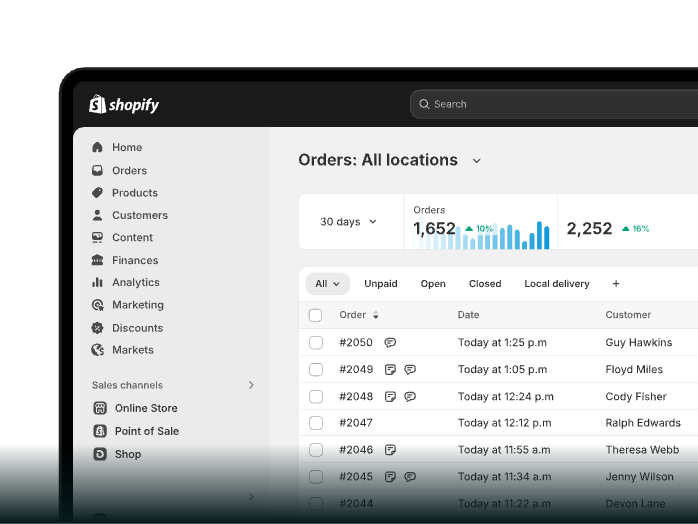
Built-in product, order, payment, logistics, and promotion features meet most day-to-day e-commerce operational needs.
Flexible Scalability to Support Business Growth
Through theme customization, the app ecosystem, and APIs, businesses can gradually extend functionality without immediately switching platforms.
Omnichannel and Cross-Border Sales Support
Shopify integrates with social platforms and marketplaces, and supports multiple languages, currencies, and cross-border payments, making it suitable for global expansion.
Predictable costs for long-term operations
Subscription-based and modular, allowing businesses to scale investment as needed while keeping total cost of ownership (TCO) under control.
Shopify’s Core Capabilities and Key Features
Which Enterprises and Use Cases Is Shopify Best For?
Direct-to-Consumer (DTC) Brands
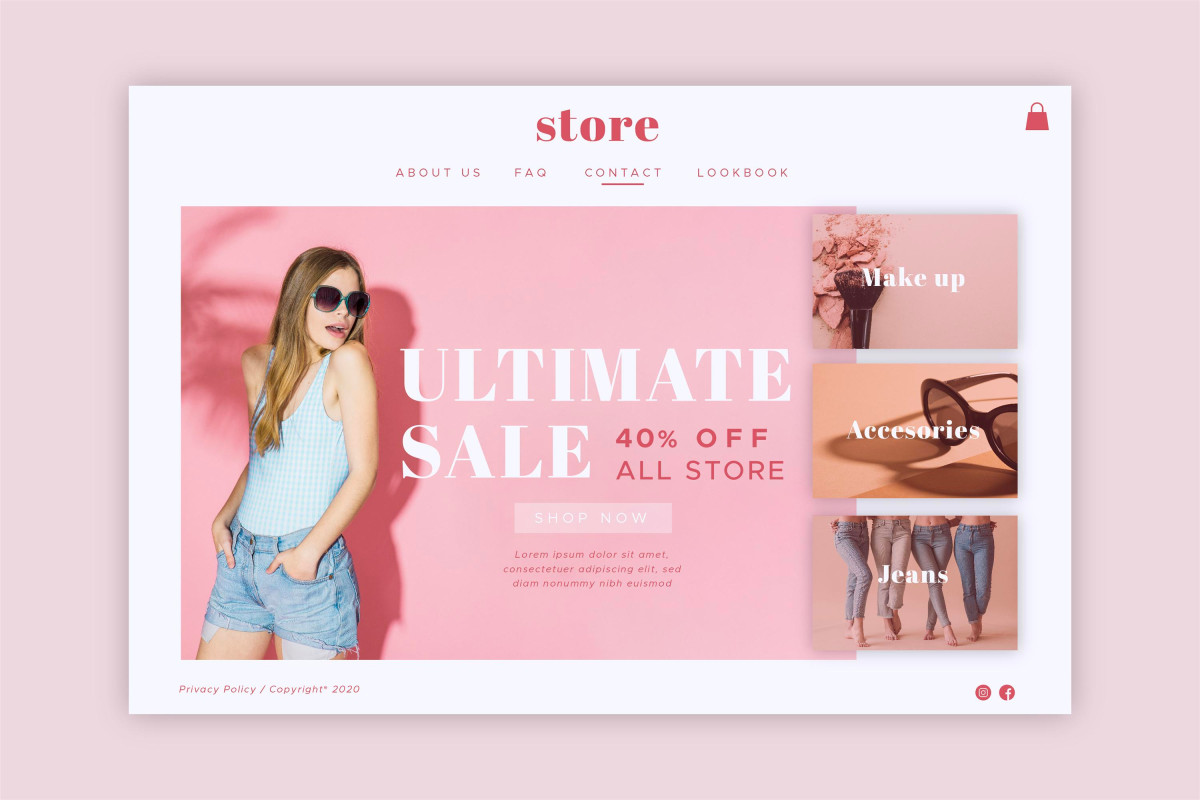
Ideal for brands selling directly to consumers while building a branded website and integrated e-commerce experience.

Small to Mid-Sized and Growing Businesses
When companies need to launch quickly, validate markets, or expand online sales without heavy IT and maintenance investment, Shopify is a common choice.

Cross-Border E-commerce and Multi-Market Operations
Supports multiple languages, currencies, and cross-border payments, making it suitable for overseas and multi-market strategies.

Marketing- and Content-Driven Brands
For brands relying heavily on content, social media, and marketing campaigns, Shopify integrates easily with marketing and analytics tools.
Businesses Seeking Lower System Complexity
For companies prioritizing platform stability, speed, and predictable operating costs, Shopify’s SaaS architecture significantly reduces system management burden.

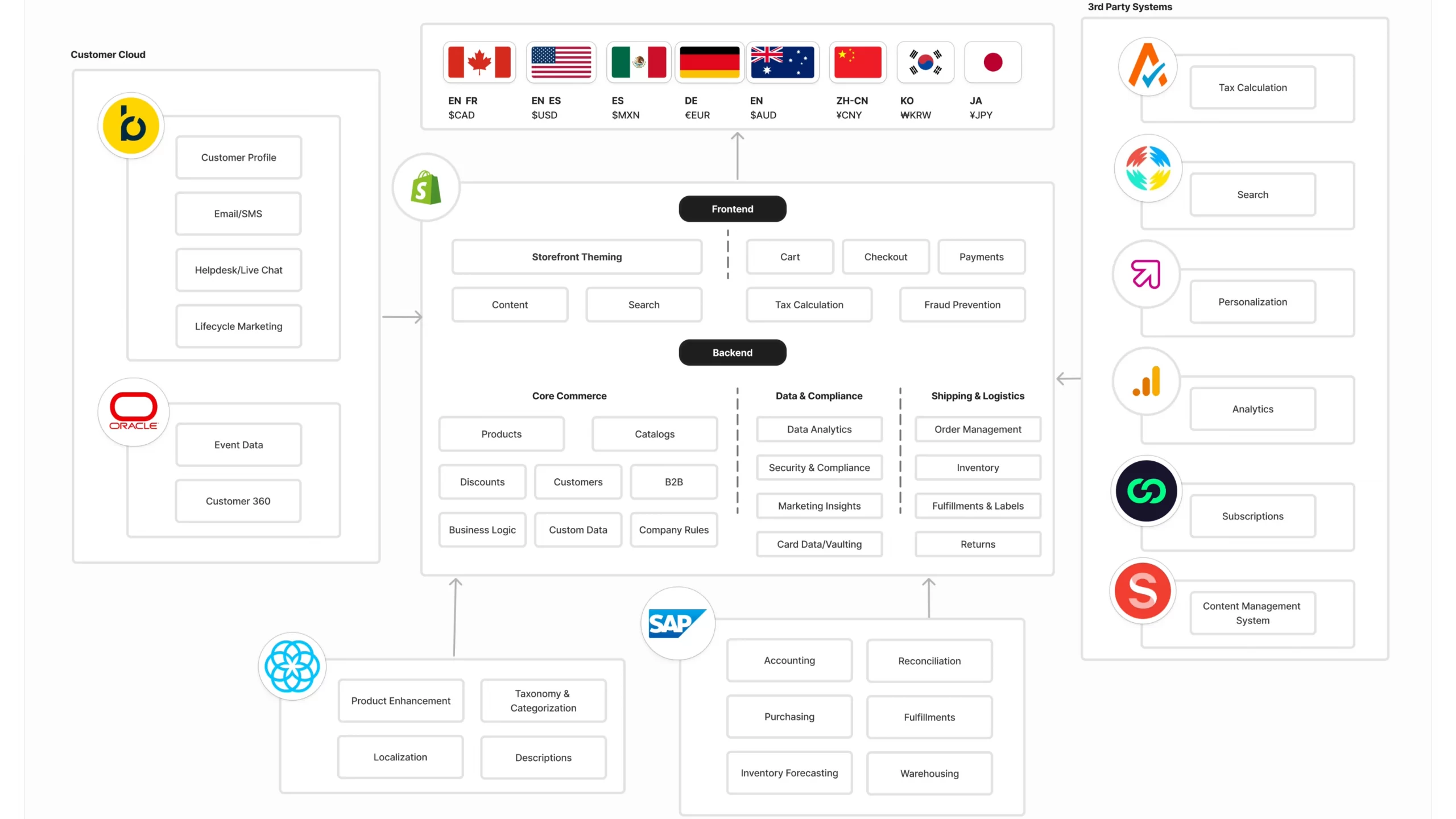
Shopify’s Role in Enterprise E-commerce Architecture
Online Sales and Transaction Entry Point
Providing stable product management, cart, checkout, and payment experiences for daily operations.
E-commerce Core Integrated with CMS and Marketing Tools
Integrates with existing CMS, marketing, and analytics tools to deliver a unified brand and sales experience.
A Platform Supporting Omnichannel and Cross-Border Strategies
Works with social platforms, marketplaces, and multi-market sales requirements to support channel expansion.
A Gradually Scalable E-commerce Infrastructure
As the business grows, functionality can be expanded via apps, ecosystem integrations, or headless architecture without immediate platform replacement.
Successful Cases
Building An Online Store For A Designer Brands Using Shopify
Discover how a top designer used Shopify to grow into a multi-million-dollar fashion brand, gaining immense industry recognition.
Frequently Asked Questions (FAQ)
Shopify Services Provided by LeadsTech

Shopify Store Setup and Theme Customization
Assisting with store configuration, theme adjustments, and brand visual customization to ensure alignment with brand positioning and user experience.

Brand Website and E-commerce Integration
Integrating brand content and e-commerce sales into a unified experience, supporting content-driven and marketing-driven strategies.

Multi-Language, Multi-Market, and Cross-Border Setup
Planning and configuring languages, currencies, cross-border payments, and logistics to support global and multi-market operations.

Marketing and Analytics Tool Integration
Integrating Google Analytics (GA4), marketing automation, and tracking tools to optimize marketing and conversion through data.

SEO, Performance, and Conversion Rate Optimization
Optimizing search visibility, site performance, and checkout conversion from both technical and user behavior perspectives.

Shopify Architecture and Growth Consulting
Helping enterprises assess platform suitability and plan future expansion to ensure the e-commerce architecture evolves with business growth.
Why Choose LeadsTech for Shopify Implementation?
Implementation Planning Based on Business Needs
We avoid one-size-fits-all templates and design Shopify architectures and feature sets based on brand positioning, business models, and growth stages.
Expertise in E-commerce, Content, and Marketing Integration
LeadsTech specializes in integrating Shopify with CMS, marketing, and analytics tools, ensuring e-commerce is part of a holistic digital experience.
Balanced Perspective Across Marketing, Technology, and Management
Projects consider marketing flexibility, technical feasibility, and management decision-making to ensure systems are usable and maintainable across teams.
Support for Scalable and Expandable E-commerce Architecture
We help businesses launch quickly while preserving room for future expansion and upgrades, avoiding short-term decisions that limit long-term growth.

Enterprise AI MarTech Trends Analysis 2024-2029 Outlook Report
From AI content productivity tools to a core engine for revenue growth and marketing transformation
*The PDF will be sent directly to your inbox.