
Website Security Testing & Optimization Services
LeadsTech provides enterprise-grade website security testing and optimization services to help businesses identify security risks, vulnerabilities, and remediation opportunities across corporate websites, CMS platforms, eCommerce websites, membership systems, forms, APIs, and campaign microsites. We evaluate websites from multiple perspectives, including architecture, frontend security, backend applications, authentication, access control, data transmission, third-party components, forms, and APIs. Our goal is to help organizations proactively detect risks before they lead to data breaches, cyberattacks, service disruptions, or reputational damage. Through structured security testing, risk prioritization, remediation recommendations, and continuous optimization, LeadsTech helps enterprises build more secure, stable, and trustworthy digital experience platforms.
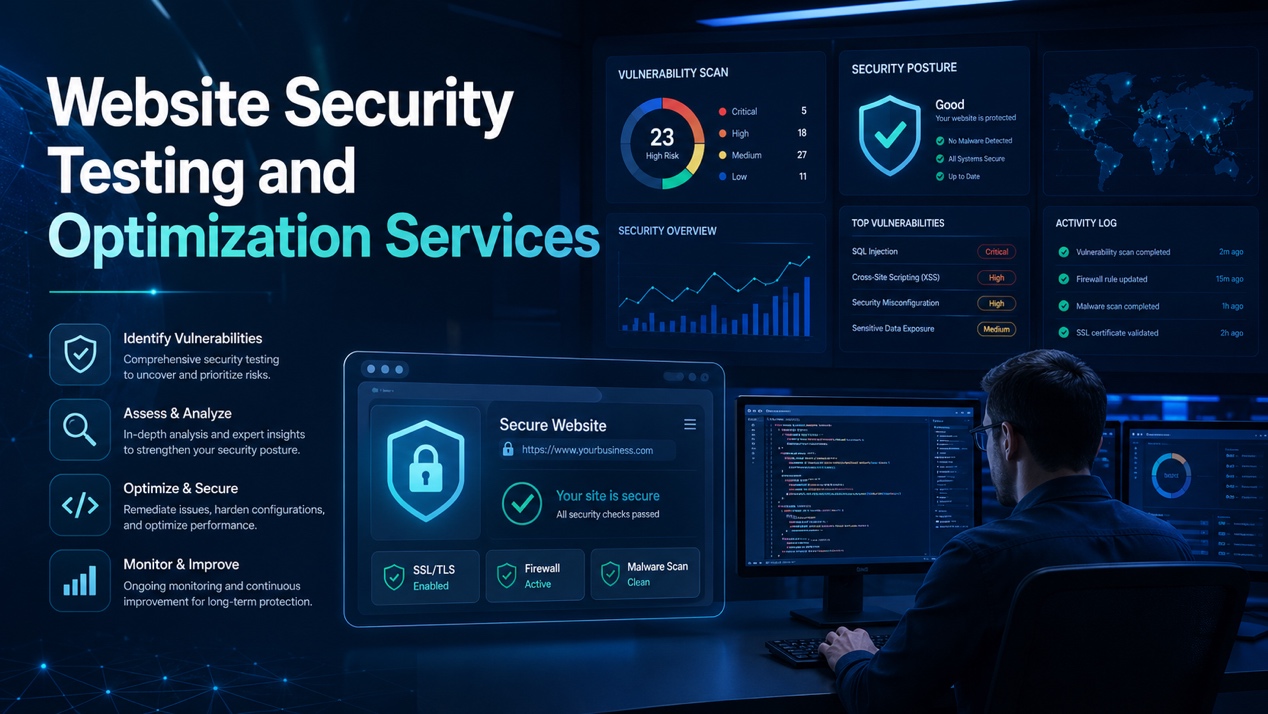
Why Website Security Matters
Protect Customer Data and Sensitive Business Information
Enterprise websites often handle customer accounts, inquiry forms, order information, marketing data, business content, and administrative functions. If vulnerabilities exist, they may result in data breaches, account compromise, unauthorized backend access, compliance violations, and reputational damage. Security testing helps identify and resolve issues before they become serious incidents.
Reduce the Risk of Attacks and Service Disruptions
Common threats include SQL Injection, XSS, weak passwords, misconfigured permissions, insecure APIs, outdated packages, and exposed sensitive information. These issues can lead to malware infections, phishing redirects, unauthorized admin access, or website downtime. Security testing helps organizations identify weak points and establish stronger protection mechanisms.
Improve Brand Trust and Customer Confidence
Website security is not only a technical concern — it directly affects customer trust. For industries such as finance, insurance, retail, aviation, travel, healthcare, education, B2B, and cross-border commerce, a secure and stable digital experience is essential for users to submit information, register accounts, complete transactions, and engage with the brand confidently.
Support Compliance and Internal Risk Management
More organizations are required to comply with data privacy regulations, cybersecurity standards, internal audits, third-party assessments, and vendor risk management policies. Regular security testing and optimization provide documented security records, remediation evidence, and improvement plans that support governance, compliance, and customer security requirements.
Ideal Organizations for This Service
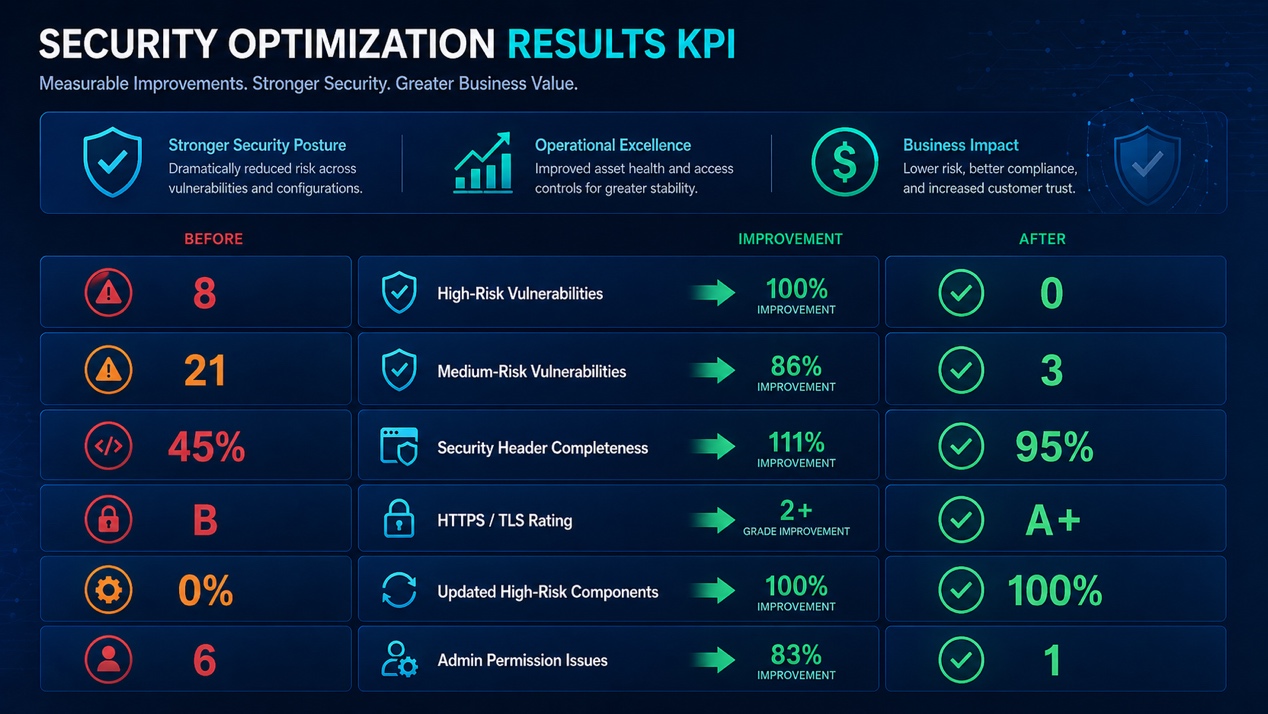
Common Security Challenges
We Help Solve
Identifying High-Risk Website Vulnerabilities
Many enterprise websites operate for years without regular security reviews. We help businesses identify common high-risk vulnerabilities such as injection attacks, cross-site scripting, unauthorized access, sensitive data exposure, security misconfigurations, and insecure file uploads.
Security Risks in CMS, eCommerce, and Backend Systems
CMS platforms, eCommerce systems, and admin portals can become attack entry points if permissions, plugins, authentication mechanisms, or version management are poorly maintained. We review backend access control, user roles, login protection, publishing workflows, and platform configurations to reduce the risk of unauthorized access and privilege abuse.
Security of Forms, Membership Systems, and APIs
Contact forms, registration forms, login systems, search features, order inquiries, and API integrations are all common attack surfaces. We assess input validation, data transmission, authentication, session management, API authorization, error message exposure, and data processing workflows to strengthen frontend and backend security interactions.
Outdated Components and Known Vulnerabilities
Modern websites rely heavily on JavaScript libraries, CMS plugins, third-party SDKs, server packages, and open-source components. If these dependencies are not regularly updated, they may contain known vulnerabilities. We help identify outdated or risky components that require upgrades, replacements, or additional hardening.
Security Headers and HTTPS Configuration
Using HTTPS alone does not guarantee a fully secure website. We review HSTS, Content Security Policy, X-Frame-Options, X-Content-Type-Options, Referrer-Policy, and other security headers to reduce the risk of man-in-the-middle attacks, clickjacking, XSS, and browser-side threats.
Lack of Clear Security Reports and Remediation Guidance
Some organizations know their websites may be at risk but lack actionable evidence, prioritization, and remediation direction. LeadsTech provides not only testing results, but also clear risk prioritization, impact analysis, remediation guidance, and optimization roadmaps to help both technical teams and management understand the next steps.
Services Provided by LeadsTech

Service 1 | Website Vulnerability Scanning & Risk Assessment
We perform vulnerability scanning and risk analysis for enterprise websites, CMS platforms, eCommerce websites, and Web Applications. Assessments include common vulnerabilities, HTTPS/SSL configuration, permission settings, sensitive information exposure, and third-party dependency risks, along with detailed reports and remediation recommendations.

Service 2 | Web Application Security Testing
We conduct in-depth security testing for login systems, forms, APIs, membership platforms, and backend features. Testing includes SQL Injection, XSS, CSRF, authorization control, and data exposure risks, making it ideal before website launches, redesigns, or major feature releases.

Service 3 | CMS & eCommerce Platform Security Review
We help organizations review the security of platforms such as AEM, WordPress, Magento, and Shopify, including permissions, plugins, APIs, and publishing workflows. We also provide hardening recommendations and security governance guidance.

Service 4 | Security Optimization & Remediation Support
Based on testing results, we assist businesses in implementing frontend, backend, and platform security improvements, including CSP, HTTPS, cookie security, API authorization, file upload protection, and backend access control enhancements.

Service 5 | Security Reporting & Continuous Improvement Recommendations
We provide comprehensive security reports covering risk levels, issue descriptions, remediation guidance, retesting recommendations, and ongoing security improvement strategies to support long-term website governance and maintenance.
Frequently Asked Questions
Why Choose LeadsTech?

Expertise in Enterprise Websites, CMS, and eCommerce Architectures
LeadsTech has extensive experience supporting enterprise clients and understands how CMS platforms, eCommerce systems, DAM, CRM, CDP, MA, and digital experience platforms operate in real-world environments. We do not only review security issues at the page level — we also evaluate content workflows, backend permissions, third-party integrations, and enterprise digital ecosystems to help reduce overall security risks.
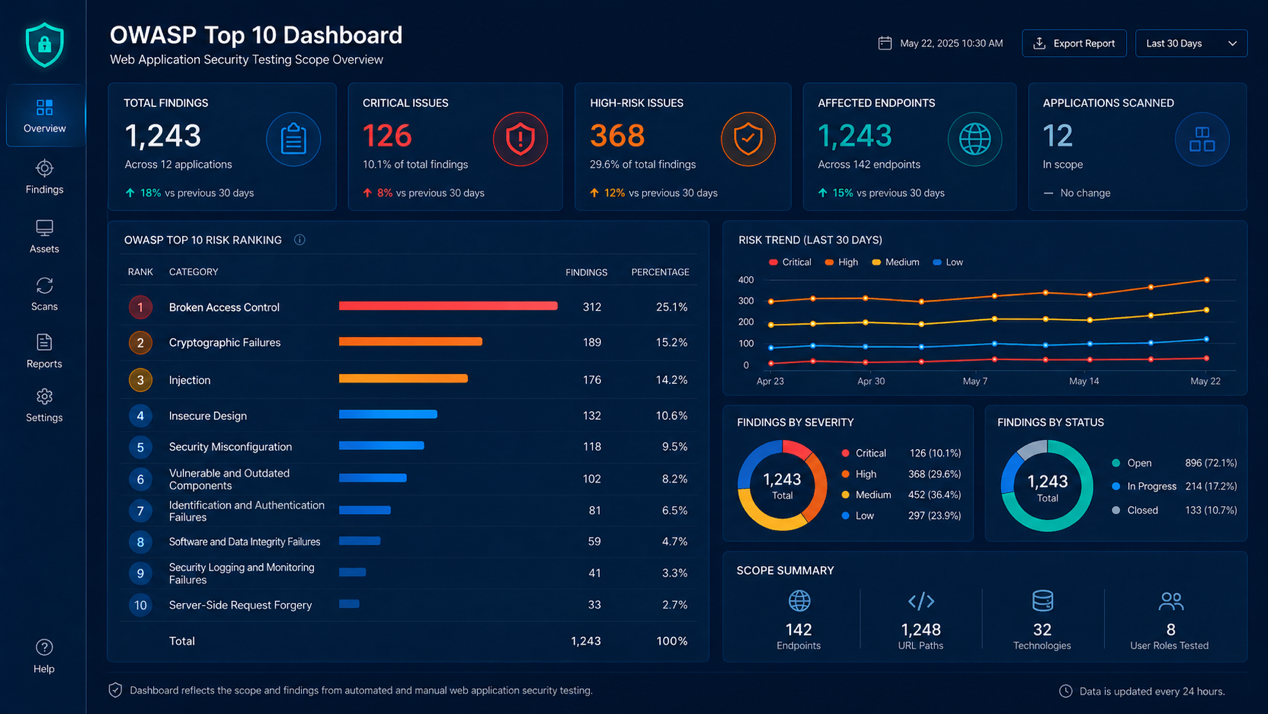
End-to-End Support: Testing, Analysis, Remediation, and Optimization
Many security vendors only provide reports, but businesses need actionable solutions. LeadsTech helps organizations move from security testing and risk analysis to remediation planning and implementation, creating a complete security improvement cycle that delivers measurable results.

Focus on Business Impact, Not Just Vulnerabilities
We prioritize issues based on their business impact, such as risks affecting customer data, transaction workflows, backend management, marketing campaigns, branded content, or third-party integrations. This helps businesses focus on the most critical issues first instead of being overwhelmed by large volumes of technical findings.
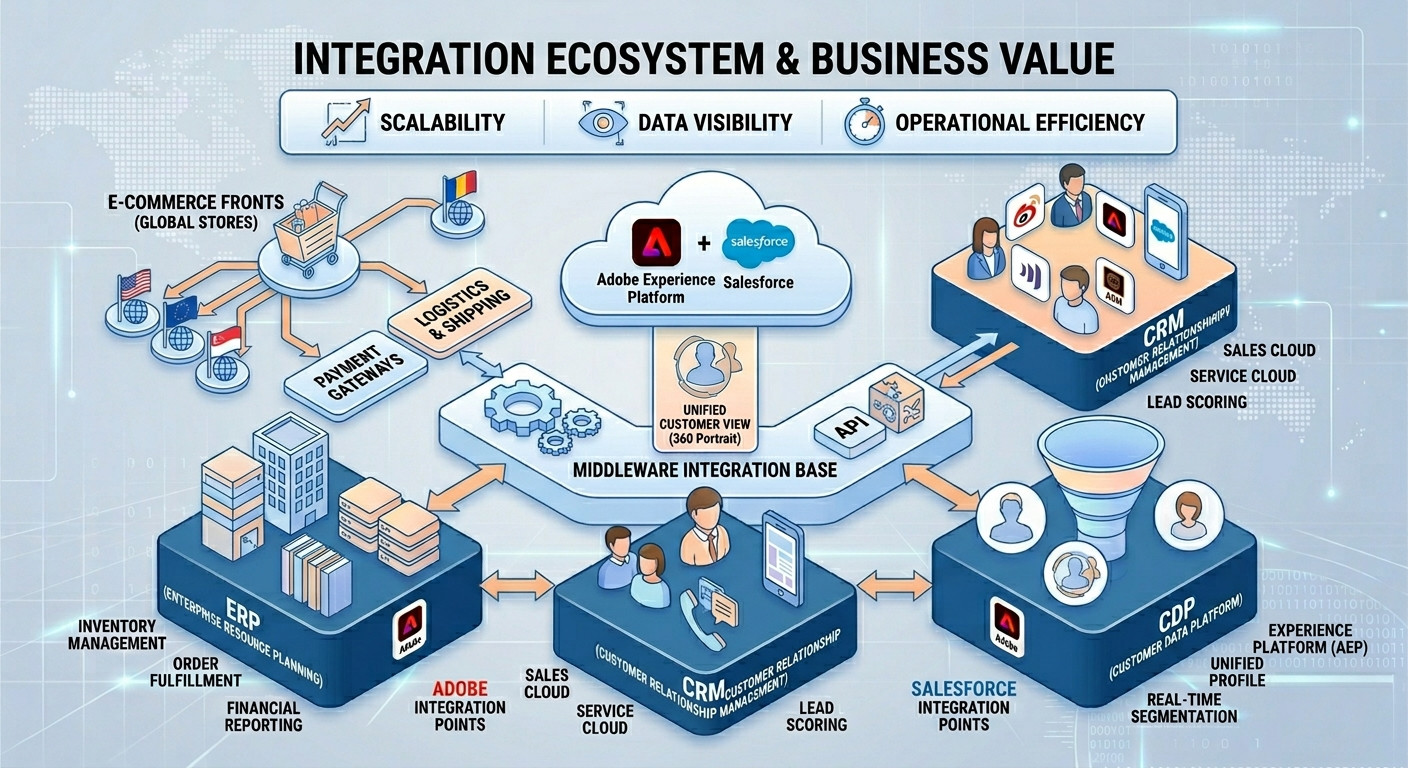
Combined Expertise Across CMS, eCommerce, and Marketing Platforms
LeadsTech is experienced with platforms such as Adobe Experience Manager, Magnolia, WordPress, Adobe Commerce, Shopify, Salesforce, CDP, MA, and Analytics solutions. We help businesses optimize security, performance, content management, data integration, and digital marketing operations together as part of a broader digital strategy.

Suitable for Taiwan, Hong Kong, Mainland China, and Global Enterprises
For multi-market, multilingual, and cross-border organizations, website security is more than a single-site issue. It involves governance across regions, permissions, compliance requirements, content publishing, and system integrations. LeadsTech provides security testing and optimization services tailored to different business structures, operational models, and regional requirements.
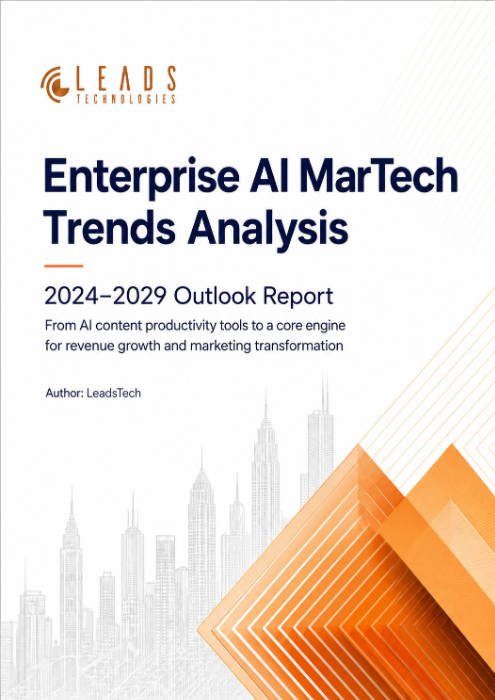
Enterprise AI MarTech Trends Analysis 2024-2029 Outlook Report
From AI content productivity tools to a core engine for revenue growth and marketing transformation
*The PDF will be sent directly to your inbox.