
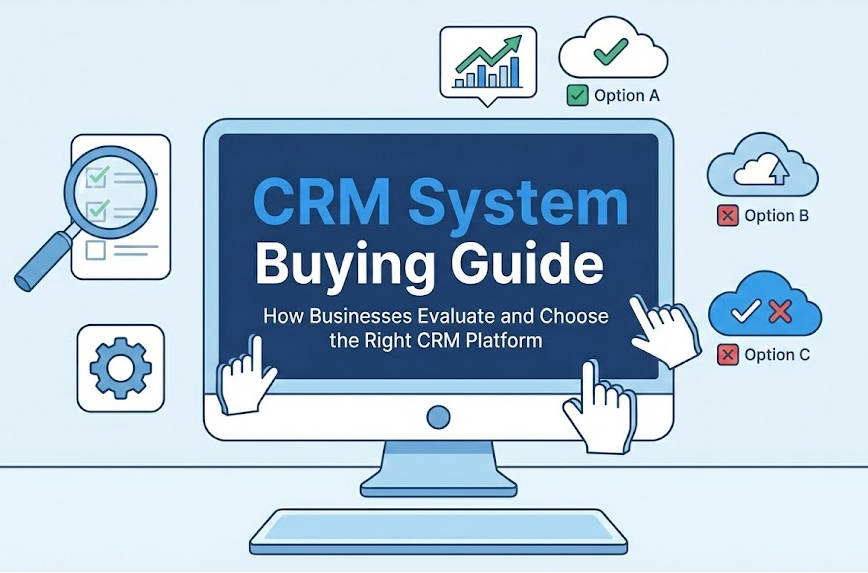
2026 CRM System Guide: How to Choose the Right CRM Platform
Customer Relationship Management (CRM), Social CRM
11 February 2026
1. Introduction: Why Choosing a CRM Is More Complex
In 2026, businesses face a more complex CRM landscape than ever before. On one hand, the number of CRM products and platforms continues to grow, with increasingly detailed feature differentiation. On the other hand, business expectations for CRM now go far beyond simple contact management.
CRM systems are taking on broader roles, including sales process management, customer data integration, and cross-department collaboration. They are also becoming foundational platforms for marketing automation, AI analytics, and data governance. A poor selection impacts not just one department, but the entire operational structure.
CRM selection has shifted from choosing a tool to choosing the right system architecture to support growth over the next several years.
2. CRM Market Trends and Evolution
From a market perspective, CRM development has clearly shifted. Traditional sales-focused CRM tools are evolving into enterprise-level platforms.
- First, CRM users are no longer limited to sales teams. Marketing, customer service, and management now share the same customer data, making CRM the single source of truth for customer information.
- Second, organizations demand stronger data governance and visibility. CRM not only records data but also influences decision quality and operational efficiency.
- At the same time, integration capability has become a baseline requirement. Whether CRM can seamlessly integrate with ERP, marketing systems, and service platforms is now a key selection factor.
- Finally, AI and automation are increasingly embedded into CRM applications. From sales forecasting and intelligent recommendations to workflow support, AI is changing how CRM is used in practice.
These trends have transformed CRM selection from a short-term operational need into a long-term strategic decision.
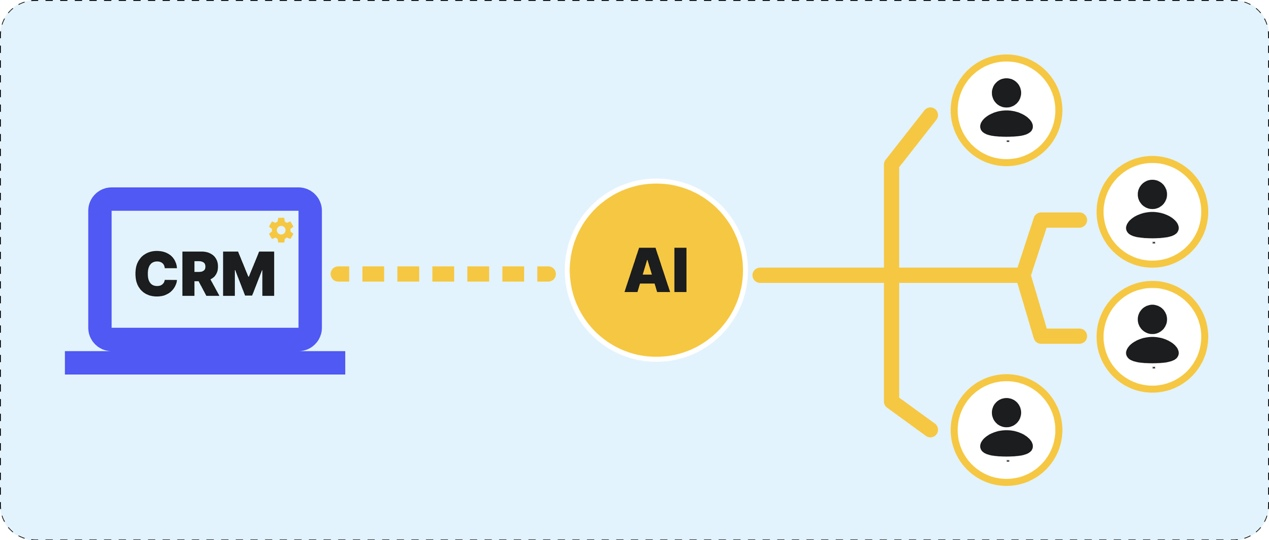
3. Assessing Business Needs Before Selecting a CRM
Before evaluating any CRM platform, organizations must first assess their own needs and current situation rather than directly comparing product features.
- Start by reviewing whether your existing sales processes are clearly defined. If processes are unstable, even the most comprehensive CRM system will struggle to deliver value.
- Next, evaluate how customer data is currently managed. Is it scattered across multiple systems, Excel files, or managed individually?
- Third, determine whether cross-department data sharing is required. For example, do sales, marketing, and service teams need a unified customer view?
- Finally, consider your business direction over the next one to three years, including potential team expansion, business model adjustments, or system integration initiatives.
The answers to these questions often matter more than a feature checklist when selecting the right CRM.
4. Main Types of CRM Systems
From a practical business perspective, CRM systems generally fall into three main categories, each reflecting different design philosophies and use cases.
- The first category includes entry-level and SMB CRM systems. These emphasize quick deployment and ease of use, making them suitable for smaller teams with relatively simple sales processes.
- The second category consists of packaged enterprise CRM systems, offering comprehensive modules and standardized workflows. These are suitable for organizations with established IT environments that prefer stable, standardized systems.
- The third category is platform-based CRM. These systems emphasize scalability, integration capability, and long-term governance, making them ideal for growing or enterprise-level organizations.
Understanding these differences helps organizations avoid implementing overly complex platforms too early or choosing systems that limit flexibility during rapid growth.
5. Overview and Comparison of Major CRM Platforms
Among the three CRM categories above, the following representative platforms are commonly evaluated by businesses.
Comparison Table of Different CRM Types and Platforms
| CRM Type | Representative Platforms | Suitable Business Stage | Process Flexibility | Scalability & Integration | Implementation Complexity |
|---|---|---|---|---|---|
| Entry-Level / SMB | HubSpot CRM, Zoho CRM | Small / Mid-Sized Businesses | Low–Medium | Low–Medium | Low |
| Packaged Enterprise CRM | Microsoft Dynamics 365, SAP CX, Oracle CX | Mid-to-Large Enterprises | Medium | Medium | Medium |
| Platform-Based CRM | Salesforce | Growing / Enterprise-Level | High | High | Medium–High |
6. Core Differences Between CRM Platforms
During the selection process, companies often find that most CRM systems can meet basic functional requirements. The real differentiation lies in platform-level architecture and design, rather than individual features.
First is process flexibility.
Some CRM systems are built around standardized workflows, making them suitable for organizations with stable and predictable processes. Others allow businesses to adjust sales stages, data structures, and rules based on their actual operating model, which is ideal for organizations whose processes continue to evolve.
Second is the data model and governance capability.
CRM is not just about storing data. It defines how data is structured, related, and utilized. As customer structures become more complex, the scalability of the data model directly affects future analytics, reporting, and system integration capabilities.
Third is system integration and long-term scalability.
As organizations grow, CRM will almost inevitably need to integrate with other systems, such as marketing automation platforms, service systems, ERP, or data platforms. Whether the CRM platform provides stable APIs and a mature ecosystem significantly impacts the long-term sustainability of the overall IT architecture.
7. CRM Selection for Small and Medium Businesses
For small and mid-sized businesses, the primary goal of CRM is typically to establish basic customer data management and sales process discipline, rather than implementing a highly complex platform all at once. At this stage, common challenges include scattered customer data, limited visibility into sales progress, and a lack of process consistency.
As a result, SMBs often prioritize solutions that offer fast implementation, low learning curves, and controlled costs, rather than highly customized platform-based systems.
In practice, commonly evaluated CRM solutions suitable for SMBs include:
HubSpot CRM
Offers both free and paid versions, covering contact management, basic sales pipeline management, and simple reporting. It is well-suited for teams just beginning their CRM journey or those seeking rapid deployment.
Zoho CRM
Provides comprehensive functionality with flexible module options, making it ideal for organizations that want to gradually expand their CRM capabilities during the SMB growth stage.
These types of CRM systems share a common advantage: they can quickly address issues related to data centralization and process visibility, helping businesses establish a foundational management structure.
As the organization grows and processes become more complex, evaluating whether to upgrade or migrate to a more advanced platform is generally a more stable and strategic approach.
8. CRM Selection for Growing and Enterprise Organizations
As companies enter a growth or enterprise stage, CRM is no longer just a sales management tool. It becomes a core platform that must support cross-department collaboration, customer data integration, and long-term system scalability.
At this stage, the CRM platforms most commonly evaluated by organizations typically focus on the following two options.

Microsoft Dynamics 365
Microsoft Dynamics 365 offers strong integration within the Microsoft ecosystem. It is well-suited for organizations that heavily use Microsoft 365, Teams, or Power Platform and have relatively stable business processes.
For companies that want their CRM to align closely with an existing Microsoft-based IT architecture, this is a practical and reasonable choice.
Salesforce
Salesforce is centered around a platform-based CRM architecture, emphasizing process flexibility, data integration, and long-term scalability. It is suitable for businesses with evolving sales models or those that require cross-departmental sharing of customer data across sales, marketing, and service teams.
Why Do We Recommend Salesforce More?
In our practical experience with growing businesses and enterprise clients, we often recommend prioritizing the evaluation of Salesforce, mainly for the following reasons:
- Higher platform flexibility, better able to adapt to business growth and process changes
- Mature cross-departmental and cross-system integration, suitable for using CRM as a long-term core platform
- More conducive to future expansion, including data analysis and AI application planning
This does not mean Salesforce is suitable for all businesses, but for organizations that want CRM to support long-term business development, Salesforce is typically a more scalable option.
9. Conclusion: Building a Long-Term CRM Strategy
In 2026, choosing a CRM system is no longer just about “which product has the most features,” but rather “which platform best aligns with the business’s development pace.”
Different sizes and maturity levels of businesses are naturally suited to different types of CRM.
The key is not to follow the market’s most popular options, but to clearly understand your own processes, data needs, and future direction, and select a system architecture that can grow with your business.
If you would like to learn more about the overall positioning and use cases of Salesforce CRM products, you can refer to our Salesforce product introduction page to understand its role within the enterprise CRM framework from a platform perspective. We also offer Salesforce-related consulting and implementation services, assisting businesses from selection and planning to actual deployment.
If your business is in the critical phase of CRM system evaluation, upgrade, or re-planning, feel free to contact us through the Contact Us page, where our consultant team can help you clarify direction, reduce selection and implementation risks, and build a long-term CRM strategy.
Further Reading
Related Articles
Enterprise AI MarTech Trends Analysis 2024-2029 Outlook Report
From AI content productivity tools to a core engine for revenue growth and marketing transformation
*The PDF will be sent directly to your inbox.