
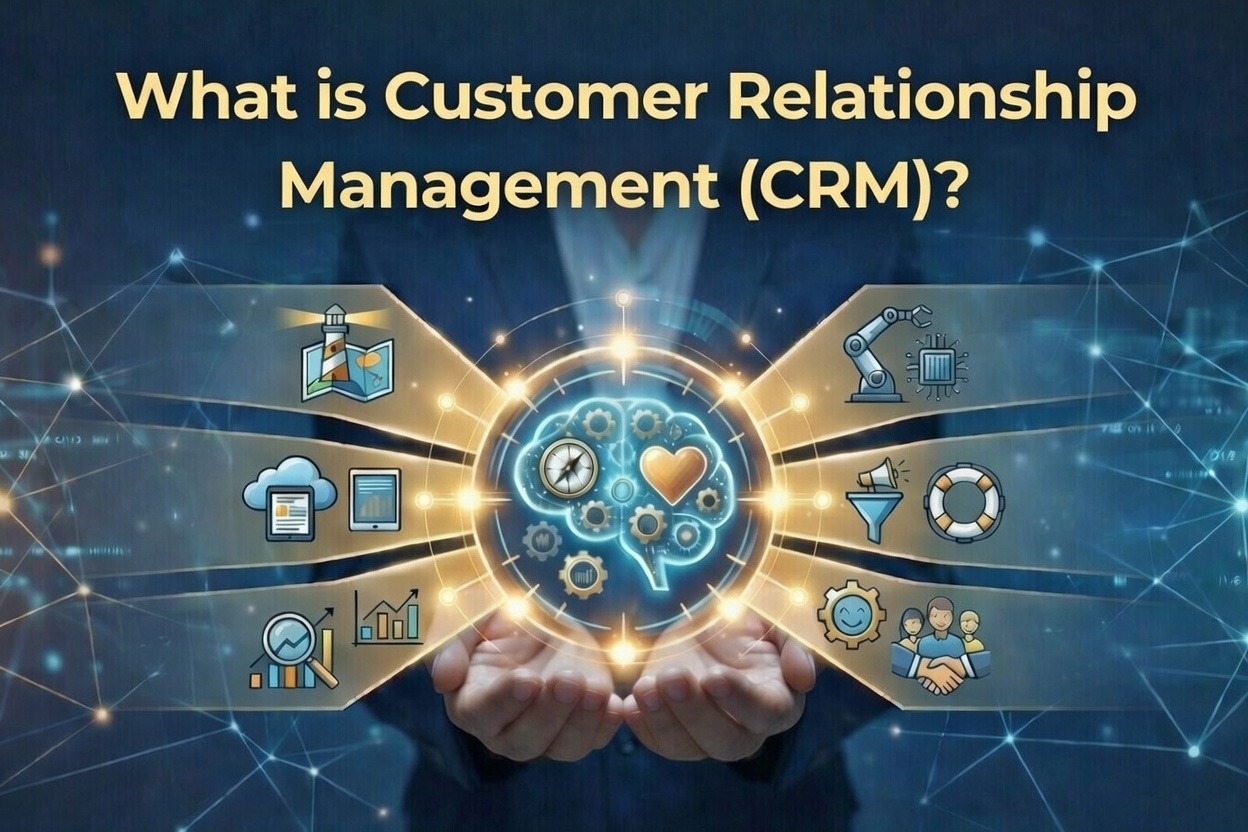
What Is CRM? A Complete Guide to Customer Relationship Management
Customer Relationship Management (CRM), Social CRM
9 February 2026
1. Introduction: Why Businesses Care About CRM
In today’s increasingly competitive markets, where customers have more choices than ever, business growth no longer depends solely on products themselves. Instead, it depends on how effectively companies manage and develop customer relationships.
Whether operating in B2B or B2C environments, businesses deal daily with large volumes of prospects, existing customers, and interaction records. Without a structured management system, information often becomes fragmented, sales processes break down, and customer experience can be negatively impacted.
Against this backdrop, CRM (Customer Relationship Management) has gradually become a core system that is indispensable to modern business operations.
2. The Basic Definition of CRM
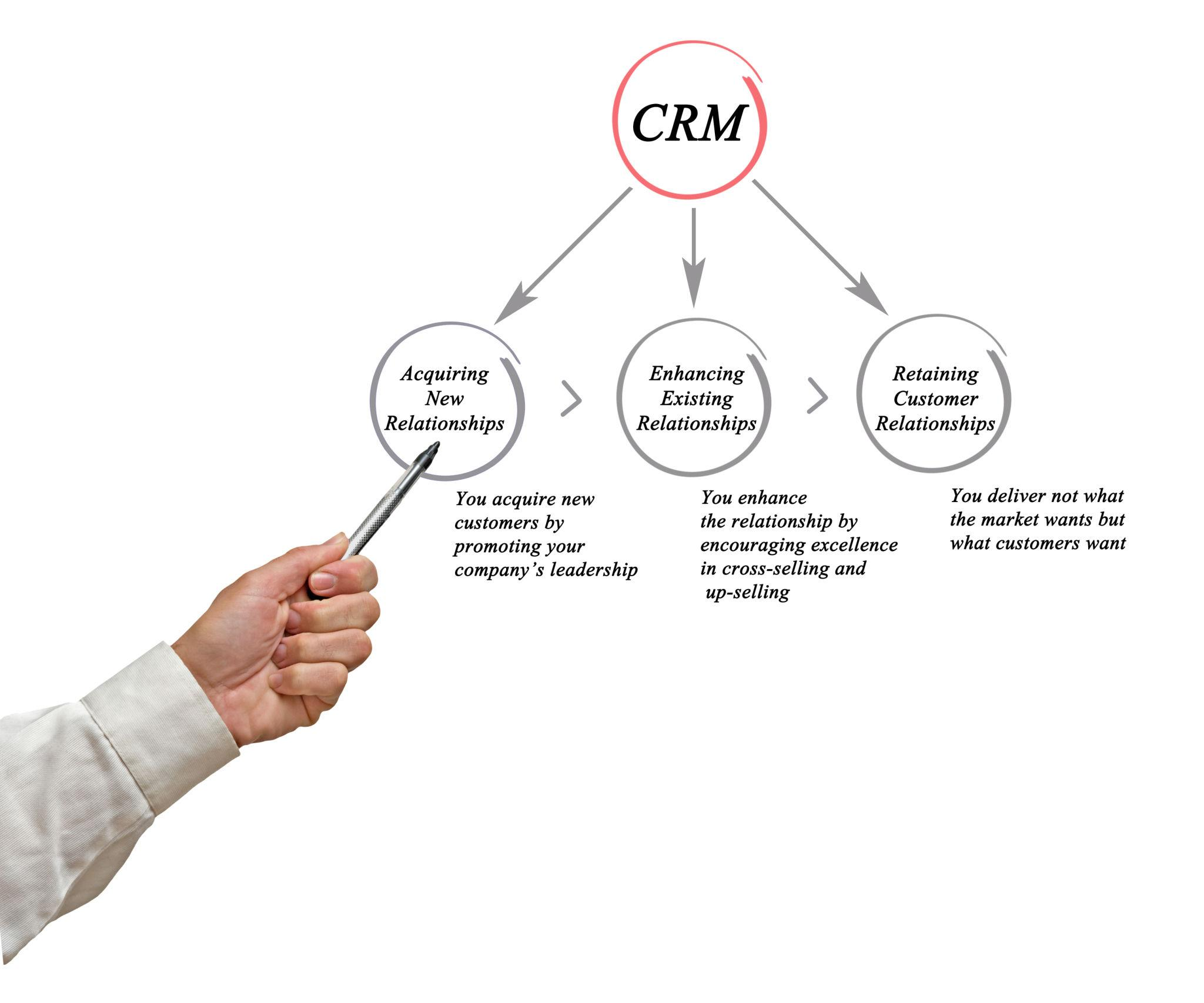
CRM, or Customer Relationship Management, refers to the systematic management of all customer-related information and interactions through structured policies, processes, and systems, including:
- Lead and prospect data
- Sales opportunities and deal records
- Customer communication history and interaction logs
- Customer status and relationship lifecycle stages
From a system perspective, CRM is typically a centralized platform that enables sales, marketing, and customer service teams to access consistent, real-time customer information in one place, preventing siloed operations across departments.
3. The Evolution of CRM
Early CRM systems primarily focused on contact management and sales pipeline tracking, with the goal of helping sales teams record customer information and follow-up status.
As organizations expanded and digital touchpoints increased, the role of CRM gradually evolved into:

A sales process management tool
A centralized customer data platform

A foundation for cross-department collaboration
CRM is no longer just a tool for sales teams—it has become a critical foundation that impacts overall operational efficiency and decision-making quality across the organization.
4. CRM and the Sales Process
In most organizations, the most direct and common application of CRM remains sales process management.
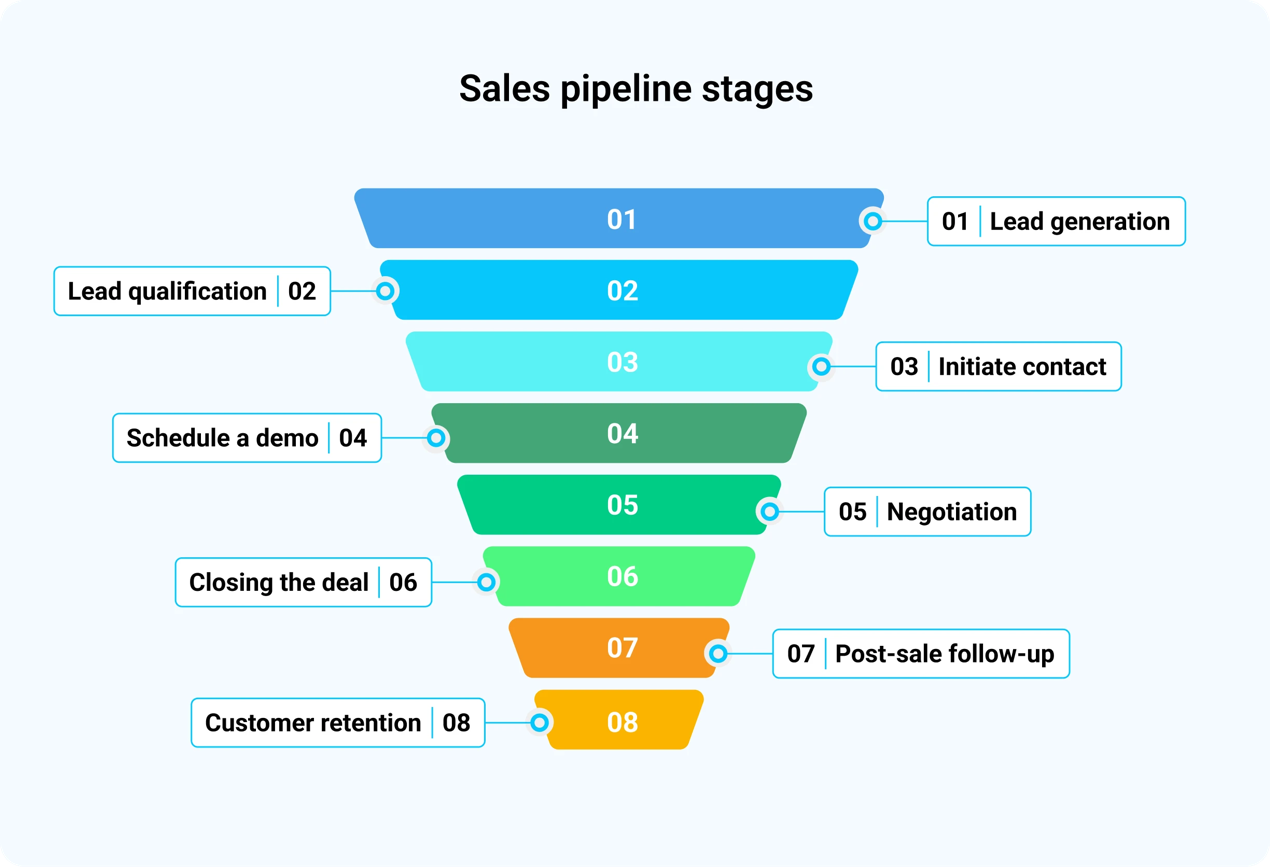
A well-designed CRM system typically supports the following sales stages:
- Lead acquisition and management
- Sales opportunity tracking
- Deal stage management and win-rate evaluation
- Deal closing and post-sale relationship maintenance
Through standardized and system-driven processes, businesses can clearly monitor the progress of every opportunity and reduce risks caused by staff turnover or missing information.
5. CRM and Customer Data
Beyond process management, another core value of CRM lies in the centralization of customer data.
When customers interact with a business through different channels—such as websites, sales visits, event registrations, or social platforms—data scattered across multiple systems makes it difficult to build a complete customer view.
The role of CRM is to integrate these data sources, enabling businesses to:

Understand past customer behavior and needs

Maintain consistent sales and communication approaches

Support data-driven analysis and decision-making
In data-driven operating models, CRM often becomes one of the most important sources of customer data for businesses.
6. Limitations of Traditional CRM
Although CRM addresses many management challenges, organizations often encounter the following issues in practice:
- Customer data remains largely static
- Limited ability to reflect customer behavior across different touchpoints in real time
- Restricted integration with social, marketing, or external platforms
- Users update records only when necessary
As a result, CRM may contain data, but it does not always accurately reflect customers’ real-time status.
7. The Concept of Social CRM
Traditional CRM primarily manages customer data and sales processes. However, businesses today interact with customers across multiple channels—such as websites, email campaigns, LINE, and social media. When this information is scattered across different systems, it becomes difficult to gain a real-time understanding of customer status.
Social CRM was created to solve this problem. It integrates behavioral data from social and digital touchpoints into CRM, enabling businesses not only to know who the customer is, but also to understand what the customer is doing—while supporting one-to-one communication and automated nurturing.
By leveraging Salesforce Customer 360 together with Social CRM, organizations can establish a unified customer view, centralizing CRM data, social interactions, and membership information. This enables both sales and marketing teams to stay aligned on real-time customer insights. Learn more about our solution here:
https://www.leads-technologies.com/en/products/salesforce-customer-360/social-crm/
8. CRM vs. Social CRM
Although both CRM and Social CRM focus on customer relationship management, their priorities differ. Traditional CRM emphasizes customer profiles, sales processes, and static status management. Social CRM, on the other hand, focuses on real-time interaction behavior, multi-touchpoint data integration, personalized engagement, and closer collaboration between marketing and sales.
Simply put, CRM answers the question “Who is the customer?” while Social CRM answers “What is the customer doing right now?”
After implementing Social CRM, businesses can monitor customer behavior across websites, LINE, or events in real time and adjust follow-up strategies based on these signals to improve conversion rates. For organizations with multiple customer touchpoints and strong membership strategies, Social CRM is not just a system upgrade—it represents an evolution in overall customer engagement strategy.
9. Conclusion: The Role of CRM in Modern Businesses
CRM is no longer just a database for storing customer information. It serves as the core foundation for connecting sales processes, integrating customer data, and enabling cross-department collaboration.
As customer interactions become increasingly fragmented, many businesses are moving from traditional CRM toward Social CRM models that incorporate multi-touchpoint data and real-time behavioral insights. This shift transforms customer management from passive record-keeping into proactive insight and precision follow-up.
If your organization is evaluating CRM systems or looking to further integrate sales, marketing, and customer interaction data, we recommend starting from your actual processes and business objectives—not just system features. Our consulting team can assist with requirements analysis, architecture planning, and implementation strategy to build a scalable CRM and Social CRM foundation.
Feel free to Contact Us to learn more about Salesforce Sales Cloud and related services. Let us help you build a truly customer-centric growth engine—from lead management and sales processes to long-term customer engagement.
Further Reading
Related Articles
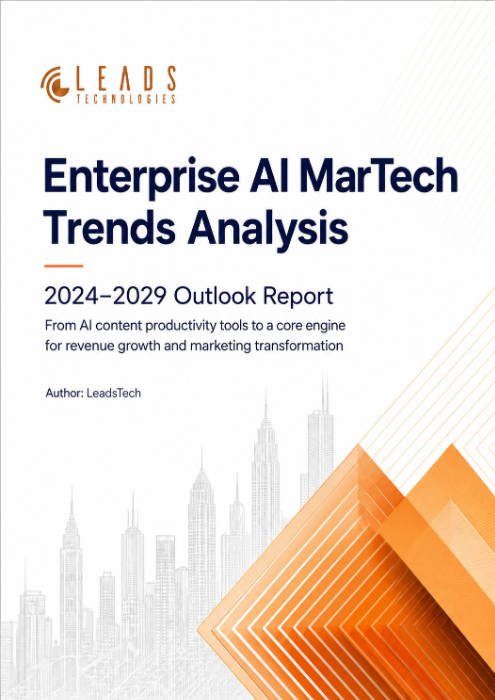
Enterprise AI MarTech Trends Analysis 2024-2029 Outlook Report
From AI content productivity tools to a core engine for revenue growth and marketing transformation
*The PDF will be sent directly to your inbox.