
What is MarTech? Complete 2026 Guide to Marketing Technology | Definitions, Tools, Use Cases, Trends
Martech
28 November 2025
1. What is MarTech? (Definition of MarTech)
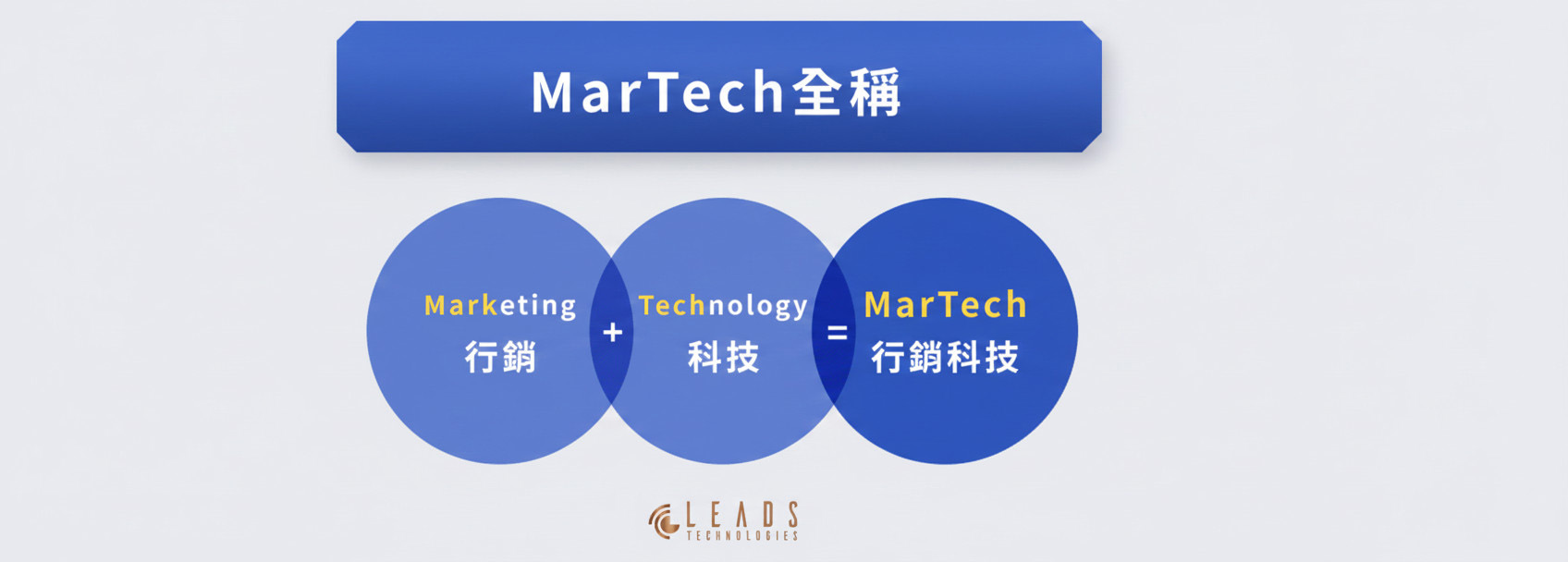 MarTech = Marketing + Technology
It refers to all the technologies, tools, and platforms that companies use in marketing processes to improve marketing efficiency, manage customer data, trigger automated journeys, analyze performance, and increase conversion rates.
The focus of MarTech is not “tools,” but “making marketing smarter”
It enables companies to:
- Automate emails, SMS, and app notifications
- Provide personalized recommendations based on customer behavior
- Create a 360° customer data view
- Track the customer journey
- Predict who may churn and who will buy
- Use AI to automatically generate content, images, and assets
In short:
MarTech helps companies use “data + tools + AI” to run more efficient and precise marketing.
2. What Does MarTech Include? Five Core Areas (2026 Latest Classification)
Common MarTech technologies can be categorized into five core areas:
1. Content & Experience
Example tools:
- CMS (Content Management Systems): Adobe Experience Manager (AEM), Magnolia, various Headless CMS
- DAM (Digital Asset Management): AEM Assets
- Personalization and experimentation tools: Adobe Target
Brands use these tools to:
- Create websites, campaign pages, and landing pages
- Manage images, videos, banners, and other digital assets
- Conduct A/B testing and personalized content presentation
2. Customer Data & CDP (Customer Data Platform)
Example tools:
- Adobe Real-Time CDP
- Tealium
- Salesforce Data Cloud
CDP is one of the most important MarTech infrastructures for companies, used to:
- Collect customer data across channels (website, app, stores, call center, e-commerce, CRM, etc.)
- Integrate into a 360° customer data view
- Perform segmentation and audience management
- Drive personalized marketing and automated journeys
3. Marketing Automation
Example tools:
- Adobe Journey Optimizer (AJO)
- Marketo
- HubSpot
- Braze
Main uses include:
- Automatically trigger marketing journeys (Welcome Journey, Retention Journey, Repeat Purchase Journey)
- Automatically send reminders based on behavioral events (e.g., abandoned cart)
- Highly customized EDM, SMS, app notifications, and push messages
4. Analytics & Insights
Example tools:
- Adobe Analytics
- Google Analytics
- Mixpanel
Companies use these tools to understand:
- Which campaigns are most effective?
- Which channels bring the highest conversion?
- At which step in the shopping or application process do customers drop off?
Marketing optimization decisions are based on the analysis and insights from this layer.
5. AI, Personalization & GenAI
Example tools:
- Adobe Sensei
- AI Assistant in Adobe Experience Platform
- Various GenAI content generation tools
Common applications include:
- Automatically generating copy, images, and assets
- Using AI to predict purchase intent and churn risk
- Intelligent customer service and chatbots
- Dynamic recommendations and personalized content based on customer behavior
3. Why Do Businesses Need MarTech? (Four Tangible Benefits)
More and more companies invest in MarTech because it brings clear and measurable results.
1. Improve Marketing Efficiency
(Reduce 30–50% repetitive labor)
- Automatically send emails, SMS, and app notifications
- Replace manual follow-up with automated journeys
- Use AI to automatically generate banners, headlines, and message content
- Centralized customer data management to reduce manual integration time
2. Increase Conversion Rates
(Typically improves 10–30%)
- Provide different product recommendations for different customer segments
- Dynamically adjust content based on browsing or interaction behavior
- Offer faster and smoother website experience and form processes (through CMS and frontend optimization)
3. Reduce Marketing Costs
(Targeted marketing, minimize waste)
- Identify truly valuable audiences using data
- Avoid wasting budget on low-performing channels
- Continuously reduce ineffective investments through content and campaign performance analysis
4. Build a Complete 360° Customer Profile
This is one of the top priorities for many companies.
Through CDP and data integration, companies can consolidate:
- CRM data
- Website and app behavior
- Store POS or membership card data
- E-commerce purchase history
- Membership and loyalty systems
4. Common MarTech Use Cases in Business (Taiwan & Hong Kong Examples)
Below are several MarTech applications that have been implemented and proven effective:
1. New Member Welcome Journey
When a customer registers as a member, a series of communications are automatically triggered:
- Welcome email or SMS
- Brand introduction and service advantages
- First-purchase discounts or recommended popular products
- Guide customers to complete additional information (improve data completeness)
2. Member Segmentation and Personalized Communication
Based on:
- Spending amount and frequency
- Product category preferences
- Usage behavior and login frequency
Different member levels and groups are defined to provide:
- Exclusive offers for each tier
- Personalized content (e.g., fashion, travel, electronics, etc.)
- Access to specific events or pre-sale privileges
3. E-commerce Cart Abandonment Reminder
When a customer adds items to the cart but does not check out, the system automatically:
- Sends reminder notifications
- Provides related product recommendations
- Offers time-limited discounts or free shipping conditions depending on strategy
This scenario significantly improves conversion rates on e-commerce platforms.
4. Web Personalization
Display different content dynamically based on customer browsing behavior and history, e.g.:
- Travel sites recommend similar trips based on viewed locations
- Insurance sites show different product packages based on age and family status
- B2B sites display relevant case studies based on industry
5. Customer Churn Prediction and Retention
Using AI models and behavior analysis to predict which customers are likely to churn:
- No login for a period
- Significant decrease in purchase frequency
- Increase in customer complaints
The system can automatically trigger retention journeys, e.g.:
- Provide exclusive offers
- Surveys to understand dissatisfaction reasons
- Push relevant content or product combinations
This is often a key factor in increasing customer lifetime value (LTV).
5. 2026 MarTech Trends: AI Takes the Lead
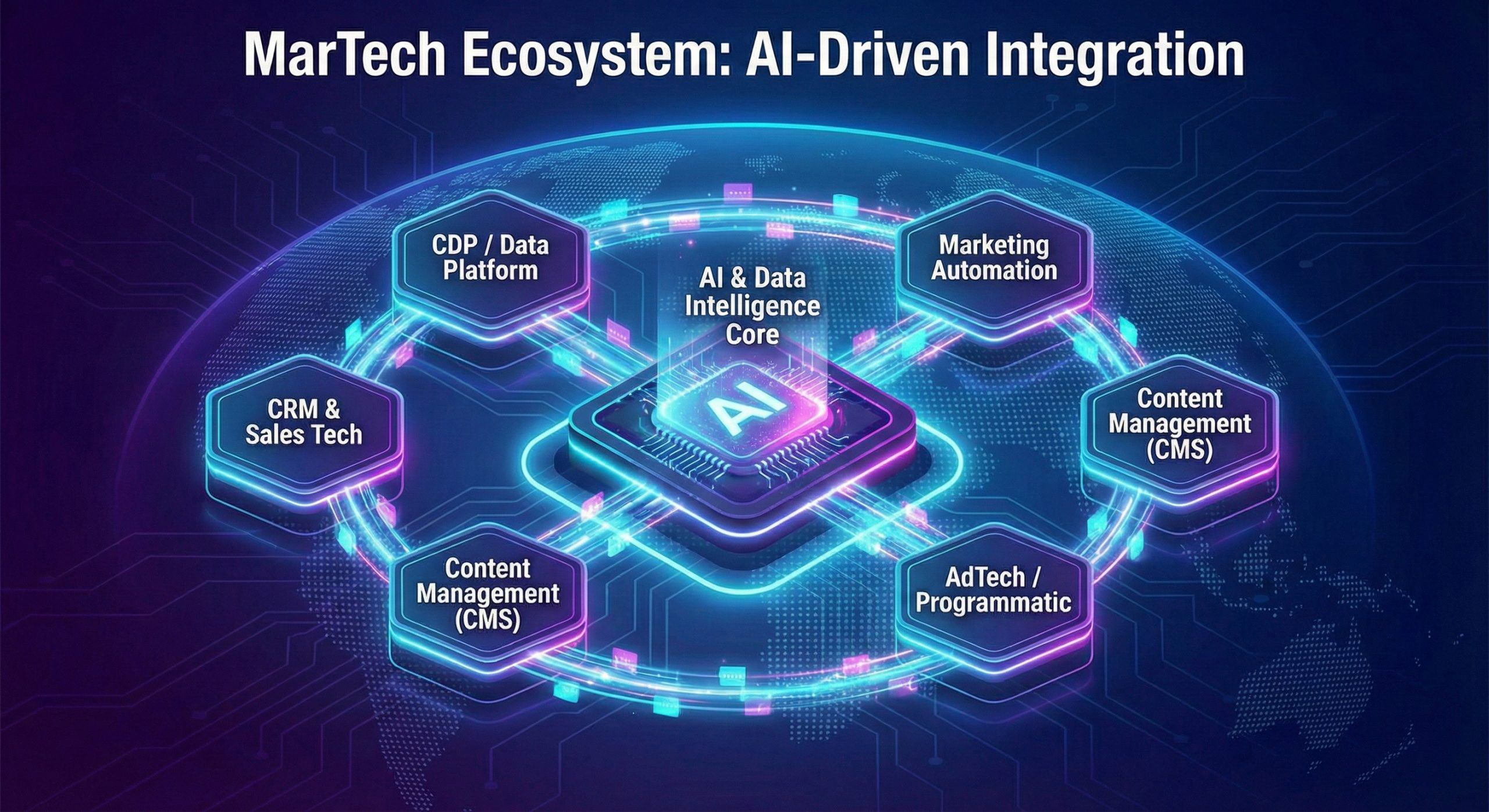 After 2026, MarTech is no longer just a “tool stack” but a complete ecosystem centered on AI + automation + personalization.
Trend 1: AI MarTech Becomes Ubiquitous
AI is no longer just an assistant but permeates all layers of MarTech:
- Automatically generate copy and images for EDMs, landing pages, and ad creatives
- Use AI for customer segmentation and behavior prediction
- Use AI assistants to answer marketers' data analysis questions, e.g., "Which campaign had the highest ROAS in the last 30 days?"
- Integrate with Real-Time CDP to trigger personalized communications in real-time
Trend 2: Zero-party Data Becomes a Core Asset
As privacy regulations become stricter, companies need to proactively collect "voluntarily provided" data from customers, such as:
- Personal preferences
- Interest tags
- Purchase consideration factors
Through surveys, preference centers, and member engagement activities, companies can create more precise personalized experiences while staying compliant.
Trend 3: Customer Journey Automation Becomes Standard
Companies are gradually shifting from "single-campaign" marketing to "journey-oriented" long-term management, such as:
- Guiding new customers from registration to first purchase
- Remarketing from first to second purchase
- Membership tier upgrades and lifecycle management
- Long-term retention and reactivation journeys
Tools like Adobe Journey Optimizer make journeys more than flowcharts—they automate execution and continuously optimize performance.
Trend 4: Content Management Enters the AI CMS Era
Combining CMS like AEM with AI is changing content operations:
- Automatically tag and classify digital assets for faster search and reuse
- Auto-crop and output in multiple sizes for different devices and platforms
- Use AI to suggest content structure, headlines, and keywords
- Reduce human resources for website maintenance and content teams
6. How Can Businesses Start Implementing MarTech? (Five Practical Steps)
If you are a business owner, marketing manager, or IT lead, you can start with the following steps:

Step 1: Clearly Define Marketing and Business Goals
For example:
- Increase new member registrations
- Improve website conversion rate and order numbers
- Increase member repurchase rate
- Reduce ad spend waste
Clear goals help determine which MarTech solutions are needed.

Step 2: Inventory Existing Data and Systems
Check if you currently have:
- CRM or membership systems
- E-commerce platforms or order systems
- Web / App behavior and analytics tools (e.g., GA)
- EDM systems and SMS platforms
Inventorying helps identify which systems need integration and which data require cleaning or enhancement.

Step 3: Select the Right MarTech Toolset
Based on goals and current situation, choose:
- CMS (e.g., AEM, Headless CMS)
- CDP (e.g., Adobe Real-Time CDP)
- Marketing automation and journey tools (e.g., AJO, Marketo)
- AI and personalization tools (e.g., Adobe Sensei, AI Assistant)
The focus is not "more tools are better" but whether they can be integrated into a collaborative ecosystem.

Step 4: Design Integration Architecture and Customer Journeys
In collaboration between tech and marketing teams, design:
- Data flows and API integration between systems
- Main customer journeys (e.g., new, repurchase, churn alert)
- Metrics and tracking methods (KPIs, dashboards)
Only trackable journeys can be truly optimized.

Step 5: Collaborate with Professional MarTech Consultants to Accelerate Implementation
Implementing MarTech involves marketing strategy, data governance, technical integration, and organizational change.
Working with experienced MarTech consultants can:
- Save significant trial-and-error costs
- Ensure scalable system architecture and data design
- Speed up the time from "tool launch" to "actual results"
Teams like LeadsTech, familiar with Adobe Experience Cloud, ecosystem integration, and AI applications, can help companies implement MarTech end-to-end, from strategy and architecture to execution.
Conclusion: MarTech is the Growth Engine for Businesses in 2026
MarTech is no longer “optional”; it has become a core capability for digital transformation and business growth.
In 2026, competition between companies is not just about:
- Who has better products
- Who has a larger marketing budget
But more importantly:
- Who understands their customers better
- Who leverages data more effectively
- Who can truly integrate technology and AI into marketing processes
If you are considering:
- How to implement CDP, Marketing Automation, or AI MarTech?
- How to connect your website, App, EDM, SMS, and ads seamlessly?
- How to create personalized experiences using Adobe Experience Cloud or other MarTech tools?
Contact LeadsTech to design a suitable MarTech architecture and implementation roadmap for your company.
Further Reading (Recommended Next Topics)
You can use the following articles as extended reading to create a complete MarTech knowledge path with internal linking:
- What Are MarTech Tools? The Most Complete List of 30 Marketing Technology Tool Categories for 2026
- What do MarTech companies do? How to choose the right MarTech consultant
- What Is AI MarTech? How AI Is Reshaping Marketing Technology
- How Can Enterprises Adopt MarTech? A Complete Guide to Process, Budget, and Success Factors
- MarTech Trends 2026: A Complete Guide to AI, Personalization, Zero-Party Data, and Customer Journey Automation