
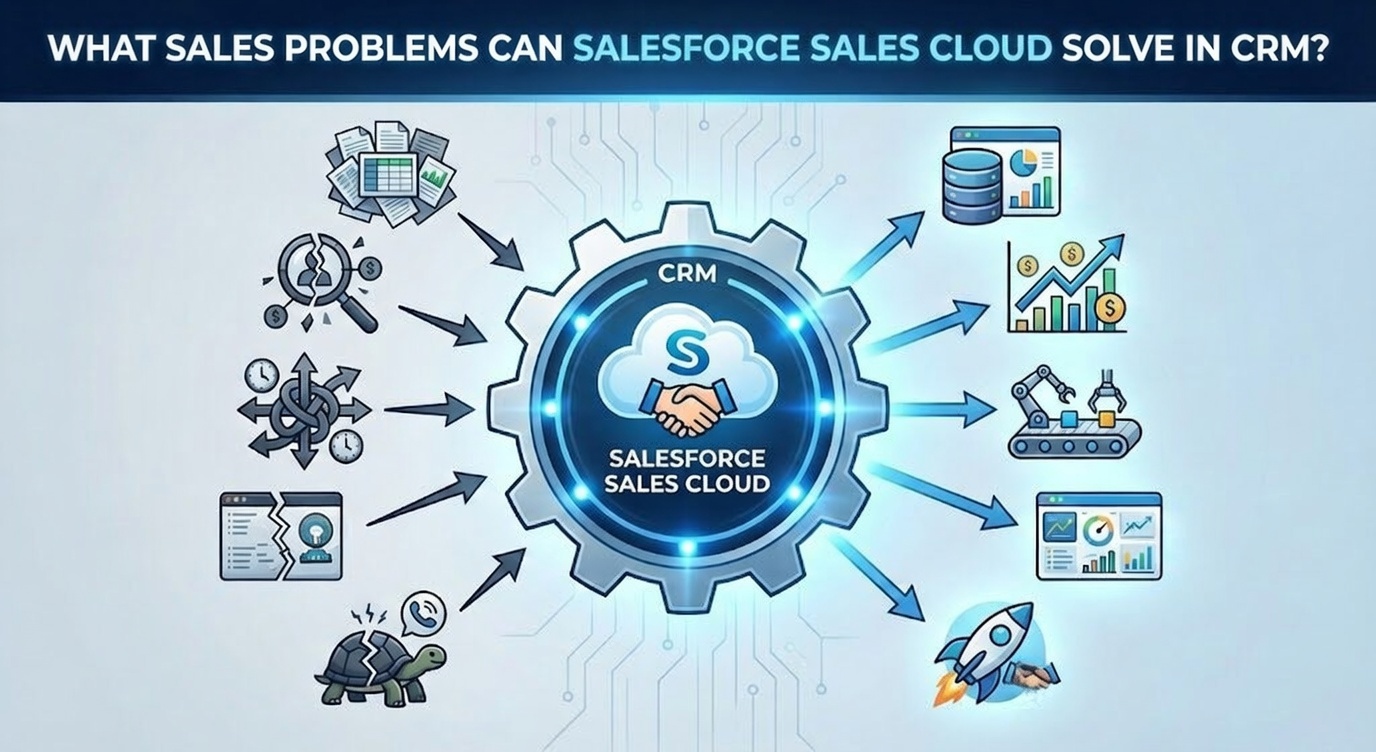
What Sales Problems Can Salesforce Sales Cloud Solve in CRM?
Customer Relationship Management (CRM), Social CRM
11 February 2026
1. Preface: Why Businesses Are Reassessing Sales-Focused CRMs
As sales processes become increasingly complex, businesses are gradually realizing that relying solely on Excel, email, or disparate tools can no longer support modern sales management needs.
CRM is no longer just used to “record customer data,” but is expected to become the core system that supports sales processes, data integration, and management decision-making.
Among many CRM solutions, Salesforce’s Sales Cloud is often included in businesses’ evaluations of sales-focused CRMs. This article will explain from a practical business perspective how Sales Cloud can solve common sales problems and its actual positioning within the CRM framework.
2. Product Positioning of Salesforce Sales Cloud
Sales Cloud is the core product within the Salesforce CRM ecosystem, focused on “sales processes and sales data management.” Its positioning is not as a single tool, but as the foundational platform for business sales operations.
Core of Sales Process Management
Systematically manage leads, opportunities, and the sales pipeline, rather than relying solely on manual reporting.
Centralized Customer and Sales Data
Establish a single source of truth for data, avoiding fragmentation across different tools and individuals.
Scalable CRM Architecture
Able to integrate with future marketing, service, or data analytics needs.
3. Common Sales Management Issues in Businesses
Before implementing CRM, most businesses have encountered the following sales management challenges:

Sales Progress is Hard to Track
Sales reports are not submitted in real time, making it difficult for managers to understand the actual situation promptly.

Inconsistent Processes and Standards
Different salespeople have their own methods, leading to challenges in handovers and management.

Customer Data is Fragmented
Contact records, quotes, and interaction histories are scattered across email, Excel, or personal notes.
Lack of Usable Management Data
Even if data is available, it is difficult to convert it into actionable decision-making insights.
4. How Sales Cloud Supports the Sales Process
One of the key purposes of implementing CRM in businesses is to ensure that the sales process is no longer entirely dependent on individual experience, but can be clearly recorded and managed.
Salesforce Sales Cloud’s design for the sales process does not focus on providing a fixed methodology, but rather on helping businesses “systematize” their existing processes.
In practice, Sales Cloud mainly supports the sales process from the following perspectives:
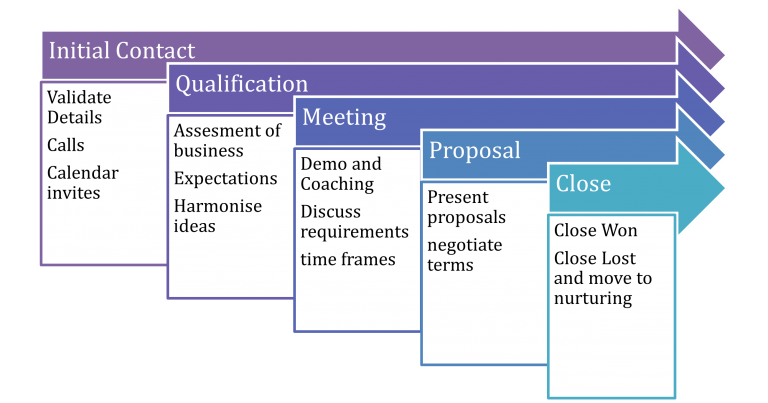
Clearly Define Sales Stages
Businesses can set opportunity stages according to their sales model, ensuring consistent standards for progress evaluation.
Centralized Tracking of Sales Activities
Customer contacts, follow-ups, and key interactions can be centrally recorded to avoid information fragmentation.
Reduce Dependence on Individuals
When processes and records are stored in the system, handovers and collaboration become smoother.
Establish a Foundation for Ongoing Optimization
Once processes are structured, managers can identify bottlenecks and continuously improve.
Overall, the value of Sales Cloud in the sales process lies in making the process visible, trackable, and capable of long-term optimization, rather than changing a business’s original sales methods.
5. Sales Data Centralization and Visualization
In addition to process management, another key value of Sales Cloud is in making sales data “visible.”
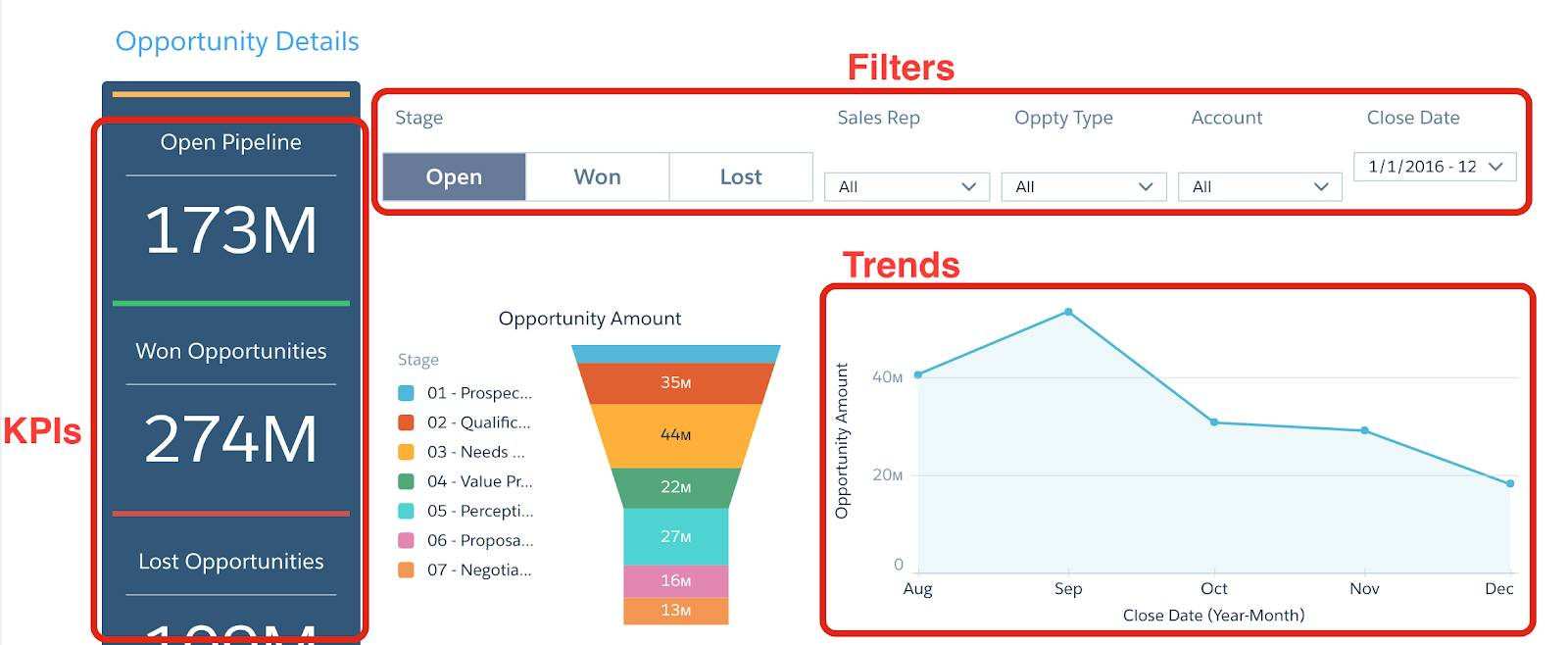
Real-Time Sales Pipeline View
Managers can quickly grasp the distribution of opportunities at each stage.
Transparency of Sales Activities
Contact records and follow-up statuses are presented in a centralized manner.
Customizable Reports and Dashboards
Key metrics are displayed according to the needs of different roles.
6. Sales Forecasting and Decision-Making Support
Once sales data is systematically managed, the value of CRM extends from being a “recording tool” to “management decision support.”
Salesforce Sales Cloud’s role at this level is to help businesses use a consistent data foundation to clearly understand the actual sales situation and future possibilities.
Sales Cloud’s support in sales forecasting and management decision-making is mainly reflected in the following aspects:
Establish a Consistent Sales Forecasting Foundation
Sales forecasts are based on actual opportunity and process data, rather than relying solely on manual estimates.
Real-Time Sales Status Tracking
Managers can clearly see the distribution and changes of opportunities at each stage, rather than compiling results after the fact.
Support for Resource and Goal Adjustments
Helps assess whether staffing, sales focus, and goal setting are reasonable.
Enhance Decision-Making Transparency
Decision-making is based on system data, reducing information gaps and the risks of subjective judgment.
Overall, the value of Sales Cloud at this level is not to “make decisions for managers,” but to base management decisions on consistent, traceable sales data. This is why many businesses start to focus on CRM applications for management as their sales scale expands.
7. Differences Between Salesforce and Other CRM Types
Compared to entry-level or packaged CRMs, the difference of Sales Cloud primarily lies in the platform design.

Higher Process Flexibility
Can continuously adapt to the changing sales model of the business.

Excellent Data Model Extensibility
Suitable for organizations with increasingly complex customer structures.

Mature Integration Capabilities
Can integrate with marketing, service, and external systems.
8. Which Businesses Should Consider Evaluating Sales Cloud
Sales Cloud is not designed for all businesses. In practice, it is more suitable for the following situations:
- The sales process is already relatively complex
- Customer data needs to be used across departments
- The business views CRM as a long-term core platform, rather than a short-term tool
If a business only needs basic lead management or simple processes, there are other lighter options on the market worth evaluating.
9. Conclusion: The Actual Value of Sales Cloud in CRM
The value of Salesforce Sales Cloud in CRM lies not in the number of features, but in its platform-based design, allowing businesses to integrate sales processes, customer data, and management decisions into a single, scalable structure.
Whether Sales Cloud is suitable for implementation depends on the business’s sales maturity, data needs, and future development direction. For organizations that want CRM to grow with the business and support cross-department collaboration, Sales Cloud is often a worthwhile option to deeply evaluate.
If you’d like to learn more about Salesforce Sales Cloud’s product positioning and application methods, you can refer to our Salesforce product introduction page. We also offer Salesforce-related consulting and implementation services to assist businesses from demand assessment and process planning to actual deployment.
If your business is reassessing its CRM or sales management system, feel free to contact us via the Contact Us page, where our consultant team can help you evaluate the most suitable CRM and Salesforce implementation strategy.
Further Reading
Related Articles
Enterprise AI MarTech Trends Analysis 2024-2029 Outlook Report
From AI content productivity tools to a core engine for revenue growth and marketing transformation
*The PDF will be sent directly to your inbox.