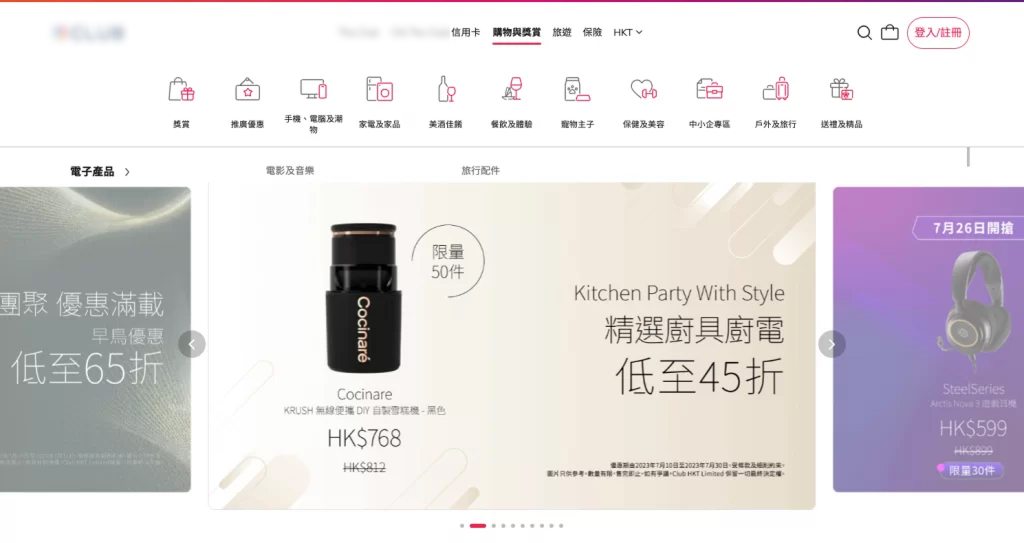
Adobe Commerce, Adobe Experience Manager (AEM), and Adobe Target integration implementation empowers a full upgrade of Hong Kong eCommerce platforms
Customer Introduction:
The client is a membership-based e-commerce platform where users earn points through daily spending to redeem rewards and enjoy exclusive deals. Covering categories like travel, electronics, and dining, it partners with multiple brands to create a robust member ecosystem. Through its website and app, it delivers personalized recommendations and promotions, driving engagement and conversions.
Solution: AEM Sites, Adobe Commerce (Magento), Adobe Target
1. Customer Challenges and Project Background
This major e-commerce platform based in Hong Kong has a large membership base and a robust rewards program, frequently collaborating with various brands to offer exclusive deals. As the business expanded rapidly, its original digital infrastructure began to struggle, making it difficult to support increasingly complex operations.
They faced several key pain points:
- Their main site, shopping mall, and sub-sites used different systems, causing content fragmentation and inconsistent brand presentation.
- The original platform lacked multi-brand and membership tiering capabilities, limiting marketing flexibility.
- There were no personalized recommendations or audience segmentation tools, resulting in missed conversion opportunities.
To resolve these issues, the client opted for a full upgrade by adopting Adobe Commerce, AEM, and Adobe Target. Their goal was to build an integrated, scalable digital platform capable of delivering truly personalized experiences—marking their transformation from a fragmented to a unified architecture.
2. Digital Transformation Needs of the Hong Kong eCommerce Market
As competition in Hong Kong and the Asia-Pacific eCommerce market intensifies, businesses need more than just a fully functional eCommerce system—they must build a complete digital experience platform.
Traditional eCommerce platforms often face challenges such as:
- Disconnection between content and product experience
- Lack of personalization capabilities
- Inefficient use of data
As a result, more companies are adopting AEM and eCommerce integration to achieve a unified upgrade of content, commerce, and experience.
Under this trend, AEM and eCommerce integration has become a key direction for eCommerce platform transformation.
3. Why AEM and eCommerce Integration Matters
Modern eCommerce is no longer just about “selling products,” but about “delivering experiences.”
Through AEM and eCommerce integration, businesses can achieve:
- Seamless integration of content and products
- Richer brand experiences
- Higher conversion rates
- More precise data-driven decision-making
Compared to traditional architectures, AEM and eCommerce integration enables marketing content to directly drive sales conversions.
4. The Three Core Systems: AEM, Adobe Commerce, and Adobe Target
A complete eCommerce experience platform typically consists of three core systems:

Adobe Commerce
Adobe Commerce provides eCommerce transaction capabilities, including:
- Product management
- Orders and inventory
- Multi-currency and cross-border commerce support
In complex business scenarios, Adobe Commerce implementation often requires deep customization aligned with business processes.

Adobe Experience Manager (AEM)
As a content and experience management platform, Adobe Experience Manager (especially Adobe Experience Manager Sites) is responsible for:
- Page management
- Content publishing
- Multilingual and multi-site management
Adobe Target
Adobe Target handles personalization and A/B testing, enabling:
- Audience segmentation
- Personalized recommendations
- Conversion rate optimization
Together, these three systems form a complete digital eCommerce experience ecosystem.
5. Three Key Personalization Use Cases
After implementing Adobe Target, the client began applying more flexible personalization strategies across different scenarios, using A/B testing and AI-powered recommendations to optimize the overall experience. Here are three representative use cases they deployed:

Use Case 1: Homepage Visual A/B/n Testing with Auto Traffic Optimization
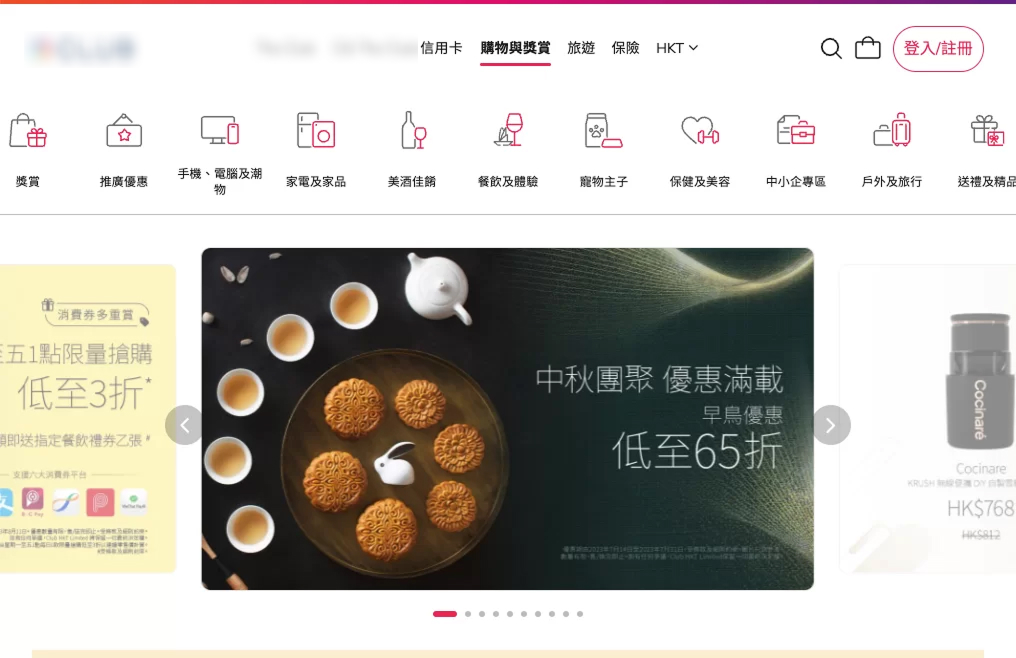
On the homepage banners of both the website and the app, multiple visual themes were designed, such as:
- Member-exclusive promotions
- Hot-selling 3C products
- Limited-time offer notifications
Initially, the system randomly displayed different banner versions and enabled the Auto-Allocate feature, allowing Adobe’s AI to automatically learn the performance of each version and direct more traffic to the top-performing one. This approach helped the client quickly identify the most effective design for driving conversions, increasing both click-through rate and average order value.

Use Case 2: Segmented Content Based on Membership (Co-branded Card Campaign)
Based on whether a member has a co-branded credit card, the system automatically segments them into two groups:
- Cardholders: Shown content like “Exclusive 4% Cashback” and other cardholder-specific benefits
- Non-cardholders: Shown messaging such as “Apply now and get 4,000 bonus points” for recruitment
This type of identity-based content display made offers feel more relevant to each user, successfully boosting the conversion rate for co-branded card applications.

Use Case 3: Smart Product Recommendations on Product Pages
When users browse a particular product (e.g., in the 3C category), AI-generated product recommendations or popular bundles automatically appear on the right side, such as:
- “Other customers also bought this accessory”
- “You might also like”
These recommendations require no manual setup—they are automatically generated based on a member’s browsing history, purchase behavior, and preferences of similar users. As a result, not only did cross-sell rates improve, but user session duration and interaction frequency also increased significantly.
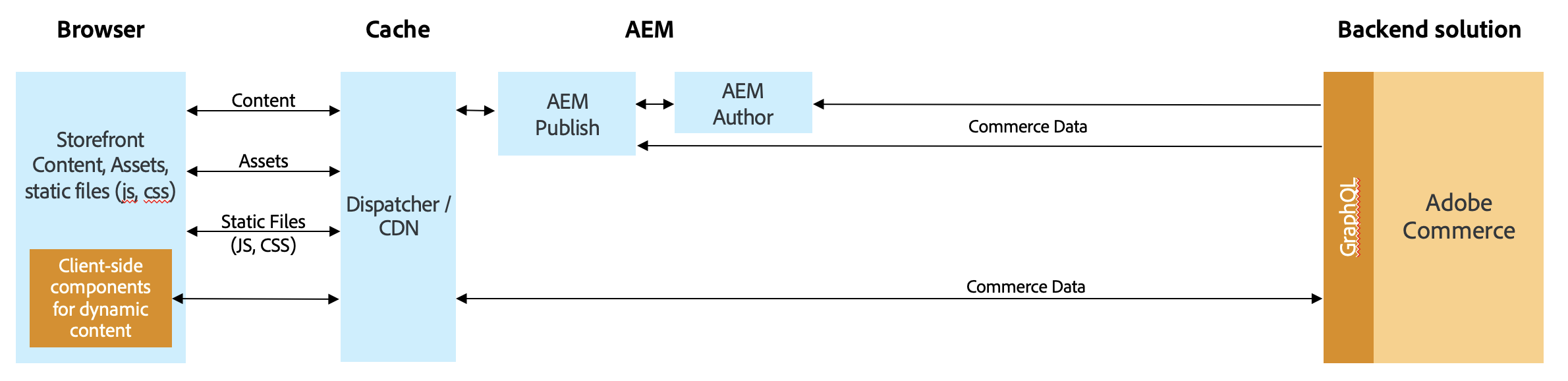
6. Core Architecture of AEM and eCommerce Integration
In modern architecture, AEM and eCommerce integration typically adopts a decoupled front-end and back-end model:
- AEM: responsible for front-end experience and content management
- Adobe Commerce: responsible for transactions and order processing
- API: connects content and eCommerce data
This AEM and eCommerce integration architecture offers the following advantages:
- Improved front-end flexibility
- Support for multi-channel content delivery
- Enhanced system scalability
With this approach, businesses can respond quickly to market changes.
7. Personalized Experience: The Key Role of Adobe Target
In the AEM and eCommerce integration architecture, Adobe Target plays a critical role.
With Adobe Target, businesses can:
- Display different content based on user behavior
- Deliver personalized product recommendations
- Run A/B testing to optimize conversion rates
For example:
- New users see brand introductions
- Returning users see exclusive offers
This level of personalization can significantly improve eCommerce conversion performance.
8. Business Value of AEM and eCommerce Integration
After successfully implementing AEM and eCommerce integration, businesses can gain multiple benefits:
- Enhanced user experience
- Higher conversion rates
- Content-driven sales
- Integrated data and marketing systems
In practice, AEM and eCommerce integration has become a key path for brand eCommerce transformation.
9. Implementation Roadmap: From Planning to Execution
To successfully implement AEM and eCommerce integration, businesses typically follow these steps:

9.1. Business and Technical Planning
Define clearly:
- eCommerce objectives
- User experience strategy
- System architecture design

9.2. System Integration and Development
Includes:
- API development
- Front-end and back-end integration
- Data synchronization

9.3. Testing and Optimization
Before launch, it is necessary to conduct:
- Functional testing
- Performance testing
- User experience optimization
With support from a professional team, smooth project execution can be ensured.
10. Client Feedback
After project completion, the client gave highly positive feedback on our collaboration. They specifically praised the seamless integration between AEM and Adobe Commerce, which successfully unified the e-commerce platform and content pages—resulting in a smoother browsing and shopping experience.
The client highlighted our team’s expertise in developing AEM templates and components, and the effective use of AEM SPA React architecture combined with Magento GraphQL. This allowed AEM pages to directly present product information and support shopping functions, enhancing the website’s interactivity and operational efficiency.
They described the collaboration as a very successful partnership and strongly recommended us as a trustworthy IT solutions provider:
“LeadsTech assists us in the development of AEM templates and components using the AEM SPA React Framework, as well as the integration of AEM and Magento using Magento graphQL, allowing AEM pages to display e-commerce products and implement shopping functions, and providing users with a seamless online shopping experience. It is a successful partnership with LeadsTech and I highly recommend LeadsTech as your IT service partner.”
This endorsement from a real client not only affirms our technical capabilities but also inspires us to continue delivering successful digital transformation results for more enterprises.
11. Outcomes and Benefits
After implementing the full Adobe solution suite, the client not only resolved system management issues but also significantly improved marketing performance and business results. Here are the key outcomes within six months of launch:
Improved Operational Efficiency
- After integrating the official website and e-commerce platform into AEM, content update speed tripled. Marketing campaigns now go from design to launch in just 1–2 days (previously 5–7 days).
- IT support demand dropped by over 40%, allowing the team to focus more on digital strategy and marketing optimization.
Enhanced Marketing with Personalization
- After implementing homepage A/B/n testing and recommendation modules via Adobe Target:
- Main banner click-through rate (CTR) increased by 20%
- Conversion rate among members shown recommendations rose by 15% - Segmented push notifications for co-branded credit card campaigns led to a 21% increase in application conversions.
Better User Experience and Engagement
AEM and Commerce integration enhanced website performance:
- Product page load time reduced by approximately 45%
- Average time on site increased by 18%
- Average pages viewed per visitor rose to 4.2 (a 25% growth)
Growth in Sales and Member Engagement
- Cross-sell conversion rate in the product recommendation zone increased by 29%
- Average order value (AOV) increased by about 17%
- Monthly login frequency among active members grew by 26%, contributing to higher repurchase rates