
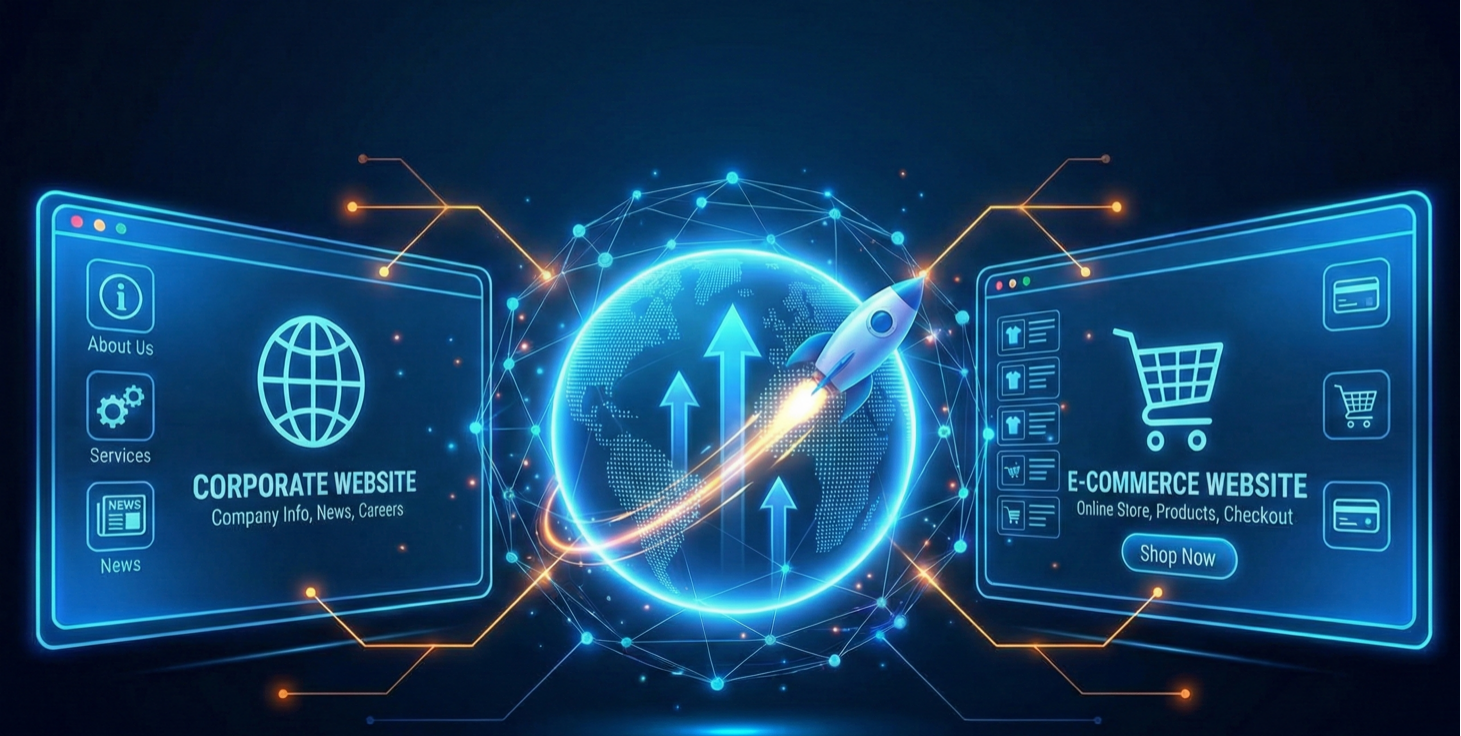
Integrated Website + eCommerce Strategy: Dual Engines for Global Growth
Adobe Commerce (Magento), E-Commerce, e-commerce Platforms
20 March 2026
1. Why Website and eCommerce Silos Are Limiting Global Growth
Among many global brands, websites and eCommerce platforms are often built independently by different teams and systems:
- The website focuses on brand and content
- eCommerce focuses on transactions and conversions
This model may seem efficient in the early stages, but as the business grows, issues begin to emerge:
- Website traffic fails to convert effectively
- eCommerce lacks brand and content support
- User data is fragmented, preventing holistic insights
- Marketing and sales strategies are difficult to align
As a result:
There is always a gap between brand investment and conversion efficiency.
2. The “Dual Engine” Model for Global Expansion: Website + eCommerce Integration
Mature global brands no longer treat websites and eCommerce as separate systems, but instead as:
- Website: the engine for brand, content, trust, and customer acquisition
- eCommerce: the engine for conversion, transactions, and business efficiency
Together, they form the “dual engine” of global growth. The key is not choosing one over the other, but:
how to integrate website and eCommerce to amplify each other’s value.
3. Common Issues with Website and eCommerce Fragmentation
In practice, fragmentation often appears in the following ways:
- Users browse content on the website but must switch to a completely different eCommerce experience
- Lack of connection between content and products disrupts the conversion journey
- User behavior data cannot be tracked across systems
- Misalignment between marketing, brand, and eCommerce teams
These issues are fundamentally caused by fragmented systems and data, leading to a fragmented user experience.
4. What Are the Core Objectives of Website + eCommerce Integration?
Website and eCommerce integration is not just a technical merge, but a strategy built around three core objectives:

Unified User View
Understand the same user’s behavior across different touchpoints

Consistent Experience Design
Ensure brand, content, and transaction experiences remain seamless

Data-Driven Growth
Create a closed loop between content, marketing, and conversion
Only when all three are achieved can integration truly deliver business value.
5. Architecture Layer: How Website and eCommerce Work Together, Not Replace Each Other
The Website Is Not a “Subpage” of eCommerce
In global expansion scenarios, the website often serves to:
- Communicate brand story and value proposition
- Provide industry solutions and content education
- Drive SEO and organic traffic acquisition
Therefore, a more effective model is:
- The website acts as the content and experience hub
- eCommerce serves as the transaction and commerce capability layer
A Headless and API-Driven Integration Approach
Through APIs and a service-oriented architecture, businesses can:
- Enable the website to pull product and pricing data from eCommerce
- Flexibly combine content and products
- Deliver differentiated experiences across different markets
6. Data Layer: Connecting User and Behavioral Data
From “Traffic Data” to “User Data”
The key to integration lies in answering:
- What content the same user viewed on the website
- Whether they later entered eCommerce and completed a purchase
- Which content actually drove conversions
- A unified data standard shared between website and eCommerce
- Cross-system tracking of behavioral events
The Role of CDP in Integration
With a CDP, businesses can:
- Unify user identities
- Integrate content, browsing, and transaction data
- Enable personalization and automation
7. Experience Layer: From Fragmented Touchpoints to a Unified Customer Journey
Content-Driven Conversion Experience
Typical characteristics of an integrated experience include:
- Seamlessly embedding products or solutions within content pages
- Dynamically recommending relevant content and products based on user interests
- Highlighting different priorities across different markets
Personalization and Intelligent Recommendations
Once the website, eCommerce, and data are integrated, businesses can:
- Dynamically adjust content based on user behavior
- Provide personalized product and promotion recommendations
- Increase overall conversion rates and average order value
8. Technical Implementation: Enterprise-Level Integrated Architecture
In global expansion practices for mid-to-large enterprises, a typical integrated architecture includes:
- An enterprise-grade CMS (e.g., AEM, Magnolia) as the content hub
- Adobe Commerce Cloud as the eCommerce core
- Analytics + CDP as the data and insights layer
- Marketing Automation to drive ongoing conversions
This architecture emphasizes:
decoupled modules, unified data, and coordinated experiences.
9. Integration Strategies for Website + eCommerce at Different Growth Stages
Stage 1: Early Global Expansion
- Goal: Validate the business model
- Recommendation: Basic website + lightweight eCommerce, with early data standard planning
Stage 2: Scaled Growth
- Goal: Improve conversion efficiency
- Recommendation: Integrate website and eCommerce experiences, unify data
Stage 3: Brand Building and Advanced Operations
- Goal: Long-term growth
- Recommendation: Enterprise-level integrated platform with enhanced personalization and automation
10. Conclusion: Website + eCommerce Integration Is the Foundation for Long-Term Growth
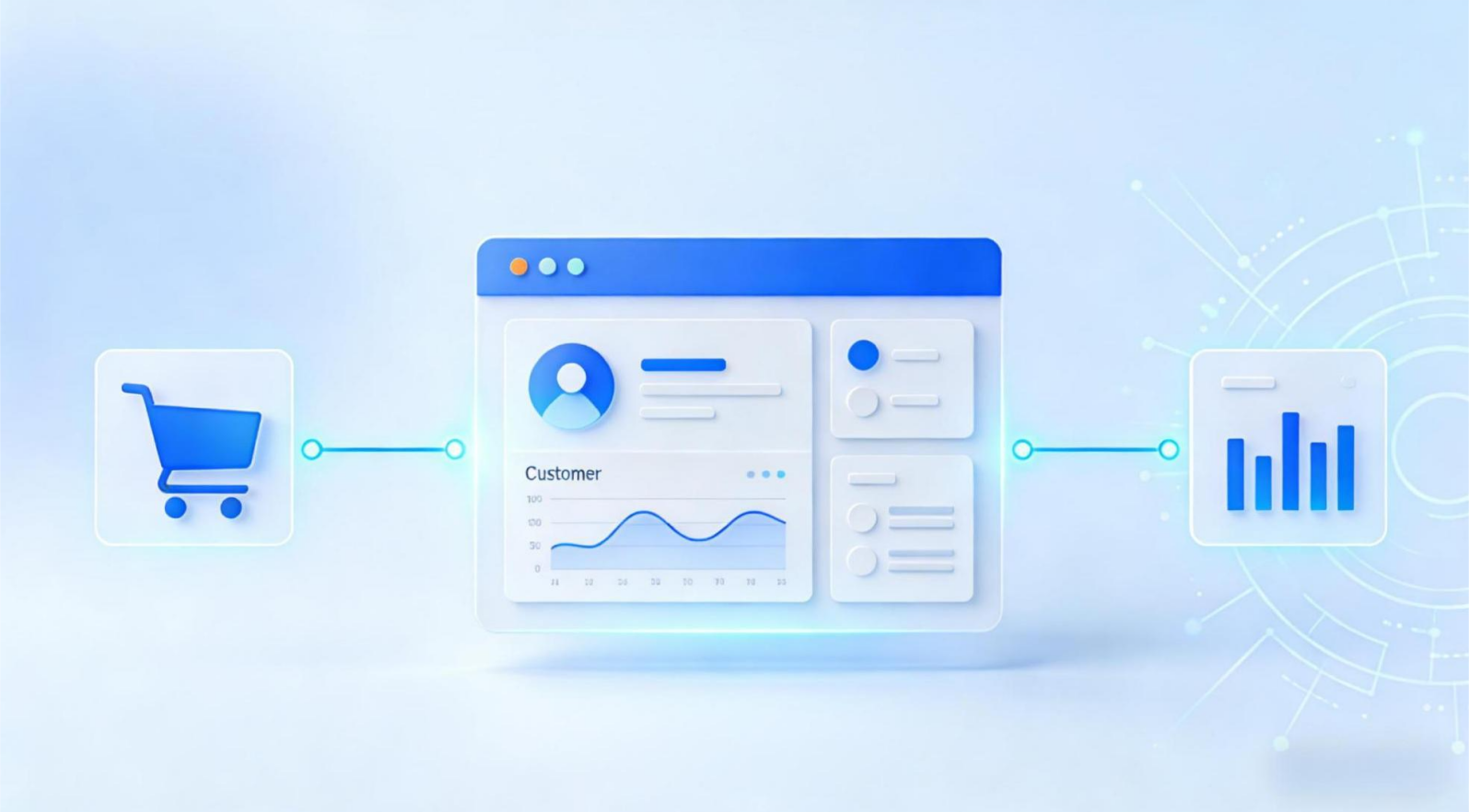
For global brands, website + eCommerce integration is not just an “upgrade project,” but:
- The foundation of brand building
- A prerequisite for data-driven growth
- The core platform for global operations
The earlier integration is implemented, the lower the marginal cost of future growth.
If you find that:
- Website traffic is difficult to convert
- eCommerce lacks brand and content support
- Data is fragmented and decisions rely on intuition
Then the issue is likely not execution, but overall architecture design.
We welcome the opportunity to work with you to systematically plan your website and eCommerce integration strategy and build true dual engines for global growth.
Contact Us: Talk to our consulting team about integration planning
Product Page: Explore enterprise website and Adobe Commerce integration solutions
Further Reading
References
Related Articles
Enterprise AI MarTech Trends Analysis 2024-2029 Outlook Report
From AI content productivity tools to a core engine for revenue growth and marketing transformation
*The PDF will be sent directly to your inbox.