
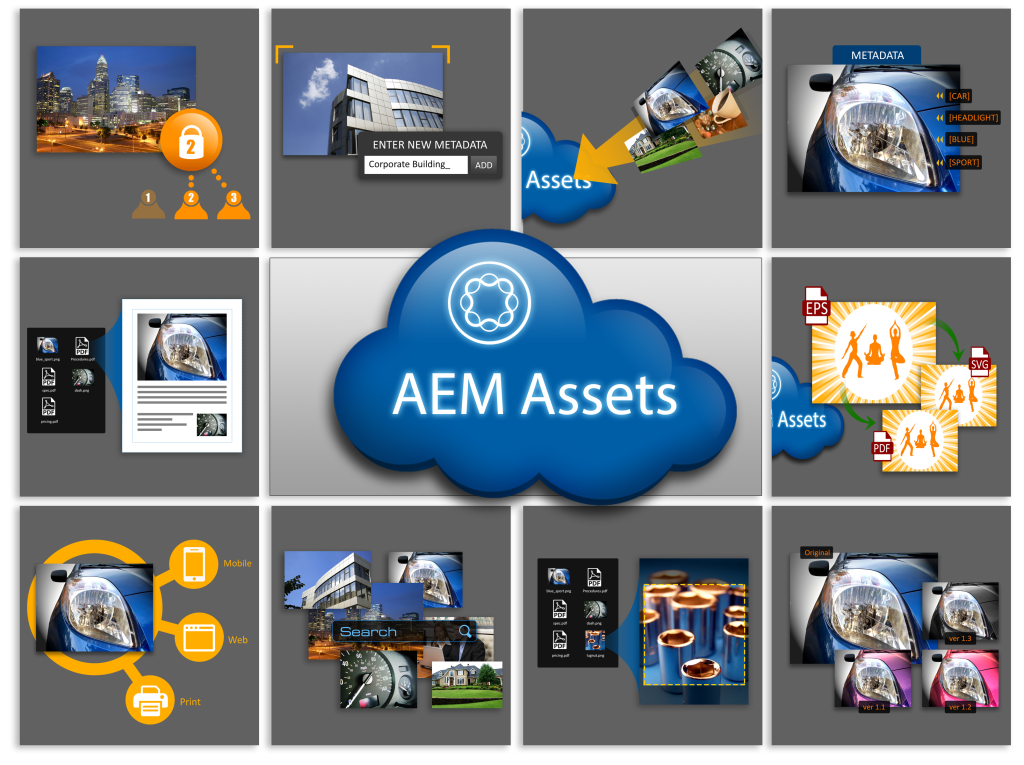
Which Companies Should Use AEM Assets? Enterprise DAM Implementation Guide
AEM Asset, Digital Asset Management (DAM)
15 April 2026
1. Why Enterprises Need DAM Digital Asset Management Systems
As enterprise content scales rapidly, the volume of digital assets — images, videos, product materials — is growing explosively. Without unified management, these assets are scattered across different systems, making reuse and management difficult.
In this context, DAM digital asset management has become a critical component of enterprise digital transformation.
Through a well-established DAM system, enterprises can:
- Centrally manage brand materials
- Improve content reuse efficiency
- Reduce duplicate production costs
- Enhance global content consistency
For global companies, DAM digital asset management is the foundation that supports worldwide marketing efforts.
2. Asset Management Challenges for Global Companies
In global operations, enterprises typically face complex asset management challenges:
Examples:
- Teams across multiple countries using different materials
- Inconsistent brand asset versions
- Content updates failing to sync in a timely manner
- Files scattered across multiple systems
These issues make DAM digital asset management especially critical.
In cross-border digital asset management scenarios, without a unified platform, enterprises struggle to ensure brand consistency and operational efficiency.
3. The Role of AEM Assets in DAM
AEM Assets is one of the leading enterprise digital asset management platforms.
It is not merely a resource storage tool — it is a comprehensive DAM digital asset management solution.
Its core capabilities include:
- Centralized asset management
- Metadata management and search
- Multi-format automatic processing
- Permissions and workflow control
Combined with content systems, AEM Assets can achieve a true end-to-end DAM digital asset management loop.
4. 7 Key Application Scenarios of DAM Digital Asset Management
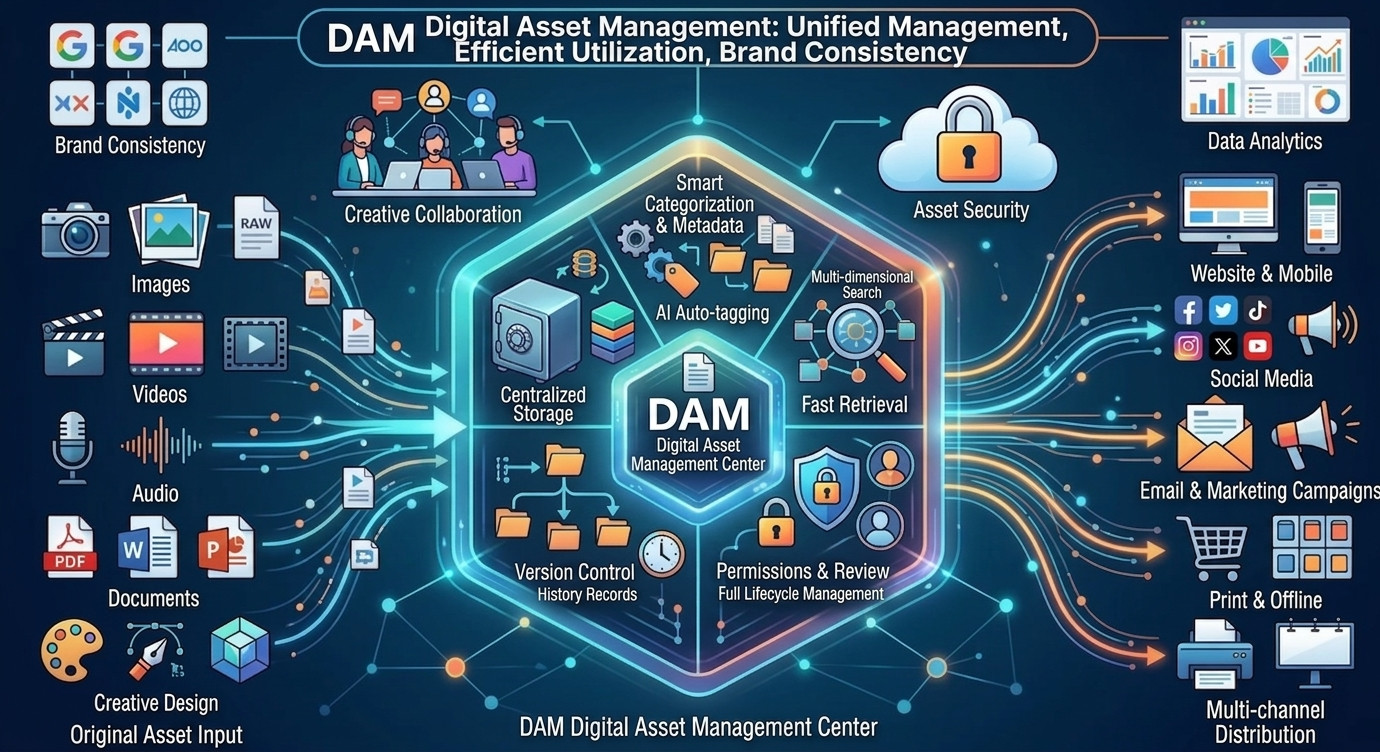
In actual business operations, DAM digital asset management primarily applies to the following 7 scenarios:

4.1 Global Brand Asset Management
Enterprises can centrally manage brand images, videos, and design materials, ensuring consistent use worldwide.

4.2 Multilingual Content Support
Through a unified asset library, different countries can quickly access and localize content.

4.3 E-Commerce Product Asset Management
In e-commerce scenarios, DAM digital asset management can support product image management, video display materials, and marketing content assets.

4.4 Marketing Content Reuse
Marketing teams can reuse existing materials, improving efficiency and reducing costs.

4.5 Content and CMS System Integration
Through AEM and DAM integration, enterprises can directly apply assets to website content, achieving seamless connections between content and assets.

4.6 Multi-Team Collaboration
Teams across different regions can share the same asset library, improving collaboration efficiency.

4.7 Data-Driven Content Optimization
By analyzing asset usage, enterprises can optimize their content strategies.
5. Value Delivered by AEM and DAM Integration
In enterprise architecture, combining AEM with DAM significantly enhances content management capabilities.
Through AEM and DAM integration, enterprises can achieve:
- Unified management of content and assets
- Improved content publishing efficiency
- Multi-channel content distribution support
- More consistent user experience
This integrated capability elevates DAM digital asset management from a tool to a core enterprise platform.
6. Which Companies Are Best Suited for DAM Deployment
The following types of companies are especially well-suited for DAM digital asset management systems:
- Global brand enterprises
- Enterprises with large-scale content production
- E-commerce and marketing-driven enterprises
- Multi-country operating enterprises
For these enterprises, DAM digital asset management can not only improve efficiency but also enhance brand competitiveness.
7. Key Points for Implementing a DAM System
To successfully implement DAM digital asset management, enterprises need to focus on the following aspects:
7.1. Asset Classification and Tagging System
Establishing a clear classification structure helps with fast asset lookup and reuse.
7.2. Workflow and Permissions Management
Ensuring different roles can collaborate efficiently while maintaining data security.
7.3. System Integration Capabilities
DAM systems need to integrate with CMS, e-commerce platforms, and marketing systems to form a complete ecosystem.
7.4. Long-Term Operations and Optimization
DAM is not a one-time project — it requires continuous optimization and operation.
8. Conclusion: From Asset Management to Content-Driven Growth
As enterprise content scales continue to expand, DAM digital asset management is becoming a critical part of digital transformation.
Through systematic DAM digital asset management, enterprises can achieve:
- Unified global content management
- Improved operational efficiency
- Multi-channel content distribution support
- Business growth acceleration
For global companies, this is not merely a technology upgrade — it is the foundation for global brand building.
Closing
If your enterprise is facing challenges such as scattered content, difficult asset management, or inconsistent global branding, deploying a professional DAM system is a critical step.
Welcome to contact LeadsTech’s expert team to learn how to build an enterprise-grade digital asset management platform with AEM Assets.
Contact Us: DAM Digital Asset Management Solutions
Product Page: Learn About AEM Assets Enterprise DAM System
Further Reading and Reference Links
Further Reading
- Adobe CMS (AEM) Deep Dive: Enterprise Digital Experience Platform
- Multi-Region Content Management Best Practices: Global Content Unity with Local Flexibility
- Cross-Border E-Commerce Official Website Solutions: AEM and Adobe Commerce Integration
Reference Links
Related Articles
Enterprise AI MarTech Trends Analysis 2024-2029 Outlook Report
From AI content productivity tools to a core engine for revenue growth and marketing transformation
*The PDF will be sent directly to your inbox.