
How to Evaluate Global Digital Service Partners: 10 Key Capabilities
Content Management System (CMS)
1 April 2026
- Why Choosing the Wrong Global Digital Service Partner Is More Risky Than Choosing the Wrong Tool
- Three Typical Types of Global Digital Service Providers
- Capability 1: Strategic Understanding of Global Expansion
- Capability 2: Website and Enterprise CMS Expertise
- Capability 3: Global Content and Multilingual Governance
- Capability 4: SEO, GEO, and Content Growth
- Capability 5: Data Analytics and Insights
- Capability 6: CDP and Data Integration
- Capability 7: Marketing Automation Execution
- Capability 8: System Architecture and Security Compliance
- Capability 9: Project Methodology and Delivery Governance
- Capability 10: Long-term Partnership and Capability Evolution
- Conclusion: Evaluating a Partner Means Choosing Your Future Capability Ceiling
- Why Choosing the Wrong Global Digital Service Partner Is More Risky Than Choosing the Wrong Tool
- Three Typical Types of Global Digital Service Providers
- Capability 1: Strategic Understanding of Global Expansion
- Capability 2: Website and Enterprise CMS Expertise
- Capability 3: Global Content and Multilingual Governance
- Capability 4: SEO, GEO, and Content Growth
- Capability 5: Data Analytics and Insights
- Capability 6: CDP and Data Integration
- Capability 7: Marketing Automation Execution
- Capability 8: System Architecture and Security Compliance
- Capability 9: Project Methodology and Delivery Governance
- Capability 10: Long-term Partnership and Capability Evolution
- Conclusion: Evaluating a Partner Means Choosing Your Future Capability Ceiling
1. Why Choosing the Wrong Global Digital Service Partner Is More Risky Than Choosing the Wrong Tool
In global digital transformation projects, many companies focus on:
- Which CMS to choose
- Whether to implement a CDP
- Whether to adopt marketing automation tools
However, the root cause of project failure is often not the tools, but the mismatch in the service provider’s capabilities.
Common consequences include:
- Systems that work but cannot scale
- Projects delivered but impossible to operate effectively
- Forced rebuilds every 1–2 years
Tools can be replaced, but poor architecture, weak methodology, and limited capability boundaries can constrain long-term growth.
2. Three Typical Types of Global Digital Service Providers
Before evaluation, companies should understand the differences among service providers in the market.
2.1 Website/Execution-focused Providers
- Strength: Low cost and fast delivery
- Limitation: Focused mainly on design and development
- Risk: Cannot support long-term global operations
2.2 Technology Implementation Providers
- Strength: Strong familiarity with systems and tools
- Limitation: Limited understanding of business and growth
- Risk: Capability ceiling reached once the system goes live
2.3 Global Digital Partner-type Providers
- Strength: Cover strategy, architecture, and execution
- Characteristic: Focus on long-term capability building
- Value: Reduce trial-and-error costs and support sustainable growth
The “10 capability dimensions” in this article are built around the third type.
3. Capability 1: Strategic Understanding of Global Expansion

A qualified global digital partner must first understand not technology, but:
- Why the company is expanding globally
- Priority markets and rollout pace
- The role of website, content, and marketing in the overall strategy
If a provider only discusses “what features to build” but not “why they matter,” they are likely just an outsourcing vendor.
4. Capability 2: Website and Enterprise CMS Expertise
The website is the starting point of global digitalization.
Key evaluation points:
- Understanding of multi-country, multilingual website architecture
- Experience with enterprise CMS implementation
- Ability to plan evolution from lightweight to enterprise-level systems

Mature partners understand the use cases and limitations of enterprise CMS platforms like AEM and Magnolia, rather than applying one tool to all scenarios.
5. Capability 3: Global Content and Multilingual Governance
Multilingual capability is not just translation.
Key aspects to evaluate:
- Content structuring and reuse
- Cross-language content mapping and synchronization
- Collaboration between headquarters and regional teams
Without these, content management costs will quickly spiral out of control as scale increases.
6. Capability 4: SEO, GEO, and Content Growth
In global markets, content is a long-term asset.
A strong partner should understand:
- SEO is fundamentally about information architecture and content strategy
- Multilingual SEO requires systematic design
- In the generative AI era, whether content is understandable and citable (GEO) is critical
If a provider focuses only on keywords and backlinks, sustainable content growth is unlikely.
7. Capability 5: Data Analytics and Insights
Data capability is a key differentiator between a “web vendor” and a “digital partner.”
Key evaluation points:
- Ability to design a proper KPI framework
- Understanding of multi-market analytical complexity
- Experience with enterprise analytics platforms (e.g., Adobe Analytics)
If only basic reports are provided without actionable insights, data value cannot be realized.
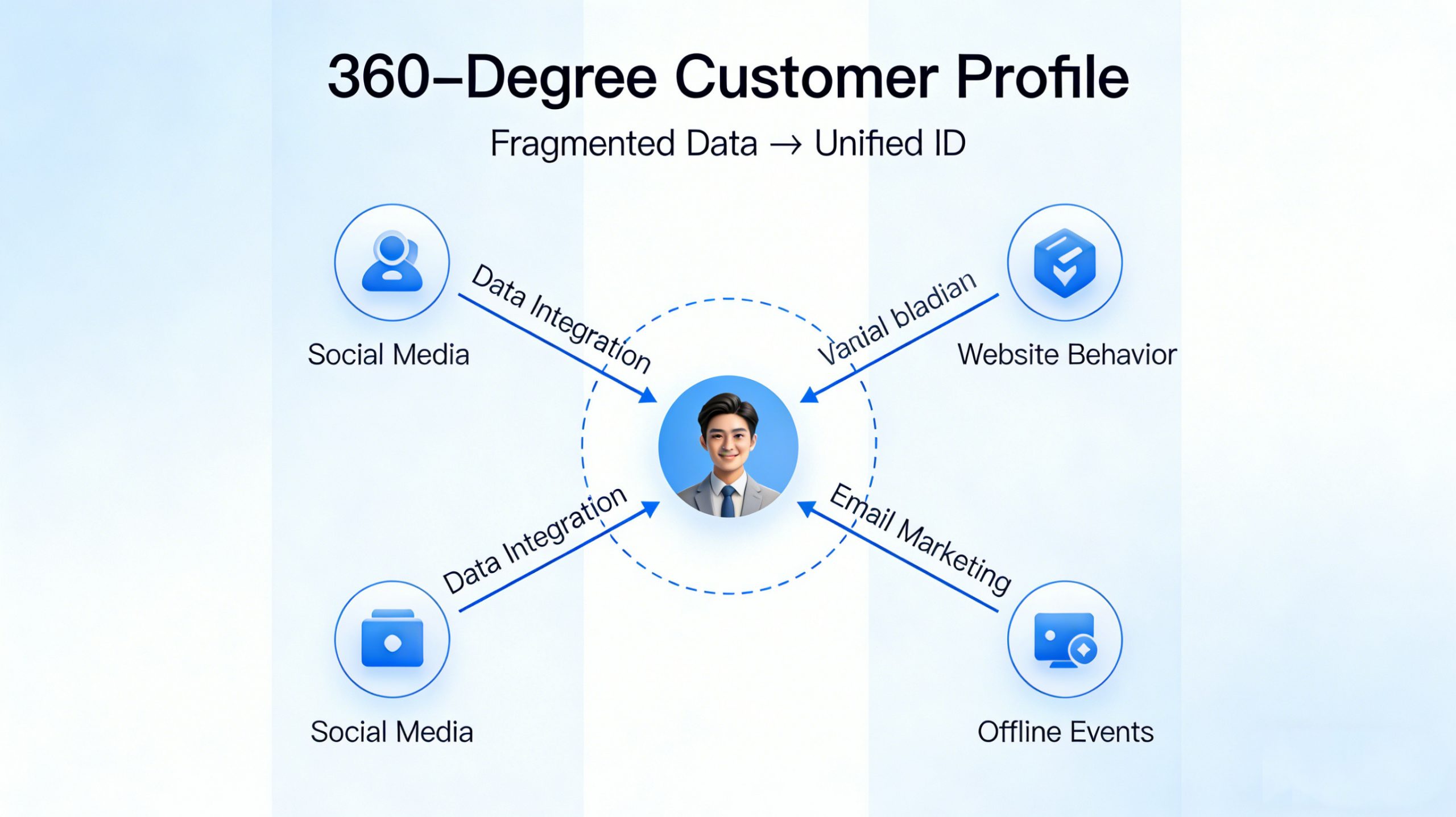
8. Capability 6: CDP and Data Integration
As business grows, data integration becomes essential.
A provider should be able to answer:
- How user data is unified and identified
- How website, e-commerce, and CRM systems are integrated
- How data supports personalization and automation
If CDP is treated merely as a system integration project rather than a business capability, ROI is often limited.
9. Capability 7: Marketing Automation Execution
Marketing automation projects often fail due to insufficient provider capability.
Key considerations:
- Whether automation is designed based on customer journeys
- Whether it integrates with sales processes
- Whether the provider has long-term optimization experience
Mature partners focus on building an automation system, not just implementing features.
10. Capability 8: System Architecture and Security Compliance
Global businesses face technical challenges such as:
- High traffic and concurrency
- Data security and privacy compliance
- Regulatory differences across regions
A provider’s enterprise architecture and security experience directly impacts brand risk and compliance.
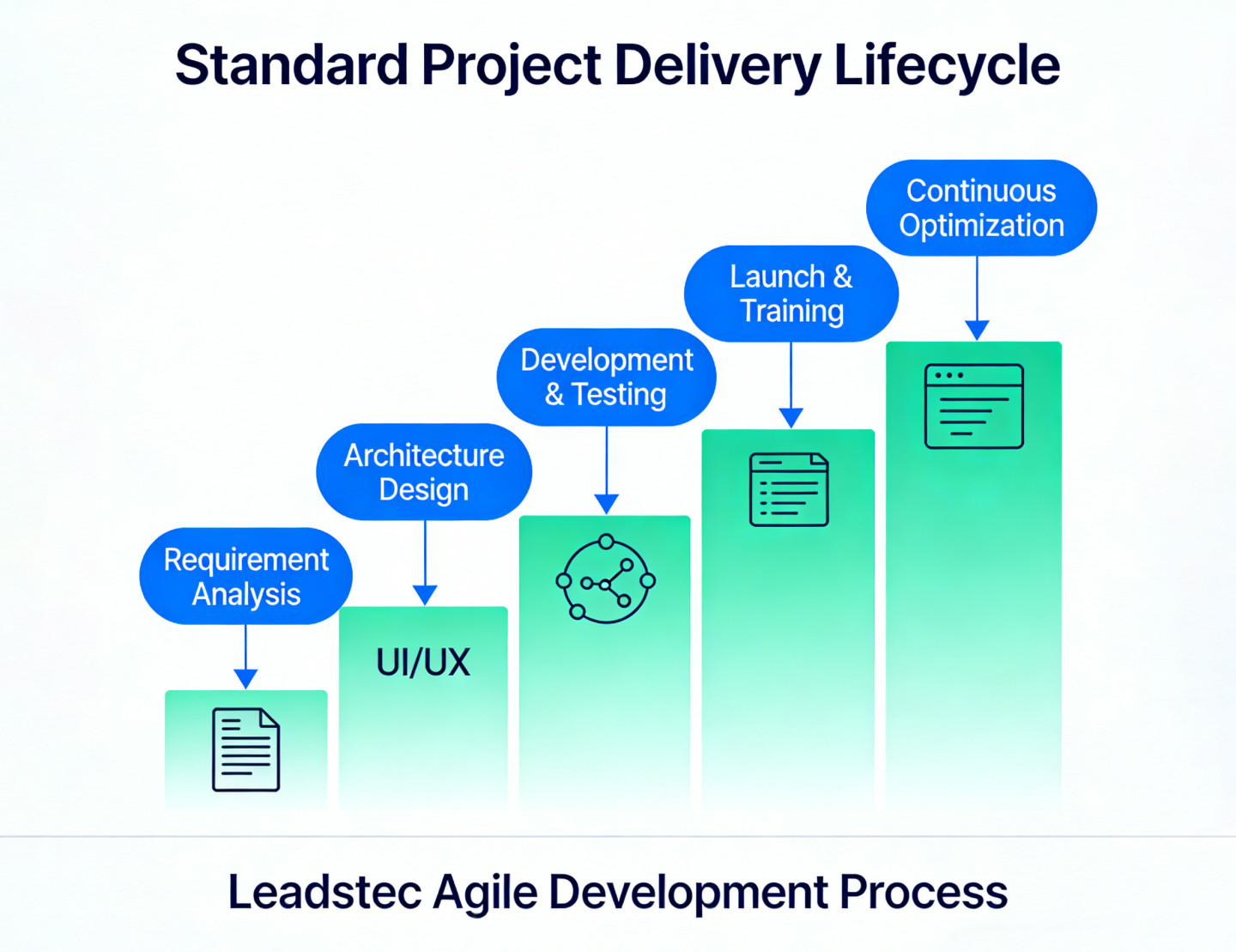
11. Capability 9: Project Methodology and Delivery Governance
In complex global projects, failures are often due to governance, not technology.
Mature providers typically offer:
- Clear project phases
- Controlled delivery cadence
- Cross-team collaboration experience
If a project relies heavily on individual experience without structured methodology, risks grow rapidly with scale.
12. Capability 10: Long-term Partnership and Capability Evolution
Global digitalization is not a one-time project.
Strong partners typically:
- Plan a 2–3 year evolution roadmap
- Help introduce advanced capabilities step by step
- Continuously adjust architecture and strategy as the business grows
This reflects not just technical strength, but a long-term partnership mindset.
13. Conclusion: Evaluating a Partner Means Choosing Your Future Capability Ceiling
Ultimately, there is one core question:
How far can this partner take you?
A truly valuable long-term partner should offer:
- Strategic thinking
- Architecture expertise
- Content and data capabilities
- Sustainable long-term support
This is not a cost decision—it is a strategic one.
Final Thoughts: From Outsourcing to Long-term Partnership
If you are:
- Planning a global website or digital upgrade
- Evaluating CMS, CDP, or marketing automation solutions
- Selecting or tendering service providers
We recommend moving beyond feature comparisons and evaluating partners systematically based on these 10 dimensions.
Feel free to contact us to explore how to build a digital capability system that truly supports global growth.
LeadsTech is the only partner in Greater China with the “Adobe Experience Manager Specialized” certification. We are also official partners of Salesforce, Magnolia, and HCL, providing world-class digital marketing services for global businesses, including UI/UX design, corporate website development, cross-border e-commerce platforms, and enterprise systems such as CMS, DAM, ERP, CRM, CDP, MA, and AEM.
Contact Us: Talk to our consultants about your global digital strategy
Services: Learn more about our enterprise CMS and global website solutions
Further Reading and References
Further Reading
- A Complete Guide to Choosing a Global Digital Partner: From Website to CDP and Marketing Automation
- Enterprise Website Guide: Handling High Traffic, Security, and Global Content Management
- Global Marketing Automation: From Strategy to Execution
References