

Leads Technologies and Adobe Co-Host Seminar on “Data × Content × Experience,” Highlighting AI-Powered Precision Marketing
Adobe Experience Cloud, Adobe Real-time CDP, AEM Sites, B2B Marketing, CDP
24 March 2026
1. Why Choosing the Wrong Partner Is the Biggest Hidden Risk in Global Expansion
During global expansion, many issues do not appear immediately but tend to surface after 1–2 years:
- Website becomes increasingly difficult to maintain
- Low efficiency in managing multilingual content
- Heavy SEO investment with limited returns
- Fragmented data with no unified customer insights
- Marketing automation tools are purchased but not effectively used
At the root, the issue is often not the tools, but that the initially chosen digital partner has overly limited capabilities.
If the partner can only “build a website” but cannot support content, data, and marketing systems afterward, rebuilding becomes inevitable.
2. The Fundamental Difference Between a Digital Expansion Partner and a Traditional Web Agency
Traditional web agencies typically focus on:
- Page design
- Frontend development
- Project delivery
A true digital expansion partner focuses on:
- The role of the website in the overall global strategy
- How content, data, and marketing form a closed-loop system
- Whether the technical architecture supports 3–5 years of growth
In short:
Web agencies deliver “projects”; digital partners deliver “capability systems.”
3. Capability 1: Whether the Website and CMS Have a Global Foundation
The website remains the starting point of digital global expansion.
The key evaluation is not “how good the design looks,” but:
- Understanding the complexity of multilingual and multi-country websites
- Whether the CMS supports structured content and scalable management
- Experience with enterprise-level permissions, workflows, and governance
Experienced partners are usually familiar with:
- Multi-site and multilingual architecture design
- Enterprise CMS platforms (such as AEM, Magnolia)
- Upgrade paths from lightweight CMS to enterprise platforms
If a partner only recommends a single tool without explaining future scalability, it usually indicates limited capability.
4. Capability 2: Understanding the Long-Term Value of Content, SEO, and GEO
A common issue in global websites:
“There is content, but it doesn’t become a long-term asset.”
A qualified partner should understand:
- SEO is not just keywords, but content structure and information architecture
- Multilingual SEO and hreflang require systematic design
- In the era of AI search, whether content can be properly understood and cited (GEO)
This requires understanding beyond technology:
- Content modeling
- Semantic clarity
- Consistency of brand messaging
Otherwise, the website cannot become a long-term growth asset.
5. Capability 3: CDP and Data Integration Capabilities
Once the website generates stable traffic, data challenges emerge:
- User data scattered across systems
- Inability to identify users across channels
- Disconnection between marketing and sales data
This is where CDP (Customer Data Platform) becomes critical.
A capable partner should help:
- Plan data collection and identity strategies
- Integrate website, e-commerce, and CRM data
- Lay the foundation for personalization and automation
If a partner can only “connect systems” but cannot explain how data will be used, value is unlikely to materialize.
6. Capability 4: Ability to Execute Marketing Automation for Global Markets
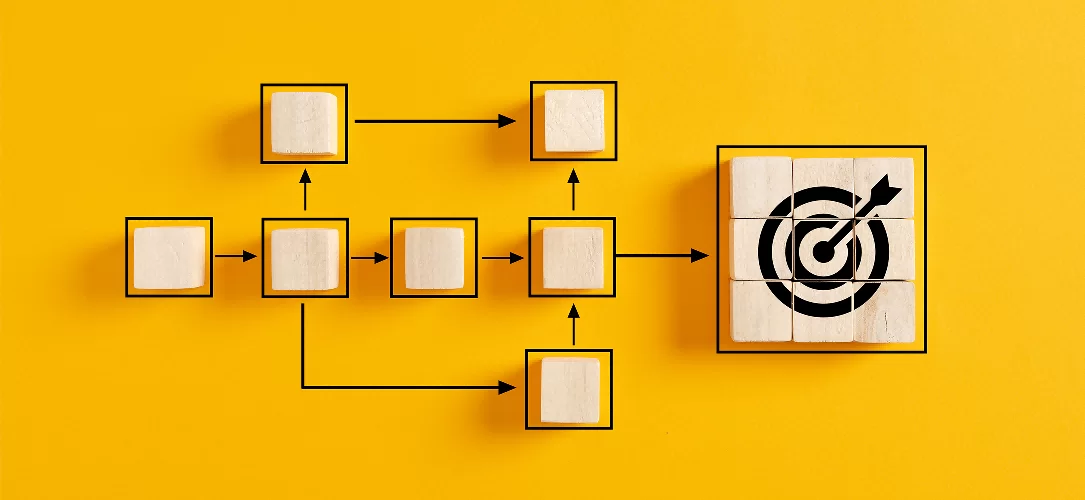
Marketing automation is often an ideal capability but also the most likely to fail.
Common reasons:
- Incomplete data foundation
- Scenarios disconnected from real business needs
- Lack of ongoing operation after implementation
Key evaluation points:
- Ability to design automation based on real customer journeys
- Integration of website content, behavioral data, and automation workflows
- Experience from implementation to operational execution
Mature partners focus on processes and organizational alignment, not just tools.
7. Capability 5: Overall Architecture and Long-Term Partnership Capability
Digital global expansion is an evolving process, not a one-time project.
Strong partners typically:
- Plan website, data, and marketing from an architectural perspective
- Introduce advanced capabilities as the business grows
- Maintain consistency across tools, content, and processes
They act more like an “external digital team” rather than a vendor.
8. Partner Selection Focus at Different Growth Stages
Stage 1: Initial Expansion
- Focus: Fast launch and market validation
- Requirement: Basic website + SEO capabilities
Stage 2: Multi-market Expansion
- Focus: Multilingual and multi-country content governance
- Requirement: CMS architecture and content capabilities
Stage 3: Scalable Growth
- Focus: Data integration, personalization, automation
- Requirement: End-to-end CDP + marketing automation capabilities
9. Conclusion: Choosing a Partner Means Choosing Your Capability Ceiling for the Next 3–5 Years

The challenge of global digitalization is not tools, but:
- Whether website, content, data, and marketing can form a system
- Whether it supports continuous growth instead of repeated rebuilding
In essence, choosing a partner means choosing:
Your company’s growth ceiling and trial-and-error cost for the next 3–5 years.
Conclusion: From Project Delivery to Long-Term Capability Building
If you are considering:
- Whether the website is just the first step
- Moving from CMS to CDP and marketing automation
- How to avoid rebuilding your digital architecture every two years
Now is the best time to systematically evaluate digital partners.
We welcome you to start from global website development and gradually build a digital blueprint covering CMS, data, and marketing automation.
- Contact Us: Discuss your global digital strategy with our consultants
- Product Page: Learn about enterprise website, CDP, and marketing automation solutions
10. Further Reading and References
Further Reading
Key Elements of Overseas Website Development: From Architecture to Content Strategy
Beyond Website Building: Using Professional CMS for Multilingual Operations
From SEO to GEO: How Content Is Understood and Cited by AI
References