
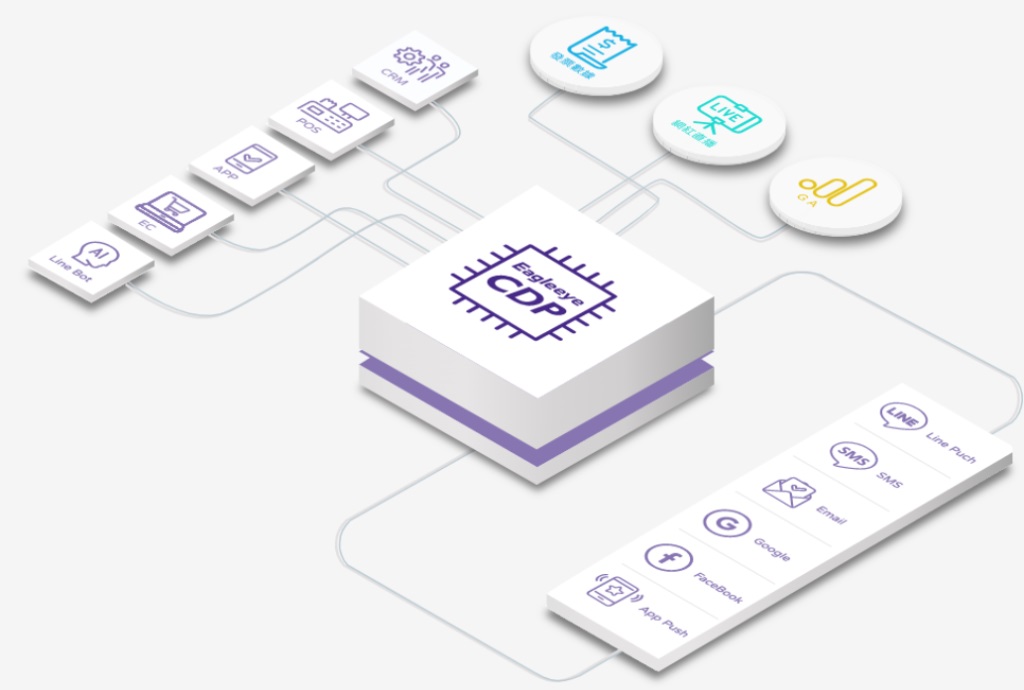
1. What Is a CDP: Definition and Differences from CRM/DMP
Definition
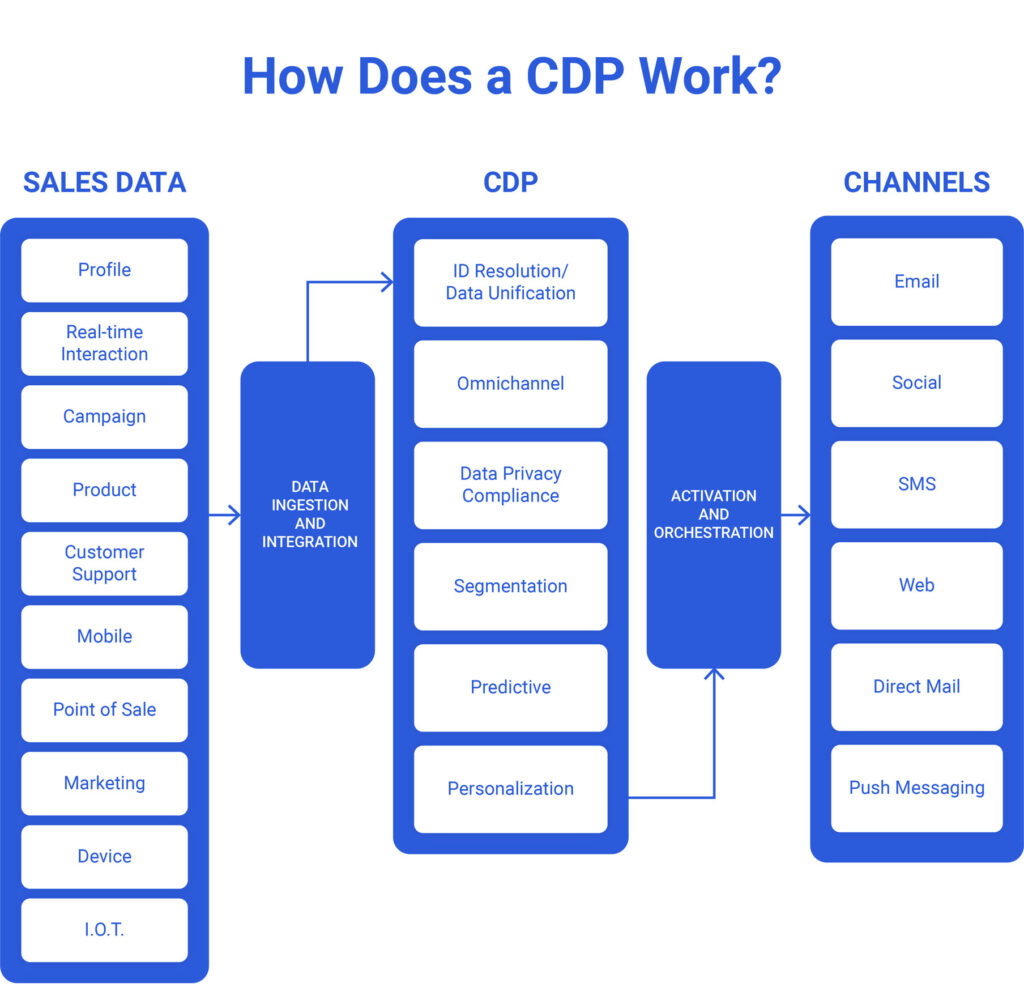
A Customer Data Platform (CDP) is a system that continuously and audibly unifies fragmented data from websites, apps, POS, EDM, customer service, and ad platforms into a single customer profile. This profile can then be activated in real time by marketing, product, and service teams.
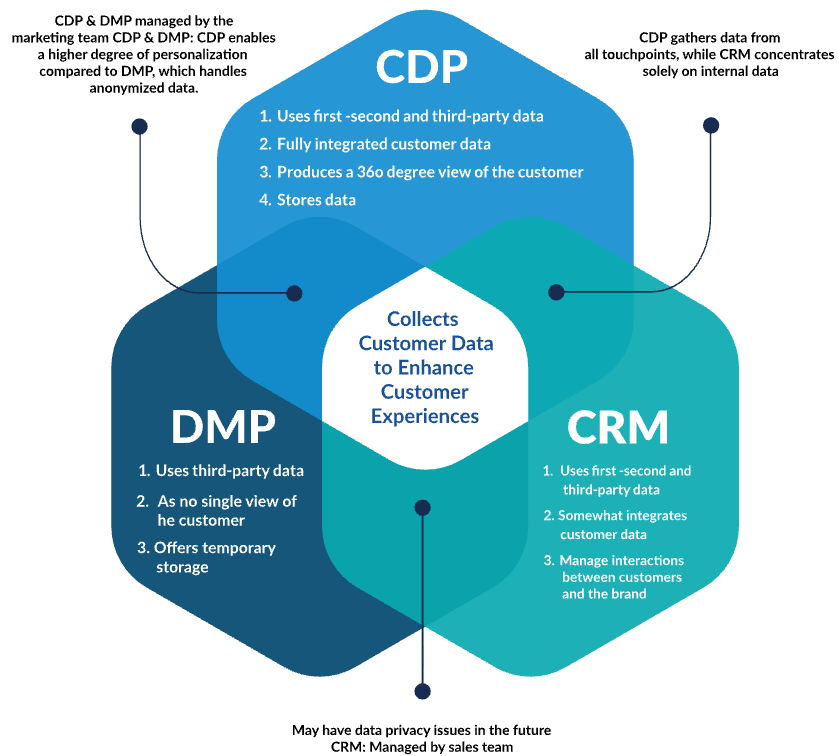
CDP vs. CRM
CRM focuses on sales, service processes, and contact records, while CDP focuses on cross-channel behavioral data and real-time audience activation.
CDP vs. DMP
DMPs rely on anonymous third-party cookies and audience buying; CDPs are built around first-party data, supporting consent management and long-term relationship building.
2. Why Taiwanese Enterprises Need a CDP in 2026
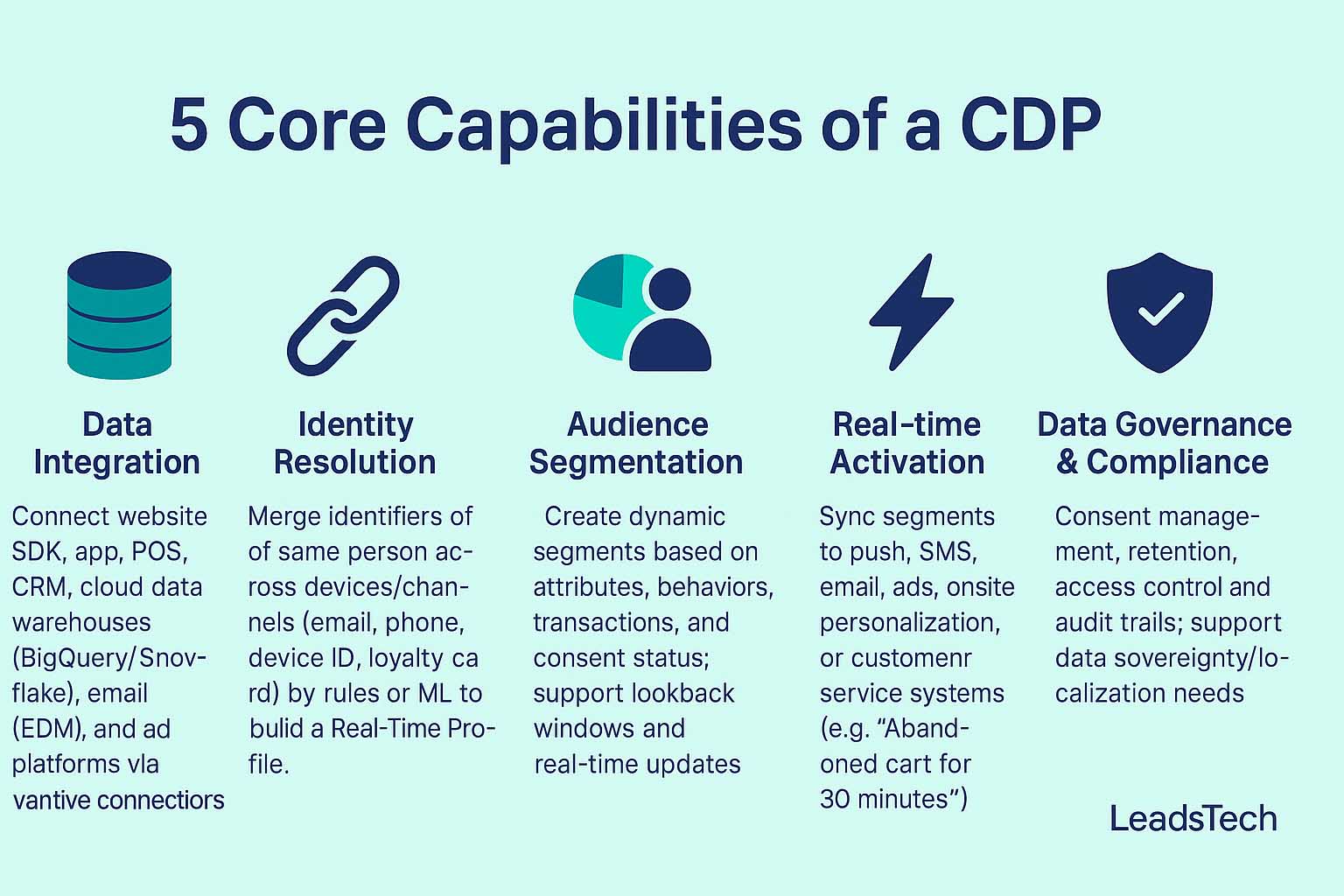
3. Five Core Capabilities of a CDP

Data Integration
Connects websites, apps, POS, CRM, data warehouses (BigQuery/Snowflake), EDM, and ad platforms through native connectors or APIs—maintaining data freshness.

Identity Stitching
Merges identifiers (email, phone, device ID, member ID) across devices and channels using rules or machine learning to form real-time customer profiles.

Audience Segmentation
Builds dynamic audiences based on attributes, behavior, transactions, and consent status; supports both historical lookback and real-time updates.

Real-Time Activation
Syncs audience segments to push, SMS, EDM, ads, on-site personalization, or customer service tools. Supports event-driven journeys (e.g., “cart abandonment after 30 minutes”).

Data Governance & Compliance
Manages consent, data retention, access control, and audit trails while ensuring data sovereignty and localization compliance.
4. Taiwan Implementation Scenarios: E-commerce/Retail, Finance, and O2O

E-commerce / Retail
- Pain Points: Scattered member data, poor cart recovery, manual ad list syncing.
- Solution: Integrate web/app/POS with EDM to create dynamic “high-intent” segments (e.g., viewed in 7 days + cart not purchased), triggering push + EDM + remarketing ads.
- KPIs: Recovery rate, repurchase rate, Average Order Value (AOV).

Finance / Insurance
- Pain Points: Strict compliance, complex consent management, fragmented product data.
- Solution: Build a centralized consent hub; trigger personalized journeys based on key events (e.g., policy simulation, form submission); write interaction results back to profiles for optimization.
- KPIs: Account opening/approval conversion rate, cross-sell ratio, audit efficiency.
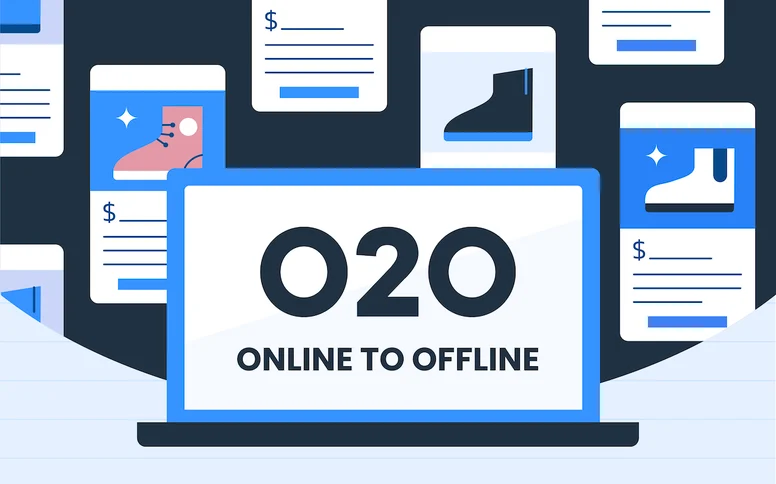
O2O / Chain Retail
- Pain Points: Disconnected online–offline data, lack of personalized promotions.
- Solution: Send POS and app transaction data to CDP, then trigger localized offers via push notifications based on geography and preferences; personalize in-store pages and app content.
- KPIs: Store visit rate, coupon redemption rate, membership upgrade rate.
5. Key Selection Criteria & Implementation Roadmap
5.1 Selection Criteria (Top 5 RFP Points)

Connectors & Latency
Native integration with web/app/CRM/EDM/data warehouse; event latency and freshness SLA.

Identity Stitching & Governance
Rules/ML-based merging, conflict resolution, visual governance, and anonymization support.

Real-Time Activation
Event triggers, real-time audience computation, cross-channel sync (push/SMS/EDM/ads/on-site).

Compliance
Consent management, audit reports, data sovereignty/localization, access control.

Cost & ROI
Licensing model (events/profiles), manpower for setup/maintenance, TCO, and payback period.
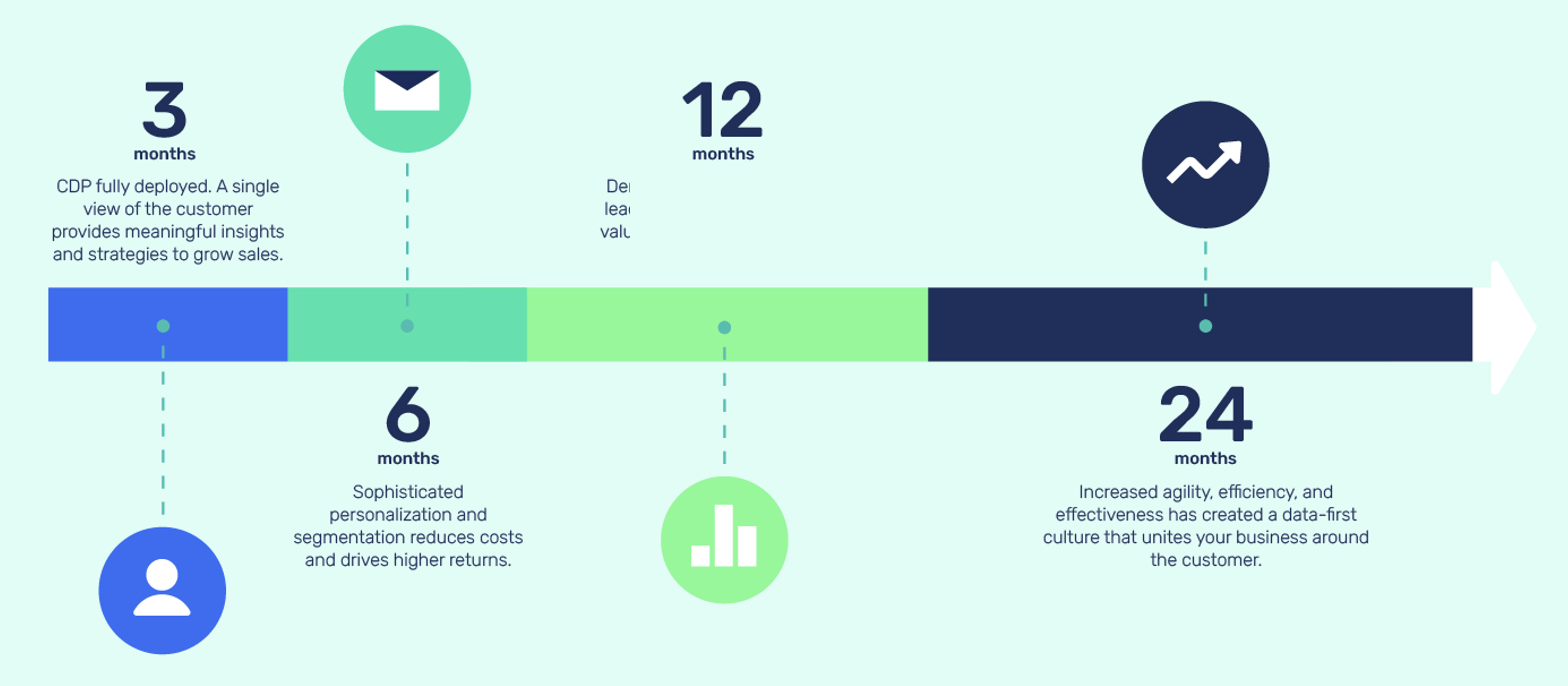
5.2 Implementation Roadmap (3 / 6 / 12 / 24 Months)
M+3 | Single Customer View Ready
CDP fully deployed with unified customer profiles (SCV). Enables actionable insights and sales growth strategies.
KPI: Segment coverage ↑, cart recovery rate ↑
M+6 | Advanced Segmentation & Personalization at Scale
Launch high-level personalization and segmentation to reduce marketing costs and increase ROI.
KPI: CAC ↓, Repurchase rate & AOV ↑
M+12 | Data Democratization & Model Feedback
Empower all departments to access and use data autonomously, unlocking efficiency and innovation.
KPI: Self-service usage ↑, List activation turnaround ↓
M+24 | Data-First Culture Established
Embed a data-driven mindset across teams—enhancing agility, collaboration, and customer-centric operations.
KPI: Conversion rate & LTV ↑, Insight-to-action cycle time ↓
6. Customer Case Study and ROI Results
An online insurer implemented Adobe Experience Platform (AEP), Real-Time CDP, Adobe Journey Optimizer (AJO), and Customer Journey Analytics (CJA). The project unified data from its website, app, quotation system, customer service, and marketing channels to create unified customer profiles and automated cross-channel journeys.
The program focused on new-customer quotation conversion, cross-selling, and repeat purchases. It used real-time segmentation, email, app push, SMS, and journey analytics for continuous optimization. The published case study reports the following results:
| Metric | Project Result | ROI Significance |
|---|---|---|
| New-customer quotation conversion rate | Increased by 13% | The same traffic and media investment generated more qualified quotations and sales opportunities |
| Combined email open and engagement rates | Increased by 15% | Existing audiences were reached and engaged more efficiently, improving marketing resource utilization |
| Customer repeat-purchase rate | Increased by 12% | Higher customer lifetime value reduced the pressure to rely solely on new-customer acquisition |
Source: Online insurer implements RTCDP and AJO for marketing automation transformation. These figures are published results from this specific project and do not guarantee the same outcome for every CDP implementation.
How Should an Enterprise Calculate CDP ROI?
Establish a pre-implementation baseline, then evaluate attributable incremental returns and cost savings:
| ROI Component | Recommended Calculation |
|---|---|
| Incremental revenue | Additional orders from higher conversion + additional revenue from repeat purchases + incremental cross-sell revenue |
| Cost savings | Labor and media costs saved by reducing list preparation, report production, cross-channel synchronization, and duplicate targeting |
| Total investment | Platform licensing + data integration and implementation + training + ongoing operations and optimization |
| ROI formula | (Incremental returns + cost savings − total investment) ÷ total investment × 100% |
Use a control group, a pre-implementation baseline, and a fixed observation period so that seasonality, promotions, or media-budget changes are not incorrectly attributed to the CDP.
7. Common CDP Questions
1. How Is a CDP Different from a CRM?
A CRM primarily manages sales, service, and interaction records for known customers. A CDP unifies cross-channel data from websites, apps, POS systems, advertising, and customer service for identity resolution, real-time segmentation, and multi-channel activation. The two systems usually complement rather than replace each other.
2. Which Taiwanese Enterprises Are Good Candidates for a CDP?
A CDP is most relevant to retail, e-commerce, financial services, insurance, O2O, and large service enterprises with multiple digital and physical channels, fragmented member or customer data, real-time personalization needs, and strong consent-management and data-governance requirements.
3. What Data Should Be Prepared Before CDP Implementation?
Inventory website and app events, CRM, POS, transaction, customer service, email, advertising, and consent data. Confirm data owners, identity fields, quality, update frequency, retention periods, and access permissions.
4. How Long Does CDP Implementation Usually Take?
The schedule depends on the number of data sources, data quality, identity-resolution rules, channel integrations, and governance requirements. Enterprises can begin with one or two high-value use cases and expand in phases instead of integrating every channel at once.
5. How Should CDP ROI Be Measured?
Start with a pre-implementation baseline. Track conversion, repeat purchases, customer lifetime value, wasted media spend, and time spent preparing audiences and reports, then deduct platform, integration, maintenance, and staffing costs. Do not judge ROI from the revenue change of a single campaign.
6. How Can a CDP Support Taiwan Privacy and Personal Data Requirements?
Platform capabilities are only the foundation. Enterprises still need lawful collection purposes, consent and preference management, data minimization, access controls, retention and deletion rules, audit trails, and vendor governance, with legal and security review based on the actual use case.
8. Conclusion and Call to Action
In a cookieless, privacy-first environment, a CDP becomes the hub for integrating, understanding, and activating first-party data. Start with one or two high-value use cases, such as cart-abandonment recovery or member reactivation. Build on real-time triggers and compliant governance, then expand across channels and teams while continuously optimizing through dashboards and A/B testing.
To assess your current systems or plan a CDP implementation roadmap, talk to our consulting team. To compare leading solutions and their fit for different business needs, continue with:
Top 5 CDP Platforms in Taiwan 2026: Comparison and Recommendations.
Related Articles

Enterprise AI MarTech Trends Analysis 2024-2029 Outlook Report
From AI content productivity tools to a core engine for revenue growth and marketing transformation
*The PDF will be sent directly to your inbox.