
- What is a global data analytics solution?
- Common data analytics challenges for global enterprises
- Core capabilities of a global data analytics solution
- How to conduct overseas user behavior analytics
- How overseas customer data analytics supports conversion
- Implementation path: from data collection to business optimization
- Conclusion
- Further Reading
- What is a global data analytics solution?
- Common data analytics challenges for global enterprises
- Core capabilities of a global data analytics solution
- How to conduct overseas user behavior analytics
- How overseas customer data analytics supports conversion
- Implementation path: from data collection to business optimization
- Conclusion
- Further Reading
Summary
After enterprises expand overseas, the common challenge is usually not a lack of data, but scattered data, inconsistent definitions, difficulty interpreting overseas user behavior, and limited visibility into which markets, channels, and content truly drive growth. Starting from these overseas data challenges, this article explains how a global data analytics solution helps enterprises collect, analyze, and apply data consistently, building a cross-border growth system from market insight to conversion optimization.

1. What is a global data analytics solution?
A global data analytics solution helps enterprises collect overseas traffic, user behavior, customer data, and conversion results in a unified way, analyze performance across markets, channels, and customer stages, and use those insights to optimize marketing, content, and sales follow-up. Users in different countries have different search habits, content preferences, devices, buying cycles, and ways of building trust. If a company looks only at total traffic, it can easily misread market performance.
The core of a global data analytics solution is to place overseas markets, channel sources, user behavior, customer profiles, and conversion outcomes into one analytical framework. This helps enterprises identify growth opportunities and optimization priorities. It allows teams to see which markets have greater potential, which channels bring high-quality traffic, which pages influence inquiries or purchases, and which customers deserve continued nurturing.
Unlike traditional website statistics, data analytics in overseas expansion scenarios emphasizes cross-market comparison, channel attribution, user behavior interpretation, customer segmentation, and data compliance. Enterprises need to know not only where traffic comes from, but also why overseas users stay, why they leave, and why they convert.
2. Common data analytics challenges for global enterprises
Overseas data challenges are not only tool-related. More often, they are systematic issues caused by complex business scenarios.
1. Scattered market data
An enterprise may run campaigns across Google, LinkedIn, Meta, industry media, and trade shows at the same time. Each channel has its own backend data, but unified comparison is difficult. Marketing teams see clicks, sales teams see leads, and management struggles to judge return on investment.
2. Unclear user behavior
After overseas visitors enter the website, they may read a blog first, then browse a solution page, and finally submit a form on a product page. Without clear overseas user behavior analytics, enterprises can only see single-page traffic and cannot reconstruct the real decision journey.
3. Inconsistent customer view
Website forms, CRM, email systems, e-commerce platforms, and customer service tools each record customer information separately, resulting in incomplete customer profiles. Only by combining form, CRM, email engagement, or CDP data can overseas customer data analytics support segmentation more accurately.
4. Difficult conversion attribution
An overseas customer may go through multiple touchpoints before converting: search, ads, website content, email, sales follow-up, and remarketing. Without a unified analytics framework, enterprises may attribute success to the last click while ignoring the influence of earlier content and brand touchpoints.
Therefore, the value of a global data analytics solution is not simply adding another report. It helps enterprises turn scattered data into actionable growth judgment.
3. Core capabilities of a global data analytics solution
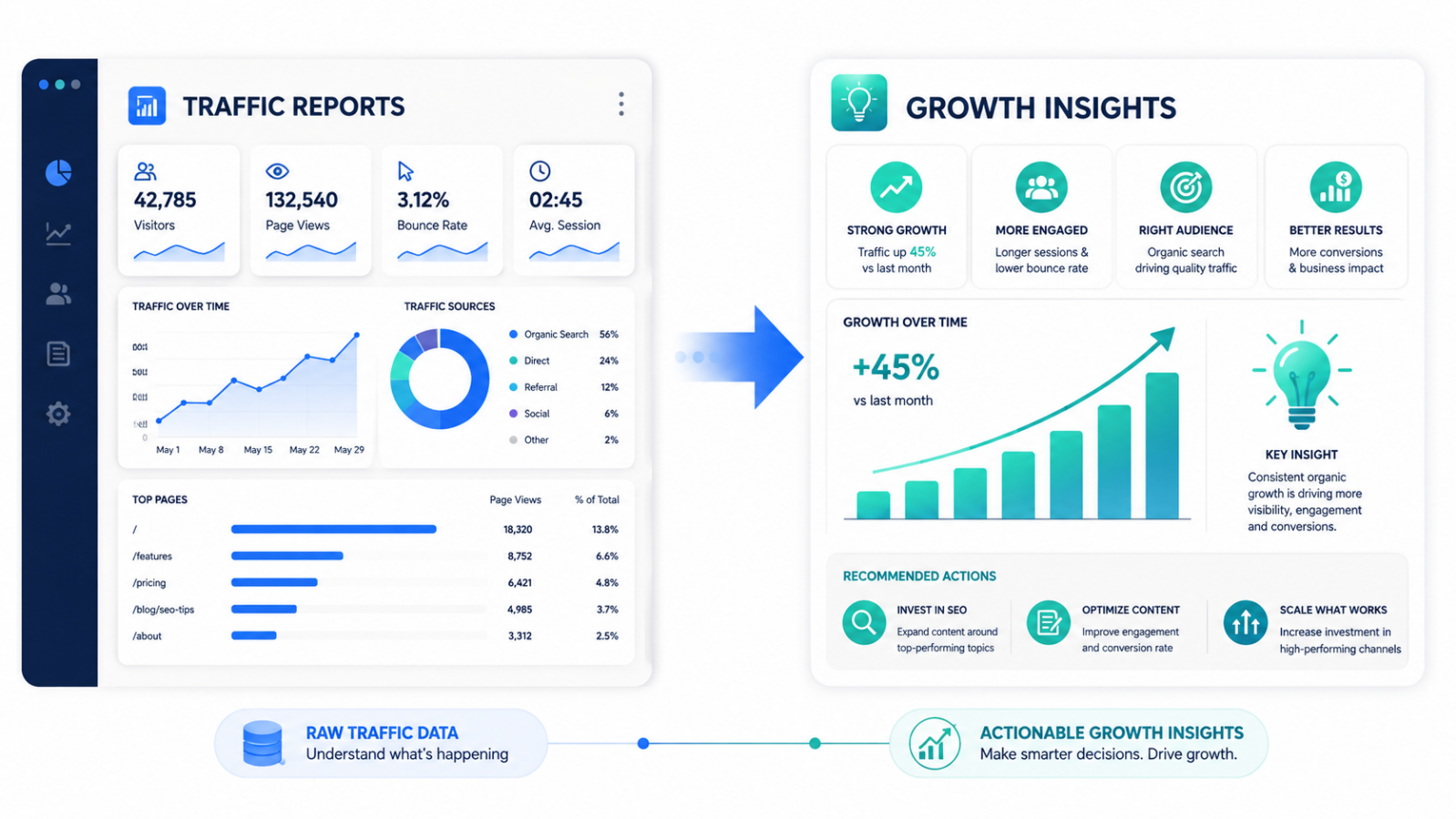
A mature global data analytics solution usually contains three levels.

Level 1: Unified collection
- Traffic sources
- Countries and regions
- Page paths
- Form submissions
- Download actions
- Cart and orders
- Sales lead status

Level 2: Behavior interpretation
- Why a country has high traffic but few inquiries
- Why ads receive many clicks but short page sessions
- Why certain content brings higher form submission rates
- Why some customers visit repeatedly but do not purchase

Level 3: Operational application
- Adjust advertising budgets
- Optimize landing page content
- Improve forms and CTAs
- Trigger sales follow-up for high-intent customers
- Create differentiated content strategies for different markets
This is what real data-driven growth means, rather than stopping at “looking at charts.”
4. How to conduct overseas user behavior analytics
The goal of overseas user behavior analytics is to understand the real intent of overseas customers across digital touchpoints. It is not just about traffic volume, but about how users move step by step toward conversion.
Enterprises can approach this from four dimensions:
1. Source behavior
Users from different channels have different intent. Search users usually have clearer needs, social media users may still be in the awareness stage, and industry media traffic may be more research-oriented. Enterprises need to compare visit depth, bounce rate, conversion rate, and later lead quality across sources.
2. Page paths
- Blog → industry page → product page
- Ad landing page → case study page → form page
- Homepage → solution page → Contact Us
3. Content engagement
Overseas users may pay more attention to cases, certifications, technical documents, pricing information, or local service capabilities. Through overseas user behavior analytics, enterprises can identify which content modules are read, clicked, or skipped, and then optimize page structure.
4. Pre-conversion behavior
Do not look only at the final conversion page. It is more important to understand what happened before conversion. High-quality leads often do not submit a form on the first visit; they gradually build trust through multiple content interactions.
After connecting website behavior, advertising sources, forms, CRM, or CDP data, a global data analytics solution can help enterprises move from isolated clicks toward a more complete customer journey.
5. How overseas customer data analytics supports conversion
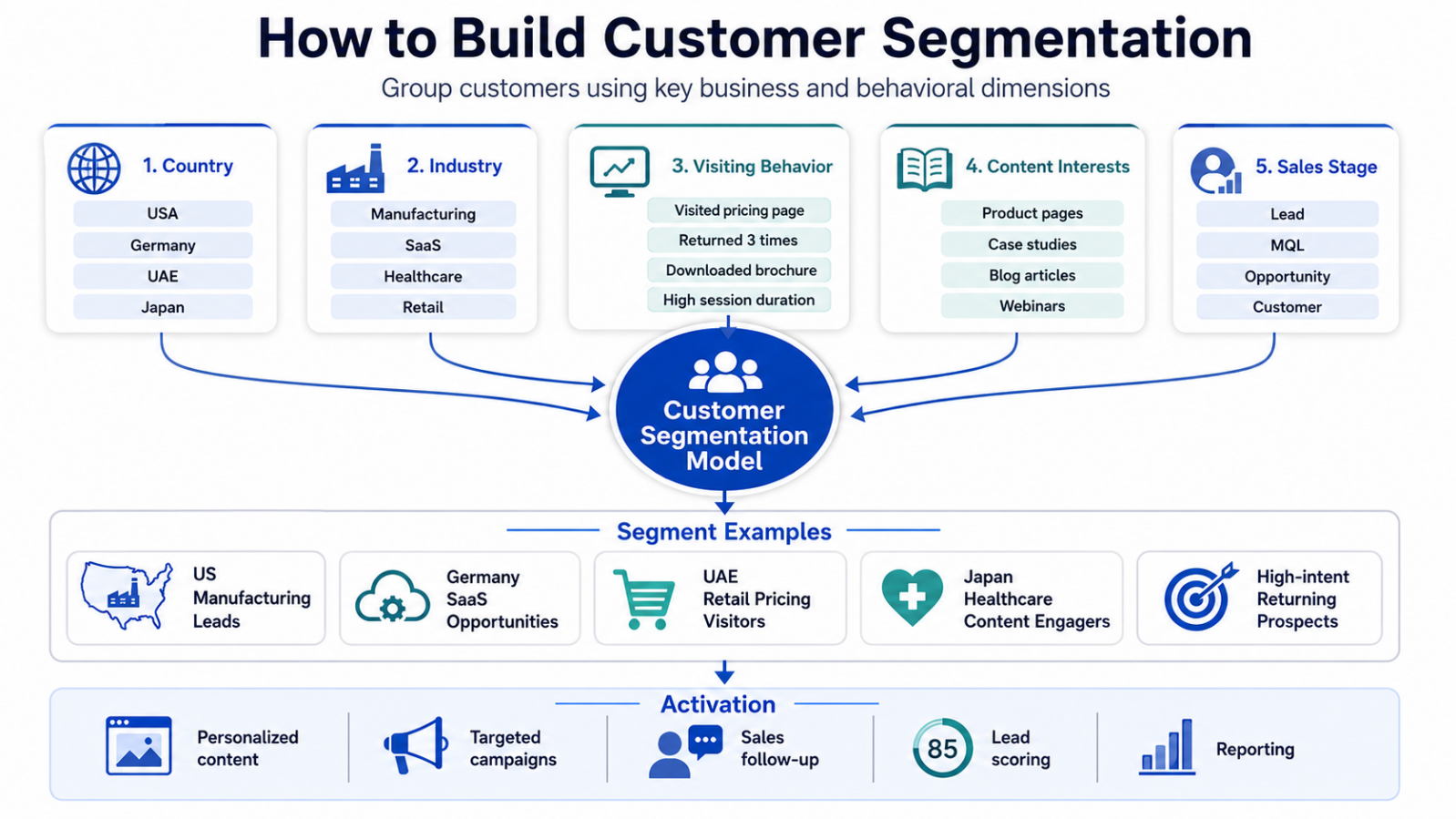
Overseas user behavior analytics mainly answers “how users browse, click, and convert.” Overseas customer data analytics needs to combine form, CRM, order, or CDP data to answer “who the customer is, how valuable they are, and what follow-up should happen next.” For global enterprises, customer data usually includes:
- Countries and regions
- Company industry
- Company size
- Visited pages
- Downloaded content
- Form information
- Products of interest
- Sales follow-up stage
- Whether the customer repurchased or visited again
Through overseas customer data analytics, enterprises can establish clearer customer segmentation:
High-intent customers
- Visited product pages multiple times
- Downloaded technical materials
- Submitted quotation or demo requests
- Came from target markets and target industries
Nurturing customers
- Visited blogs or solution pages
- Engaged with content but did not submit a form
- Suitable for email nurturing or remarketing workflows
Low-priority customers
- Short time on site
- Shallow page views
- Lower-quality sources
- Not suitable for priority sales follow-up for now
This segmentation helps marketing and sales teams work together: marketing is responsible for ongoing education, sales prioritizes high-intent customers, and management can see the real business quality of different countries and channels.
Therefore, one core outcome of a global data analytics solution is helping enterprises upgrade from “all leads are the same” to “resources are allocated based on customer value.”
6. Implementation path: from data collection to business optimization
When implementing a global data analytics solution, enterprises should proceed in stages.
Step 1: Define the growth questions
Do not start with tools. Start by clarifying the questions:
- Which markets deserve more investment
- Which channels bring valid leads
- Which pages influence conversion
- Which customer types are most valuable
The clearer the questions, the easier the data solution is to implement.
Step 2: Unify data definitions
Establish consistent naming rules for channels, countries, pages, events, and conversion goals. This is especially important for multilingual websites, multi-country corporate sites, and cross-border e-commerce platforms.
Step 3: Build a key metric framework
We recommend focusing on:
- Market visit quality
- Content engagement
- Lead conversion rate
- Customer acquisition cost
- Share of high-intent customers
- Sales conversion cycle across markets
Step 4: Connect customer data
Connect customer data while clarifying the roles of website analytics, CRM, CDP, and BI: website analytics tracks behavior, CRM manages sales stages, CDP unifies customer profiles, and BI supports cross-department reporting and management decisions.
Step 5: Create an optimization mechanism
Review data every month around questions such as:
- Adjust priority country budgets
- Optimize low-conversion pages
- Update high-performing content
- Improve forms and CTAs
- Provide high-intent customer lists for sales
At this stage, a global data analytics solution truly upgrades from a tracking and reporting project into a business growth mechanism that includes data governance, attribution analysis, customer segmentation, and continuous optimization.
7. Conclusion
One of the biggest challenges in overseas growth is that enterprises see a great deal of data but still cannot identify the real opportunities. Traffic, clicks, inquiries, orders, and customer behavior are scattered across different systems, making it difficult for teams to determine where growth comes from, where the bottlenecks are, and what should be optimized next.
The value of a global data analytics solution lies in turning scattered data into actionable insight. Through overseas user behavior analytics, enterprises can understand how users in different markets browse, compare, and convert. Through overseas customer data analytics, they can identify high-value customers, optimize sales priorities, and continuously improve conversion efficiency.
If you are planning an overseas website, cross-border e-commerce platform, CRM, or data analytics system, you are welcome to learn more about our global data analytics and digital growth services. You can also visit Contact Us to discuss your overseas market data challenges and implementation path with our consulting team.
8. Further Reading
- Website Analytics Optimization: Adobe Analytics to CDP for Growth Loop
Suitable for further understanding how website data connects CDP and conversion optimization. - How to Choose an Enterprise Data Analytics Partner: Adobe Analytics to CDP
Suitable for further evaluating data analytics implementation capabilities and vendor selection criteria. - Global Website Analytics Tool: How Adobe Analytics Drives Business Decisions
Suitable for understanding how enterprises use analytics tools to support global market decisions.
Related Articles

Enterprise AI MarTech Trends Analysis 2024-2029 Outlook Report
From AI content productivity tools to a core engine for revenue growth and marketing transformation
*The PDF will be sent directly to your inbox.
Email Error
Please enter a valid email address.
Thank You!
The whitepaper has been sent to your inbox. If you don’t see it, please check your spam or promotions folder.