
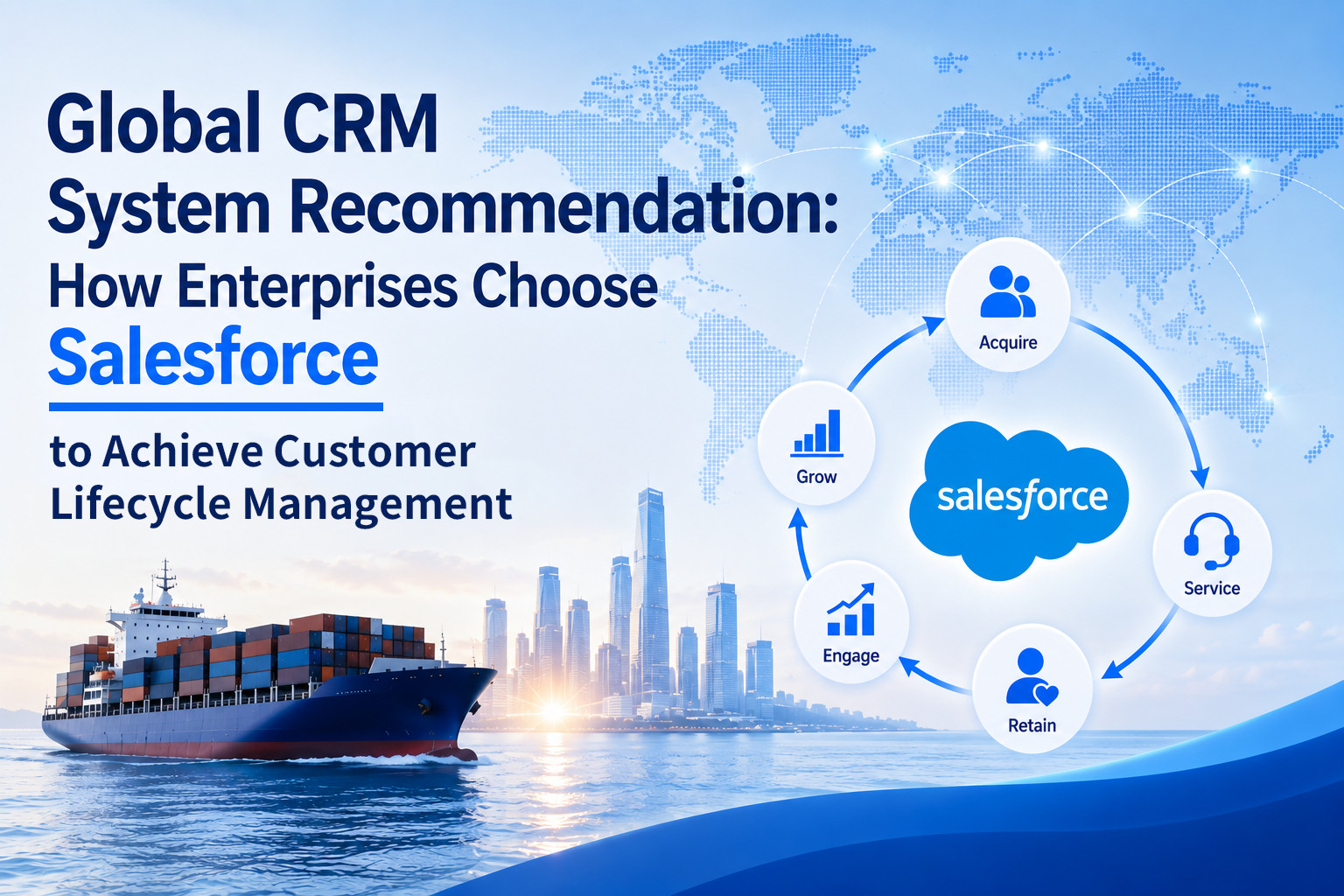
Global CRM System Recommendation: How Businesses Use Salesforce for Customer Lifecycle Management
B2B Marketing, Customer Relationship Management (CRM), MarTech, Salesforce
26 May 2026
- Introduction: Why Global Businesses Need to Redefine CRM
- Key Criteria for Cross-Border CRM System Recommendations
- Why Salesforce Is Ideal for Global Customer Lifecycle Management
- How Salesforce Supports Complex B2B Global Sales Processes
- From Lead to Renewal: How CRM Connects the Full Customer Lifecycle
- What to Evaluate When Choosing a Salesforce Partner
- Common Pitfalls: Why CRM Projects Often Underperform After Launch
- Conclusion: Making CRM the Growth Engine for Global Businesses
- Introduction: Why Global Businesses Need to Redefine CRM
- Key Criteria for Cross-Border CRM System Recommendations
- Why Salesforce Is Ideal for Global Customer Lifecycle Management
- How Salesforce Supports Complex B2B Global Sales Processes
- From Lead to Renewal: How CRM Connects the Full Customer Lifecycle
- What to Evaluate When Choosing a Salesforce Partner
- Common Pitfalls: Why CRM Projects Often Underperform After Launch
- Conclusion: Making CRM the Growth Engine for Global Businesses
1. Introduction: Why Global Businesses Need to Redefine CRM
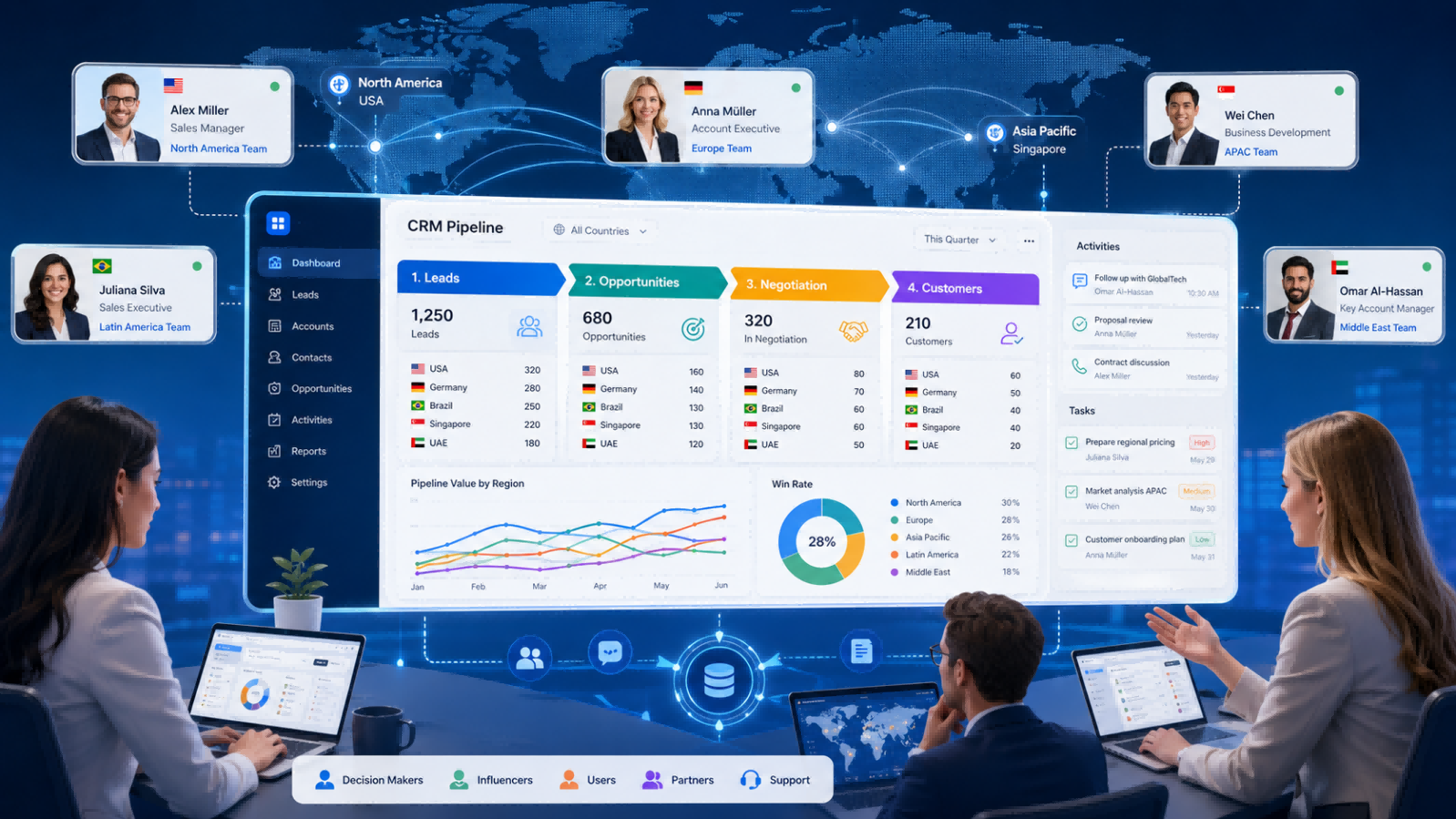
In the past, many companies viewed CRM as a customer information database, mainly used for recording contacts, follow-ups, and sales opportunities. But when businesses enter overseas markets, customer sources, sales cycles, regional teams, quotation processes, and service support all become more complex. At this point, the value of CRM is no longer “recording” but “managing growth.”
For B2B global businesses, a single customer may come from official website inquiries, overseas exhibitions, LinkedIn ads, agent referrals, or e-commerce independent stores. After entering the sales process, customers may also go through technical evaluation, sample testing, business negotiation, legal review, delivery support, and subsequent renewals. If this data is scattered across spreadsheets, emails, chat tools, and local systems, companies can hardly see the true customer status.
Therefore, the focus of cross-border CRM system recommendations should not be “which system has more features,” but which platform can better help businesses manage the global customer lifecycle.
2. Key Criteria for Cross-Border CRM System Recommendations
When selecting a CRM, businesses must first clarify their own business complexity. For simple sales scenarios, lightweight CRM may be sufficient; but for B2B global businesses with multiple countries, teams, and product lines, more advanced platform capabilities are needed.
A mature enterprise CRM system recommendation standard typically includes the following dimensions:
-
Global Sales Support Capability: Whether it supports multiple languages, currencies, and regional team collaboration; whether it can manage customers and opportunities by country, region, and business line; whether it supports permission division between headquarters and overseas sales teams.
-
Complex B2B Process Adaptability: Whether it supports long-cycle sales processes; whether it can manage multiple contacts and decision-making roles; whether it covers quotation, contract, approval, and delivery coordination.
-
Data Integration Capability: Whether it can connect with official websites, marketing automation, CDP, ERP, and e-commerce platforms; whether it can link lead sources, customer behavior, and sales results; whether it supports subsequent analysis and forecasting.
-
Scalability and Long-Term Operations: Whether it can scale continuously as markets expand; whether it supports automation, AI, reporting, and customer service scenarios; whether it has a mature ecosystem and implementation partner support.
From these perspectives, cross-border CRM system recommendations are essentially about determining whether CRM can evolve from a sales tool into a global customer management platform.
3. Why Salesforce Is Ideal for Global Customer Lifecycle Management
Salesforce’s advantage lies in its modular cloud products and ecosystem, covering sales, service, marketing, and data analysis across multiple customer management scenarios.
Salesforce officially defines CRM as a system for managing interactions with existing and potential customers, with the goal of improving customer relationships to enhance profitability and business growth. Its Customer 360 emphasizes integrating sales, service, marketing, commerce, and IT applications to form a unified customer view.
Therefore, many B2B global businesses include Salesforce as a key option when evaluating enterprise CRM platforms. It is not only suitable for sales process management but also for connecting marketing, service, and customer operations. As Salesforce integrates AI Agent capabilities into its CRM product line, Sales Cloud / Agentforce Sales further strengthens sales automation, lead follow-up, and forecasting capabilities.
Salesforce’s value in global customer lifecycle management is mainly reflected in the following four aspects:
Unified Customer View
Centralize management of customer profiles, contacts, opportunities, follow-up records, service requests, and historical interactions to avoid disconnect between sales and service information.
Sales Process Standardization
Companies can define lead, opportunity, quotation, approval, and closing stages according to their own sales models, enabling global teams to adopt unified processes.
Multi-Team Collaboration
Marketing, sales, customer service, channels, and management can work around the same customer data, reducing information gaps.
Ecosystem Expansion Capability
Salesforce can connect with marketing automation, data platforms, e-commerce, ERP, and other systems to support complex business scenarios.
Therefore, when choosing Salesforce solutions, the focus should not be on a single module like Sales Cloud, but on the higher-level goal of “whether it can support global customer lifecycle management.”
4. How Salesforce Supports Complex B2B Global Sales Processes
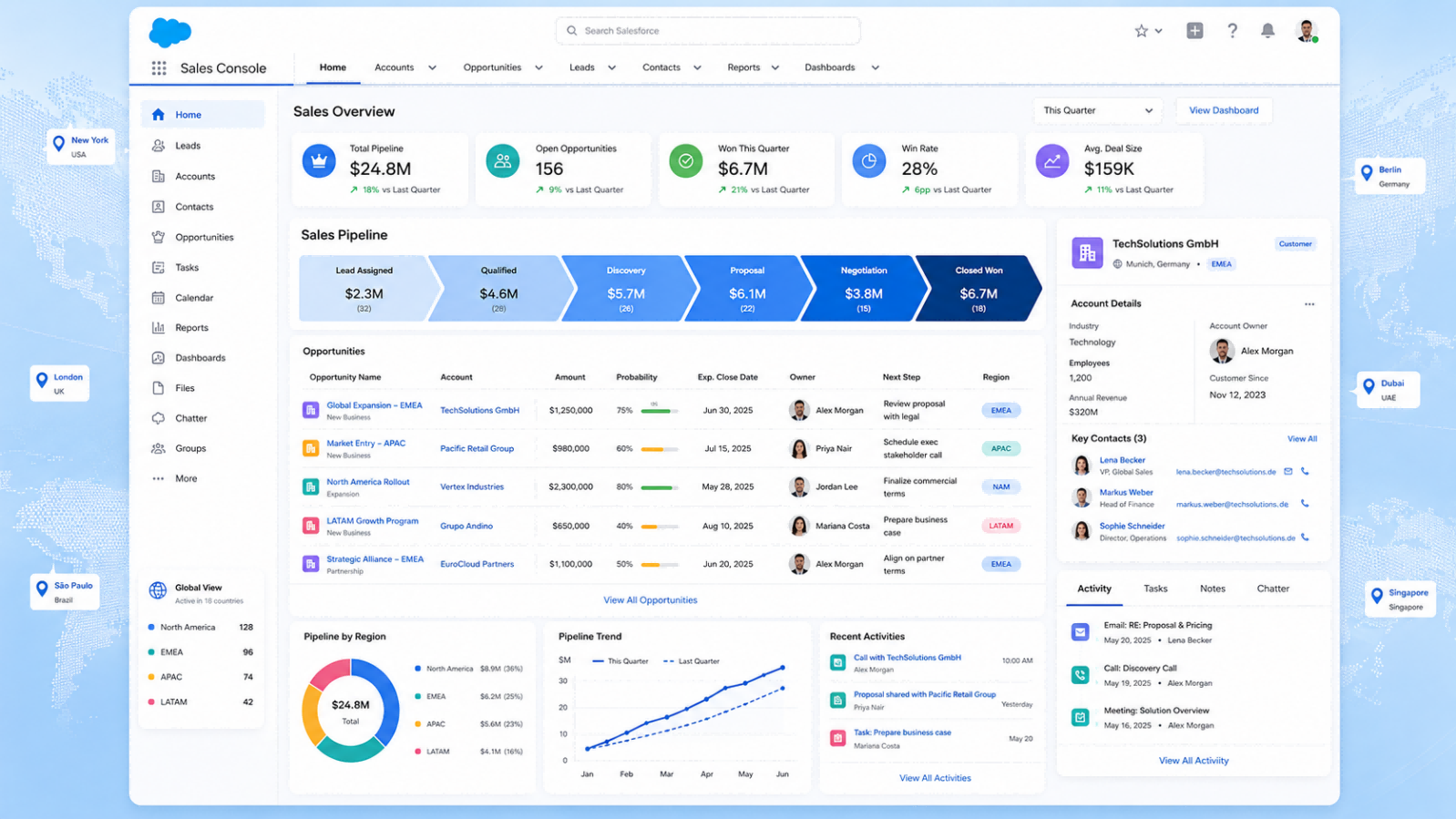
The biggest difference between B2B global sales and ordinary retail sales is that the process is complex, the cycle is long, and there are many participants. An overseas customer from first contact to final deal may take weeks or even months, involving product managers, sales managers, technical consultants, regional agents, and procurement teams.
In this business context, cross-border CRM system recommendations must focus on whether the platform supports complex processes.
Salesforce can support the following key scenarios:
Lead Assignment and Follow-Up
Automatically assign leads by region, industry, and product line
Record every communication, email, meeting, and next step
Prevent high-value leads from being neglected or duplicated
Opportunity Stage Management
Clearly define stages from initial contact to quotation, negotiation, contract, and closing
Help management view global sales pipelines in real time
Identify stalled opportunities and high-potential deals through reports
Multi-Role Customer Relationship Management
Manage procurement, technical, financial, and decision-making contacts within the same customer organization
Help sales identify key influencers
Ensure customer relationships don't depend on individual sales rep experience
Sales Forecasting and Management Decisions
View performance forecasts by region, product, and team
Analyze conversion rates and sales cycles across different markets
Provide basis for resource allocation
These capabilities are at the core value of Salesforce solutions. They enable global businesses to do more than just “have someone follow up with customers” — they use systematic processes to improve sales certainty.
5. From Lead to Renewal: How CRM Connects the Full Customer Lifecycle
Many companies only use CRM for sales follow-up after implementation, without truly connecting the customer lifecycle. For global businesses, CRM should cover the complete path from lead acquisition to customer renewal.
A complete customer lifecycle typically includes the following five stages:
Lead Acquisition
Official website inquiries
Overseas advertising
Exhibition business cards
Partner referrals
Independent store or e-commerce platform registration
Lead Nurturing
Classify by industry, region, and interest tags
Collaborate with marketing automation to push product materials, case studies, or whitepapers
Hand off high-intent leads to sales
Opportunity Conversion
Record quotation, sample, meeting, and contract progress
Support cross-team collaboration
Form standardized sales funnels
Customer Service
Track delivery, after-sales, issue handling, and service records
Build customer satisfaction and service quality feedback
Renewal and Growth
Identify renewal opportunities
Drive cross-selling and upselling
Build long-term customer assets
This is why cross-border CRM system recommendations should emphasize Salesforce: through modules such as Sales Cloud, Service Cloud, Marketing Cloud / Data Cloud, as well as integrations with official websites, ERP, e-commerce, and marketing automation systems, Salesforce can help businesses bring each stage — from first contact and opportunity conversion to service support and renewal growth — into a unified customer management framework. Salesforce’s explanation of customer lifecycle management also emphasizes that lifecycle management focuses on the continuous journey from potential customers to loyal customers, enhancing customer relationships and loyalty through personalized service.
In actual implementation, businesses still need to plan based on business processes, data sources, licensed modules, and integration scope in order to build practical Customer 360 and customer lifecycle management capabilities.
For businesses evaluating enterprise CRM system recommendations, this is particularly important. The ultimate goal of CRM is not to make sales fill out more forms, but to help businesses manage customer value more systematically.
6. What to Evaluate When Choosing a Salesforce Partner
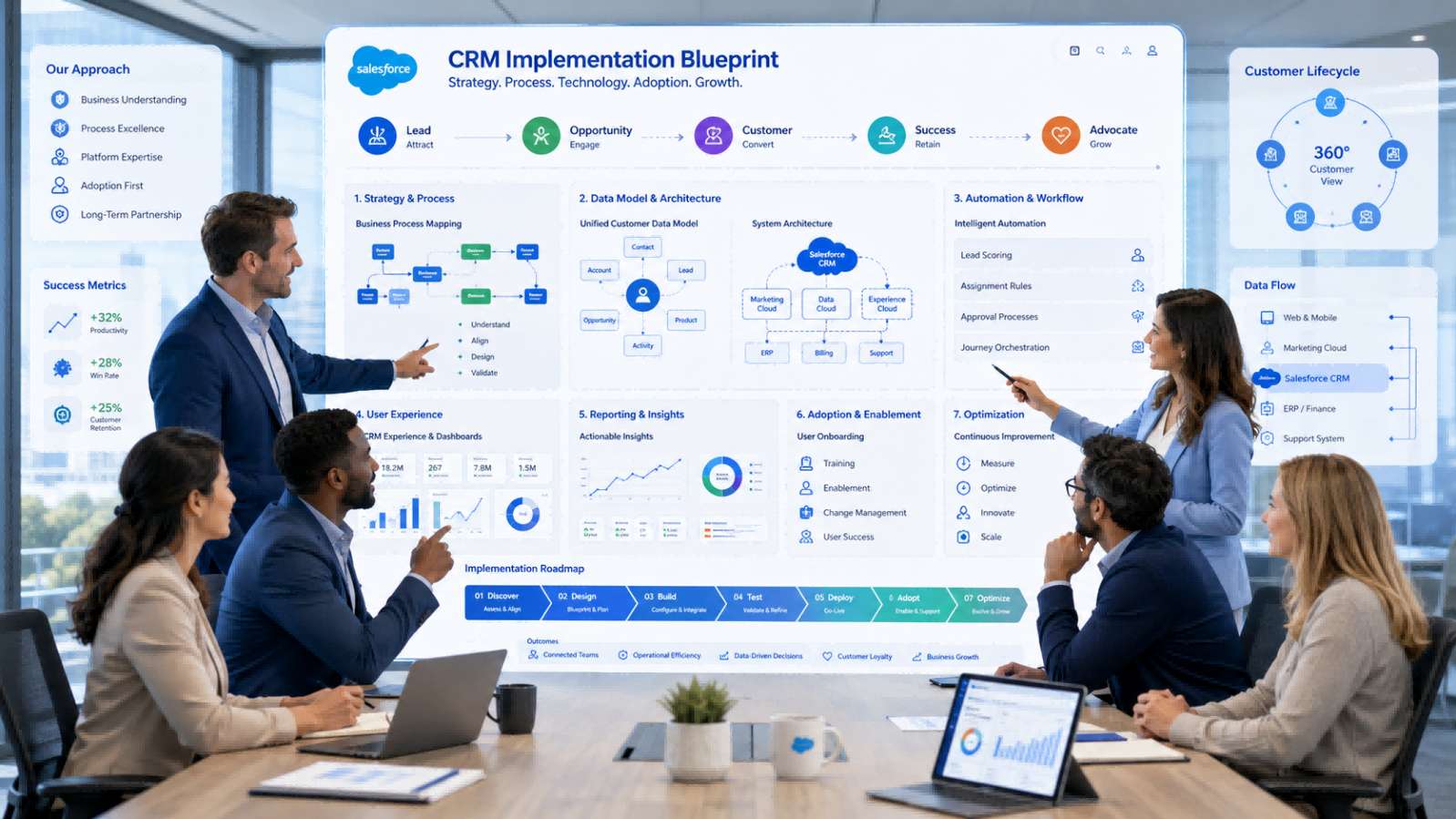
For complex B2B global businesses, the system itself is just the foundation — the implementation approach is the key to project success. When choosing a Salesforce partner, businesses should not only look at whether they can configure the system, but evaluate whether they can understand the business and translate it into an executable CRM architecture.
It is recommended to focus on evaluating the following five aspects:

Understanding of Global B2B Sales Scenarios
Experience with multi-country, multi-team sales projects
Understanding of long-cycle sales and multi-role decision-making
Ability to translate business processes into system processes

Data Model Design Capability
How customers, contacts, leads, opportunities, and orders relate
How to unify data standards across different countries and business lines
How to prevent subsequent data chaos

System Integration Capability
Ability to connect official websites, CDP, marketing automation, ERP, and e-commerce systems
Ability to link lead sources and sales results
Ability to support management-level data analysis

Implementation Methodology
Research, blueprint, configuration, testing, training, launch, and optimization processes
Ability to control project scope and delivery risks
Ability to help business teams actually use the system

Long-Term Optimization Support
CRM launch is just the beginning
Ongoing optimization of reports, processes, and automation is needed
A mature Salesforce partner should have continuous operations support capability
From this perspective, the value of Salesforce solutions is not simply purchasing a system, but building growth capabilities together through the platform and implementation partners.
7. Common Pitfalls: Why CRM Projects Often Underperform After Launch
Many problems companies encounter in CRM projects are not because the platform is not powerful enough, but because of early-stage misconceptions and implementation approach deviations.
Common pitfalls include:
-
Treating CRM as Just a Customer Information Recording Tool: If you only record customer information without connecting sales processes, service processes, and lifecycle management, CRM is unlikely to generate strategic value.
-
Lack of Unified Data Standards: Different regions, teams, and business lines define fields independently, making subsequent reports unreliable.
-
Ignoring Sales Team User Experience: Overly complex systems discourage salespeople from using them, ultimately degrading data quality.
-
Lack of Post-Launch Optimization Mechanisms: CRM projects are not one-time deliveries; they need continuous adjustment as business changes.
-
Focusing Only on Product, Not Partner Capability: For complex businesses, a Salesforce partner’s industry understanding, implementation experience, and project management capabilities often directly determine the final outcome.
Therefore, cross-border CRM system recommendations cannot stop at “recommending Salesforce”; it is essential to clarify how to implement, how to use, and how to optimize.
8. Conclusion: Making CRM the Growth Engine for Global Businesses
For B2B global businesses, CRM has evolved from a sales management tool into a global customer management platform. What businesses need is not just recording customers, but improving global business conversion efficiency through unified customer views, standardized sales processes, cross-team collaboration, and customer lifecycle management.
From this perspective, focusing cross-border CRM system recommendations on Salesforce is a reasonable choice. Salesforce not only helps businesses manage leads and opportunities, but also collaborates with marketing, service, data, and e-commerce systems to support longer-term customer value growth.
If you are evaluating a CRM platform suitable for global businesses, or would like to learn how LeadsTech can assist with the planning, implementation, and optimization of Salesforce CRM projects, learn more about our Salesforce implementation and integration services, or visit Contact Us to discuss your global customer management goals and implementation roadmap with our consulting team.
Further Reading
- Salesforce CRM Selection and Implementation: Empowering B2B Global Businesses to Achieve Sales Growth and Customer Lifecycle Management
- 2026 CRM System Selection Guide: How Businesses Choose the Right Platform
- How to Evaluate Global Digital Service Partners? Ten Capability Dimensions to Help You Make Strategic Choices
Related Articles
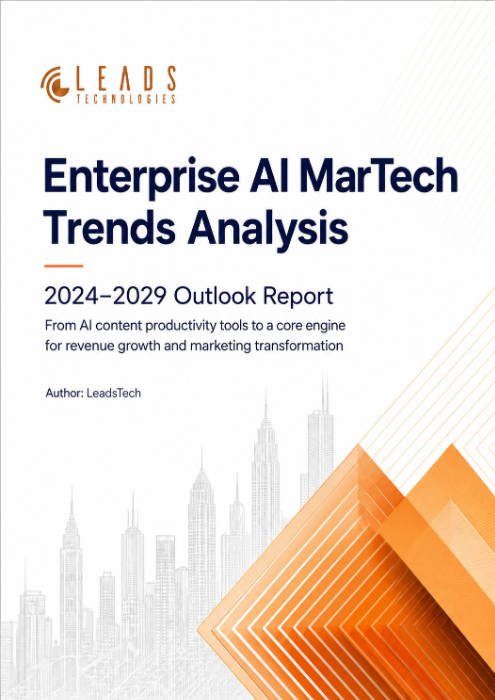
Enterprise AI MarTech Trends Analysis 2024-2029 Outlook Report
From AI content productivity tools to a core engine for revenue growth and marketing transformation
*The PDF will be sent directly to your inbox.
Email Error
Please enter a valid email address.
Thank You!
The whitepaper has been sent to your inbox. If you don’t see it, please check your spam or promotions folder.