
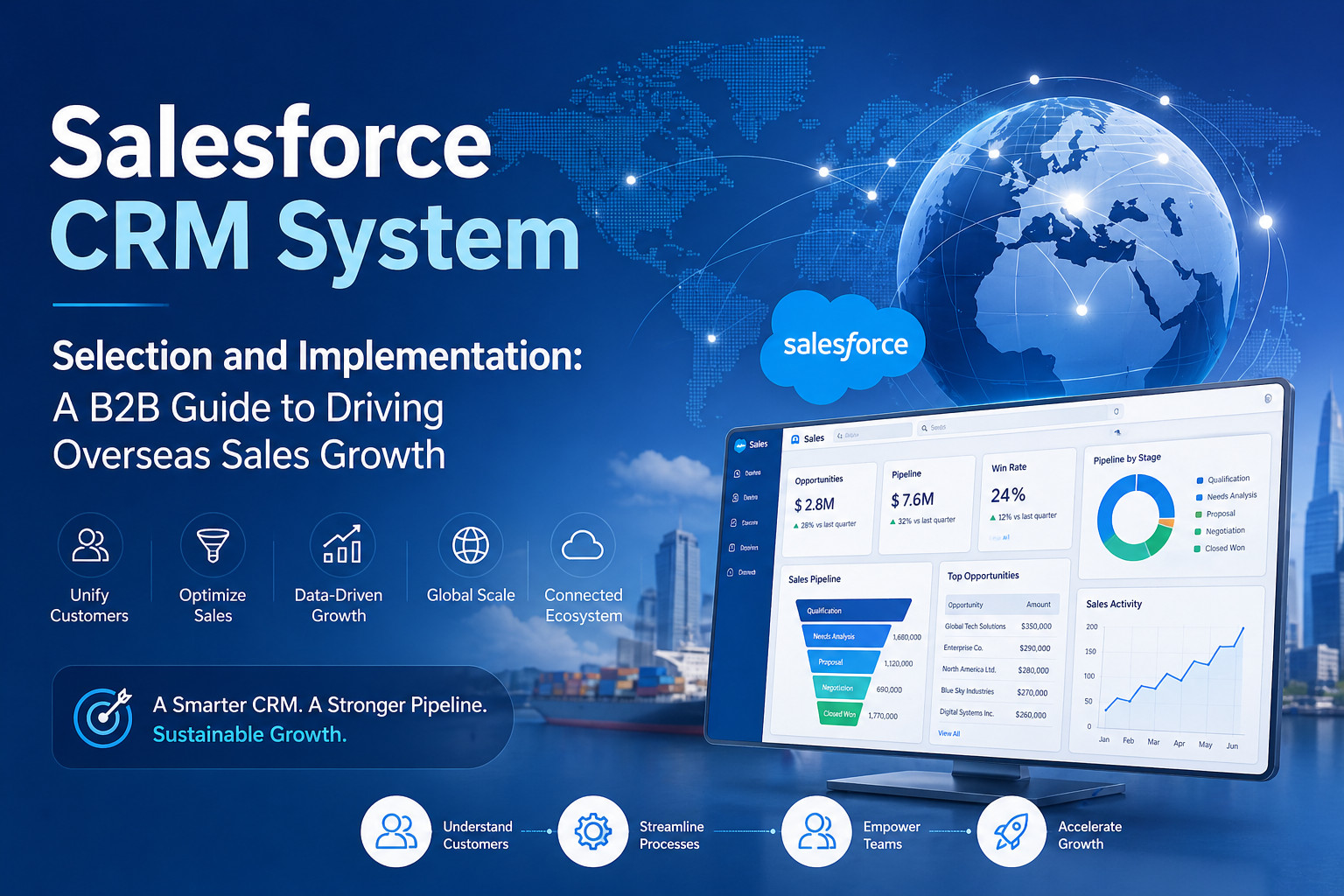
Salesforce CRM Selection & Implementation: B2B Global Sales Growth Guide
Customer Relationship Management (CRM), Social CRM
3 May 2026
1. Why B2B Companies Going Global Need a Professional CRM System
As more companies expand into overseas markets, sales processes become increasingly complex. B2B customers typically involve longer decision cycles, multiple stakeholders, and cross-regional sales team collaboration, making it essential for companies to adopt a more systematic approach to customer management.
In traditional models, many companies still rely on Excel or basic customer management software to track leads. However, this approach often fails to support scalable business growth.
As a result, an increasing number of companies are deploying professional Salesforce CRM systems to achieve digitalized sales process management.
By implementing Salesforce CRM, companies can centrally manage customer information, sales opportunities, and interaction records, thereby improving sales efficiency and enhancing customer experience.
2. Salesforce CRM’s Position in Global Enterprises
Among the many CRM platforms, Salesforce is widely recognized as one of the leading enterprise-grade CRM solutions globally.
Many multinational companies choose Salesforce CRM, and the main reasons include:
Powerful Sales Automation Capabilities
Automate sales workflows, reduce manual tasks, and boost team efficiency.
Rich Ecosystem and Scalability
Over 5,000 applications available to meet diverse business needs.
Support for Global Business Operations
Multi-language, multi-currency, and multi-timezone support, enabling global business expansion.
Highly Customizable Platform Architecture
Flexibly customize workflows and fields to adapt to different business scenarios.
For companies expanding into overseas markets, Salesforce CRM is not only a sales management tool but also a critical platform connecting marketing, customer service, and data analytics.
3. Core Functions and Value of Salesforce CRM
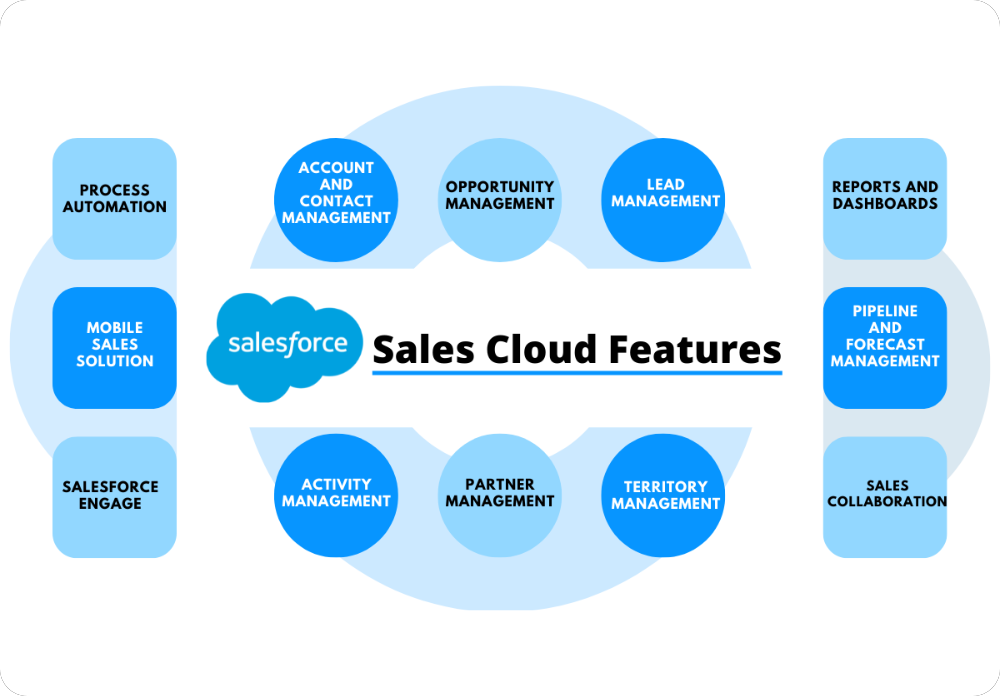
After deploying Salesforce CRM, companies gain multiple key capabilities to comprehensively improve sales management efficiency.
3.1. Lead Management
Salesforce helps companies centrally manage all potential customer leads, tracking customer sources, interaction records, and follow-up statuses. This enables sales teams to more clearly monitor each customer's progress.
3.2. Opportunity Management
In B2B sales, each project typically goes through multiple stages:
- Initial Contact
- Needs Analysis
- Proposal & Solution Discussion
- Business Negotiation
- Closing
Salesforce CRM helps companies manage the complete sales opportunity workflow and provides a clear sales funnel view.
3.3. Customer Lifecycle Management
Customer relationship management extends beyond the sales process to include customer success and long-term relationship maintenance. Through Salesforce CRM, companies can manage the entire lifecycle from prospect to long-term partner.
4. How B2B Companies Going Global Should Select a CRM System
When selecting a CRM system, companies need to evaluate multiple dimensions.
4.1. Global Business Support Capabilities
Companies expanding globally typically need to support multiple country markets, so the CRM system must have:
- Multi-language support
- Multi-currency management
- Global sales team collaboration
These capabilities make Salesforce CRM the preferred choice for many international companies.
4.2. System Scalability and Integration
CRM systems need to integrate with other enterprise systems, such as:
- Website and CMS systems
- Marketing automation platforms
- eCommerce systems
- Customer service platforms
Salesforce's extensive application ecosystem enables companies to easily expand functionality.
5. Key Steps for Implementing Salesforce CRM
Successfully deploying Salesforce CRM is more than software installation — it involves business process optimization and organizational transformation.
Companies typically need to go through the following key phases.

5.1. Requirements Analysis and Business Process Mapping
Start by clearly defining your company's sales process, such as:
- Lead capture methods
- Sales stage definitions
- Customer management rules
These processes will determine how the CRM system is configured.

5.2. System Configuration and Data Migration
During implementation, existing customer data needs to be imported into the system, and sales workflows, fields, and reports configured according to business requirements.

5.3. User Training and Adoption
The success of a CRM implementation depends on team usage, so companies need to provide systematic training for sales and marketing teams. Only when teams actively use the system can Salesforce CRM deliver maximum value.
6. Integrating CRM with Marketing, Website, and eCommerce Systems
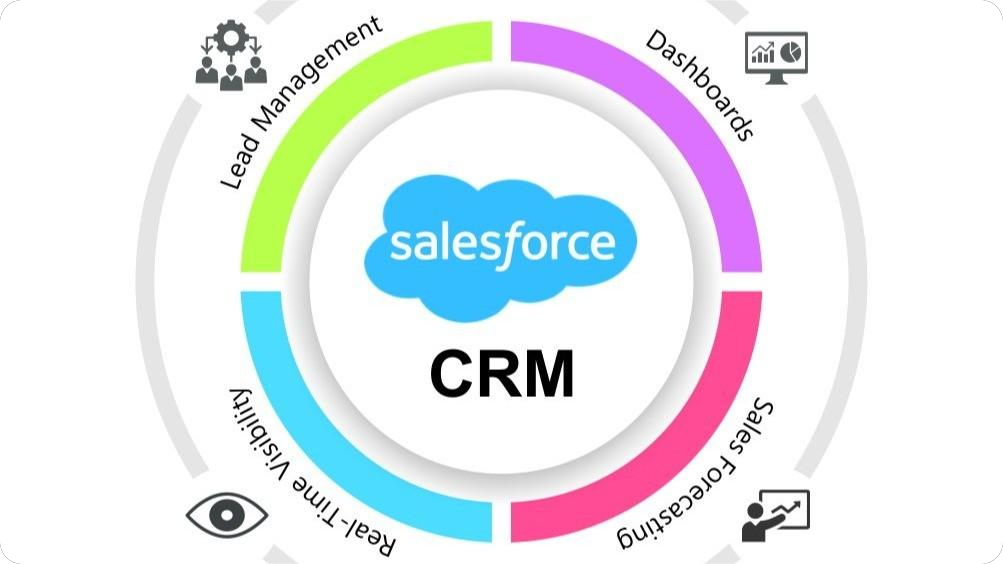
In modern enterprise digital architecture, CRM systems typically need to integrate with multiple systems.
For example:
- Website and marketing automation systems
- Customer Data Platforms (CDP)
- eCommerce platforms
- Customer service systems
When Salesforce CRM integrates with these systems, companies can build a unified customer data ecosystem.
For instance, when a visitor submits a form on the website, customer information can automatically enter the CRM system, allowing the sales team to follow up promptly.
This integration can significantly improve sales efficiency.
7. Common Implementation Challenges and Best Practices
Despite the tremendous value CRM systems can deliver, some challenges may arise during implementation.
7.1. Non-Standardized Business Processes
If a company's internal sales processes are unclear, the CRM system will struggle to deliver value. It is recommended to map out processes before implementation.
7.2. Insufficient User Adoption
If the sales team is unwilling to use the system, the CRM project may fail. Therefore, companies need to strengthen training and management throughout the implementation process.
7.3. Complex System Integration
Large enterprises often have multiple systems, requiring professional teams for integration. Partnering with an experienced implementation provider can ensure smoother Salesforce CRM deployment.
8. Conclusion: Building a Customer-Centric Sales System
In an increasingly competitive global marketplace, companies must continuously improve their customer management capabilities.
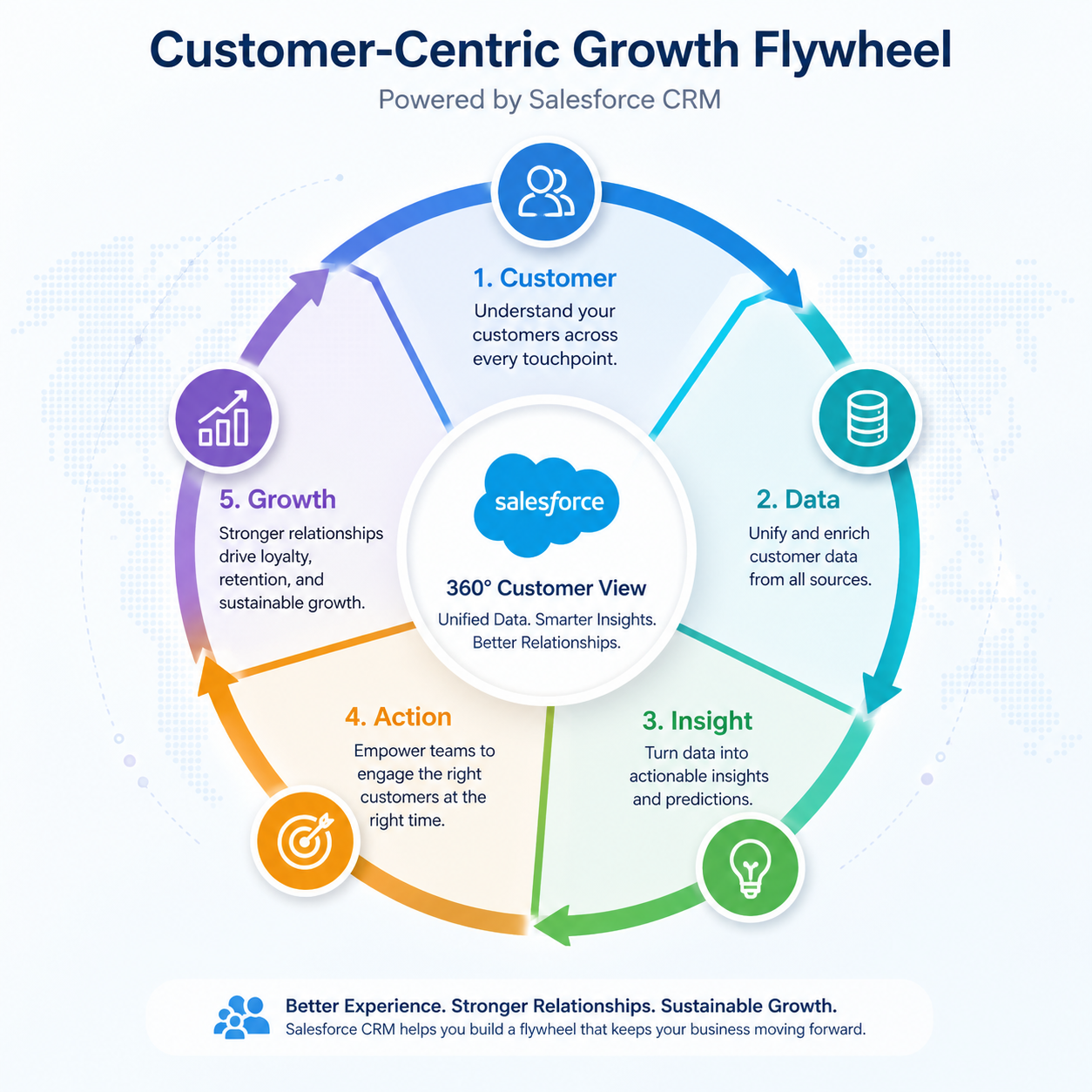
By deploying Salesforce CRM, companies can achieve digitized sales processes, unified customer data, and optimized sales team collaboration.
For B2B companies going global, CRM is not only a sales tool but also a critical platform for building long-term customer relationships.
Through a systematic CRM strategy, companies can more effectively manage the customer lifecycle and continuously drive business growth.
Conclusion
If your company is planning a CRM system upgrade or looking to optimize sales management processes, a professional implementation plan will help you achieve digital transformation more quickly.
Contact our expert team to learn how to build an efficient sales management system with Salesforce CRM and support global business growth.
Contact Us: Salesforce CRM Selection & Implementation Consulting
Product Page: Learn About the Salesforce CRM Solution
Related Articles
- Empowering Complex Workflows: B2B CRM Picks & Salesforce Implementation Guide for Global Business
- Global Marketing Automation: From Strategy to Execution — Building Cross-Channel Intelligent Marketing Journeys
- Enterprise Global Website Solutions: Core Elements for Building a Brand’s Global Digital Headquarters
Related Articles

Enterprise AI MarTech Trends Analysis 2024-2029 Outlook Report
From AI content productivity tools to a core engine for revenue growth and marketing transformation
*The PDF will be sent directly to your inbox.