
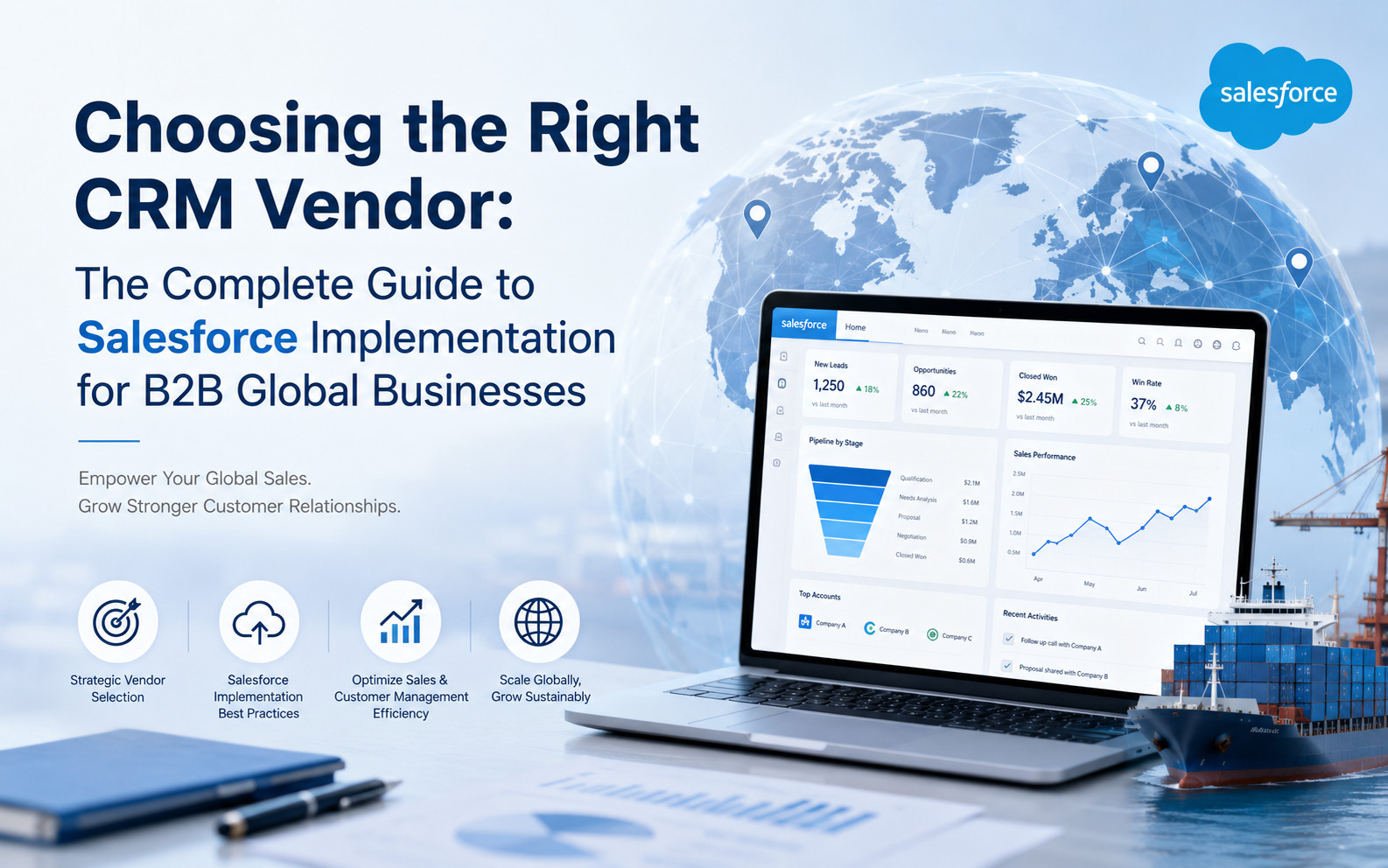
CRM Vendor Selection: A Complete Guide to Salesforce Implementation for B2B Global Expansion
B2B Marketing, Customer Relationship Management (CRM), MarTech, Salesforce
16 May 2026
- Introduction: Why CRM Has Become a Core System for Global Expansion
- Core Logic for CRM Vendor Selection
- Salesforce CRM: The Leading Choice for B2B Global Expansion
- Key Modules and Capabilities of Salesforce Implementation
- How CRM Supports B2B E-commerce and Sales Collaboration
- How to Evaluate Salesforce Service Providers and Partners
- Common Selection Pitfalls and Optimization Recommendations
- Conclusion
- Introduction: Why CRM Has Become a Core System for Global Expansion
- Core Logic for CRM Vendor Selection
- Salesforce CRM: The Leading Choice for B2B Global Expansion
- Key Modules and Capabilities of Salesforce Implementation
- How CRM Supports B2B E-commerce and Sales Collaboration
- How to Evaluate Salesforce Service Providers and Partners
- Common Selection Pitfalls and Optimization Recommendations
- Conclusion
Article Summary
This article explores CRM vendor selection methods and dives into Salesforce implementation logic and key modules for B2B companies expanding globally, helping businesses improve sales efficiency, customer management capabilities, and global collaboration.
1. Introduction: Why CRM Has Become a Core System for Global Expansion

As companies enter the refined operation phase of global expansion, customer management is no longer just a tool for the sales department, but a core system connecting marketing, sales, and service. Against this backdrop, more and more enterprises are paying attention to CRM vendor selection.
For B2B companies, long customer cycles, complex decision-making, and multiple stakeholders mean that without unified customer data and sales process management, lead loss and low conversion efficiency are likely. Therefore, a suitable CRM system has become essential for supporting sales management and customer lifecycle operations.
2. Core Logic for CRM Vendor Selection
When evaluating CRM vendors, companies should not focus solely on system features, but consider the overall business context.
Complex B2B Sales Process Support
Multi-stage sales cycles
Multi-role decision making
Global Capabilities
Multi-language, multi-currency
Cross-regional sales collaboration
System Integration
Website, marketing systems, ERP
Data connectivity with CDP and other platforms
Scalability
Support for future business growth
Automation and AI capabilities
Therefore, truly excellent CRM vendors not only provide systems, but also support enterprises in building complete sales and customer management systems.
3. Salesforce CRM: The Leading Choice for B2B Global Expansion
Among all CRM vendors, Salesforce is one of the most widely used enterprise-level CRM platforms globally.
Core advantages of Salesforce CRM:

Powerful Sales Management
Opportunity management
Sales process standardization

Flexible System Expansion
Customizable business processes
Support for complex organizational structures

Global Support
Multi-country sales team collaboration
Multi-language and multi-currency

Comprehensive Ecosystem
Integration with marketing automation, CDP, and other systems
Therefore, many companies prioritize Salesforce CRM as their core platform when making CRM recommendations for global expansion.
4. Key Modules and Capabilities of Salesforce Implementation
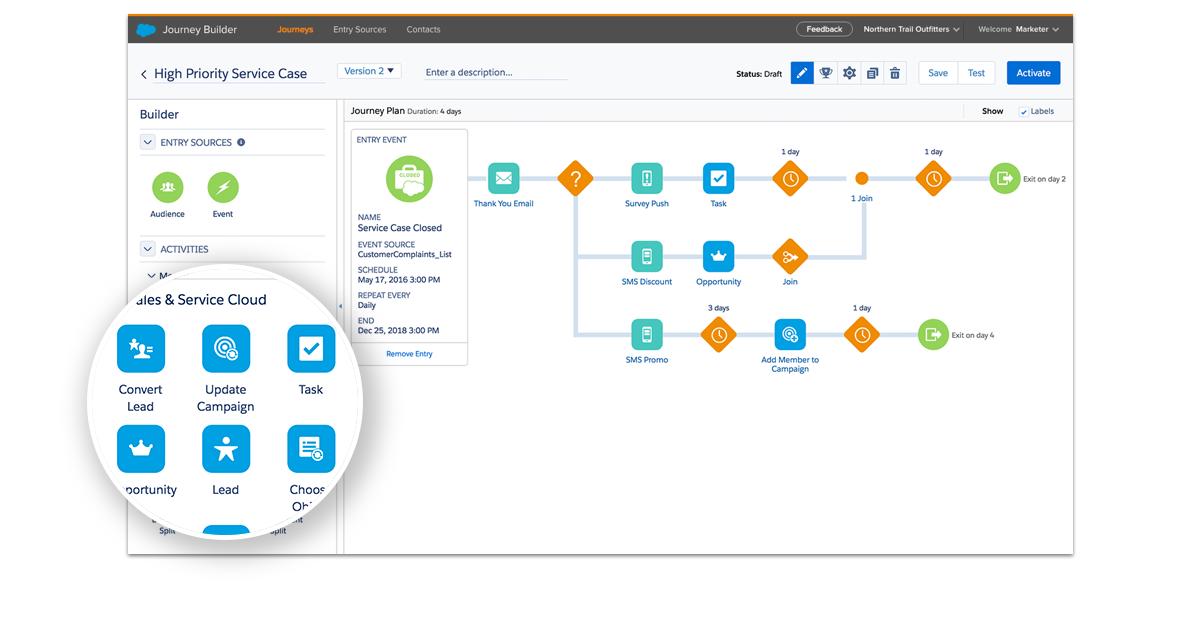
In practice, the value of a CRM system largely depends on implementation quality.
A complete Salesforce implementation typically includes:
Sales Process Design
Complete path from lead to deal
Conversion standards for different stages
Data Model Design
Accounts, contacts, opportunities
Data field and structure planning
System Integration
Website and marketing systems
ERP and order systems
Automation and Reporting
Lead assignment and process automation
Sales performance analysis
This is why companies must evaluate implementation capabilities alongside product features when selecting a CRM vendor.
5. How CRM Supports B2B E-commerce and Sales Collaboration
In many business practices, CRM serves not only the sales team but also needs to collaborate with e-commerce and website systems.
Especially in B2B e-commerce platform scenarios:
- Website captures leads
- CRM manages customers
- Sales drives deals to close
Forming a complete chain.
Specifically, CRM can help:
Unified Customer Data Management
Achieve unified customer data management and sales collaboration
Improved Sales Efficiency
Automated lead assignment and follow-up
Customer Segmentation Support
Distinguish high-potential customers from regular ones
Therefore, an excellent CRM vendor must be able to support the complete business process from traffic to deal closure.
6. How to Evaluate Salesforce Service Providers and Partners
In CRM projects, the implementation team often determines the final outcome.
Companies should focus on the following when evaluating:
1. Rich Experience
Multiple B2B project cases
2. Business Understanding
Understanding of industry sales logic
3. Integration Capability
Ability to connect website, marketing systems, and data platforms
4. Long-term Service
Continuous optimization support
A mature Salesforce service provider or partner is responsible not only for system go-live, but also for long-term optimization and growth.
7. Common Selection Pitfalls and Optimization Recommendations
Common issues companies face when selecting CRM vendors include:
Focus Only on Features
Ignoring implementation and business fit
Ignore Data Structure Design
Leading to difficulty in future expansion
Underestimate Integration Complexity
CRM connecting with multiple systems
Lack Long-term Planning
No optimization after go-live
Avoiding these issues is essential for CRM to truly deliver value.
8. Conclusion
As competition intensifies for companies expanding globally, customer management capability is becoming one of the core competitive advantages. Choosing the right CRM vendor not only improves sales efficiency but also helps enterprises build long-term customer assets. LeadsTech, as an official Salesforce partner, has over ten years of hands-on experience, providing world-class digital marketing services for cross-border businesses based on their platform.
If you are evaluating a CRM system and implementation plan for your business:
Visit our product page for complete solutions
Or Contact Us to discuss your business needs with our consulting team
Related Reading
- From Chinese Enterprise Global Website Building to CDP and Marketing Automation
Understand how websites, data, and CRM collaborate to build a complete lead acquisition and conversion system. - Global Website Analytics Tool Recommendations: How Adobe Analytics Drives Global Business Decisions
Understand the collaborative value of CRM and marketing systems from a data analytics perspective. - Must-Read for Enterprises! Top 5 Best CDP Recommendations and Selection Guide for 2026
Learn more about how customer data platforms integrate with CRM to enhance customer insights.
Related Articles
Enterprise AI MarTech Trends Analysis 2024-2029 Outlook Report
From AI content productivity tools to a core engine for revenue growth and marketing transformation
*The PDF will be sent directly to your inbox.
Email Error
Please enter a valid email address.
Thank You!
The whitepaper has been sent to your inbox. If you don’t see it, please check your spam or promotions folder.