
How Can B2B Exporters Build Their First Digital Lead Generation Channel? From Website to CRM Follow-Up
B2B Marketing, Customer Relationship Management (CRM), Lead Generation
6 August 2026
Summary
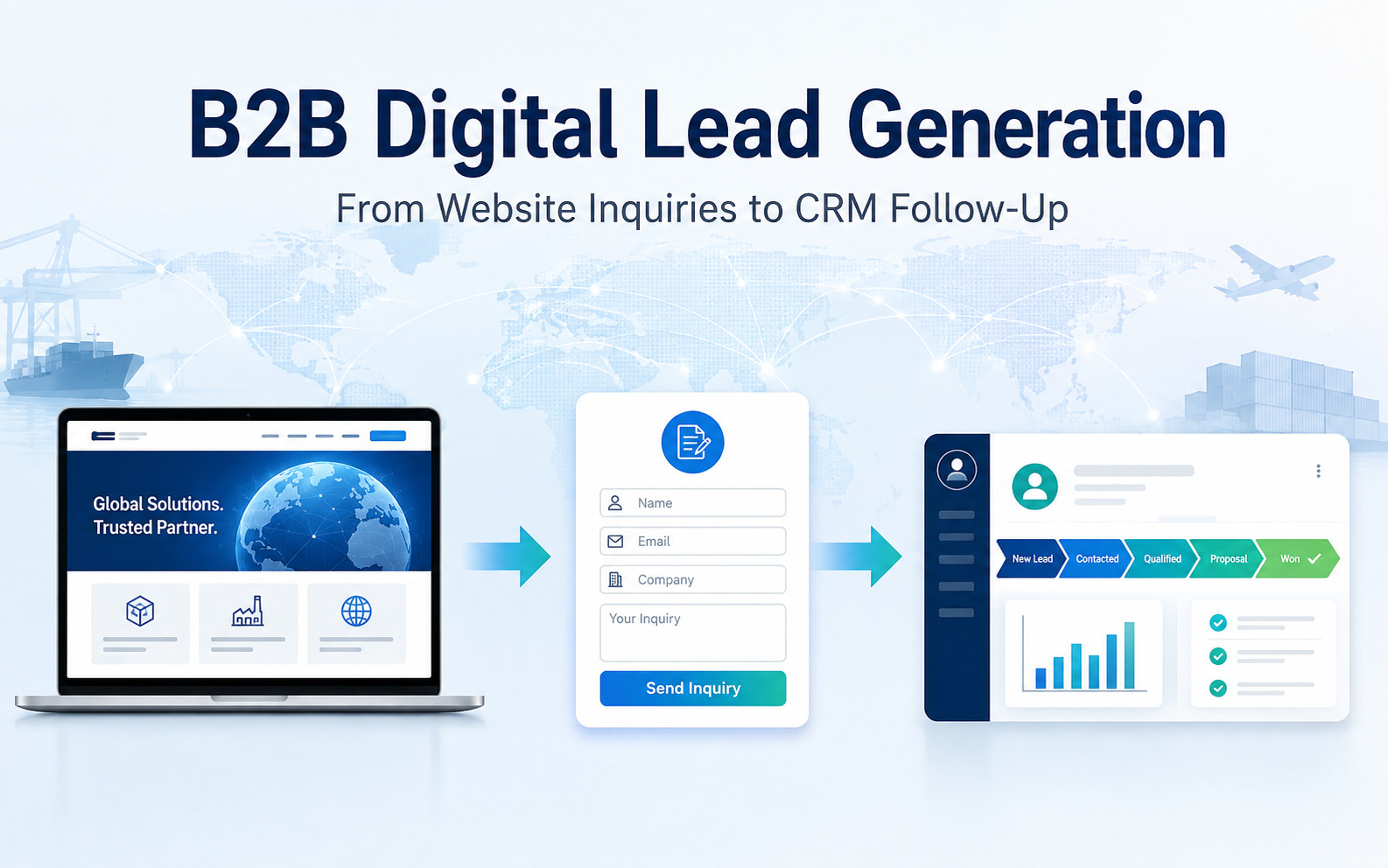
For B2B teams just getting started, developing overseas customers does not have to begin with heavy advertising or purchased lists. A more practical approach is to establish a trackable digital lead generation journey: use your website to capture search and content traffic, collect requirements through forms, and then use a CRM to assign, record, and advance sales follow-up. This article provides a practical introduction to website content and CRM lead management, helping companies build a measurable customer acquisition process. In this type of process, the website, form, and CRM should not be treated as separate tools. LeadsTech’s practical approach is to connect source, inquiry, ownership, and next action into one trackable journey before evaluating whether Salesforce solution partner services are needed for implementation.
1. Why Beginners Should Start with a Trackable Lead Generation Journey
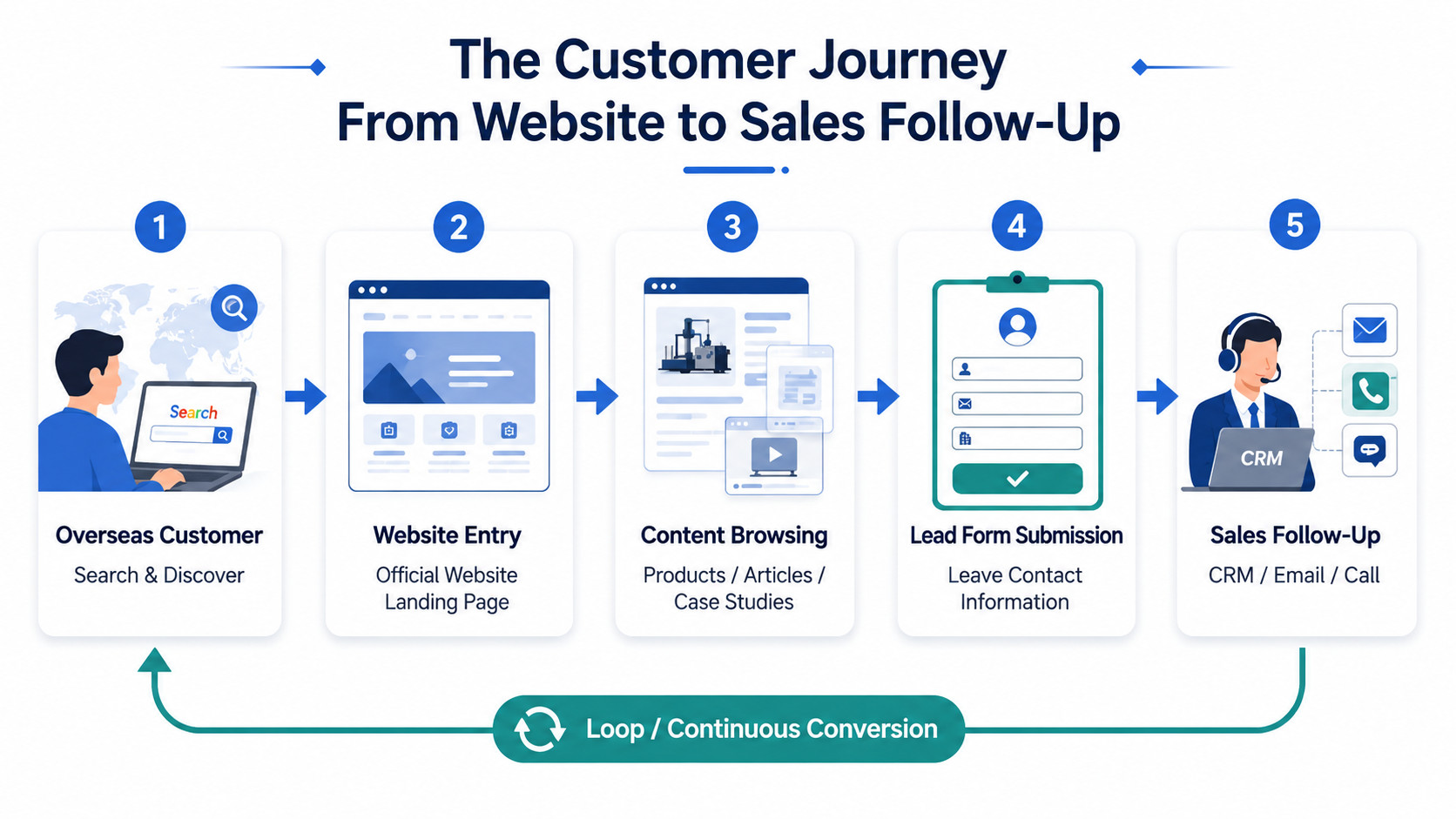
When considering how beginners in international trade can develop customers, many people immediately think of trade shows, B2B platforms, direct messages on social media, or mass cold emails. These methods can all play a role, but without a unified point of entry and a consistent record-keeping system, customer information quickly becomes scattered across inboxes, messaging tools, and spreadsheets. It then becomes difficult to identify which channels are actually generating business opportunities.
Your first digital lead generation channel does not need to be complicated. At a minimum, it should include a website that clearly explains your capabilities, content pages that answer customer questions, a form that makes it easy to submit requirements, and a CRM that continuously records each lead’s source, owner, communication history, and next action. Google Search first discovers pages through crawling, then understands and stores their content through indexing, and finally uses ranking systems to order search results. Your website should therefore ensure that important pages are crawlable, that each topic is clearly presented, and that the content delivers real value to target customers.
2. Step 1: Define Your Products, Customers, and Core Website Pages
The first step in overseas customer development is not to create a large number of pages immediately. It is to clarify three things: what you sell, who your customers are, and why they should choose you.
Start by focusing your website content on five types of core pages:
Home Page
Explain your product, target customers, and core advantages in one sentence.
Product or Service Pages
Explain specifications, use cases, delivery methods, and frequently asked questions.
Industry or Customer Scenario Pages
Show customers that you understand their practical needs.
Case Study or Credentials Page
Showcase certifications, project experience, manufacturing capabilities, or partnership results.
Contact Page
Provide an inquiry form, email address, phone number, and response commitment.
At this stage, the goal is not to build a “website with exhaustive content.” It is to help first-time visitors decide within two or three minutes whether your company is worth contacting. For exporters new to customer development, the website should function first as a sales guide and only then as a brand showcase.
3. Step 2: Use Content to Attract Relevant Overseas Visitors
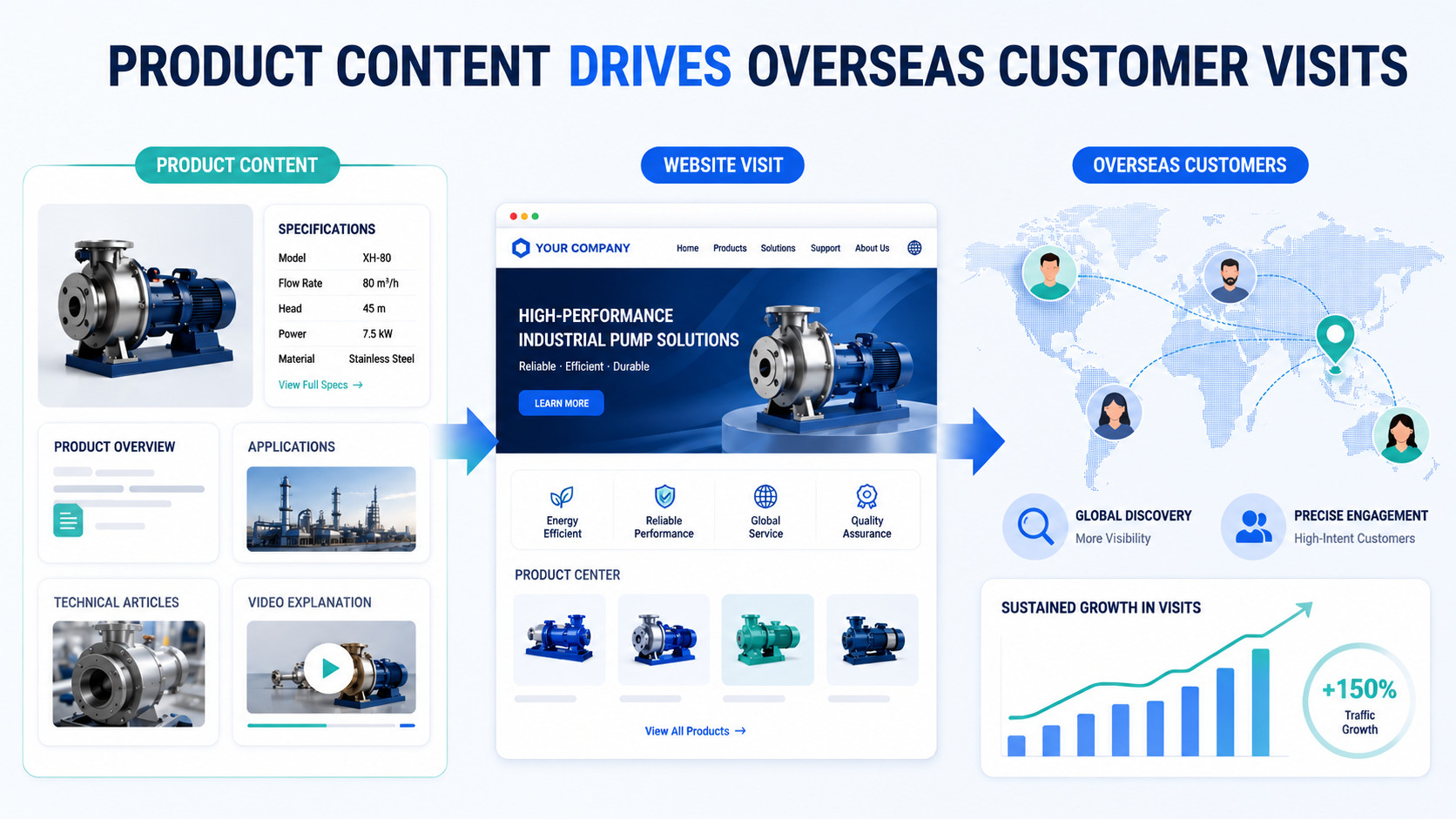
Once your website is live, you should not simply wait for customers to find it by chance. A more practical approach is to publish content consistently around the questions customers search for, such as product selection, technical specifications, application cases, purchasing considerations, lead times, and certification requirements.
When beginning to develop overseas customers, start with these three types of content:

High-intent content
Product models, solutions, and frequently asked questions before requesting a quote.

Educational content
How to select the right material, equipment, or service solution.

Trust-building content
Customer cases, quality inspection processes, certifications, and delivery capabilities.
Google’s SEO Starter Guide emphasizes creating helpful, clearly structured, and easy-to-understand content for users while ensuring that search engines can discover and interpret important pages.
You do not need to pursue a high volume of articles from the outset. Publishing frequency should reflect your team’s resources, customer questions, and content quality. Rather than stuffing pages with irrelevant keywords, continue updating content that answers purchasing, product selection, and application questions.
4. Step 3: Make Inquiry Forms Easier to Submit
Many export websites receive traffic but no inquiries. The reason is not necessarily that the product is uncompetitive; customers may simply be unsure what to do next after reading the content.
In the early stages of overseas customer development, do not rely solely on a “Contact Us” button. Instead, provide calls to action at different levels:
- Download a product catalog or specification sheet;
- Request product selection advice;
- Request a sample or quotation;
- Schedule an online consultation;
- Submit project requirements.
Keep form fields simple as well. For an initial inquiry, it is enough to collect the customer’s name, company, country, email address, requirement type, and message. Too many required fields create friction, while too little information makes qualification more difficult. CRM lead management should begin by recording the form source, identifying whether the customer came from a product page, case study, Google Search, or an advertising campaign.
5. Step 4: Capture Every Lead in Your CRM
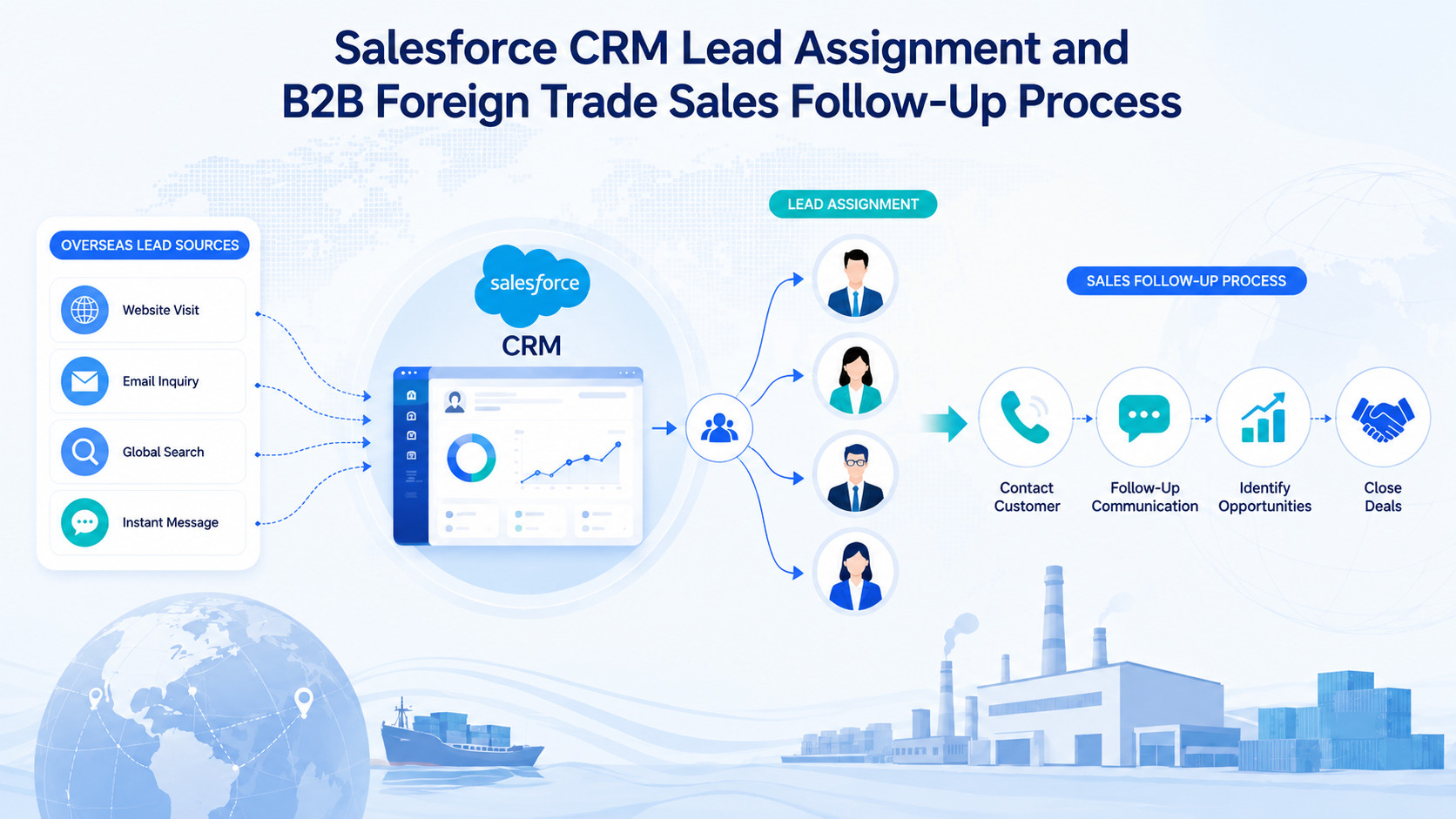
As inquiry volume grows, the greatest risk is not a shortage of leads. It is that leads receive no follow-up, are contacted by multiple people, or are abandoned midway through the process. CRM lead management records the customer journey from the first interaction through the sale, including the source, contact, requirements, owner, communication history, and next action.
Salesforce defines lead management as the process of managing prospects from their first interaction through purchase and explains that a CRM can track lead activities and interactions. Companies that need to evaluate the customer acquisition performance of different channels should also use Lead Source, Campaign, Campaign Member, and the relevant attribution or reporting configuration rather than relying solely on the lead record itself.
Small teams do not need complex automation in their CRM from the outset, but they should achieve at least the following:
- Assign a clear owner to every inquiry;
- Set a time limit for the first response;
- Record every interaction;
- Set a date for each customer’s next follow-up;
- Record the reason for every quotation, sale, postponement, or lost opportunity.
This turns CRM lead management from a simple customer information repository into a management tool that reduces the risks of missed follow-ups, duplicate outreach, and interrupted processes.
6. Step 5: Establish a Weekly Follow-Up Rhythm
In overseas customer development, beginners are most likely to fail not because of the website or CRM, but because they lack a consistent execution rhythm. When starting out, commit to a simple weekly action plan.
Monday: Review New Leads
Confirm that every website form submission, email inquiry, and event contact has been entered into the CRM and assigned to an owner.
Wednesday: Follow Up with Stalled Prospects
Identify customers who have not responded within seven days, have not progressed after receiving a quotation, or have not yet confirmed their requirements, and schedule the next outreach.
Friday: Review Content and Lead Sources
Review which pages generated customers this week, what questions they asked, and which products attracted the most attention, then decide what content to add next week.
Salesforce explains that lead management tools can centralize lead records, assign owners, and track interactions. Automated follow-up and lead prioritization depend on the Salesforce product and edition a company uses, as well as its data quality and specific configuration.
Once a team connects website content, inquiry touchpoints, and CRM lead management, customer acquisition no longer depends on individual memory. It gradually becomes a process that the team can review and improve.
7. Conclusion
For B2B export teams, building a first digital lead generation channel does not need to begin with expensive systems or large-scale advertising. Companies can first turn their website into a clear point of entry for customers, use content to attract relevant visitors, capture requirements through forms, and use a CRM to assign owners, record sources, and schedule consistent follow-up. Together, these steps gradually create a measurable customer acquisition process.
An effective B2B export lead generation process should continuously track website visits, form inquiries, and sales conversations in compliance with applicable regulations and privacy requirements. Teams can then improve content and follow-up actions based on lead source, first-response time, conversion stage, and reasons for lost opportunities. As the business grows, marketing automation, customer segmentation, and a more complete sales operations system can be introduced gradually.
Companies planning a B2B website lead generation program or Salesforce implementation can learn more about Leads Technologies’ corporate website and global digitalization services and Salesforce solution services, or visit Contact Us to discuss an implementation roadmap with our consultants.


Related Articles
- Essential Elements of an International B2B Website: Strengthen Global Competitiveness from Structure to Content
Ideal for learning how to turn your website into a gateway where overseas customers can discover your company, understand its capabilities, and submit inquiries. - From Global Website Development for Chinese Companies to CDP and Marketing Automation
Ideal for exploring customer data, automated nurturing, and sales alignment after establishing website-based lead generation.
Recommended Articles

Enterprise AI MarTech Trends Analysis 2024-2029 Outlook Report
From AI content productivity tools to a core engine for revenue growth and marketing transformation
*The PDF will be sent directly to your inbox.