
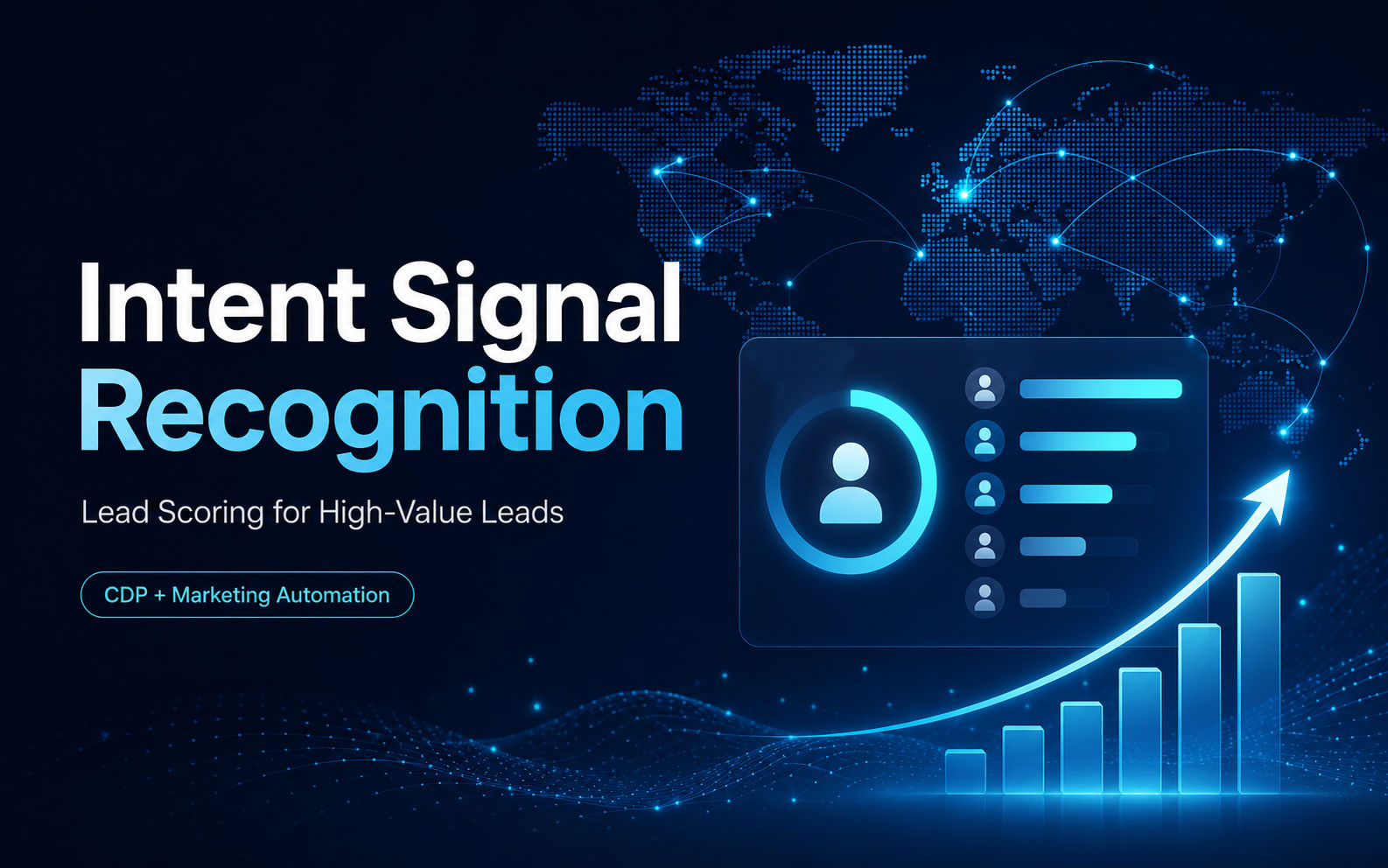
Intent Signals in Overseas Client Development: Convert More High-Value Leads
CDP, Lead Generation, Marketing Automation
16 June 2026
Summary
Traditional overseas customer acquisition often relies on contact lists, bulk email campaigns, or advertising. However, the real challenge is not insufficient reach, but the inability to identify customer intent, differentiate customer value, and nurture prospects continuously. Starting with intent signal identification, this article explains how overseas customer acquisition solutions use CDP to unify customer data and combine it with automated journeys to enable precise engagement and high-value conversions.
1. What Is an Overseas Customer Acquisition Solution?

An overseas customer acquisition solution refers to the way enterprises use systems such as websites, advertising, email, CRM, CDP, and marketing automation to identify customer intent signals, build customer segmentation, and continuously drive sales follow-up and customer nurturing. In overseas markets, however, customer decision journeys are longer, touchpoints are more numerous, and trust takes longer to build. If companies focus only on the volume of outreach, they can easily end up with many leads but low quality, high sales follow-up costs, and long conversion cycles.
The core of an overseas customer acquisition solution is a shift from list-driven to intent-driven growth: using CDP to unify customer data and behavioral signals, using marketing automation to design nurturing journeys, and using CRM to support sales follow-up. Truly effective overseas lead generation is not about putting more people into the funnel. It is about identifying, on the basis of compliant data collection and data integration, which customers or accounts are showing purchase intent, which are worth nurturing over time, and which should be prioritized for sales. Adobe Real-Time CDP’s official materials note that it can turn fragmented data into unified customer profiles for relevant experiences and real-time activation, which aligns closely with the logic of moving from list-driven to intent-driven customer acquisition.
Common gaps in overseas customer acquisition: Traditional overseas customer acquisition processes typically have three gaps.
1. Data Gap: Incomplete Visibility into Customer Behavior
A customer may first click an ad, then browse product pages on the website, download materials, and finally reply to a sales email. But if these behaviors are scattered across ad platforms, website backends, CRM, and email systems, the company cannot accurately determine the customer's true interests.
2. Segmentation Gap: All Leads Are Treated Equally
Many companies treat all form submissions, business cards, and download users as sales leads. As a result, sales teams spend substantial time on low-intent prospects, while high-value customers do not receive timely responses.
3. Engagement Gap: Follow-Up Lacks Continuity
After the first email receives no reply, the customer often goes silent. Without continuous content nurturing and behavior-triggered engagement, it is difficult for companies to turn early-stage interest into real opportunities.
2. Reshaping Customer Identification with Intent Signals
A mature overseas customer acquisition solution is not a single-channel campaign. It connects customer behavior tracking, identity resolution, customer segmentation, audience activation, automated journeys, and sales collaboration.
The first step in an overseas customer acquisition solution is to redefine what constitutes an effective customer. An effective customer is not necessarily the first person to submit a form, but an individual or account that continuously demonstrates need, interest, and decision-making signals. In B2B scenarios, account-level intent is often more important than the behavior of a single contact.
Common intent signals include:
- Repeated visits to the same product or solution pages
- Downloading white papers, technical materials, or case studies
- Viewing content related to pricing, specifications, delivery, or services
- Clicking product links in emails
- Coming from target countries, target industries, or priority customer types
- Multiple contacts from the same company visiting similar content
These signals help companies classify customers into three groups:
High-Intent Customers
Suitable for triggering immediate sales alerts and arranging one-to-one follow-up.
Nurture-Ready Customers
Suitable for entering content journeys that build trust progressively through case studies, guides, and industry insights.
Low-Priority Customers
Do not require significant sales resources for now, but should remain in the long-term engagement pool.
This approach shifts overseas customer acquisition from a competition for lead volume to a competition for intent quality.
3. How CDP Builds Actionable Customer Segmentation
The value of CDP is not merely storing customer data. Through identity resolution, unified profiles, dynamic segmentation, and audience activation, CDP converts fragmented behaviors into audience assets that can be used by marketing, sales, and service teams. In overseas customer acquisition solutions, CDP typically performs three critical tasks.

1. Unified Customer Profiles
With identity matching, data consent, and system connectivity in place, website visits, ad clicks, email interactions, form information, CRM records, and transaction data can be integrated into a single customer or account view.

2. Building Dynamic Segments
Customer groups are continuously updated based on country, industry, product interest, behavior frequency, and lifecycle stage.

3. Activation Across Channels
High-intent audiences that meet consent and channel usage requirements are synced to advertising, email, CRM, or personalized content systems for subsequent engagement.
Adobe Real-Time CDP’s guidance on audience activation notes that unified customer profiles can be transformed into actionable audiences and used across channels such as email, paid media, CRM, and customer service. It also supports real-time activation based on behavioral changes. This is critical for overseas customer expansion because overseas customers rarely convert after a single visit; companies must continuously capture new behavioral changes.
4. How Automated Journeys Improve High-Value Conversions
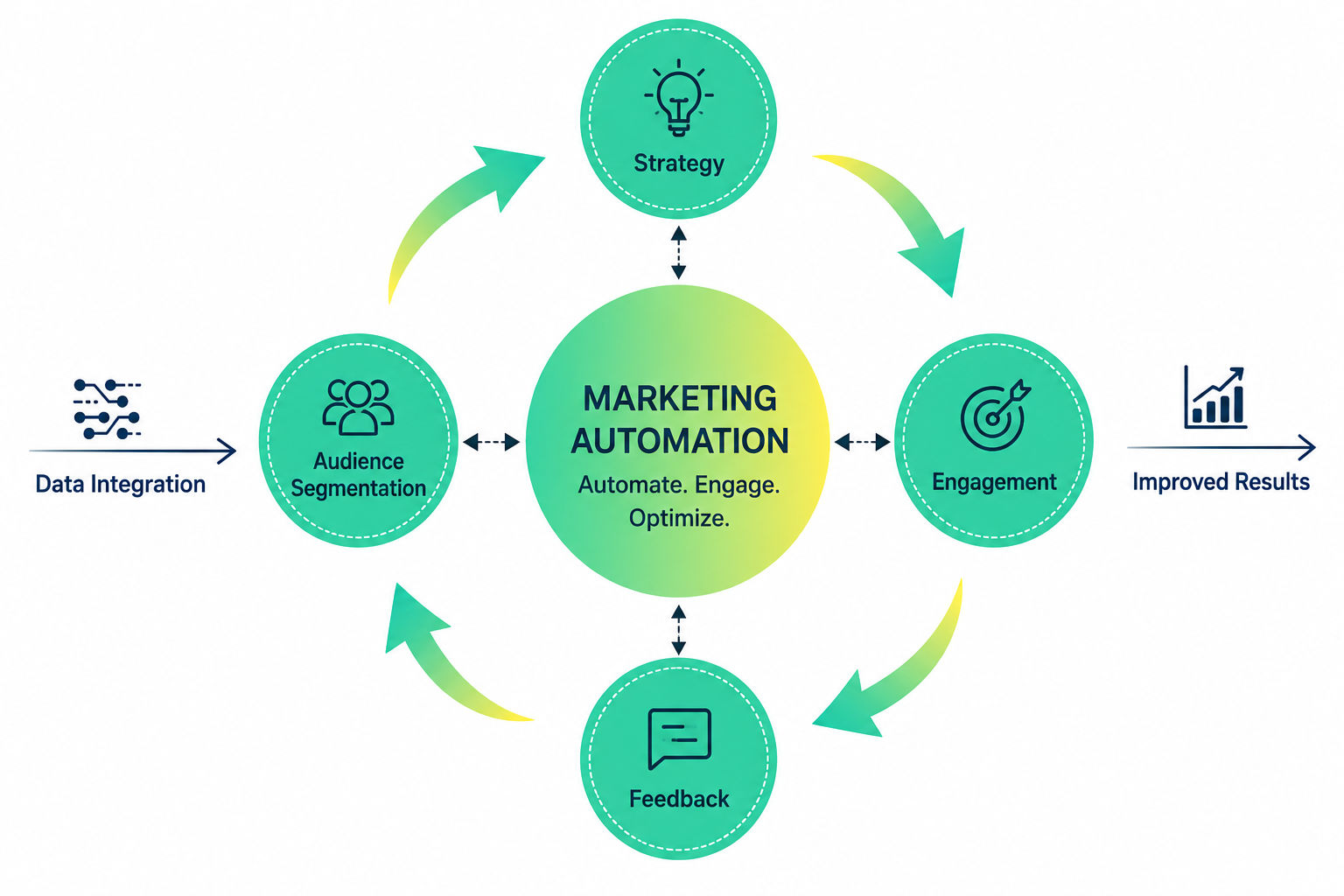
When an overseas customer acquisition solution enters the execution stage, the core role of marketing automation or Adobe Journey Optimizer is to turn customer segmentation into scheduled, event-triggered, or real-time journey actions.
It should not simply be used for scheduled bulk email sends. Instead, journeys should be designed around customer intent. For example:
Scenario 1: Product Interest Nurturing
After a customer repeatedly browses a category of product pages, the system automatically delivers application cases, technical specifications, and relevant customer success stories.
Scenario 2: High-Intent Sales Alerts
After a customer downloads quotation materials or visits the contact page multiple times, and provided that CRM or marketing automation integration is in place, the system can automatically notify sales and include the customer's recent behavior history.
Scenario 3: Re-Engaging Silent Customers
After a customer has not visited for a period of time, the system pushes new content or event invitations based on their previous interests.
Scenario 4: Key Account Collaboration
When multiple contacts from the same company visit similar content, the system flags the company as a potential key account and syncs it to the sales team.
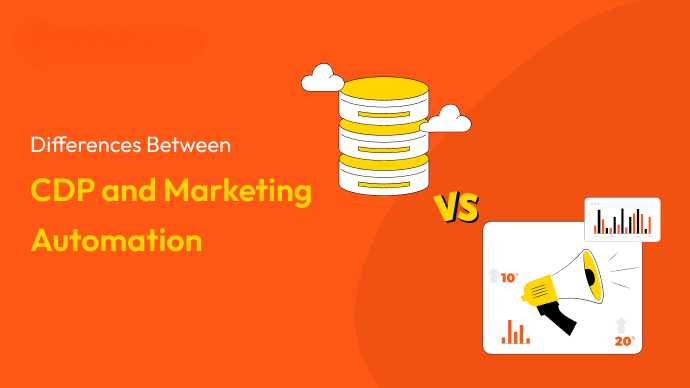
Adobe Real-Time CDP can be combined with Adobe Journey Optimizer to create and deliver personalized customer journeys based on unified profiles, audience segments, and event-triggering mechanisms. This shows that the effectiveness of marketing automation depends on whether front-end data is sufficiently accurate and segmentation is sufficiently clear.
5. Implementation Path: From Customer Identification to Sales Alignment
When implementing an overseas customer acquisition solution, companies should avoid starting with tool procurement. Instead, they should advance according to a closed-loop business process.
Step 1: Define the Ideal Customer Profile
Clarify priority countries, industries, company sizes, buying roles, and product needs. Without a clear profile, subsequent segmentation and nurturing will lose focus.
Step 2: Map Key Touchpoints
Include the website, advertising, social media, email, trade shows, CRM, and e-commerce pages, and identify which touchpoints can reflect customer intent.
Step 3: Establish Scoring Rules
Assign different weights to website visits, downloads, email interactions, form submissions, and account matching.
Step 4: Design Nurturing Journeys
Design content around different customer stages: trends for the awareness stage, case studies for the comparison stage, and solutions and service capabilities for the decision stage.
Step 5: Enable Sales Alignment
Automatically push high-intent customers to CRM and give sales visibility into behavioral context, rather than showing only a cold form record.
Through this path, marketing automation is no longer just an email tool. It becomes an operational bridge connecting CDP audiences, customer journeys, CRM sales follow-up, and conversion analytics.
6. Conclusion
The key to overseas lead generation is shifting from finding more customers to identifying more valuable customers. If companies still rely on list-based bulk email or isolated advertising campaigns, it will be difficult to continuously improve conversion efficiency in highly competitive overseas markets.
The value of an overseas customer acquisition solution lies in combining the data integration capabilities of CDP with the continuous engagement capabilities of marketing automation. The former helps companies understand who customers are, where their interests lie, and how much value they represent; the latter helps companies move customers to the next stage at the right time with the right content.
If you are planning overseas customer acquisition, CDP implementation, or a cross-channel customer nurturing system, we invite you to learn more about our overseas digitalization and customer growth services, or visit Contact Us to discuss your target markets, customer segmentation, and implementation path with our consulting team.
Further Reading
- Overseas Marketing Automation: From Strategy to Implementation, Building Cross-Channel Intelligent Marketing Journeys: Suitable for further understanding how companies expanding overseas can design cross-channel customer journeys and automated engagement.
- From Overseas Website Development for Chinese Enterprises to CDP and Marketing Automation: Suitable for further understanding how websites, CDP, and customer journeys work together to support companies expanding overseas.
- Integrating AEP, RTCDP, AJO, and CJA to Build More Efficient Marketing Experiences: Suitable for understanding how the Adobe technology ecosystem creates a closed loop from data integration and audience segmentation to journey activation.
Related Articles
Enterprise AI MarTech Trends Analysis 2024-2029 Outlook Report
From AI content productivity tools to a core engine for revenue growth and marketing transformation
*The PDF will be sent directly to your inbox.
Email Error
Please enter a valid email address.
Thank You!
The whitepaper has been sent to your inbox. If you don’t see it, please check your spam or promotions folder.