
Is B2B Lead Generation Outsourcing Worth It? When It Works Better
B2B Marketing, Lead Generation
21 May 2026
- Introduction: Why B2B Companies Are Reconsidering Lead Generation Outsourcing
- What Is B2B Lead Generation Outsourcing? Common Service Models
- Advantages and Limitations of In-House Lead Generation
- Real Value and Potential Risks of B2B Lead Generation Outsourcing
- When Is Outsourcing More Effective Than an In-House Team?
- Cost and Efficiency Comparison: Outsourcing vs. In-House
- How to Determine If Your Business Is Ready for Outsourcing
- Conclusion: Choosing the Right Lead Generation Model for Your Stage
- Introduction: Why B2B Companies Are Reconsidering Lead Generation Outsourcing
- What Is B2B Lead Generation Outsourcing? Common Service Models
- Advantages and Limitations of In-House Lead Generation
- Real Value and Potential Risks of B2B Lead Generation Outsourcing
- When Is Outsourcing More Effective Than an In-House Team?
- Cost and Efficiency Comparison: Outsourcing vs. In-House
- How to Determine If Your Business Is Ready for Outsourcing
- Conclusion: Choosing the Right Lead Generation Model for Your Stage
1. Introduction: Why B2B Companies Are Reconsidering Lead Generation Outsourcing
In the B2B market, acquiring new customers has never been easy. As competition intensifies, list costs rise, and sales pressure mounts, more companies are re-examining a fundamental question:
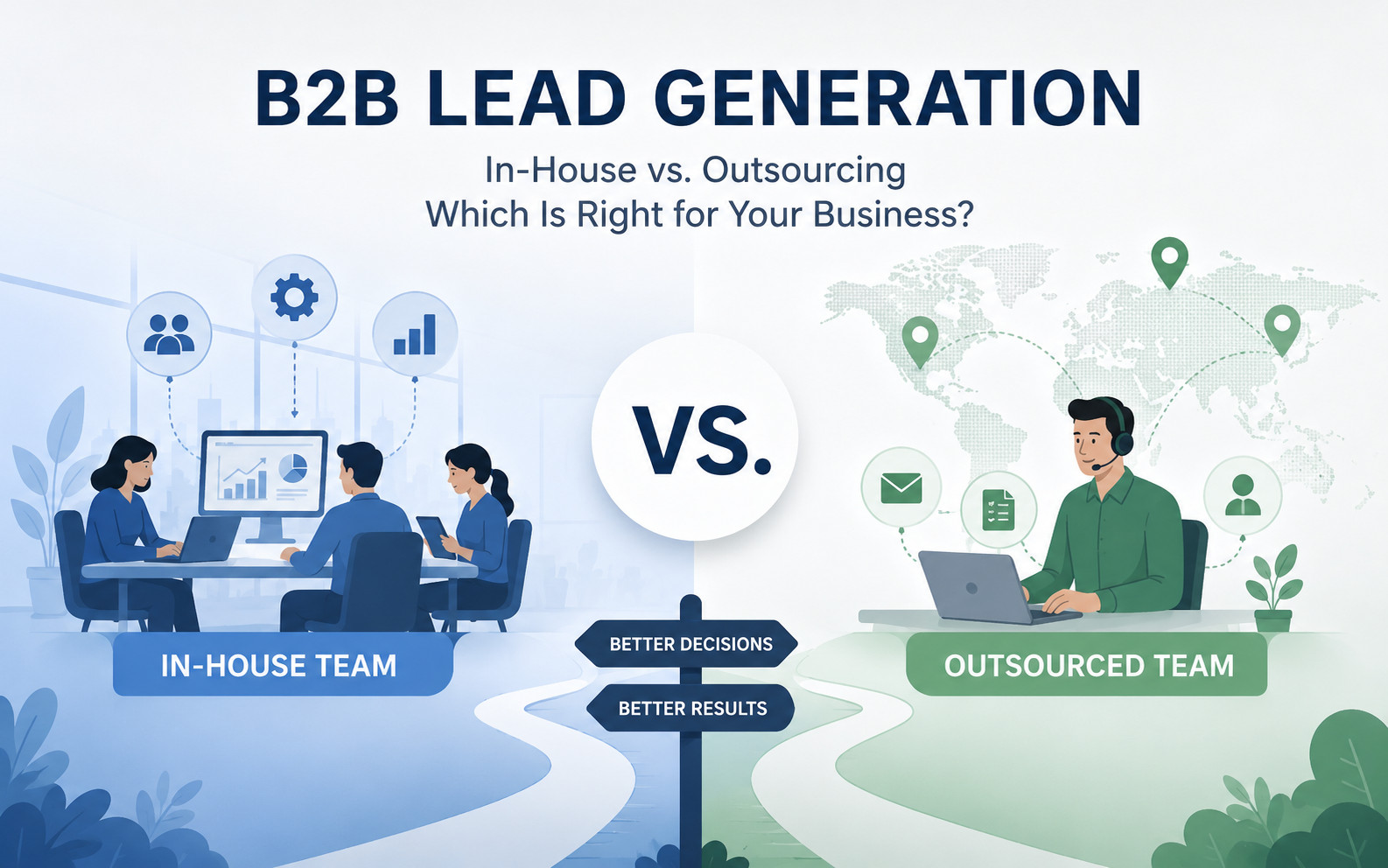
Should B2B lead generation be handled entirely by an in-house team, or should outsourcing be considered?
For many decision-makers, "outsourcing" raises concerns: Will quality suffer? Is it just buying lists? Will we lose control over our customer relationships?
In reality, as lead generation models have evolved, outsourcing is no longer simply about "making calls or sending emails" on behalf of a company.
2. What Is B2B Lead Generation Outsourcing? Common Service Models
B2B lead generation outsourcing refers to companies delegating part or all of their prospecting activities to third-party teams with specialized processes and resources.
Common outsourcing models include:
- List research and data organization
- Cold outreach and initial contact
- Lead qualification and scoring
- Delivering follow-up-ready leads to internal sales
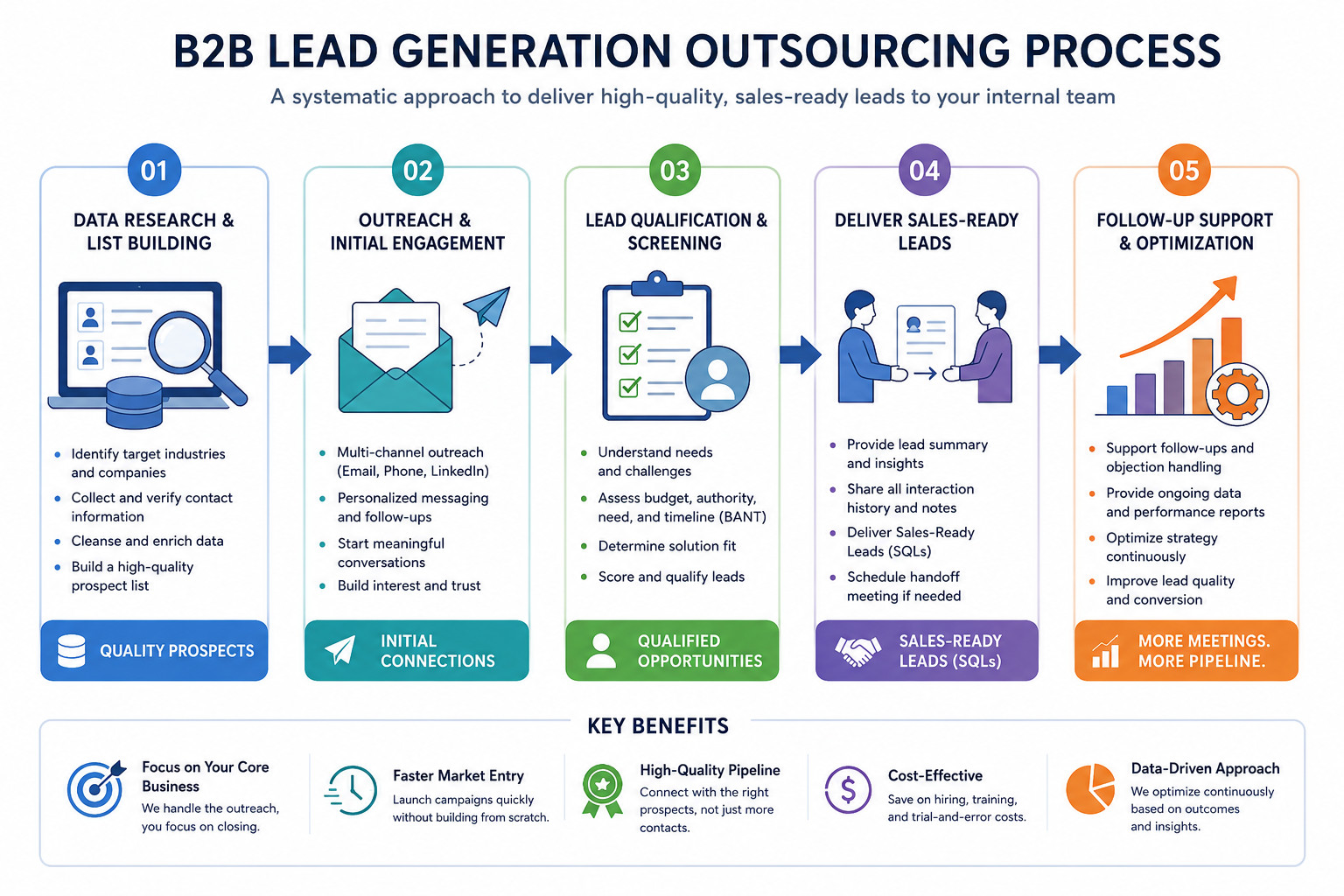
Unlike traditional "list buying," modern B2B lead generation outsourcing emphasizes process, roles, and conversion quality.
3. Advantages and Limitations of In-House Lead Generation
Handling lead generation internally does have its advantages:
- Deep understanding of products and industry
- Tight integration with sales processes
- Lower communication costs
However, in-house lead generation also faces practical limitations:
- Building a team takes time and money
- High talent turnover risk
- Efficiency heavily depends on individual capabilities
- Steep learning curve when entering new markets
As companies enter growth or expansion phases, these limitations often become magnified.
4. Real Value and Potential Risks of B2B Lead Generation Outsourcing
Well-executed lead generation outsourcing can deliver the following value:
- Rapid launch of customer acquisition without lengthy training
- Introduction of proven methodologies and multi-channel experience
- Reduced trial-and-error costs and avoidance of repeated mistakes
But if chosen poorly, outsourcing can also bring risks, such as:
- List quality that does not match actual needs
- Overemphasis on quantity at the expense of conversion
- Lack of transparency making performance hard to evaluate
Therefore, the key is not "whether to outsource," but how to choose the outsourcing model and partnership approach.
5. When Is Outsourcing More Effective Than an In-House Team?
In the following situations, B2B lead generation outsourcing is often more effective than relying solely on an in-house team:
- The company wants to quickly validate a new market or industry
- Internal sales resources are limited and cannot afford extensive trial efforts
- The lead generation process is not yet mature and lacks methodology
- The company wants to reduce dependency on individual salespeople
In these cases, outsourcing can serve as an "accelerator" rather than a replacement for the internal team.
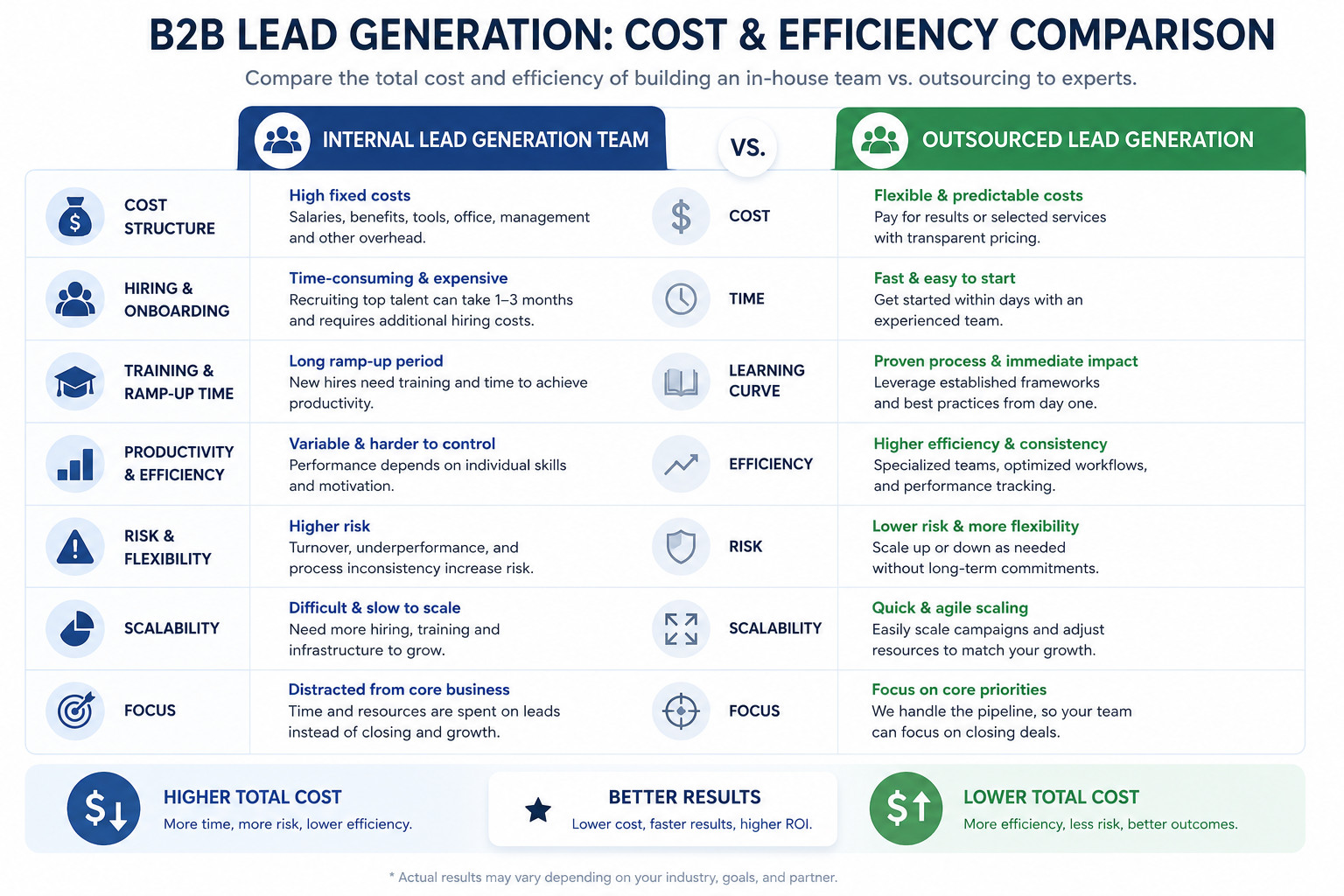
6. Cost and Efficiency Comparison: Outsourcing vs. In-House
On the surface, outsourcing appears to increase expenses, but businesses should compare "total cost" against "actual output."
Hidden costs of an in-house team include:
- Recruitment and training time
- Fixed salaries and benefits
- Trial-and-error and inefficiency time costs
By contrast, outsourcing costs are typically more flexible, and results can be seen in a shorter timeframe—especially suitable for companies that need to act quickly.
7. How to Determine If Your Business Is Ready for Outsourcing
When considering lead generation outsourcing, companies should ask themselves the following questions:
- Do we have a clear picture of our target market and ideal customer profile?
- Do we need to see tangible business opportunities in the short term?
- Do we have the capability to build a complete lead generation process internally?
- Do we want to reduce upfront risk and trial-and-error costs?
If most answers lean toward "yes," outsourcing is likely a worthwhile option to consider.
8. Conclusion: Choosing the Right Lead Generation Model for Your Stage
B2B lead generation outsourcing is not a silver bullet, nor is it suitable for every company. What truly matters is choosing the lead generation model that best fits your current business needs.
For some companies, an in-house team is the long-term core. For others, outsourcing is a more efficient growth strategy.
The key is not which one you choose, but whether you can consistently and reliably generate high-quality leads.
Every B2B company has different markets, resources, and growth stages, so lead generation strategy should not be one-size-fits-all.
If you are evaluating whether to outsource part of your B2B lead generation, or want to understand the practical differences between different models, feel free to reach out to our consulting team.
👉 Contact Us: Discuss the best lead generation strategy for your business stage
Related Articles
Enterprise AI MarTech Trends Analysis 2024-2029 Outlook Report
From AI content productivity tools to a core engine for revenue growth and marketing transformation
*The PDF will be sent directly to your inbox.
Email Error
Please enter a valid email address.
Thank You!
The whitepaper has been sent to your inbox. If you don’t see it, please check your spam or promotions folder.