
Adobe Analytics Costs and ROI: A Practical Guide
Adobe Analytics, Adobe Experience Cloud, MarTech, Website Analytics
31 July 2026
- What Makes Up the Cost of Implementing Adobe Analytics?
- Which Factors Have the Greatest Impact on Adobe Analytics Implementation Costs?
- How Should Adobe Analytics ROI Be Estimated?
- When Is Adobe Analytics Worth Implementing?
- How Can You Reduce Implementation Risk and Select a Service Provider?
- Adobe Analytics Implementation Assessment Checklist
- Frequently Asked Questions (FAQ)
- Conclusion
- Further Reading
- What Makes Up the Cost of Implementing Adobe Analytics?
- Which Factors Have the Greatest Impact on Adobe Analytics Implementation Costs?
- How Should Adobe Analytics ROI Be Estimated?
- When Is Adobe Analytics Worth Implementing?
- How Can You Reduce Implementation Risk and Select a Service Provider?
- Adobe Analytics Implementation Assessment Checklist
- Frequently Asked Questions (FAQ)
- Conclusion
- Further Reading
Key Takeaways
Adobe does not publish a standard fixed price for Adobe Analytics. Licensing is generally quoted according to the selected package, usage and enterprise requirements. Enterprises should include one-time implementation, annual licensing, internal resources, system integration, governance and ongoing optimisation in their total cost of ownership. ROI should not be assessed solely on website traffic; organisations should quantify incremental gross profit, reduced media waste, reporting hours saved and better decision-making. Implementation is generally more likely to deliver value when an enterprise operates multiple websites and markets, manages complex conversion journeys and has clearly designated analytics owners.
That order—define the business question first, then scope the work—is also the basis LeadsTech uses when assessing an Adobe Analytics implementation.
When an enterprise needs to plan platform implementation, data architecture, and ongoing governance together, LeadsTech’s Adobe solution partner service can assess the investment against the existing stack, data requirements, and delivery scope rather than relying on a single licence figure.
1. What Makes Up the Cost of Implementing Adobe Analytics?
Adobe currently offers flexible packages including Select, Prime and Ultimate, but enterprises must contact Adobe for a quotation. Adobe’s product documentation also indicates that some licensing metrics are related to Primary Server Calls and Secondary Server Calls. Therefore, organisations should not base their budgets on a single monthly or annual price circulated online.
One-Time Investment
One-time implementation costs typically include:
Business Requirements Workshops and KPI Design
In practice, cost planning should start with business questions and KPIs rather than a license quote; once the decisions are clear, the SDR, data layer, and integration scope become much easier to define.
Solution Design Reference (SDR, the data tracking specification) and Data Layer Planning
SDK, Tag and Event Implementation for Websites or Apps
Integration with CRM, E-commerce, CDP, Advertising Platforms or BI Systems
Data Validation, Dashboards, Training and Go-Live Support
Migration of Legacy Tracking Architecture and Continuity of Historical Reporting
Adobe currently identifies Adobe Experience Platform Web SDK as the standard recommended approach for new customers implementing Adobe Analytics. If an enterprise already uses legacy AppMeasurement, different tag management tools or multiple Data Layers, migration and testing requirements will generally increase.
Ongoing Investment
Ongoing costs include annual licensing, Server Call usage or overage risk, consulting support, internal analytics resources, tag maintenance, post-release testing, dashboard adjustments and data governance.
Adobe provides a Server Call Usage dashboard and overage alerts, enabling users to compare actual usage against contractual limits. Enterprises should incorporate usage monitoring and growth forecasting into routine management rather than waiting until contract renewal to review them.
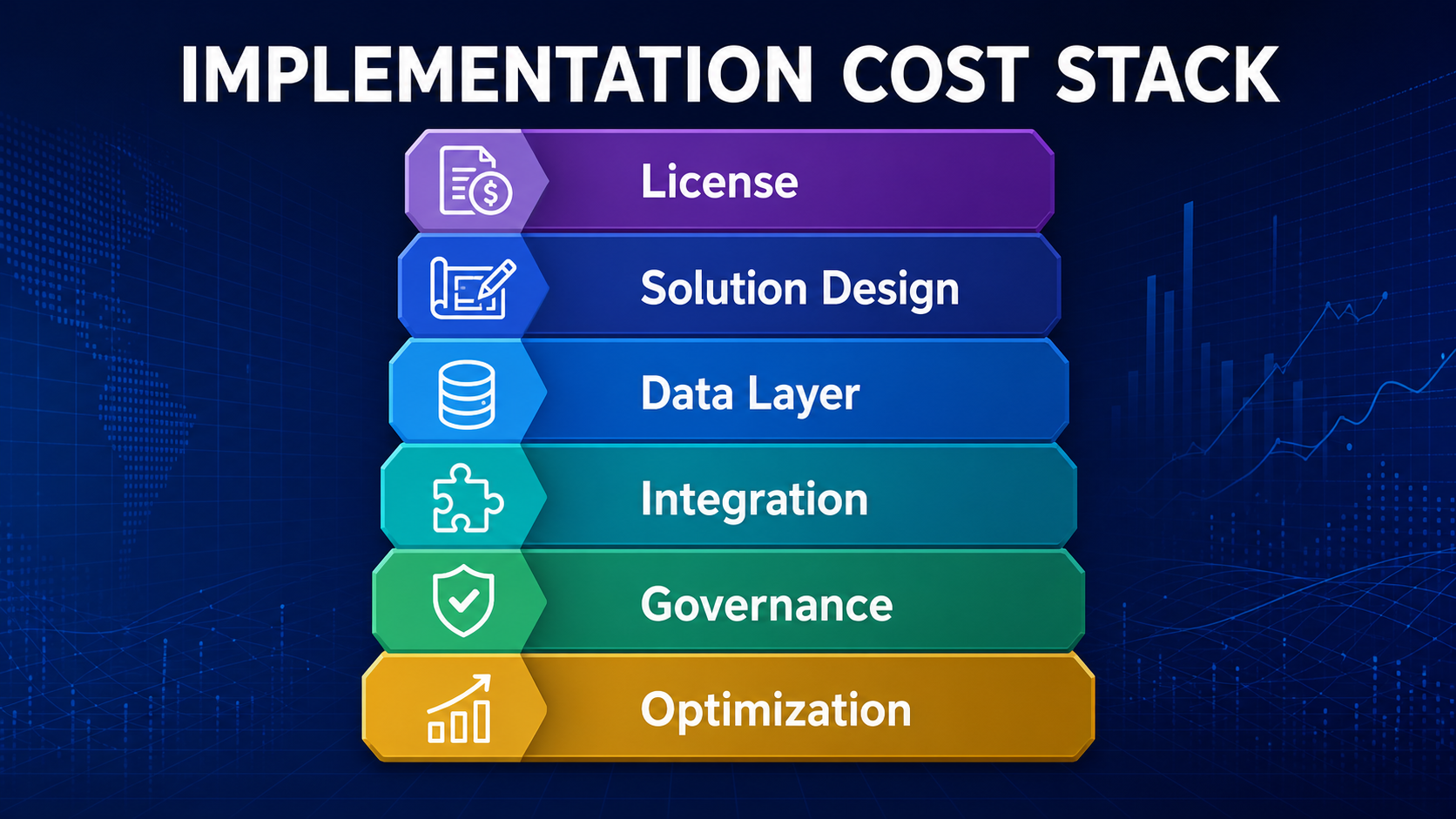
Figure 1 | The cost of implementing Adobe Analytics comprises licensing, planning, implementation, integration, governance and ongoing optimisation.
2. Which Factors Have the Greatest Impact on Adobe Analytics Implementation Costs?
The primary cost drivers are generally not employee headcount, but data and operational complexity:
- The number of websites, apps, brands, countries and language versions
- The conversion, membership, product and content events that need to be tracked
- Whether integration with CRM, e-commerce, CDP or a data warehouse is required
- The quality of the existing Data Layer, tags and legacy tracking code
- Consent management, privacy, access control and data retention requirements
- The required package, add-on features and estimated Server Call volume
- The ability of internal marketing, product, analytics, IT and legal teams to collaborate
A more prudent approach is to divide the budget into a minimum viable go-live scope and a second phase of optimisation. Phase one should establish trustworthy data for core conversions, revenue, leads and channels. Advanced segmentation, integrations and automated reporting can then be added progressively.
3. How Should Adobe Analytics ROI Be Estimated?
Enterprises can use the following framework:
- Annual benefit = Incremental gross profit + Labour cost savings + Reduced media waste + Avoided costs from data errors and rework
- Annual total cost of ownership = Annual licensing + Ongoing support + Internal resources + Integration and infrastructure costs
- ROI = (Annual benefit − Annual total cost of ownership) ÷ Annual total cost of ownership × 100%
- Payback period (months) = One-time implementation cost ÷ Monthly net benefit
Consider an industrial equipment exporter that operates websites for Hong Kong, Taiwan and Southeast Asia but cannot accurately attribute enquiry sources and must manually consolidate advertising, website and CRM reports every month.
The enterprise could first standardise its Data Layer, track product pages, technical document downloads, enquiry forms and sales follow-ups, and write source data into its CRM. After implementation, it should monitor enquiry conversion rate, qualified opportunity rate, cost per opportunity, reporting hours, data discrepancy rate and lead response time rather than comparing page views alone.
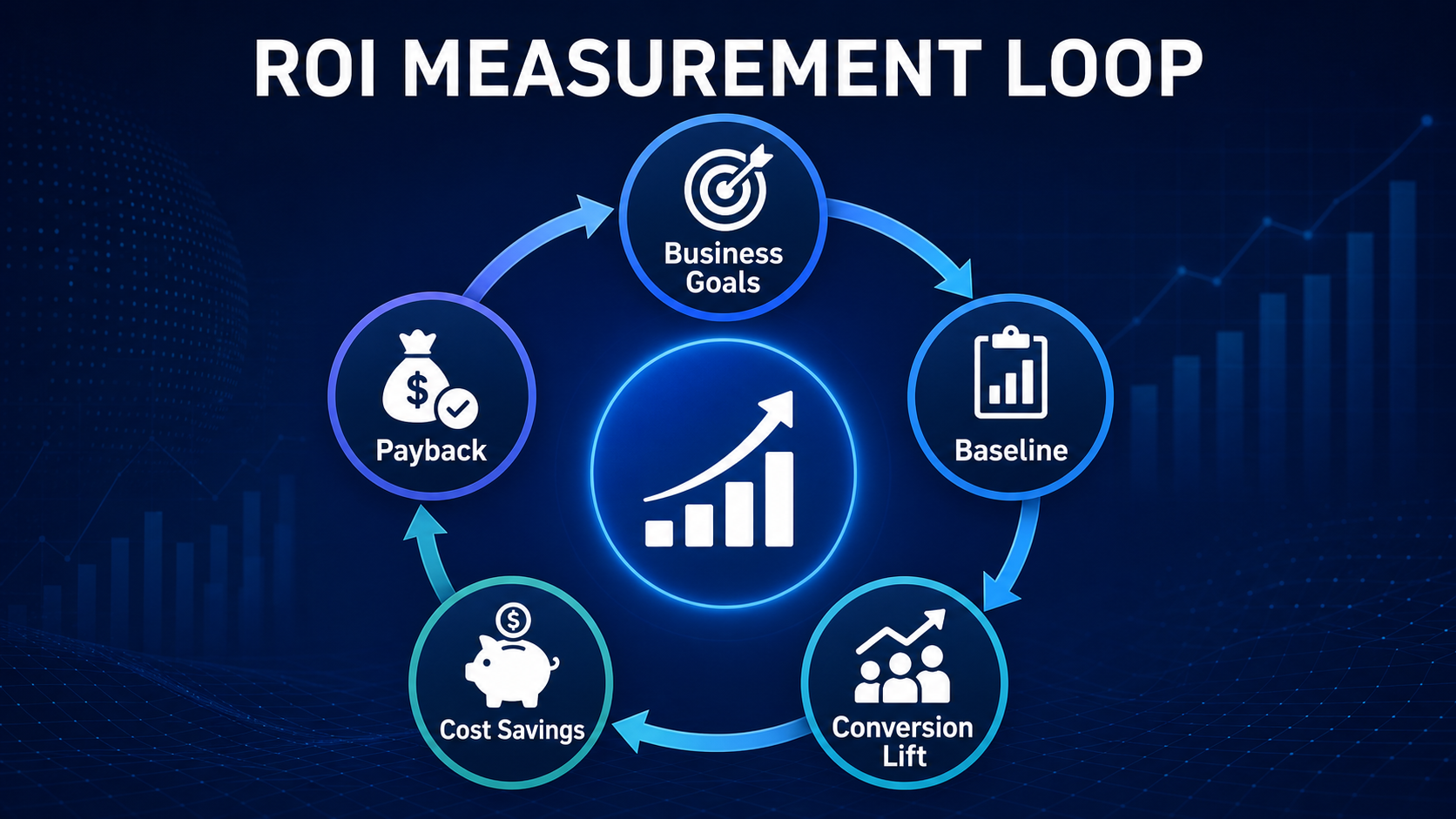
Figure 2 | ROI assessment should begin with business objectives and baseline data, followed by quantifying improvement benefits and the payback period.
4. When Is Adobe Analytics Worth Implementing?
Adobe Analytics is particularly well suited to enterprises that:

Operate multiple brands, markets, websites or apps

Require highly customised event, dimension, segmentation and attribution analysis

Have substantial media spend or digital revenue, making poor decisions materially costly

Need robust access controls, data governance and cross-team reporting standards

Already use Adobe Target, AEM or other Adobe Experience Cloud products

Have analysts and business owners who can turn insights into improvement actions
Adobe Analytics primarily focuses on digital behaviour across websites and mobile apps. If an enterprise needs to integrate journeys spanning physical stores, contact centres, members, sales and other offline touchpoints, it should also evaluate Adobe Customer Journey Analytics rather than assume that a single tool can address every use case.
If an enterprise operates only one straightforward website, primarily requires basic traffic and conversion reports, and has no dedicated analytics resources or testing process, GA4 or another lighter-weight solution may be more cost-effective.
5. How Can You Reduce Implementation Risk and Select a Service Provider?
Common implementation risks include installing tracking code before defining the business questions, allowing each market to use its own event naming conventions, building numerous dashboards without assigning owners, failing to forecast Server Call growth, and omitting regression testing after website releases.
Adobe recommends conducting a comprehensive implementation review at least once every six months and performing focused checks after each website release to ensure that KPIs, variables and data quality continue to meet business requirements.
When evaluating an Adobe Analytics consultant or service provider, confirm whether they can:
- Translate business objectives into KPI, event and dimension specifications.
- Provide architecture, implementation, QA and data acceptance methodologies.
- Manage integrations with CRM, e-commerce, CDP, BI and consent management systems.
- Establish naming, access, privacy and change governance.
- Deliver documentation, training and an internal handover plan.
- Clearly separate licensing, one-time project and ongoing service fees.
- Define success through data adoption and business improvement rather than simply going live.
Leads Technologies (LeadsTech) provides requirements assessment, Adobe Analytics implementation, system integration, data governance, dashboard design and ongoing optimisation services tailored to each enterprise’s current environment, helping organisations connect their analytics platform to practical marketing and operational decisions.
6. Adobe Analytics Implementation Assessment Checklist
- Have the five most important business KPIs been identified?
- Do you know which events, dimensions and data sources each KPI requires?
- Have Web, App, download, exit link and other Server Calls been estimated?
- Have business, data and IT owners been assigned?
- Are a test environment, acceptance test cases and a post-release review process in place?
- Have data access permissions, privacy labels and deletion requirements been defined?
- Have current conversion rates, media costs and reporting hours been established as baselines?
- Have adoption and optimisation targets been set for the next six to twelve months?
Adobe Analytics provides Data Governance tools that allow administrators to apply classifications and controls to different data fields and configure the handling of data access and deletion requests. The enterprise’s legal and privacy teams should still verify the appropriate compliance approach for each market in which it operates.
7. Frequently Asked Questions (FAQ)
Does Adobe Analytics Have a Publicly Available Fixed Price?
No. Adobe does not publish standard pricing. Enterprises must request a quotation based on their selected package and requirements, while contracts may also cover Server Call usage, add-on features and specific service terms.
Does the Adobe Analytics Implementation Cost Cover Software Licensing Only?
No. A complete budget should also include requirements planning, tracking implementation, integration, testing, training, internal resources, data governance and ongoing optimisation.
How Can ROI Be Estimated Without Historical Performance Data?
Start by collecting four to eight weeks of baseline data, including conversion rates, media costs, reporting hours and data discrepancy rates. Then estimate the potential improvement under conservative, baseline and ambitious scenarios.
Is Adobe Analytics Always More Suitable Than GA4 for Large Enterprises?
Not necessarily. The decision should depend on custom analytics, data governance, integration requirements and internal operating capabilities rather than company size alone.
How Soon Should the Implementation Be Reviewed?
Focused checks should be conducted after every major website or app release, alongside scheduled comprehensive audits to ensure that tracking specifications, KPIs and data quality continue to meet business requirements.
8. Conclusion
The cost of implementing Adobe Analytics should not be judged by a single licensing figure. A more reliable approach is to define the business questions, estimate data volume and integration scope, and then incorporate both one-time and ongoing investments into the same ROI model.
If your enterprise is preparing an Adobe quotation request, comparing analytics solutions or reviewing its existing tracking architecture, explore LeadsTech’s Adobe Analytics implementation and optimisation services and contact the LeadsTech consulting team to assess costs, data maturity and the expected payback period.


9. Further Reading
- Website, App and Customer Journey Analytics Services
Learn how to build an analytics framework that supports marketing and operational decisions, from data collection and journey analysis through ongoing optimisation. - In-Depth Guide to Adobe Analytics and CDP Integration
Understand the respective roles of Adobe Analytics and customer data platforms, data flow design and key integration considerations. - What Is Adobe Analytics?
Explore the core uses of Adobe Analytics, the enterprises it suits and its key differences from general website analytics tools.
Similar Cases

Enterprise AI MarTech Trends Analysis 2024-2029 Outlook Report
From AI content productivity tools to a core engine for revenue growth and marketing transformation
*The PDF will be sent directly to your inbox.
Email Error
Please enter a valid email address.
Thank You!
The whitepaper has been sent to your inbox. If you don’t see it, please check your spam or promotions folder.