

Getting data into a platform does not guarantee accurate identity links or timely use by downstream systems. A Salesforce Data Cloud implementation needs a traceable path from sources and models through matching and activation. This guide examines technical and operational details that are easy to overlook, helping you define practical design requirements and acceptance criteria.
Summary
A Data Cloud implementation should validate how data enters the platform, how records are linked, and how the results are used. This article retains the Data Cloud name; Salesforce now calls the product Data 360. Source identifiers, model granularity, matching rules, summary values, and destination formats can all affect the outcome. Real-time capabilities must be configured within their supported conditions. A working connection or a fast response at one step does not establish that the entire workflow meets business requirements.
1. Define Source Identifiers and Update Behavior First
Give Every Record a Stable Identifier
Source identifiers should remain stable and traceable within their defined scope. Different systems may use sequential IDs in the same format, so preserve the source context. A customer ID in one system must not be mistaken for the same identity in another.
When source identifiers and update methods are inconsistent, LeadsTech can help plan Data Cloud integration and identity-resolution validation. Confirm identifier scope, change rules, and representative samples with source owners first. Documenting these prerequisites helps distinguish source-data issues from mapping or matching problems later.
Before connecting a source, check whether identifiers can be reused, changed, or missing. If a customer moves to another account, define how the old and new identifiers relate. Do not infer that relationship from the most recent name or email address alone.
Your data inventory should document source objects, primary keys, business meaning, and owners. When record counts or relationships look wrong, this context helps teams investigate instead of repeatedly comparing unexplained IDs across systems.
Validate Initial Loads Separately from Ongoing Changes
For the initial load, verify scope and completeness. For ongoing updates, test record creation, modification, deletion, and deactivation. Sources may represent these events differently; the implementation specification should explain those differences.
If an interface or file can resend data, test what happens when the same record arrives again. A successful first test does not establish that retries will avoid duplicate records or repeated downstream actions.
After a source outage, identify the timestamp or position from which processing should resume and verify the backfill range. Without clear recovery boundaries, you risk missing data or processing old events as new ones.
2. Preserve Data Granularity and Relationships in the Model
Distinguish Customers, Transactions, and Events
Before modeling, establish what each record represents. Contacts, business accounts, orders, order items, and website interactions have different levels of granularity. Putting every field into one wide table can duplicate data or obscure relationships.
Salesforce Data Lake Objects and Data Model Objects serve different roles in organizing source data and the common model. Document field mappings and transformation definitions so teams can trace application fields back to the original data.
Validate relationships with representative records. For example, when one customer has multiple orders and contact points, do audience conditions still return the expected results? Correct total record counts do not prove that one-to-many relationships or filtering paths work correctly.
Define Time and Status Consistently
Source event time, modification time, and platform receipt time serve different purposes. Specify which field determines a recent purchase, the latest preference, or data latency, and confirm how time zones and null values are handled.
Statuses also need business definitions. “Completed” might mean payment received, shipment fulfilled, or a case closed. Identical labels do not establish equivalent conditions. Preserve relevant original values and explain the transformations used in mapping.
Decide whether unknown or new statuses should be excluded, flagged, or reviewed by a person. Silently assigning unrecognized values to a default category can make activation conditions inaccurate after a source system changes.
3. Separate Three Decisions in Identity Resolution
Matching: Which Records Represent the Same Identity?
Matching rules determine which source profiles should be linked. Official documentation explains that conditions within a single match rule must all be satisfied. When multiple rules are configured, satisfying any one rule can produce a match, so adding rules may broaden the matching scope.
Assess identifier quality before choosing a combination of conditions. Names, addresses, and contact details can change or be shared. Similar formatting alone does not make them reliable, unique identifiers.
B2B implementations must also distinguish people from business accounts. Multiple contacts at one company represent a different relationship from the same contact appearing in several sources. Choose person-level or account-level modeling to suit the application.
Reconciliation: Which Values Appear in the Unified Profile?
Reconciliation rules select summary field values for a unified profile, using criteria such as source priority or the most recent update. This is separate from deciding whether records represent the same identity, and it does not mean that data in the original systems is overwritten.
Summary values help users understand a profile, but each use case may still require a particular source. If billing and marketing maintain different official names, preserve that distinction rather than expecting one summary field to serve every purpose.
Traceability: Keep Links to Source Records
A unified profile must link back to its source records so teams can explain its contents and matching results. These links also help identify which record introduced incorrect or outdated information.
Validate contact point selection separately for each activation use case. When a profile has multiple email addresses or phone numbers, selection should reflect purpose, preferences, and source. Do not assume that reconciliation rules for a display name also decide which contact points to use.
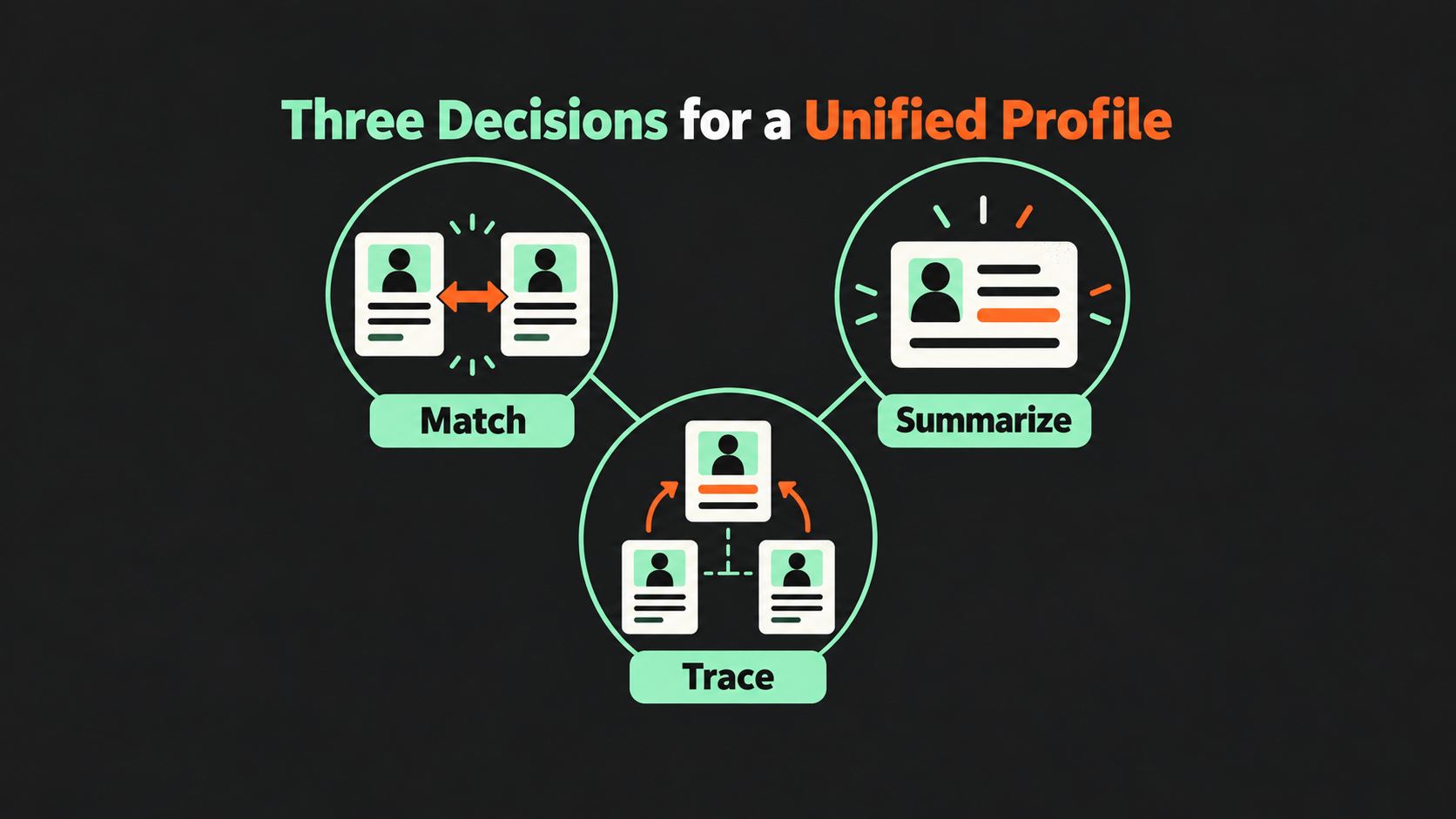
Figure 1: Matching, summary values, and source links serve different purposes; a single rule cannot replace all three.
4. Test Identity Quality with Negative Cases
Look Beyond Successful Matches
Include records known to represent the same identity, records known to represent different identities, and records with insufficient information. Shared company phone numbers, family email addresses, similar names, and missing identifiers help expose both false matches and missed matches.
Consider a hypothetical company with two contacts who share a last name and a departmental email address. Matching by email alone could combine their interactions. This illustrative test case shows why rules must reflect the meaning of the data; it is not an actual customer result.
Conversely, the same person using different email addresses may remain unlinked. Teams must decide whether other evidence is reliable enough to justify a match or whether the records should remain separate for now. Do not relax every rule simply to increase the unification rate.
Assess the Impact Before Changing Rules
Whenever a condition changes, compare the affected source records and unified profiles, then inspect representative samples. An increase in unified records does not prove better accuracy, and a decrease does not necessarily indicate worse quality.
Keep rule versions, reasons for changes, and test results so future differences can be explained. If downstream audiences or applications depend on identity results, revalidate them as well. Confirming that a rule executes successfully is not sufficient.
5. Measure the Entire Path for Real-Time Activation
Distinguish Processing Modes
Batch, streaming, and real-time capabilities address different needs and may support different sources, destinations, and configurations. Rapid source updates do not mean that identity processing, audiences, and receiving systems finish at the same time.
Salesforce documentation distinguishes streaming data graphs from real-time data graphs. Streaming data graphs can reflect updates within minutes, while real-time data graphs offer lower latency for supported scenarios. Verify the actual prerequisites during implementation; “streaming” in a feature name does not establish real-time behavior.
Design real-time data graphs, events, and actions around the application, and confirm plan, permission, and environment requirements. Raising every data flow to its highest frequency without a business need adds processing and maintenance overhead.
Work Backward from Acceptable Business Latency
Record source updates, platform processing, data delivery, and destination use separately, then measure the total elapsed time. Accelerating one stage may not improve the experience if other stages still wait for scheduled processing.
Acceptance testing should cover normal loads, concentrated updates, and recovery after brief outages. A single measurement using a small test dataset may not reflect production volumes or receiving-system limits.
Tie latency requirements to business actions. A daily service list and a recommendation during a website interaction have different acceptable delays. Align on the purpose before selecting the technical approach and measurement method.
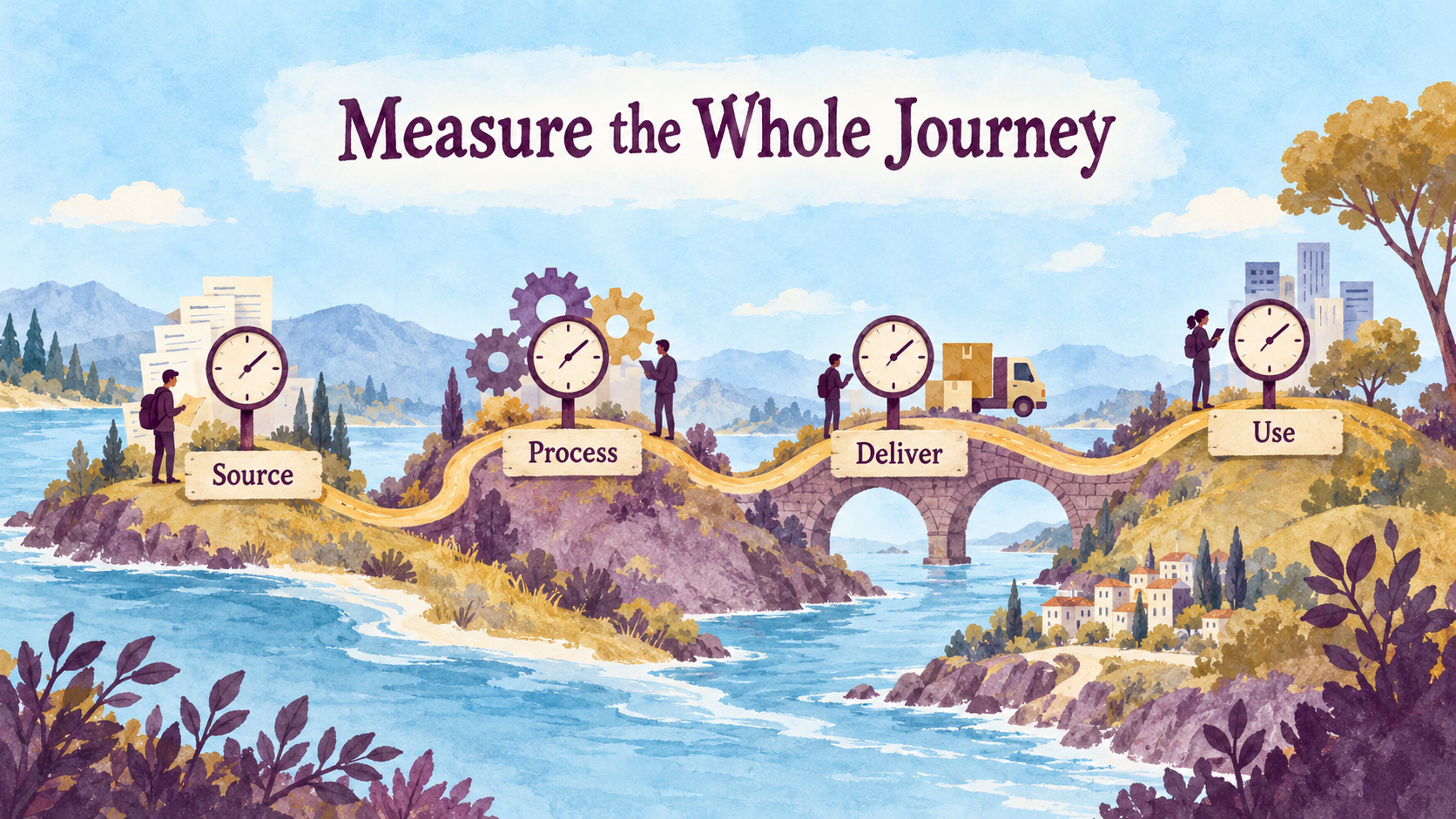
Figure 2: Assess activation latency across the complete timeline to identify where the actual waiting occurs.
6. Validate Activation Criteria, Contact Points, and Destinations Together
Audience conditions determine who qualifies for a business use case. Activation still requires decisions about which fields, contact points, and related information to send. Filters serve different purposes at different stages; one setting cannot replace validation of the whole workflow.
Consent and preference data must be ingested, modeled, and applied correctly in the relevant filters. Specify the source, purpose, and update method for preferences, then test how the next activation and receiving system respond when a preference changes.
Destinations may use different identity fields or naming conventions. Validate output formats, null values, and relationships. A successful delivery message confirms only that one step completed; verify that the destination interprets the data correctly and uses it for the intended action.
Full and incremental updates also have different effects. Confirm how the destination handles new records, changes, and records that no longer qualify. Repeatedly adding new data must not leave outdated eligibility in place.
If downstream actions could run more than once, jointly design a way to detect resends and prevent duplicate execution. The data platform, interfaces, and destinations may all be involved. Responsibility should not end with an error message from a single system.
7. Plan Acceptance Testing and Operational Monitoring
Trace the Same Record Across Every Stage
Choose representative records for acceptance testing and retain the source values, mapping results, identity links, activation payloads, and destination results at each stage. This evidence pinpoints issues more effectively than isolated screenshots and gives different teams a shared basis for discussion.
Document important limitations in the handover, including unsupported sources, missing identifiers, and manual steps. Users who understand the data boundaries are less likely to treat an incomplete profile as a complete picture.
- Source identifiers are unique and stable within the intended scope.
- Field granularity, timestamps, and relationships have been checked.
- Matching, summary value selection, and source traceability can be explained.
- Normal cases, negative cases, and records with insufficient data have been tested.
- Activation criteria and destination behavior meet expectations.
- Owners are assigned for latency, failures, resends, and recovery.
Connect Monitoring to Specific Response Procedures
Define notification recipients and response procedures for changes in volumes, errors, latency, and results. Alerts that provide only a technical label, without the affected use case or representative records, make it difficult for responders to prioritize the issue.
Notify model, identity, and application owners before source fields or business rules change. Maintain a dependency inventory so teams know which audiences and destinations need to be rechecked, reducing unexpected downstream effects.
Review platform consumption regularly in the context of your plan and processing configuration. If frequency or source volume changes significantly, establish the business need before deciding how to adjust. Technical feasibility alone is not a reason to expand the scope.
Separate Business Impact from the Underlying Cause
When an issue appears, first identify the affected data, audiences, and business actions, then decide whether related activations should pause. Low volumes may result from source delays or changed conditions. Do not resend all data before investigating.
Incident records should include the time, representative identifiers, the last successful step, and actions already taken. Teams taking over can use the same evidence, avoiding repeated operations or unknowingly increasing the impact.
After a fix, verify the missing-data range and downstream state. Restoring an interface connection does not prove that all data has been backfilled or that the destination has restored the correct eligibility. Completion criteria should reflect the original business use case.
If source quality caused the issue, feed the findings back into data entry or maintenance processes and retain new negative cases for future testing. This turns an incident into a repeatable check instead of merely clearing an alert.
8. Frequently Asked Questions
Do More Matching Rules Make Profiles More Accurate?
Not necessarily. Additional rules can broaden matching and may link different identities. Test records known to be the same and records known to be different, then check the downstream impact.
Does Real-Time Activation Mean Every Source Updates Immediately?
No. Sources, models, identity processing, activation, and destinations each have their own conditions. Build the complete path using supported capabilities and measure the total time needed for the business action.
How Can We Locate an Integration Problem?
Keep source identifiers, timestamps, and results from every stage, then trace the same record through the workflow. If only the final error is visible, add evidence from intermediate steps and clarify maintenance ownership.
9. Conclusion
Reliable Data Cloud implementations depend on explainable identifiers and models, identity rules tested against negative cases, and activation workflows that can be traced to their destinations. Include these requirements in implementation and acceptance testing so data can be used consistently.
LeadsTech can work with your organization on Salesforce Data Cloud architecture, identity resolution, and application integration, helping you prioritize issues and define the implementation scope.

If you need to review an existing implementation or plan a new data use case, bring an overview of your sources, update methods, and current issues so we can discuss the next steps.

10. Further Reading
-
CRM vs. CDP: Choosing a Customer Data Platform for Your Business
Understand how CRM and CDP roles differ based on data use and operational needs.
-
A CDP Implementation Guide for Taiwan: Integrating Customer Data
Explore further considerations for data integration, governance, and implementation planning.
Related Articles

Enterprise AI MarTech Trends Analysis 2024-2029 Outlook Report
From AI content productivity tools to a core engine for revenue growth and marketing transformation
*The PDF will be sent directly to your inbox.