
1. Introduction: When B2B Customer Acquisition Is No Longer Just About “Doing More”
In many B2B companies, when revenue growth hits a plateau, the first reaction is often: “Are we simply not doing enough?”—organizing more events, running more ads, making more cold calls, or purchasing more contact lists.
However, as market competition intensifies, more companies are realizing that the problem is not a lack of effort, but whether the direction of that effort is correct.
The number of leads continues to increase, yet sales teams still struggle to find the right prospects.
The market appears large, but the number of reachable customers becomes increasingly limited.
When expanding into overseas or local markets, companies often discover that many potential businesses simply do not exist in existing databases.
This signals the next stage of B2B customer development:
What companies need is not simply more activity, but a system that enables them to see and understand the market.
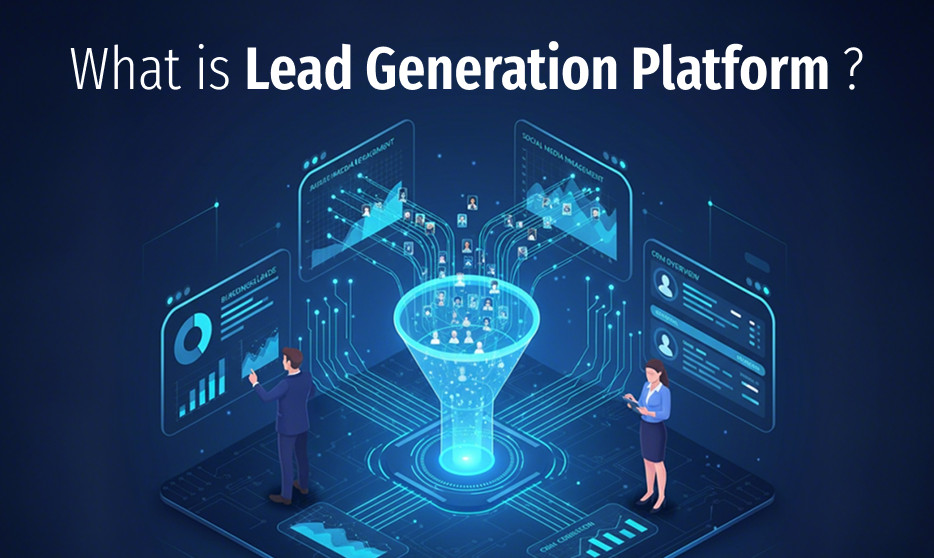
2. What Is a Lead Generation Platform?
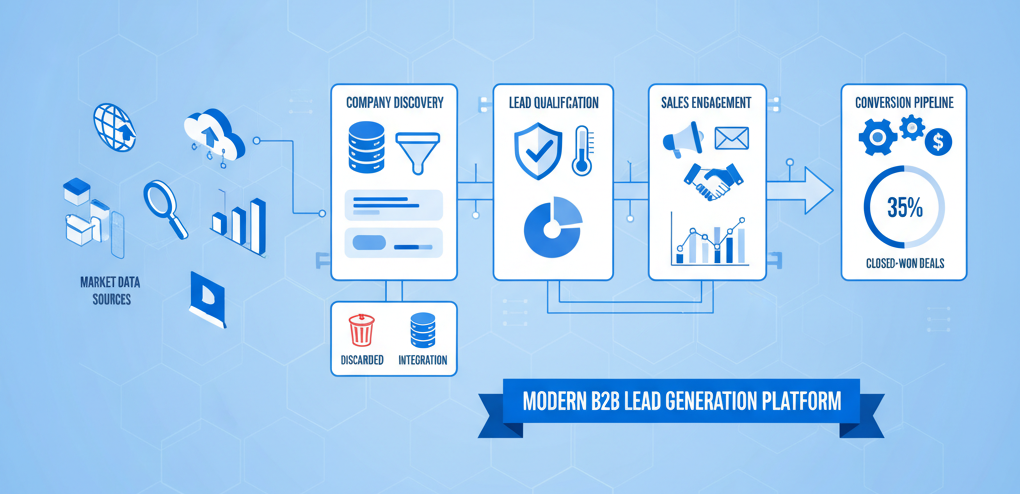
A Lead Generation Platform is a system that helps B2B companies systematically discover, identify, qualify, and convert potential customers.
Contrary to common perception, its core function is not merely managing “known leads.” Instead, it addresses a more fundamental question:
Are there still large numbers of companies in the market that you simply cannot see—yet have strong commercial potential?
A mature lead generation platform can leverage large-scale, diverse, and continuously updated data sources to help companies actively discover these potential customers and transform them into prospects that sales teams can realistically pursue.
This transforms lead generation from a passive waiting process into proactive identification.
3. Why Traditional B2B Lead Generation Methods Are Becoming Less Effective
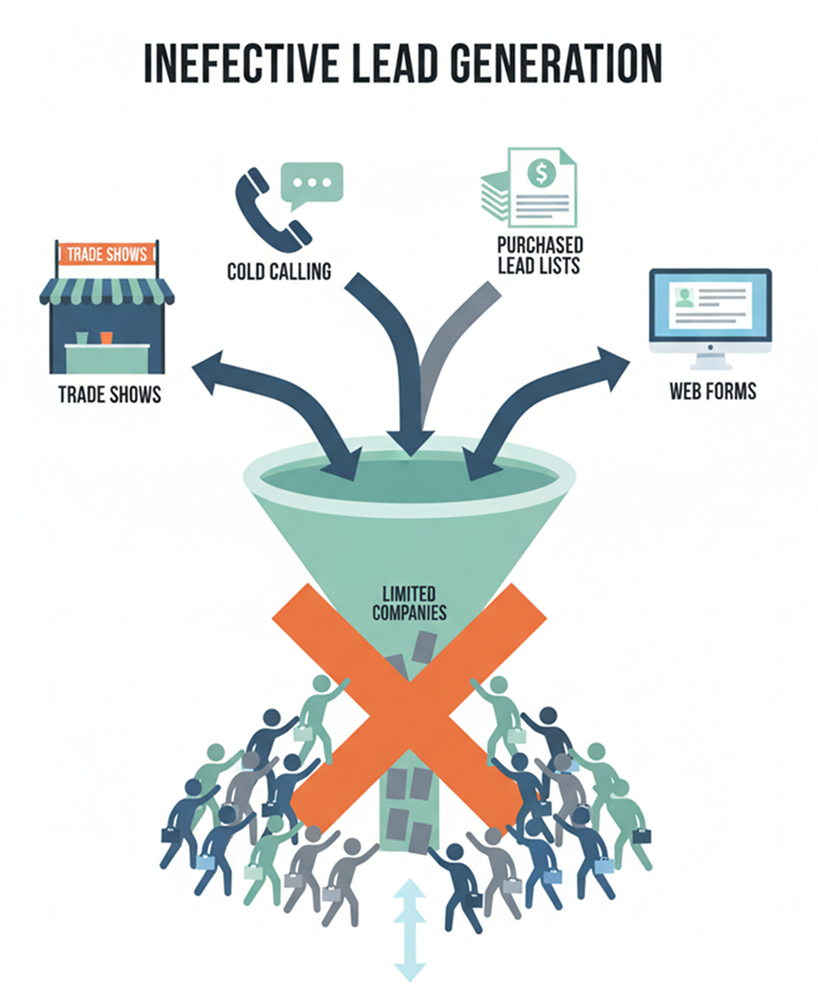
In the past, most B2B lead generation relied on the following approaches:
- Commercial databases and list providers
- Trade shows, events, and professional networks
- Website forms and inbound inquiries
These methods still provide value, but they share a key limitation:
They rely heavily on companies that have already been identified and documented.
In reality, the majority of businesses worldwide do not exist in mainstream databases, especially in:
- Non-English markets
- Local and small-to-medium enterprises
- Niche or non-mainstream industries
When the data source itself contains blind spots, companies may work harder—but only compete repeatedly within the same limited pool.
4. Why B2B Companies Must Systematize Customer Acquisition
The goal of systematized customer acquisition is not only to improve efficiency, but to enable companies to gain a comprehensive view of the market.
Without a system, companies often face:
- Highly fragmented market understanding
- Lead quality that depends heavily on individual experience
- Results that are difficult to replicate or scale
Once lead generation becomes systematized, companies can begin answering critical questions:
- Which companies in the market are currently growing?
- Which businesses have recently shown signals indicating potential demand?
- Are there customer segments that competitors have not yet heavily approached?
The answers to these questions determine not just short-term lead volume, but long-term competitive advantage.
5. The Real Role of a Lead Generation Platform in the B2B Process
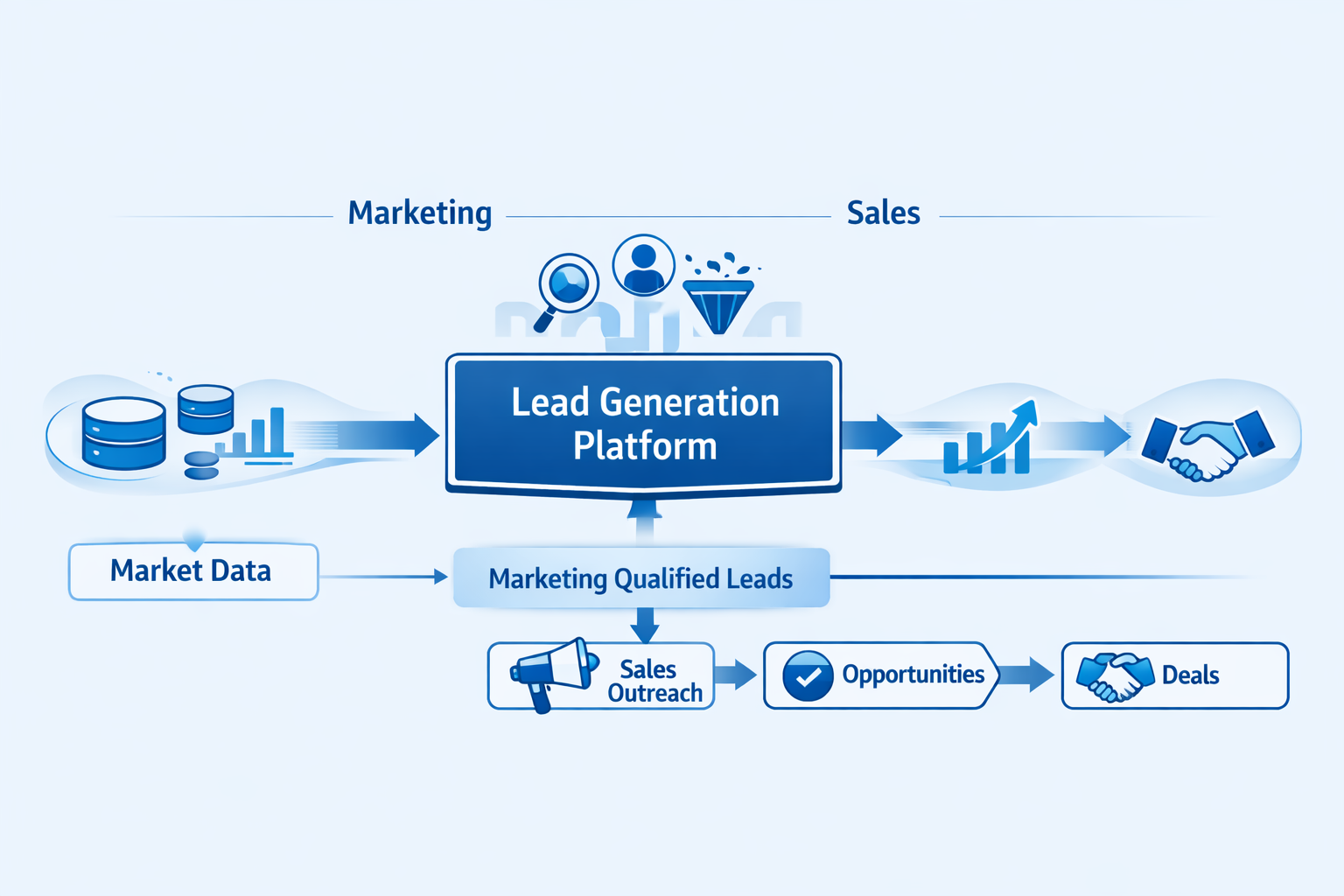
Within a complete B2B acquisition process, a lead generation platform is not a standalone tool—it acts as a bridge between the market and the sales team.
It is responsible for:
- Transforming market data into actionable sales leads
- Helping companies filter and prioritize prospects early in the process
- Allowing sales teams to focus on the prospects most likely to convert
This shifts the focus of sales work from “high-volume attempts” to “precise actions.”
6. Core Capabilities and Value of a Lead Generation Platform
A truly valuable lead generation platform typically includes several key capabilities:
Market-level prospect discovery
Not limited to existing databases, but capable of continuously identifying new companies and opportunities.
Dynamic data and behavioral signal analysis
Prospects are not static lists but organizations that evolve over time.
High-precision targeting of companies and decision-makers
Finding the right company also requires identifying the right decision-making roles.
Process-driven and trackable conversion mechanisms
Every step from market discovery to sales engagement can be reviewed and optimized.
The purpose of these capabilities is to ensure that lead generation no longer depends on luck, but instead becomes predictable.
7. How Platform-Based Lead Generation Improves Lead Quality and Sales Efficiency
When companies successfully implement a high-quality lead generation platform, the most noticeable improvements typically appear in three areas:

1. Lead quality significantly improves
Sales teams interact with prospects that better match industry, size, and demand criteria.

2. Sales efficiency increases
Sales representatives spend less time researching background information and can move more quickly into meaningful conversations.

3. Decision-making becomes clearer
Management gains visibility into which markets and strategies are truly effective.
8. Common Misconceptions Before Implementing a Lead Generation Platform
Even when companies understand the importance of such platforms, several misconceptions remain common:
- Assuming the platform is just another list-generation tool
- Concerns that the data may be inaccurate or impractical
- Believing the platform cannot adapt to local or niche markets
In reality, a platform’s value depends on the depth of its data, its ability to stay updated, and whether it truly understands the complexity of B2B markets—not the length of its feature list.
9. Which B2B Companies Especially Need a Lead Generation Platform?
Companies in the following situations are particularly well suited to adopting a lead generation platform:
- Those looking to expand into new markets or industries
- Those facing intense competition and rising costs for lead sources
- Those seeking opportunities in niche or local markets
- Those wanting more predictable and repeatable customer acquisition results
For these businesses, a platform is not merely an advantage—it is a critical foundation.
10. Conclusion: From Adopting Tools to Building Market Intelligence
A truly mature lead generation platform does more than help companies “find leads.” It helps them build the capability to continuously sense and understand market changes.
When companies can see more potential customers, understand market dynamics, and act earlier than competitors, customer acquisition stops being just a cost—it becomes part of a long-term competitive advantage.
If you would like to learn more about the differences between various types of lead generation platforms and how B2B companies in 2026 can choose the right solution, the next article will explore practical selection criteria and comparisons in depth.
👉 Contact Us:
Discuss your B2B customer acquisition strategy with our consulting team
👉 Product Page:
Learn how LeadsTech helps companies build a systematic and scalable lead generation capability
Further Reading and References
Related Articles
Enterprise AI MarTech Trends Analysis 2024-2029 Outlook Report
From AI content productivity tools to a core engine for revenue growth and marketing transformation
*The PDF will be sent directly to your inbox.