
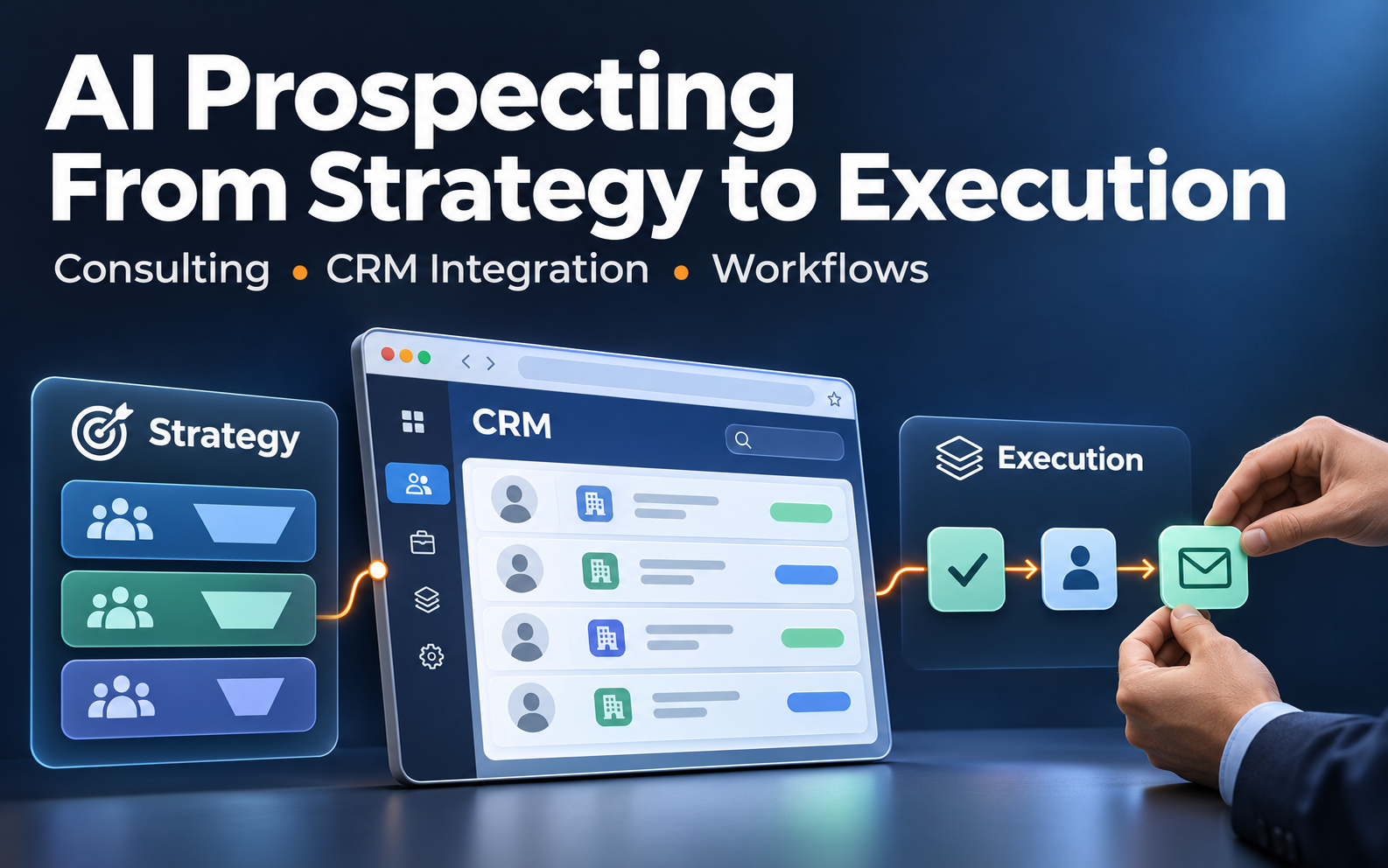
AI Prospecting Consulting: Strategy, CRM, and Implementation
AI, B2B Marketing, Lead Generation, Pubrio Lead Generation Platform
28 November 2026
You bought the tool, but prospect lists still sit in spreadsheets and sales teams are reluctant to take them on. AI prospecting implementations often stall over goals, data, and responsibilities rather than a missing feature. This guide explains where a consultant can help, which decisions your business must retain, and how to validate a prospecting workflow your team can actually use.
Key Takeaways (TL;DR)
An AI prospecting consultant should align your targeting strategy, data rules, and sales handoffs, rather than simply configure a tool. Whether you need one depends on your team’s capabilities and the complexity of your systems. The engagement should produce workflows, tests, and operating documentation you can validate. Assess subsequent results through research efficiency and opportunity quality.
1. When Do You Need an AI Prospecting Consultant?
A consultant can help establish shared standards when marketing and sales disagree on the ideal customer, data cannot enter existing systems, or no one owns the follow-up rules. If your team already has the necessary skills, you can start with a small pilot on your own.
Artificial intelligence (AI) can support research and organization, but it cannot choose your market strategy. LeadsTech provides prospecting strategy consulting and platform integration support. When evaluating Pubrio, for example, you need to connect research criteria to the work your business actually does.
Start by identifying the waste you want to reduce, such as repeated company research, data corrections, or missed handoffs. That makes success easier to define than a broad request to automate all prospecting.
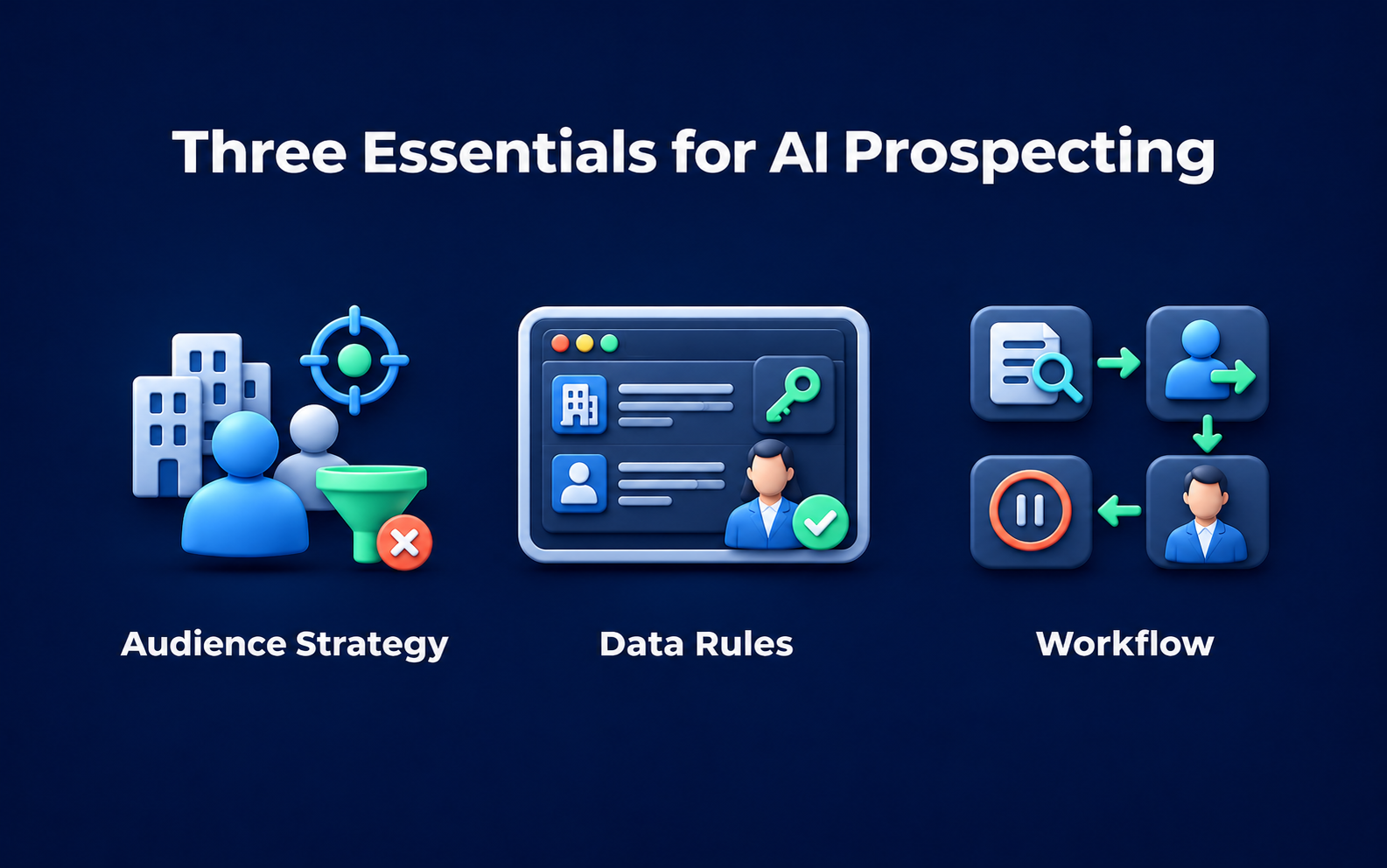
2. Which Three Areas Should a Consultant Connect?
Targeting Strategy
Define relevant industries, regions, use cases, and exclusion criteria. Investigate why deals were lost, distinguishing poor product fit from timing issues or insufficient information, rather than simply copying the visible traits of existing customers.
Data Rules
Establish how companies and contacts are identified, their data sources, update dates, and required fields. When implementing a customer relationship management (CRM) system, define which records can be added or updated and which changes require human confirmation.
Workflows
Set rules for who reviews prospect lists, when prospects are assigned, and when follow-up stops. Define how people take over when an opportunity already exists, a prospect replies, or someone declines further contact.
3. How Do You Validate the Deliverables?
Requirements documentation should address your specific business problems, including goals, scope, and success criteria. Configuration documentation should explain fields, permissions, synchronization direction, and exception handling so system owners know how to maintain the solution.
Testing should cover more than the successful path. Include duplicate companies, missing data, synchronization failures, and conditions for stopping follow-up. Document unsupported scenarios and tasks that still require manual work as limitations of the delivery.
You also need an operating manual and training. Have internal staff independently review a set of data and resolve common errors to confirm they can take over, rather than rely on the consultant to operate the system for them.
4. Hypothetical Example: A Systems Service Provider Improves Team Handoffs
Suppose a business has purchased a prospecting platform. Marketing keeps passing on lists, but sales says the companies are a poor fit. Meanwhile, the systems team worries that new data will overwrite existing records. As a result, the tool never becomes part of daily work.
A consultant could trace one prospect from search through closure, bring departments together to agree on acceptance criteria, and then pilot the process with a representative sample. Match records before data enters the system, and capture the reason whenever sales accepts or returns a prospect.
The business can compare research and correction time, missed handoffs, sales acceptance, and subsequent qualified meetings before deciding whether to expand. This is a hypothetical example: putting a workflow into use does not, by itself, establish revenue growth.
5. Five Stages for Putting the Workflow into Practice
- Define: Identify the main bottleneck and limit the scope to specific markets, products, and customer segments.
- Design: Document data fields, owners, exclusion criteria, and conditions for stopping follow-up.
- Test: Use a representative sample of real records to validate normal paths and exceptions.
- Train: Have internal staff operate the workflow, troubleshoot issues, and report problems.
- Improve: Refine rules and scope based on data quality and sales feedback.
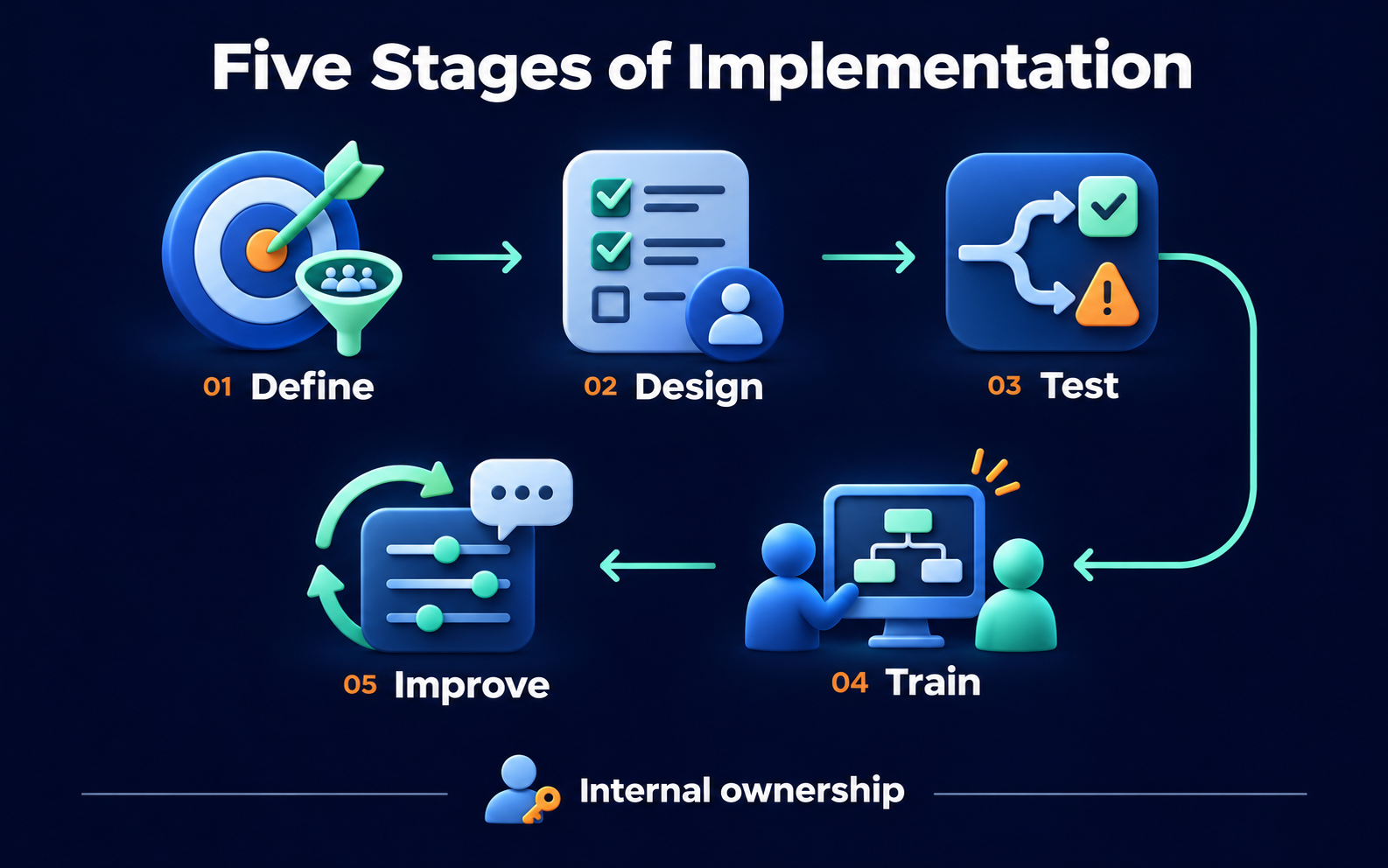
Your business remains responsible for product fit, commitments to customers, and customer relationships. A consultant can clarify the options, but cannot make every business decision for internal leaders. Without a clearly accountable owner, the workflow will be difficult to sustain.
6. Frequently Asked Questions (FAQs)
Does every business need an AI prospecting consultant?
No. Teams with a clear strategy and integration skills can run their own pilot. A consultant is more useful when specialist expertise or coordination is missing.
Should a consultant guarantee a specific number of prospects?
You can agree on research scope and quality, but volume should not be the only measure. Usable data, verifiable selection reasons, and a smooth handoff matter more.
Can a consultant help after we have chosen a platform?
Yes. The engagement can focus on data preparation, CRM integration, workflow testing, or training without repeating the entire selection process.
Should closed revenue be the only acceptance criterion?
No. Product fit, timing, and sales follow-up also affect deal outcomes. Measure delivery quality, process efficiency, and business results separately.
7. Conclusion
AI prospecting consultants add value by turning strategy and tools into workflows a team can use consistently. Identify the gaps first, then assess the engagement through deliverables your team can operate and maintain.

If you need to plan prospecting and system handoffs, discuss your existing tools, data constraints, and pilot priorities with LeadsTech.

8. Further Reading
- B2B Website Marketing Strategy: From Content to Lead Conversion
Explore how content, websites, and sales can work together to develop opportunities. - CRM for Global B2B Businesses: A Salesforce Implementation Guide
Plan the integration of prospect lists, customer data, and sales workflows across teams.
Related Articles
Enterprise AI MarTech Trends Analysis 2024-2029 Outlook Report
From AI content productivity tools to a core engine for revenue growth and marketing transformation
*The PDF will be sent directly to your inbox.