
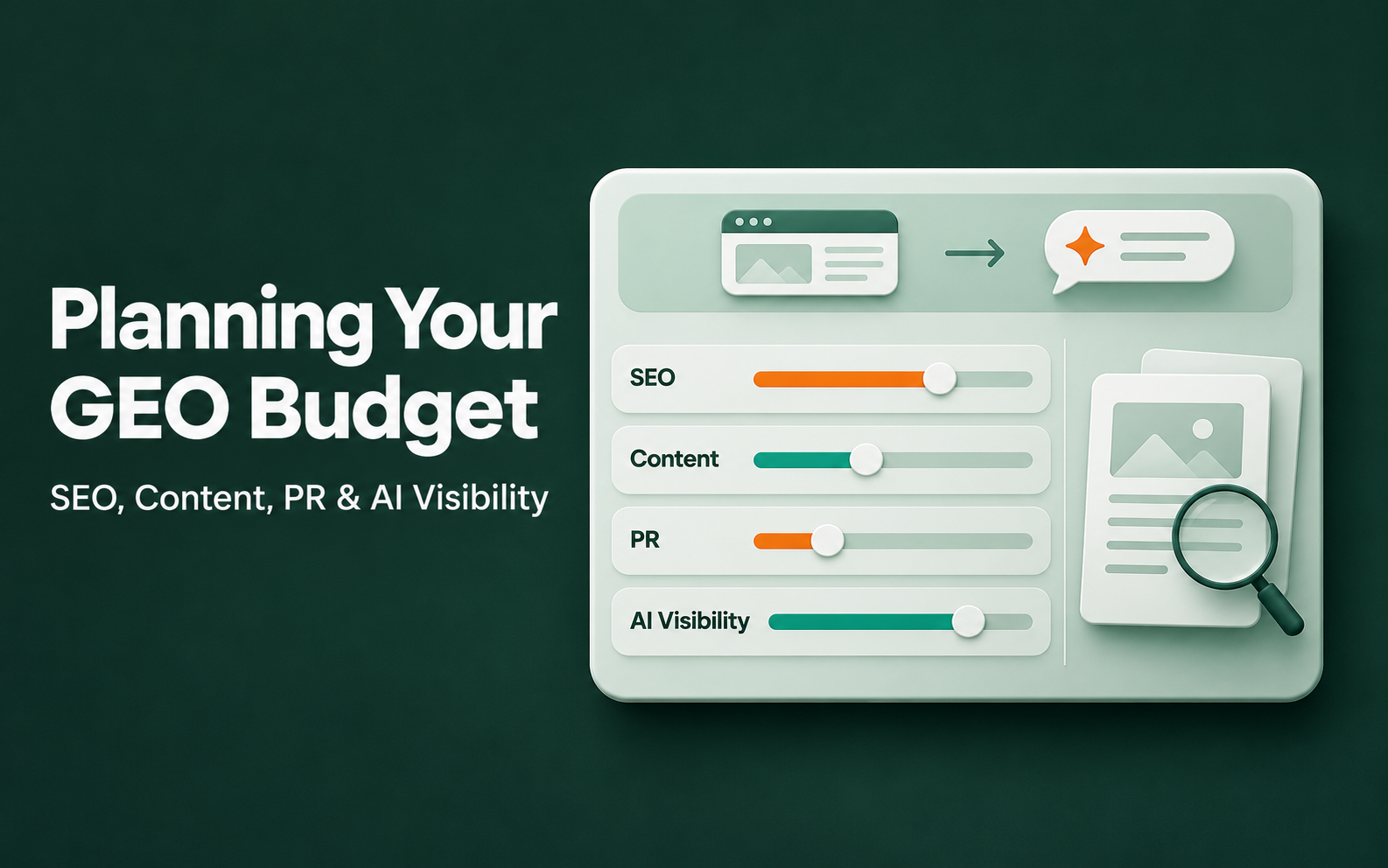
SEO, content, public relations, and monitoring tools all compete for funding. Where should your GEO marketing budget go first? Rather than applying a fixed percentage split, identify the gaps that most affect customer decisions. This guide explains four areas of work, hidden costs, and a phased approach to investment and review.
Key Takeaways (TL;DR)
Allocate your GEO marketing budget according to gaps in your website, content, and brand information; there is no universal percentage split. Proposals should account for research, implementation, maintenance, and internal effort so that you do not buy reports without the resources to act on them. Start with a limited pilot, then use delivery quality and business feedback to decide whether to expand, adjust, or stop.
1. Which Gaps Should Your GEO Marketing Budget Address First?
Generative engine optimization (GEO) requires coordinated work on content, websites, and brand information. If important pages cannot be accessed, expanding monitoring will simply reveal the same problem repeatedly.
LeadsTech’s SEO and GEO optimization services can help you assess your current position and set priorities. Start budget discussions with your key products and customer questions to determine whether you need technical fixes, stronger content, or more complete measurement.
If your service descriptions are still vague, clarify their suitability, conditions, and supporting evidence first. If the information is already complete but you lack visibility into performance, assess investment in tools and analysis. Let the gaps determine the sequence.
2. What Work Does Each Budget Category Cover?
SEO: Website Foundations and Implementation
Search engine optimization (SEO) may include website audits and fixes to site structure and important pages. An audit report does not mean the changes have been implemented. Specify development, testing, and deployment responsibilities separately.
Content: Research, Production, and Maintenance
Content costs extend beyond writing to include question research, expert interviews, fact-checking, images, reviews, and updates. Align the depth of work before comparing per-article prices, and avoid producing overlapping content on similar topics.
PR: Story Development and External Communications
Public relations (PR) may include story planning, media outreach, and interview preparation. Paid placements and independent reporting are different arrangements. Distinguish their costs and deliverables, and do not assume that either guarantees inclusion in AI answers.
AI Visibility: Monitoring and Analysis
AI visibility tools may charge by question, platform, region, and update frequency. Someone still needs to check the answers and turn findings into action. A subscription alone does not complete that work.

3. How Do You Estimate Total Cost?
Separate costs into one-time, ongoing, and variable expenses. Audits and tracking setup may be one-time costs. Maintenance, consulting, and tools are ongoing costs. Variable costs rise with the number of articles, languages, campaigns, or the scope of monitoring.
Internal product reviews, sales interviews, and website publishing also take time. Without those resources, content may remain unused long after an external supplier delivers it.
The same technical or content work may support both SEO and GEO and should not be charged twice. Ask proposals to identify shared deliverables, additional work, and exclusions before comparing the total investment.
4. Hypothetical Scenario: Buy Tools or Improve Content for a New Integration Service?
Suppose a business is preparing to promote a new service, but its website does not explain suitability, implementation steps, or limitations. The team receives proposals for tools and PR. Expanding visibility immediately could simply expose more people to information that still does not support their decisions.
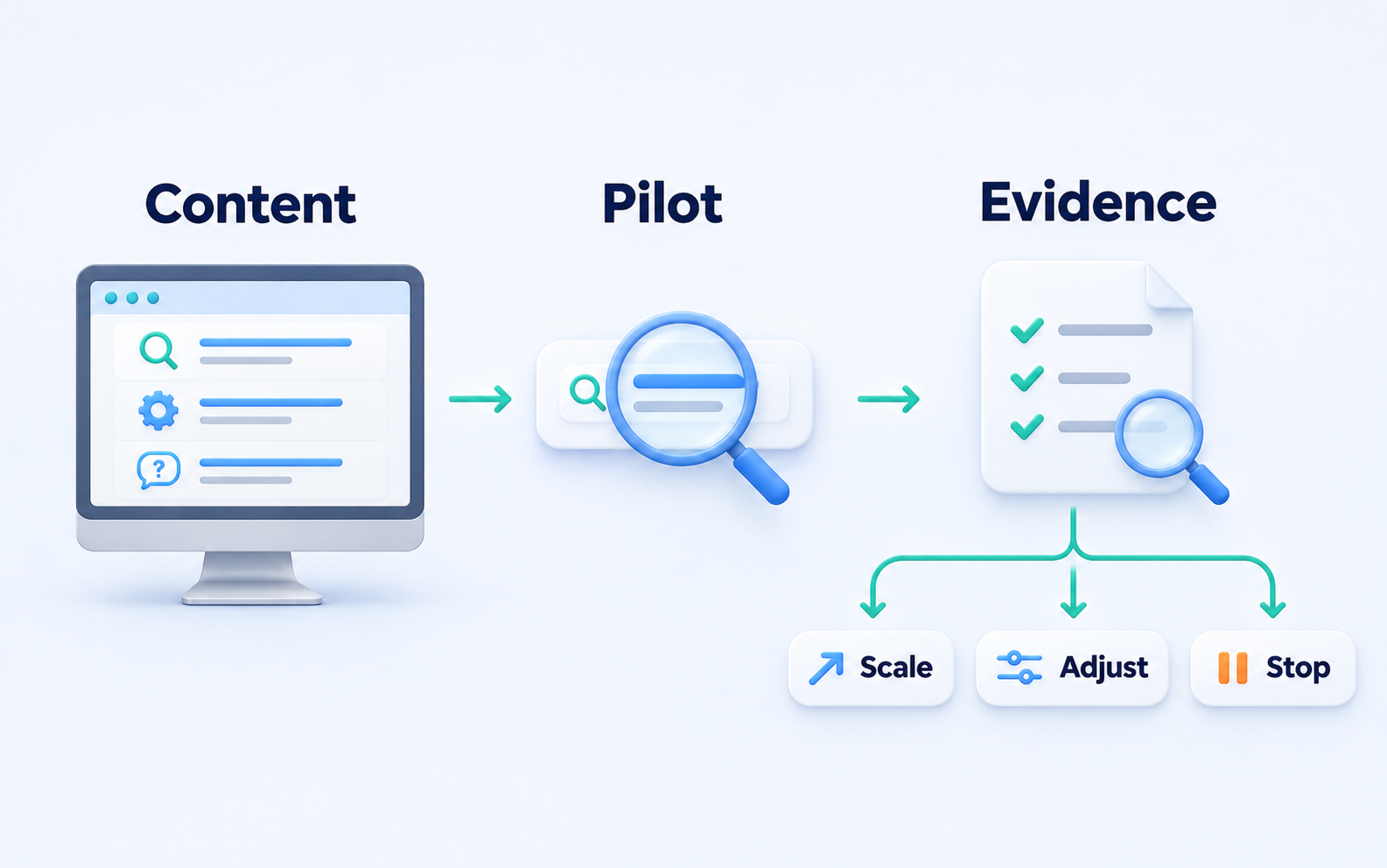
A more useful pilot would begin with product and sales interviews, a complete service page, and answers to key questions. Confirm that the website and inquiry tracking work, then monitor a limited sample of questions to identify which external materials are still needed.
Track content coverage, inquiry completeness, the accuracy of brand descriptions, and qualified opportunities before deciding whether to add markets to tool coverage or expand PR activity. This is a hypothetical scenario with no assumed return on investment.
5. An Eight-Point Budget Review Checklist
- Which customer question or existing gap does each expense address?
- Which research, implementation, testing, and update activities are included in the proposal?
- Has shared SEO and GEO work been counted twice?
- Which internal staff are needed, and has their time been allocated?
- How will tool costs increase with markets, questions, and update frequency?
- Will delivery quality and business observations be assessed separately?
- When will the budget be reviewed, and what evidence would support expansion or adjustment?
- When the engagement ends, can data, access, and content be handed back?
Start with a limited scope and a defined review date. Adjust the plan if work cannot be delivered, measurement methods are unclear, or the team cannot maintain the work. Increase investment gradually once the process is stable and useful evidence emerges.
6. Frequently Asked Questions
Is there a recommended percentage split for a GEO marketing budget?
No single split suits every business. Website maturity, content gaps, the number of markets, and internal capabilities all affect the allocation.
Do more expensive monitoring tools always deliver better results?
No. Assess whether they cover the scenarios you need, provide verifiable evidence, and produce findings your team can use.
Can a PR engagement guarantee citations?
That is not a sound basis for procurement. You can agree on stories, materials, and communication activities, but third-party publication and inclusion in AI answers are not fully controllable outcomes.
How should we explain results to management?
Report completed work, visibility observations, and business results separately. Explain their scope and limitations rather than attributing every change to a single investment.
7. Conclusion
Adjust your GEO marketing budget as evidence and work requirements evolve. Address essential foundations first, then validate value through a limited pilot to make subsequent investment decisions better informed.

To plan resources for your website, content, and measurement, talk to LeadsTech about your current gaps and a phased implementation approach.

8. Further Reading
- SEO vs GEO: Search Engine and Generative AI Optimization Compared
Understand the shared foundations of traditional search and generative answers, along with the different ways to assess them. - SEO + GEO + AI Search: A Strategy for Brand Visibility and Leads
Bring website content, technology, and business objectives into one growth plan.
Related Articles
Enterprise AI MarTech Trends Analysis 2024-2029 Outlook Report
From AI content productivity tools to a core engine for revenue growth and marketing transformation
*The PDF will be sent directly to your inbox.
Email Error
Please enter a valid email address.
Thank You!
The whitepaper has been sent to your inbox. If you don’t see it, please check your spam or promotions folder.