
In 2026, the search journey extends beyond traditional search results. Users may get a summary from an AI-generated search answer, an AI assistant, or another generative search interface before deciding whether to click through to a source. That means keyword rankings alone are no longer enough. Your content also needs to be easy to understand, cite, and use as a trusted source.
Summary
SEO and GEO should not be treated as entirely separate disciplines. SEO helps search engines crawl, index, and understand your website so it can appear in traditional search results. GEO extends that work to brand and content visibility, citations, and semantic coverage in generative answers. Bring both into a shared framework for content, technical performance, authority, and measurement.
1. Why Do SEO and GEO Need to Work Together in 2026?
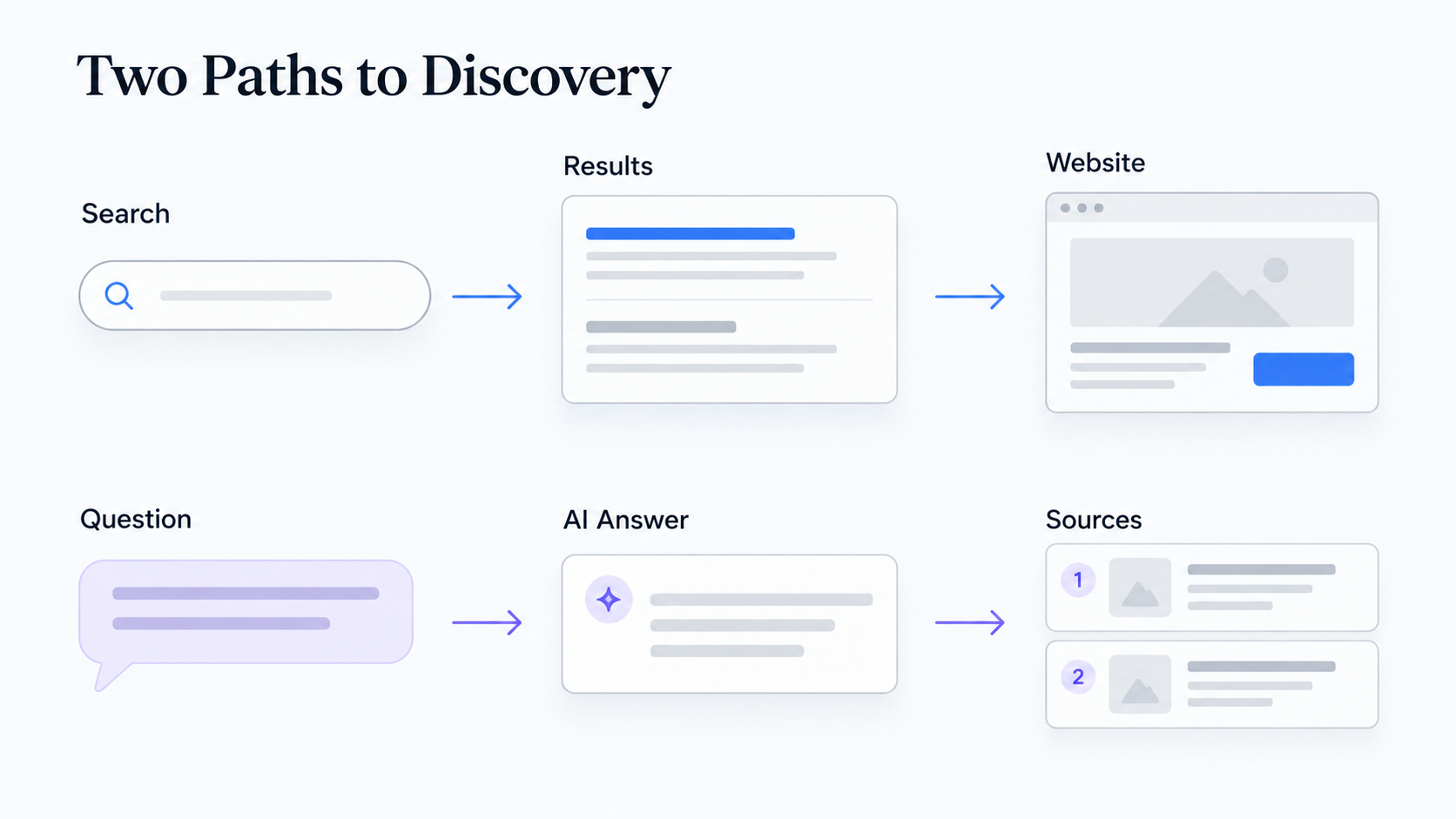
Traditional search often follows a path from keyword to search result to website. AI search may instead move from a natural-language question to a synthesized answer, then to cited sources and further exploration. Queries are also becoming more detailed. Instead of searching for “CRM system,” a user might ask, “Which CRM is right for a multinational manufacturing sales team, and what integration issues should we consider during implementation?”
Your content therefore needs to meet two requirements: align with search intent and indexing requirements, and provide a clear, specific, credible answer to a complete question.
2. Priority One: Move Beyond Keywords to Search Intent and Question Mapping
Keyword research still matters, but it should lead to topic clusters and question maps. Break each topic down by intent: definitions, reasons, how-to guidance, selection criteria, comparisons, costs, case studies, troubleshooting, and vendor evaluation.
For Adobe Analytics, for example, a product overview is just the beginning. You can also cover GA4 vs. Adobe Analytics, implementation steps, consultant selection, cost assessment, tracking plans, and real-world case studies. This connected body of content provides more comprehensive topic coverage than a single article.
3. Priority Two: Create Original Content Worth Citing
Rewriting information already available online offers little differentiation for either SEO or AI visibility. Add insights that only your organization can provide, such as implementation experience, process diagrams, checklists, test results, expert perspectives, case study breakdowns, original data, decision frameworks, or common mistakes.
Answer specific questions instead of repeating keywords. Clear definitions, comparison tables, steps, conditions, exceptions, and verifiable details help readers and AI systems understand the substance of your content.
4. Priority Three: Keep Technical SEO and Crawlability at the Foundation
GEO does not replace technical SEO. Search engines and AI systems have a harder time reliably accessing content when important pages cannot be crawled, canonical tags are incorrect, JavaScript rendering obscures content, internal links are insufficient, the site is slow, or multilingual hreflang implementation is inconsistent.
Continue managing crawlability, indexability, canonical tags, XML sitemaps, robots directives, internal linking, Core Web Vitals, structured data, the mobile experience, and multilingual site architecture. Even excellent content must first be discoverable and understandable.
5. Priority Four: Structure Content for Search Engines and AI
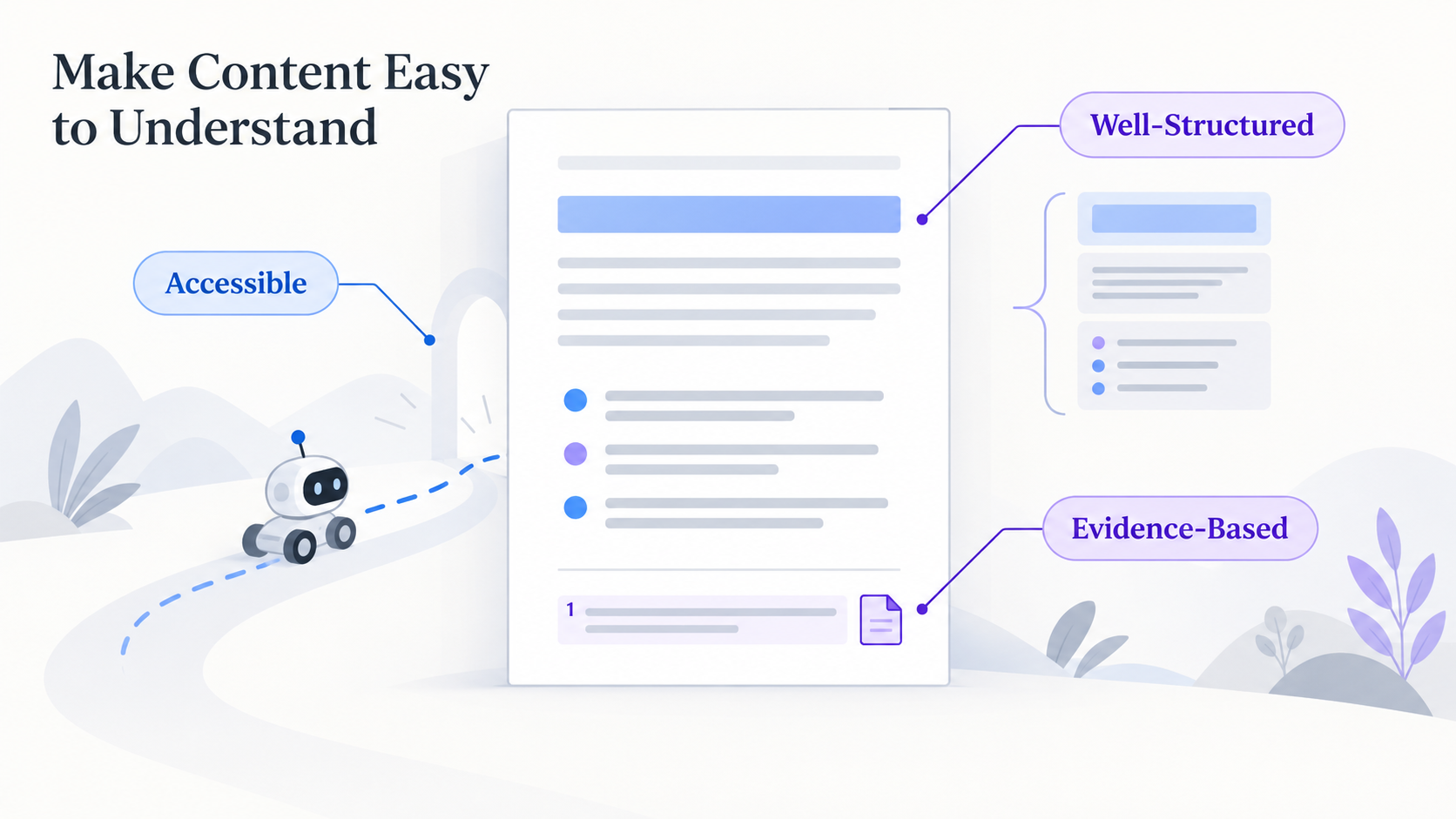
Use a clear H1/H2/H3 hierarchy, introduce the topic and answer directly, and keep each paragraph focused on one idea. Organize information with lists, tables, FAQs, step-by-step instructions, definitions, and comparisons.
On appropriate pages, structured data can help search engines understand the content type. But schema markup is not a shortcut to guaranteed visibility. What matters most is that the page itself is clear, readable, and closely aligned with the user’s question.
6. Priority Five: Build Brand Credibility and External Evidence
In AI search, consistent brand mentions across credible sources may matter more than the keyword density of a single page. Keep developing case studies, expert author profiles, customer results, partner pages, media coverage, industry directory listings, research reports, and high-quality backlinks.
Keep your brand name, product and service descriptions, company information, and areas of expertise consistent across your website and external sources. This helps search systems identify clearer relationships between entities.
7. Priority Six: Track Both Search Performance and AI Visibility
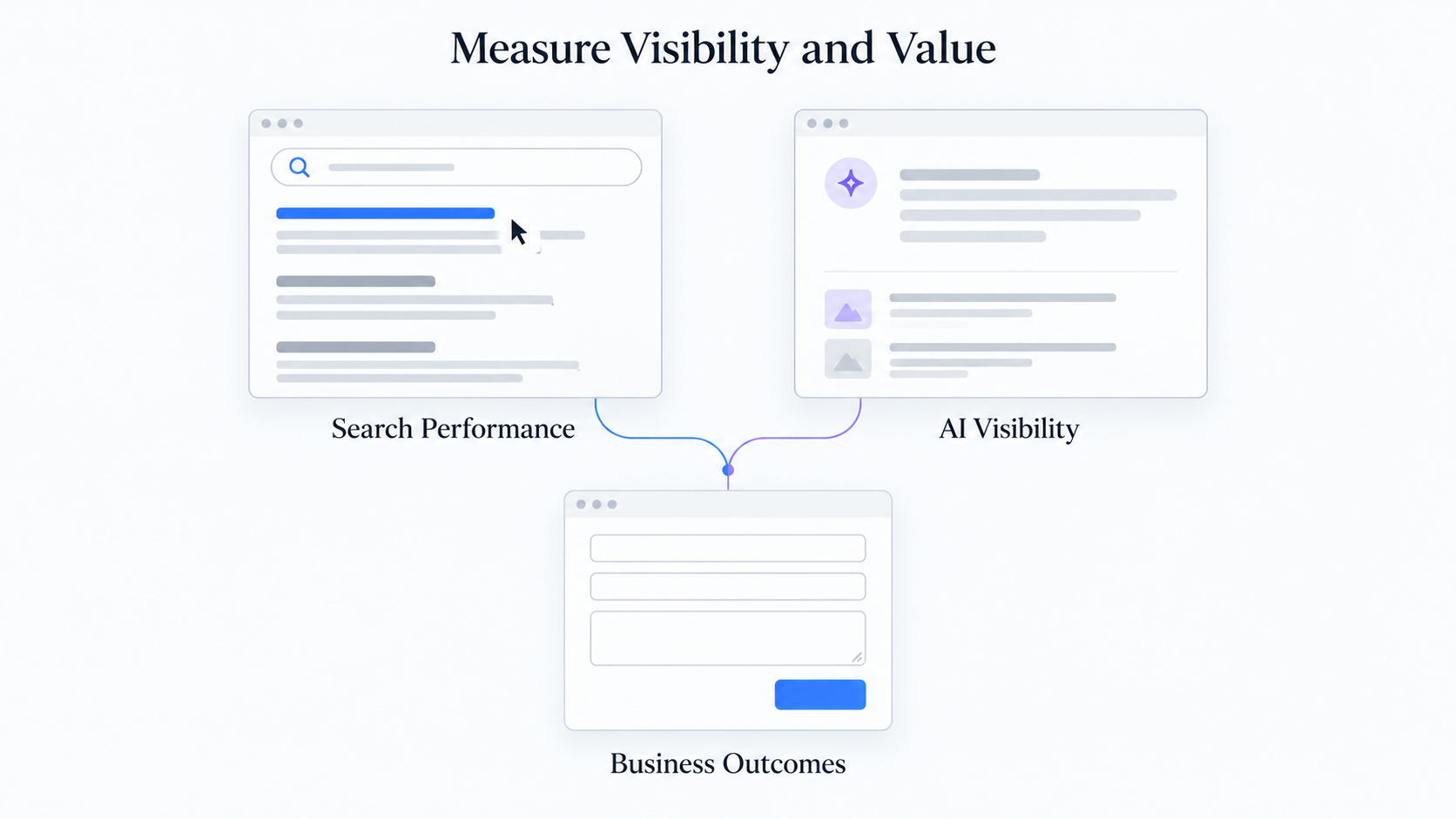
Traditional KPIs can include organic clicks, impressions, rankings, non-branded traffic, conversions, qualified leads, and revenue. For GEO, add measures such as AI mentions, citations, share of answer, brand presence, prompt coverage, and AI referral traffic.
AI visibility should mean more than simply being mentioned. Evaluate whether your brand appears in the right topics, is treated as a trusted source, and leads to subsequent branded searches, website visits, or business conversions.
8. How to Establish an SEO + GEO Execution Plan
First, map your core services and topic clusters. Second, build a search intent and prompt/question map. Third, audit existing content gaps. Fourth, address technical SEO in parallel. Fifth, develop original content and case studies. Sixth, strengthen internal links, entity relationships, and external citations. Seventh, create an SEO + GEO dashboard and adjust priorities monthly.
You do not need to cover every question at once. Start with commercially valuable topics such as product selection, solution comparisons, implementation guides, and consulting services, then gradually expand into educational content.
9. Frequently Asked Questions
Do we still need SEO if we invest in GEO in 2026?
Yes. Search engine crawling, indexing, content quality, and the technical foundations of your website still matter. GEO should build on a strong SEO foundation.
Is GEO just about adding more FAQs?
No. FAQs are only one content format. What matters is answer quality, comprehensive topic coverage, original value, credibility, and a content structure that is easy to understand.
How can we measure AI visibility?
Create a consistent set of prompts and regularly track brand mentions, cited sources, competitors’ share of answer, the context of answers, and changes in referral traffic and branded searches. Then connect those findings to actual leads or conversions.
10. Conclusion
An effective SEO + GEO strategy in 2026 is about more than chasing a new acronym. It is about becoming a trusted information source for both search engines and AI systems. Integrate search intent, original content, technical foundations, clear structure, brand authority, and measurement to build sustainable visibility in AI search.
If you need support with SEO, GEO, AI visibility, or website content strategy, explore LeadsTech’s digital marketing and website optimization services:
Explore SEO, GEO, and Website Optimization Services
To develop an SEO + GEO roadmap and prompt tracking framework tailored to your organization, contact LeadsTech:

Related Articles
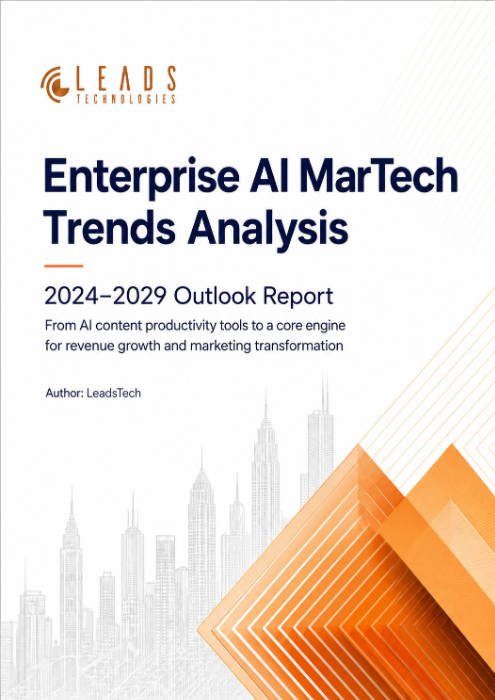
Enterprise AI MarTech Trends Analysis 2024-2029 Outlook Report
From AI content productivity tools to a core engine for revenue growth and marketing transformation
*The PDF will be sent directly to your inbox.
Email Error
Please enter a valid email address.
Thank You!
The whitepaper has been sent to your inbox. If you don’t see it, please check your spam or promotions folder.