
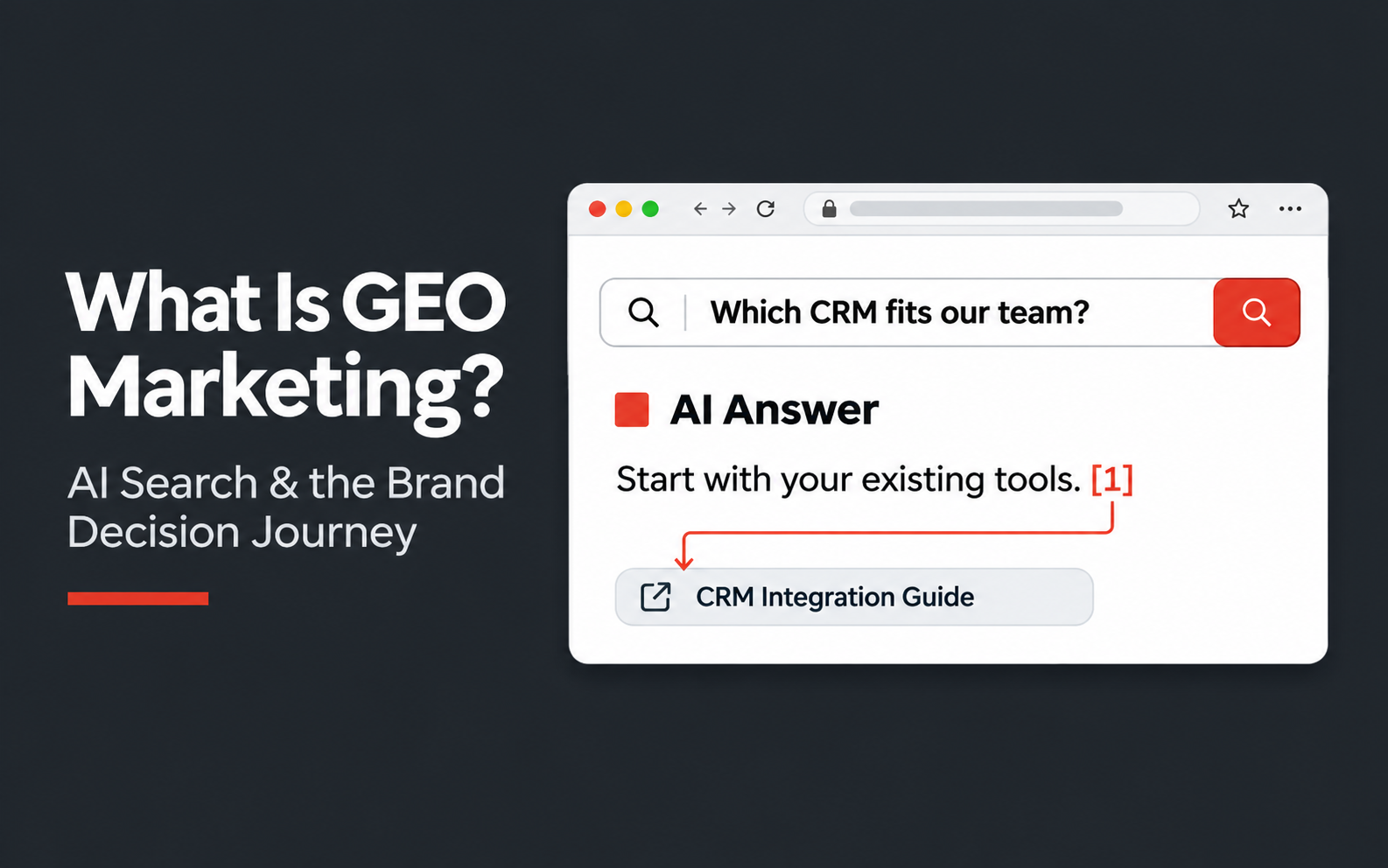
Customers may ask AI to put together a list of options, check the facts on company websites, and contact sales only after that. GEO marketing helps businesses examine where buyers first encounter the brand, whether the information they see is accurate, and whether it helps them make a decision. This guide explains the basics and how to plan content, brand, and measurement work.
1. Key Takeaways (TL;DR)
GEO marketing considers how generative search understands, mentions, and cites a brand and how those encounters affect later decisions. A reliable website and solid content remain essential. Provide the level of detail customers need as they discover, compare, verify, and get in touch. Measure outcomes at each stage so visibility is tracked separately from sales.
2. What Is GEO Marketing?
Generative engine optimization (GEO) describes work that improves visibility in AI-generated answers. GEO marketing brings content, brand information, and promotion together to help buyers make informed decisions.
LeadsTech’s SEO and GEO optimization services can help you review website fundamentals, topic coverage, and search performance. Start with the questions your priority audiences ask, then determine where the information needs improvement.
Each platform works differently, and a mention alone says little about whether the description is accurate or relevant to the intended audience. Review how the brand is represented as well as how often it appears.
3. How Does AI Search Affect the Buyer Journey?
Discover Needs Through Real Scenarios
Customers may describe a need such as “We need to manage multilingual websites” before searching for a product by name. A page that only introduces your brand is unlikely to answer questions buyers ask before they shortlist vendors.
Narrow the Options Through Comparison
Buyers may ask which company sizes a solution suits, what integrations require, or who handles maintenance. Compare options using consistent criteria, and explain trade-offs alongside strengths.
Verify Important Details at the Source
AI answers can help buyers organize information. Procurement teams may still visit your website to verify capabilities, review case studies, and find contact details. Give technical teams, marketers, and managers enough information to answer their own questions.
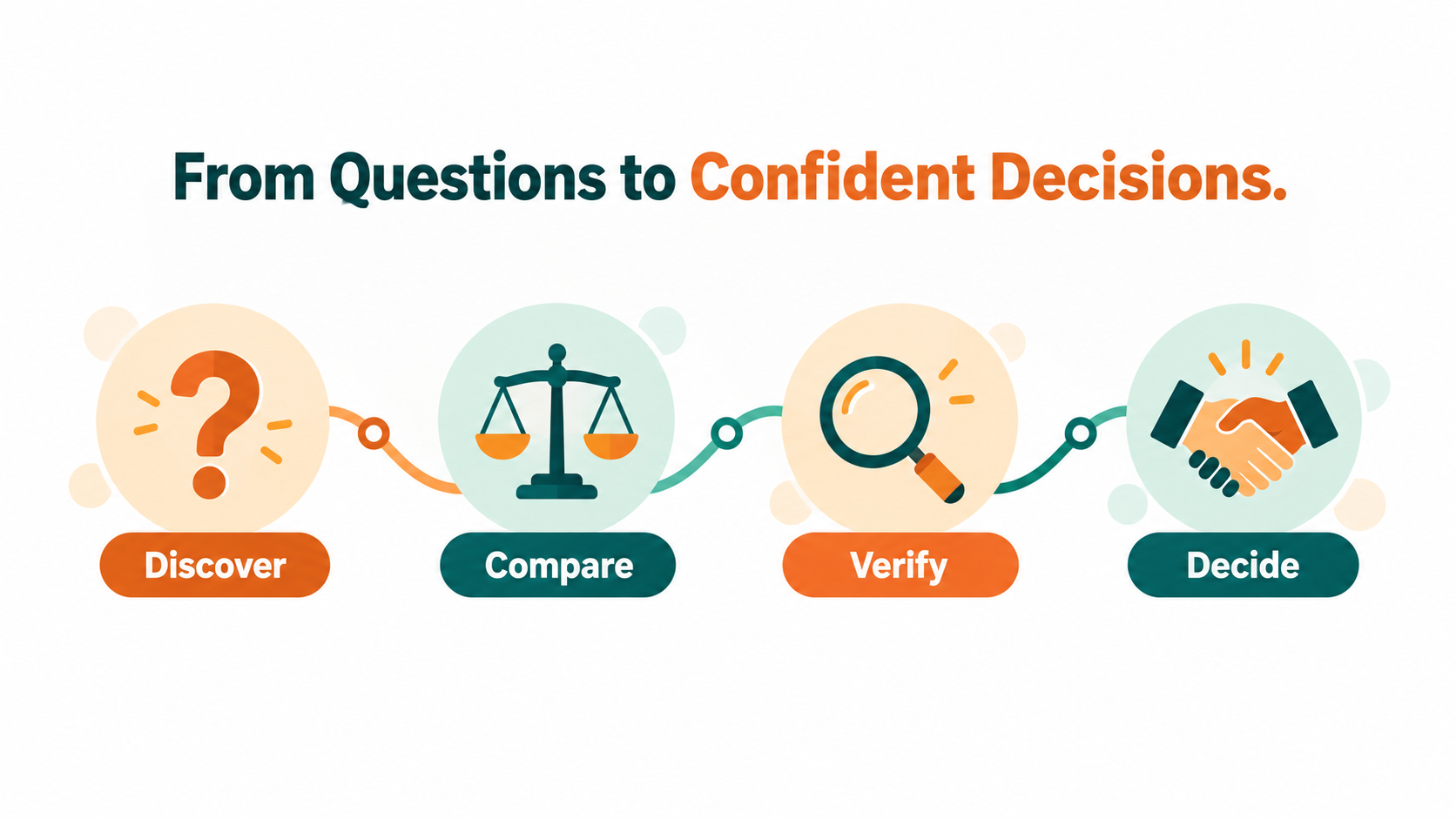
Buyers may move back and forth between AI answers, company websites, colleagues, and third-party sources. Keep key facts consistent wherever buyers check them.
4. How Should Your Content and Brand Strategy Adapt?
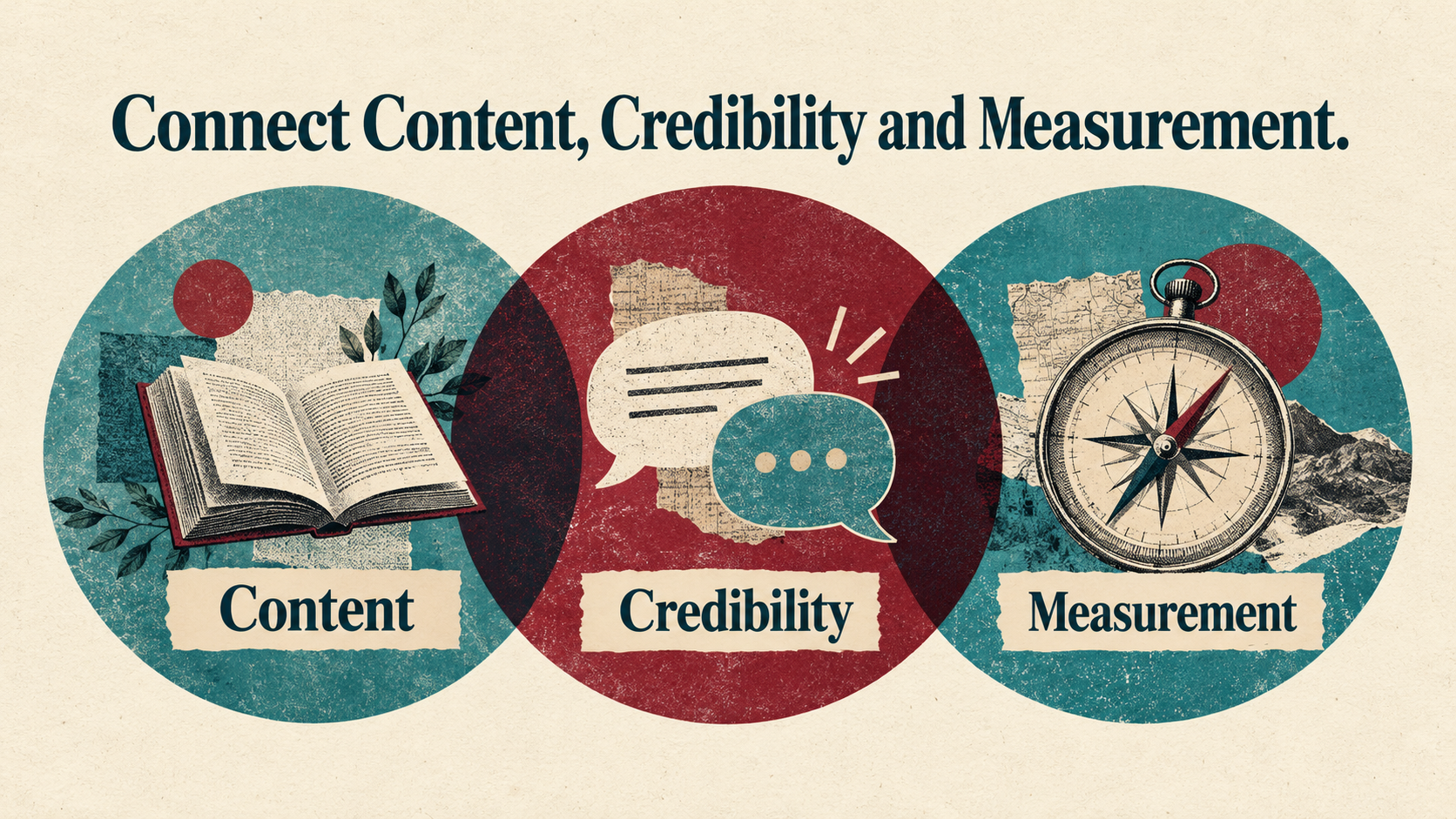
Plan content around what buyers need to do, from understanding the basics and comparing options to preparing for implementation and maintaining the product. Give each piece a clear purpose and link to relevant product and service pages so readers can explore further.
Support claims with verifiable product facts, expert judgment, and approved case studies. Third-party coverage, events, and partner materials can provide other perspectives. Avoid fake reviews and disclose paid placements clearly.
Keep company names, product relationships, and the markets you serve consistent. If a product has changed and outdated descriptions are still circulating, correct misleading information before creating new content.
The website and content fundamentals behind search engine optimization (SEO) still apply. Coordinate work across traditional and generative search so both can benefit from the same improvements.
5. Example: Buying a Website Management Solution Across Regions
Suppose a procurement team uses AI to identify website management options and asks marketing and IT to assess them. One vendor makes the list, but its site leaves out details on multilingual maintenance, permissions, and integrations. Buyers may move on to an option they can evaluate more easily.
The vendor can explain which situations its solution fits, what implementation requires, and who is responsible for what. It can also organize evidence approved for public use and link comparison articles to product and service pages. The contact page should tell buyers what information to provide in an inquiry.
Track whether brand descriptions are accurate, whether buyers read important content, whether inquiries are qualified, and how opportunities progress. This hypothetical example illustrates what to measure. It cannot establish that citations or sales will follow.
6. Five Steps to Get Started With GEO Marketing
- Choose a priority product and audience, then collect real questions buyers ask when making a decision.
- Check whether existing pages address buyer concerns at each stage.
- Add requirements, evidence, and limitations, and arrange for an expert review.
- Keep brand information in sync and connect content to a clear next step for getting in touch.
- Establish a measurement baseline and review content performance and sales feedback regularly.
Measure mentions, citations, site visits, and business outcomes separately. A sample score from one tool cannot show what every customer saw. Other campaigns may also contribute to a rise in quote requests, so interpret the results together.
7. Frequently Asked Questions
Does GEO marketing make SEO less important?
No. Website accessibility, content quality, and user needs are shared fundamentals. Plan resources for both together.
Does an AI mention always drive traffic?
No. A user may read the answer without clicking a source. Track visibility and site visits separately.
Is it enough to publish more articles?
No. Identify gaps in the information buyers need and make sure each new piece has a distinct purpose, accurate information, and a plan for maintenance.
Is more third-party coverage always better?
Relevance, credibility, and accuracy matter more. Repeated mentions without supporting evidence may do little to build customer trust.
8. Conclusion
Start by understanding how customers discover, compare, and verify brands. Fill the content gaps at each stage, then use measurement and sales feedback to decide where to invest.

If you’re planning how to grow through search and content, LeadsTech can help identify priority audiences, content gaps, and what to tackle first.

9. Further Reading
- SEO vs. GEO: Search Engine Optimization and Generative AI Optimization
See what traditional search and AI-generated answers have in common and how to monitor each. - SEO, GEO, and AI Search Growth Strategy: Increase Brand Visibility and Generate Leads
Bring website content, technology, and business goals into a single growth plan.
Related Articles
Enterprise AI MarTech Trends Analysis 2024-2029 Outlook Report
From AI content productivity tools to a core engine for revenue growth and marketing transformation
*The PDF will be sent directly to your inbox.
Email Error
Please enter a valid email address.
Thank You!
The whitepaper has been sent to your inbox. If you don’t see it, please check your spam or promotions folder.