
What Is AI Prospecting? A Guide to More Efficient B2B Sales
AI, B2B Marketing, Lead Generation, Pubrio Lead Generation Platform
15 November 2026
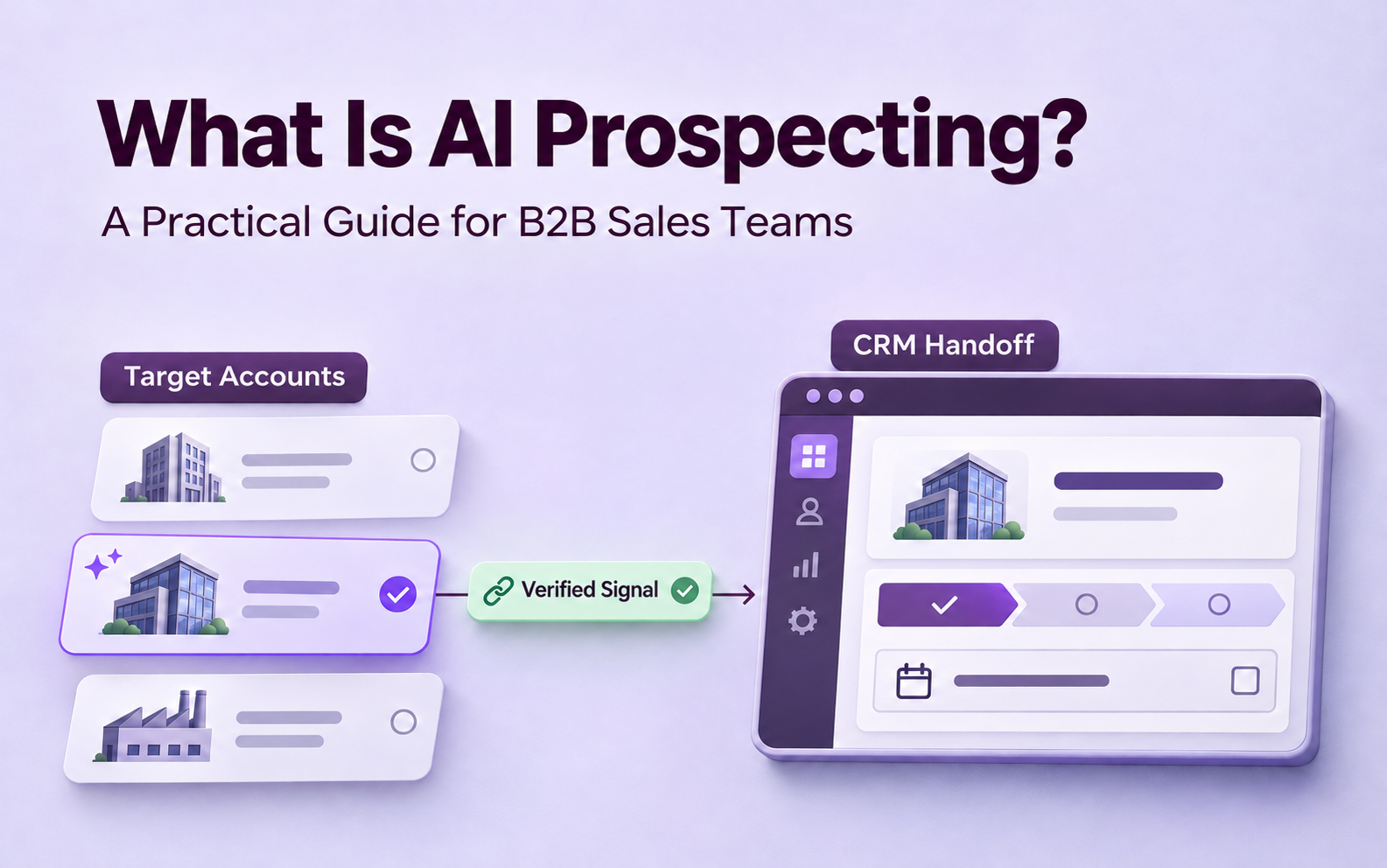
Do your sales reps spend every day researching companies and organizing contacts, yet still struggle to decide who to follow up with first? AI prospecting can reduce that research and data work. Its effectiveness depends on clear targets, reliable data, and someone to own the follow-up. This guide explains what AI prospecting can do, where it falls short, and how to get started.
Summary (TL;DR)
AI prospecting uses artificial intelligence for account research, data organization, and coordination so sales teams can act sooner on better information. Public signals may suggest a need, but they cannot establish buying intent. Validate your data and handoff process first, then measure relevant replies and qualified opportunities.
1. What Does AI Prospecting Actually Do?
Artificial intelligence (AI) helps organize information, recognize patterns, and prepare content. In prospecting, it can identify companies worth researching based on account criteria and public information, reducing the time spent searching one company at a time.
A team could evaluate Pubrio, a prospecting platform that helps research companies and market signals. LeadsTech can help evaluate and implement the platform and integrate customer data. Pubrio provides the data and tools, and a consultant helps fit them into the company’s workflows.
AI cannot determine on its own which customers are a good fit for your services. Define your target industries, regions, and needs, along with the companies you should exclude.
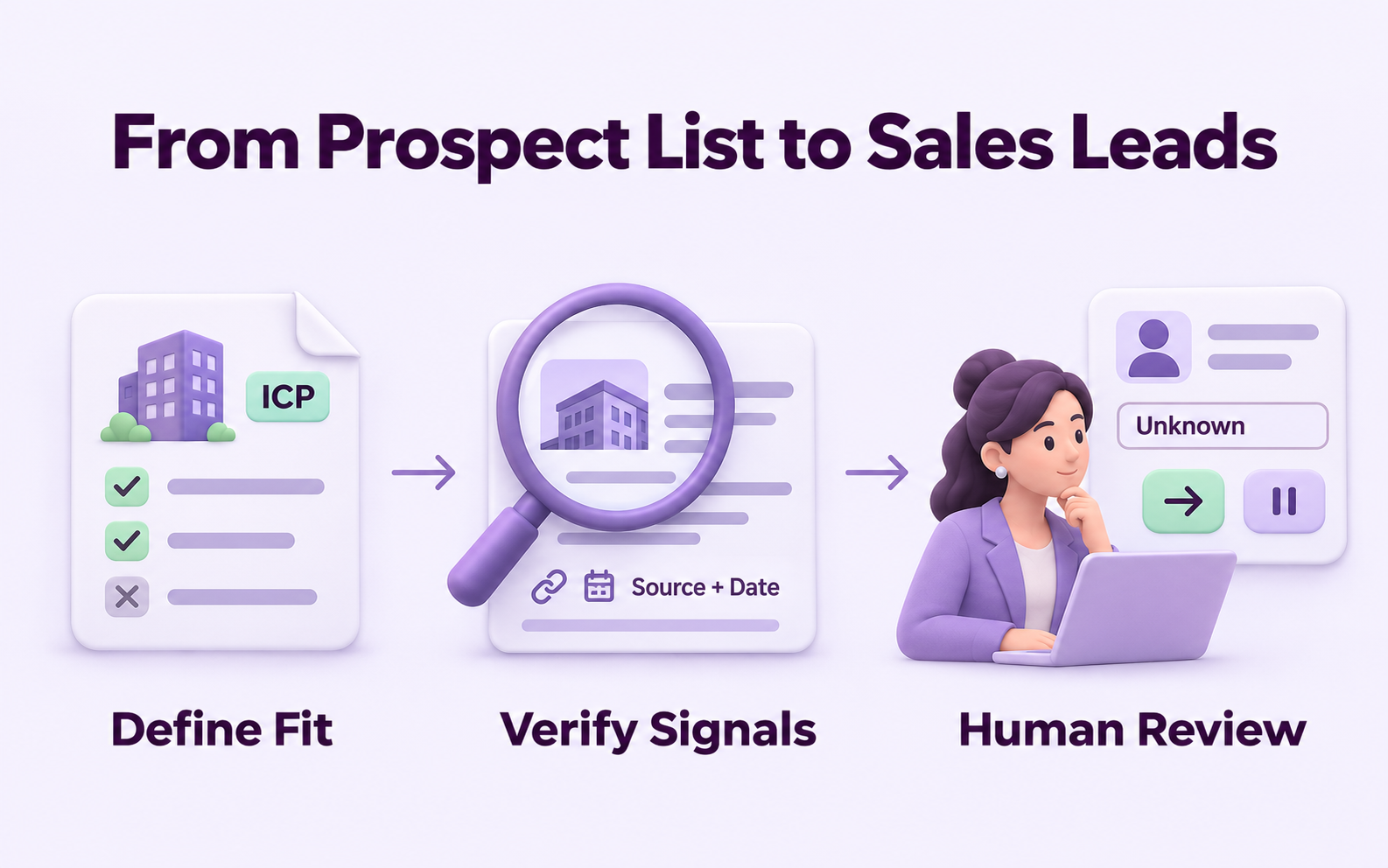
2. How Do You Turn a List into Sales-Ready Leads?
Define a Good Fit
An ideal customer profile (ICP) describes the companies best suited to your services. Along with size and industry, it can specify use cases, requirements, and exclusions.
Verify Why They Are Worth Contacting
Hiring, expansion, or a product launch can point to a possible need, though it may be unrelated to your service. Record the source and date, confirm the information refers to the right company, and separate facts from assumptions.
Have a Person Decide What Happens Next
Before reaching out, check existing relationships, active deals, and contact restrictions. Mark missing fields as unknown so AI does not fill them with plausible guesses.
3. Which Daily Tasks Can AI Help With?
Common uses include organizing candidate companies, merging duplicates, summarizing public information, and drafting outreach. AI can also rank prospects against defined criteria so reps can review the best matches first.
A customer relationship management (CRM) system stores company and contact records along with follow-up activity. When prospecting data enters the CRM, retain its source, owner, and status, and check it against existing opportunities.
Base personalization on facts. For example, refer to a confirmed public business change and ask a relevant question. Adding someone’s name to a mass message does little to make it useful, and suggesting an unverified purchase need can damage trust.
4. Example: An Equipment Service Provider Enters a New Market
Suppose an equipment maintenance company wants to reach manufacturers that are expanding operations. Its sales reps used to search news stories one by one. They often researched accounts that colleagues were already pursuing, leaving less time for discovery calls.
The team can define the market and service scope, use AI to compile a list of companies and expansion signals, and have sales reps verify the data and service fit. Create follow-up tasks only for prospects that pass review, and route companies already in discussion back to their current owners.
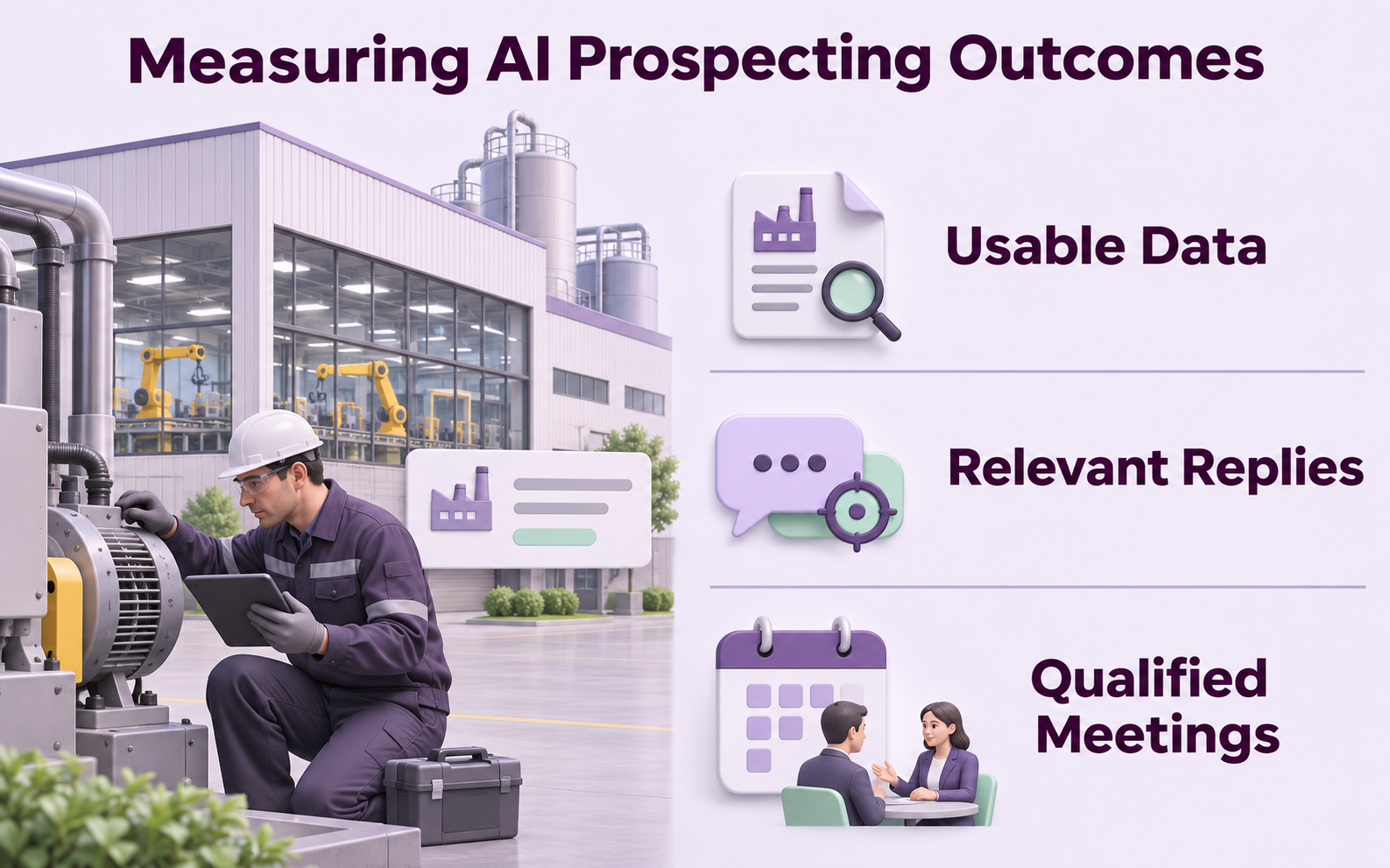
Measure time to produce usable research, the share that needs manual correction, relevant replies, qualified meetings, and later opportunity progress. This is a hypothetical example and assumes no particular improvement in sales or efficiency.
5. Six Steps to Start a Pilot
- Pick one market or product and identify the task that takes the most time today.
- Define target account criteria and who should be excluded from outreach.
- Sample records to verify sources, dates, and key fields.
- Set rules for duplicate records, ownership, and when to stop following up.
- Have a person review outreach messages and start with a limited pilot.
- Regularly review reply quality, opportunity progress, and time spent on manual corrections.
When someone replies or opts out, or a sales rep has taken over, update the status and stop any automated follow-up that no longer applies. Review how you use data and contact prospects against the requirements of the target market and your company policies.
6. Frequently Asked Questions
Can AI prospecting fully replace sales reps?
People still need to validate needs, build trust, and negotiate. AI is best suited to research and preparation.
Does an expansion announcement indicate buying intent?
Treat it as a research lead. Confirm whether your service fits, what the company needs, and whether the timing is right.
Can we start without complete historical data?
You can start by organizing research and screening accounts against clear rules. Predictive scoring requires a separate review of data quality and tool capabilities.
Should we measure success by list size?
Usable data, relevant replies, qualified meetings, and opportunity progress give you a clearer picture of the value to sales.
7. Conclusion
Start by defining your target, the evidence you need, and who will take over each lead. Pilot the process in one specific scenario, then scale once you know it works.

Talk to LeadsTech about data, integration, and pilot planning to see how a prospecting platform would fit your sales workflow.

8. Further Reading
- B2B Website Marketing Strategy: From Content to Qualified Leads
See how content, your website, and your sales team can work together to generate opportunities.
- Salesforce Implementation Guide for Global B2B Businesses
Plan how to connect lead lists, customer data, and sales workflows across teams.
Related Articles
Enterprise AI MarTech Trends Analysis 2024-2029 Outlook Report
From AI content productivity tools to a core engine for revenue growth and marketing transformation
*The PDF will be sent directly to your inbox.
Email Error
Please enter a valid email address.
Thank You!
The whitepaper has been sent to your inbox. If you don’t see it, please check your spam or promotions folder.