
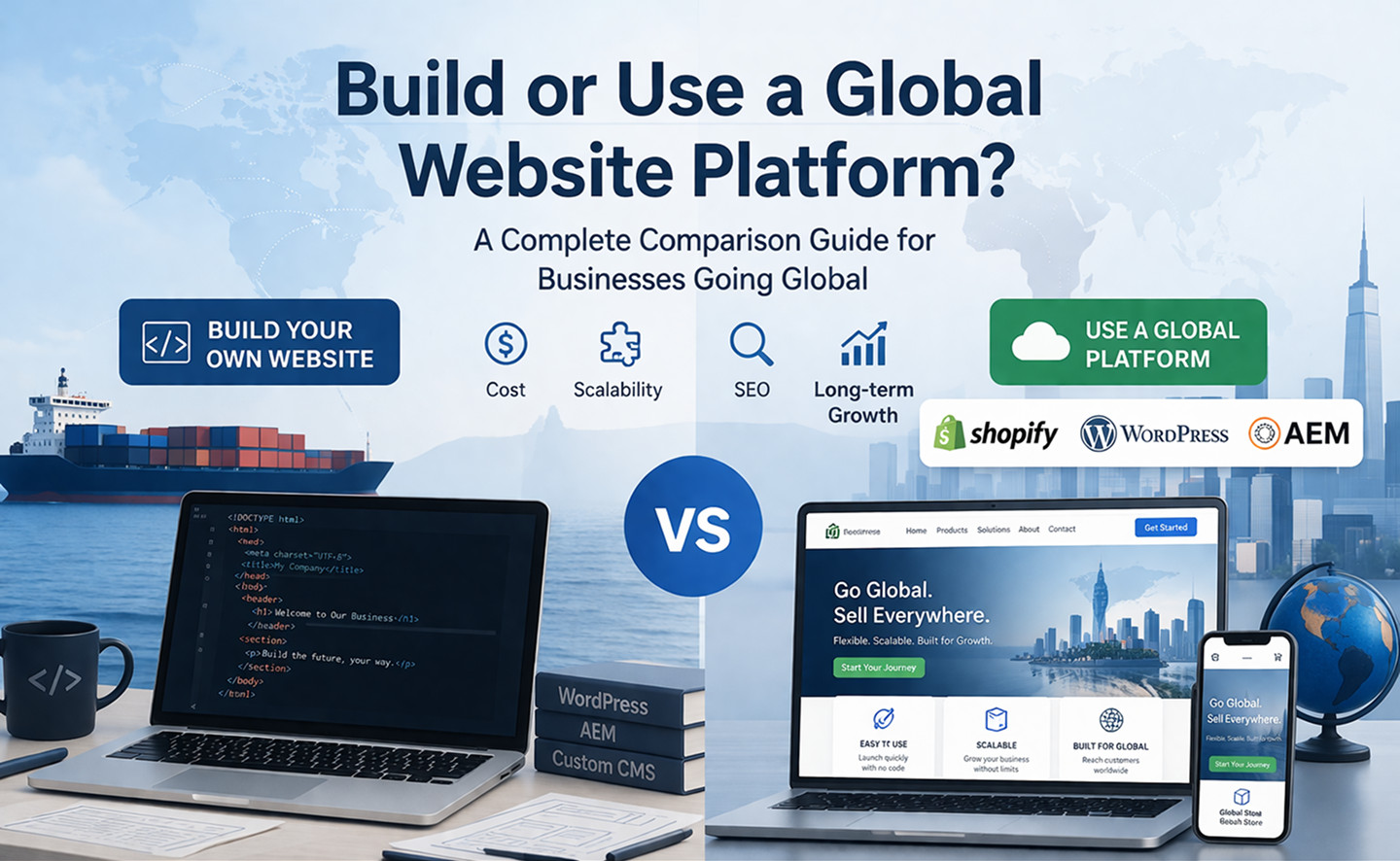
Custom Build vs Website Platforms: A Complete Guide for Global Expansion
Content Management System (CMS)
9 April 2026
- The Key Decision for Global Expansion Websites: Custom Build or Platform
- What Are Custom-Built Websites and Overseas Website Builders
- Advantages and Limitations of Overseas Website Building Platforms
- Core Value and Challenges of Custom-Built Websites
- Comprehensive Comparison: Platform vs Custom Build
- Website Strategy Recommendations by Business Stage
- Common Decision-Making Pitfalls
- Conclusion: No Absolute Best, Only What Fits
- Further Reading and References
- The Key Decision for Global Expansion Websites: Custom Build or Platform
- What Are Custom-Built Websites and Overseas Website Builders
- Advantages and Limitations of Overseas Website Building Platforms
- Core Value and Challenges of Custom-Built Websites
- Comprehensive Comparison: Platform vs Custom Build
- Website Strategy Recommendations by Business Stage
- Common Decision-Making Pitfalls
- Conclusion: No Absolute Best, Only What Fits
- Further Reading and References
1. The Key Decision for Global Expansion Websites: Custom Build or Platform
When a company decides to expand into international markets and build an official website for global customers, the first strategic question usually arises:
Should you use platforms like Shopify or Wix, or build a custom website?
This may seem like a technical choice, but it has long-term strategic implications, including:
- Whether your global expansion pace is controllable
- Whether your brand can accumulate long-term value
- Whether SEO and customer acquisition have room to grow
- Whether the website can evolve alongside your business
A mismatched decision at the beginning often leads to significantly higher rebuilding costs later.
2. What Are Custom-Built Websites and Overseas Website Builders
2.1 What Are Overseas Website Building Platforms
Overseas website builders are typically SaaS-based all-in-one solutions, such as:
- Shopify
- Wix
- Squarespace
Their common characteristics include:
- Platform-as-a-service
- Template-based website creation
- Fully hosted maintenance
Businesses can launch a website quickly by simply registering an account.
2.2 What Is a Custom-Built Website
A custom-built website does not mean coding everything from scratch. It refers to:
- Full ownership of website architecture and data
- Freedom to choose CMS and technology stack
- Ability to deeply customize based on business needs
Common approaches include:
- WordPress / Magento setups
- Enterprise CMS like Magnolia or AEM
- Headless or hybrid architectures
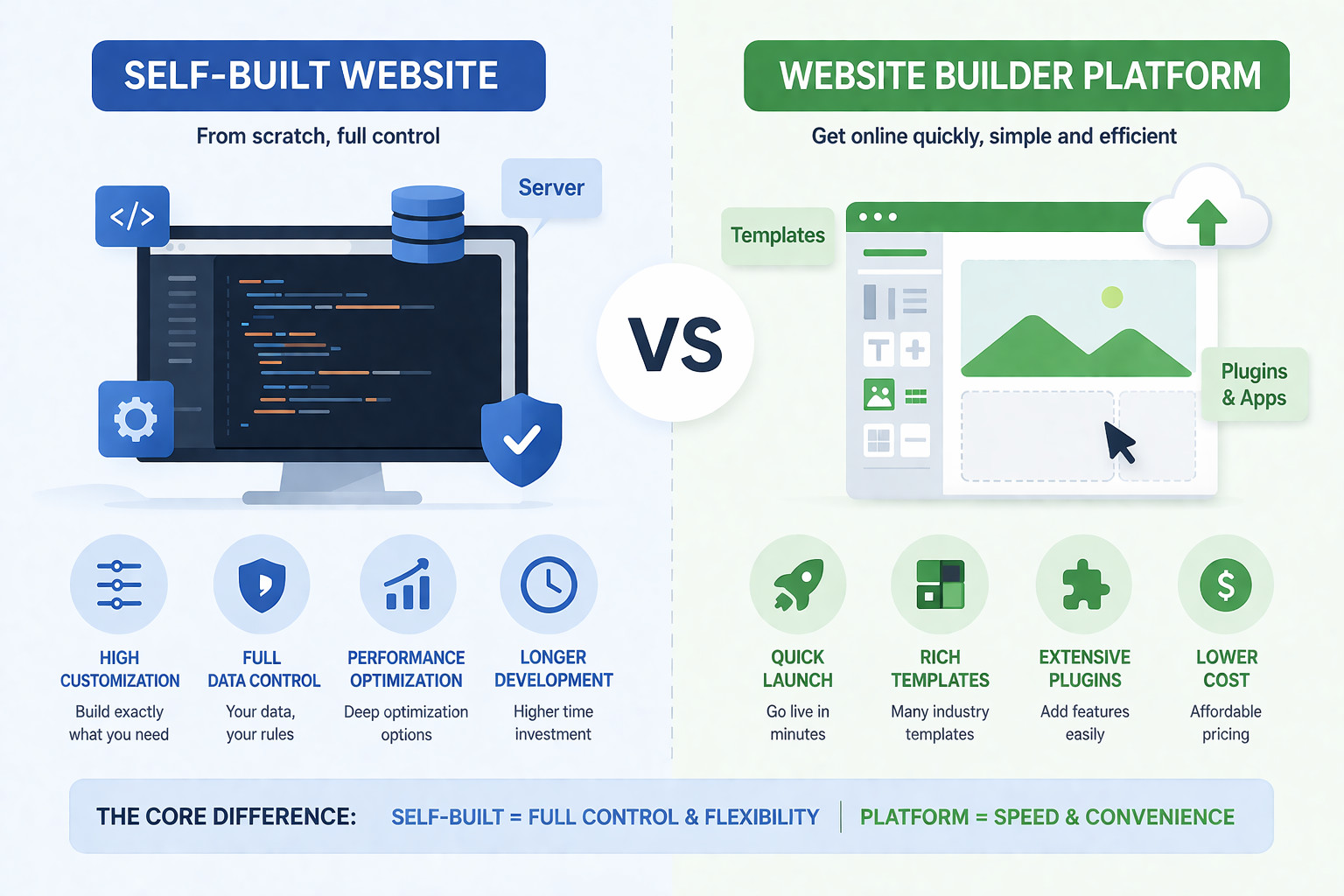
3. Advantages and Limitations of Overseas Website Building Platforms
3.1 Key Advantages

Fast launch, low barrier
No technical team required—go live within days.

Low maintenance effort
Hosting, security, and updates are handled by the platform.

Ideal for lightweight eCommerce or market validation
Well-suited for early-stage expansion or single-market testing.
3.2 Core Limitations
Limited flexibility in content and structure
Restrictions on URLs, page structures, and content modeling.
SEO and internationalization limitations
Difficult to deeply optimize multilingual setups, hreflang, and complex site structures.
Limited brand differentiation
Template-based designs make it harder to stand out or tell complex brand stories.
Ongoing costs add up
Subscription fees, plugins, and transaction commissions accumulate over time.
4. Core Value and Challenges of Custom-Built Websites
4.1 Long-Term Value
Full control of content and data
No dependency on platform rules; digital assets can accumulate over time.
Supports complex content and multi-market operations
Ideal for multi-language, multi-brand, and multi-country strategies.
Greater SEO and content growth potential
Continuous optimization based on search and content strategy.
Evolves into a digital experience platform
Can integrate CRM, marketing automation, analytics, and AI capabilities.
4.2 Practical Challenges
- Higher initial investment than platform solutions
- Requires professional teams or agencies
- Poor planning can create technical debt
This is why custom builds are better suited for companies with clear mid- to long-term global strategies.
5. Comprehensive Comparison: Platform vs Custom Build
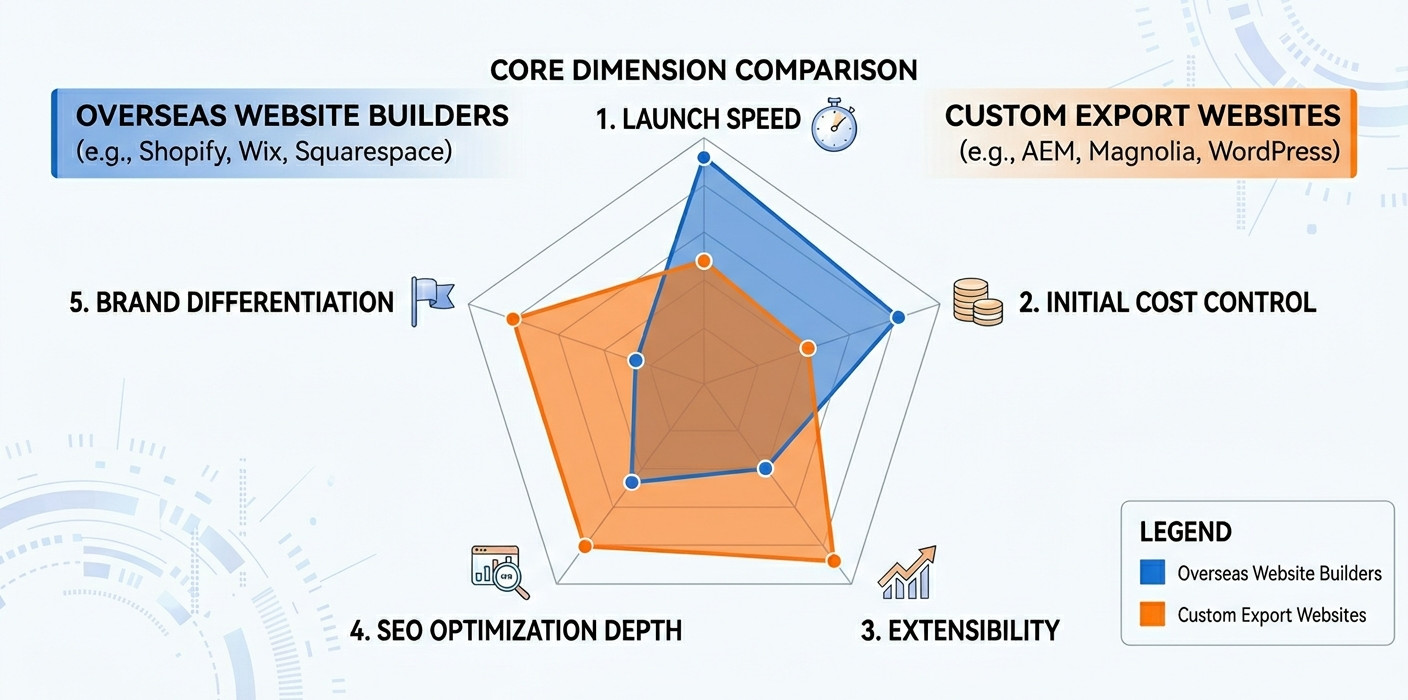
| Dimension | Platform | Custom-Built |
|---|---|---|
| Time to Launch | Very fast | Slower |
| Initial Cost | Low | Medium to high |
| Long-term Scalability | Limited | Very high |
| SEO Capability | Basic | Highly customizable |
| Multilingual / Multi-market | Limited support | Native support |
| Brand Differentiation | Template-constrained | Highly customizable |
| Data & Asset Ownership | Platform-controlled | Fully owned by business |
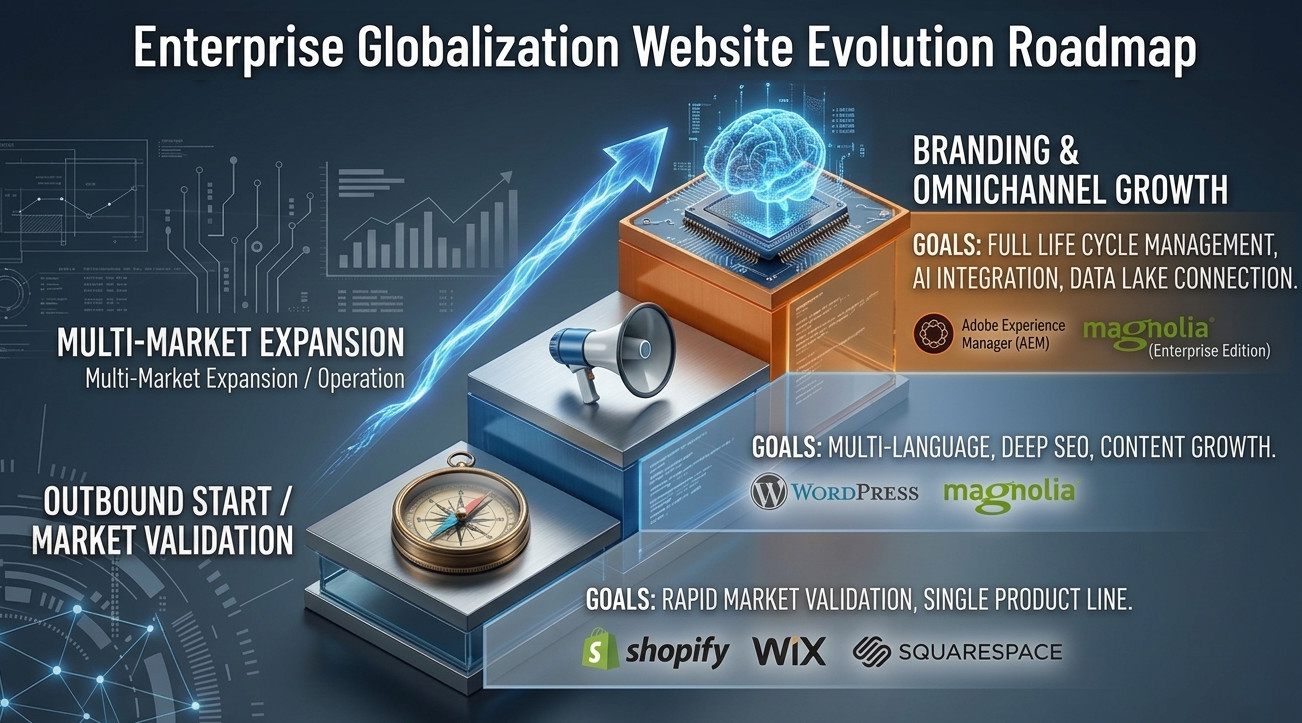
6. Website Strategy Recommendations by Business Stage
Stage 1: Initial Expansion or Market Validation
Recommended: Website building platforms
- Single market focus
- Simple product offering
- Goal is rapid validation
Stage 2: Multi-market Expansion
Recommended: Custom-built website (WordPress / Magnolia)
- Growing focus on SEO
- Expanding content scale
- Clear multilingual needs
Stage 3: Brand- and Experience-driven Growth
Recommended: Enterprise custom platforms (AEM / Magnolia)
- Multi-country website ecosystem
- High demand for brand consistency
- Integration of content, data, and AI
7. Common Decision-Making Pitfalls
Pitfall 1: Treating speed as the only priority
Launching fast does not guarantee long-term success.
Pitfall 2: Underestimating migration costs
Moving from a platform to a custom build is often more expensive than building it right from the start.
Pitfall 3: Ignoring long-term SEO and content value
A global website is not a campaign page—it is a long-term customer acquisition asset.
8. Conclusion: No Absolute Best, Only What Fits
There is no absolute right or wrong between custom-built websites and platforms. The key depends on:
- Your current business stage
- Whether you have a long-term global strategy
- The strategic role of the website in your business
For companies aiming to build long-term brand presence and growth in global markets, a custom-built website is often inevitable.
Final Thoughts: Making a More Informed Decision
If you are evaluating:
- Whether to migrate from Shopify or other platforms
- Whether to rebuild your current global website
- Whether to adopt an enterprise CMS (e.g., AEM, Magnolia)
Start from your overall business goals and content strategy—not just the tools.
Feel free to contact us and work with our consultants to identify the best website strategy for your stage of growth.
Contact Us: Discuss your website and CMS strategy
Service Page: Explore enterprise website and content platform solutions
Further Reading and References
Further Reading
- How to choose a CMS for global B2B websites? In-depth comparison of leading platforms
- How to choose a professional B2B website agency? 5 key criteria for global success
- What is AEM as a Cloud Service? A key step toward cloud-based content platforms