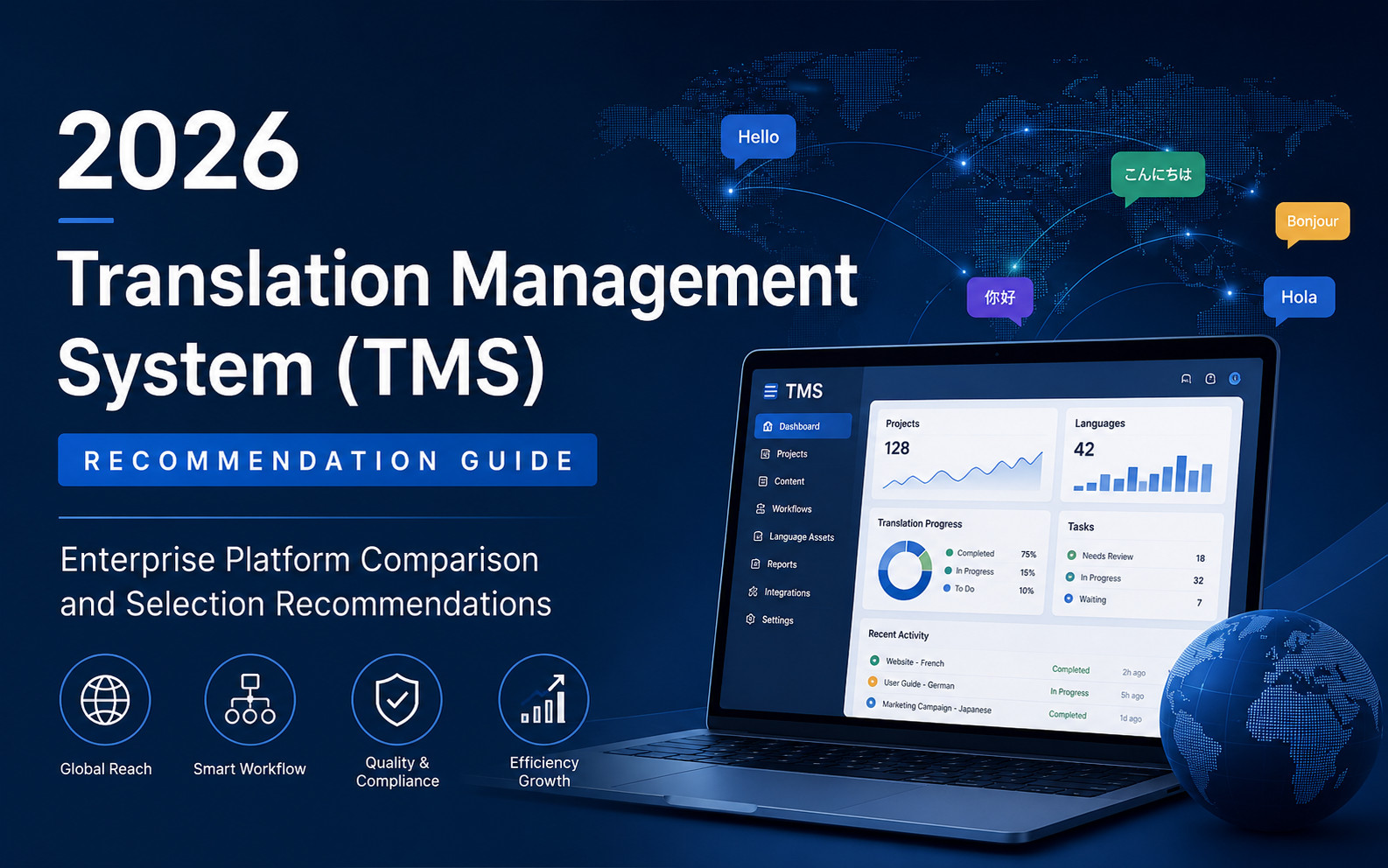
2026 TMS Guide: Enterprise Translation Management System Comparison
Translation Management System (TMS)
12 May 2026
1. Introduction: When Enterprises Reach the “Must Choose a TMS” Stage
When an enterprise’s translation needs are limited to a single website or product, translation tools or outsourced workflows are usually sufficient.
But as the business scales and expands into new markets, organizations often begin to encounter the following challenges:
- Translation demands come from multiple departments and markets
- Corporate websites, marketing, product, and documentation all require multilingual versions
- Translation workflows begin to impact content launch speed
- Brand consistency and regulatory risks start to emerge
At this point, the question is no longer “whether to use a Translation Management System (TMS),” but rather:
Which TMS can truly support the enterprise’s content and market growth in the years ahead?
2. Why Most TMS Comparisons Leave Enterprises More Confused
When searching for “TMS recommendations,” enterprises often encounter extensive feature lists, price comparisons, or ranking-style articles, yet in practice they find:
- Features all look similar
- Demos all run smoothly
- Only after going live do they realize it’s not the right fit
The reason is that most comparisons overlook a critical premise: enterprises need to solve not a translation problem, but a multilingual content governance problem.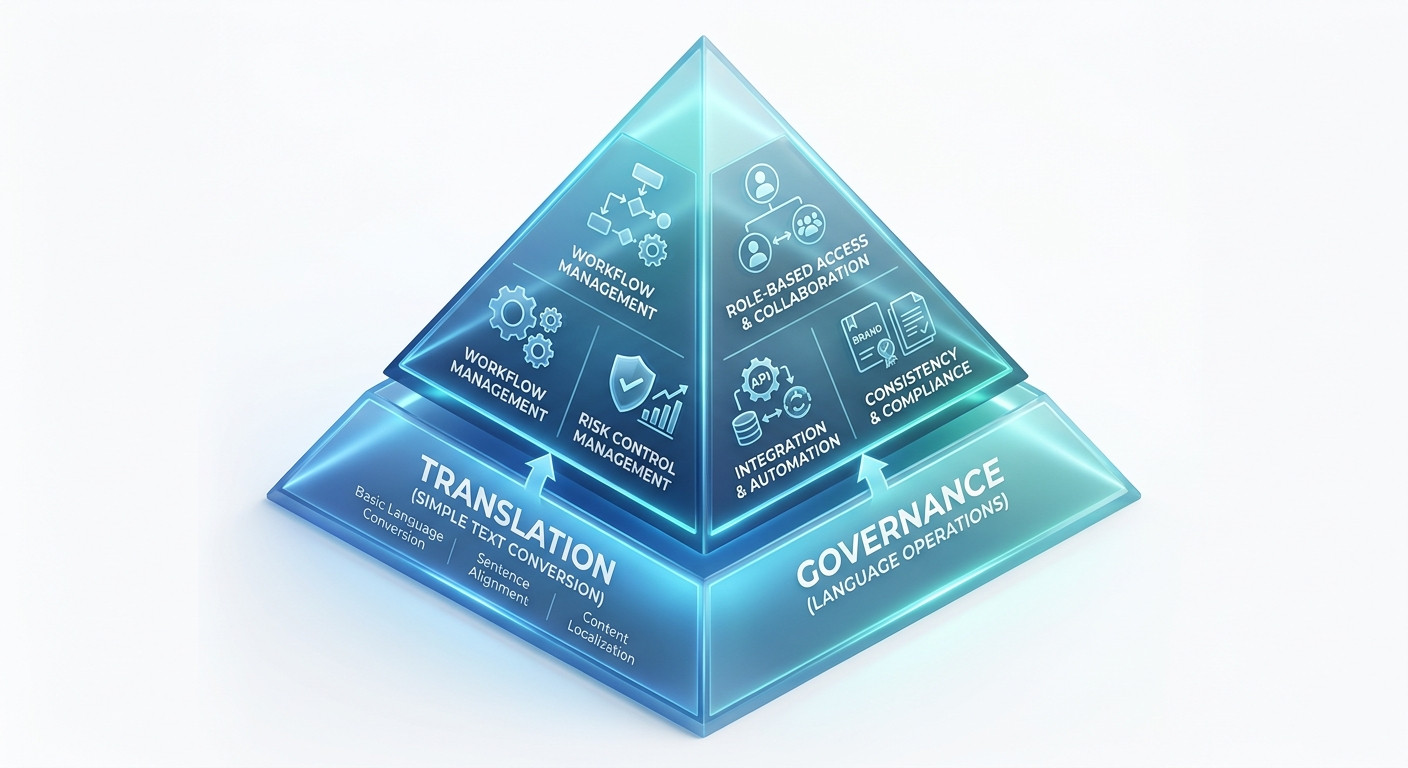
Therefore, the comparison below deliberately avoids “official spec sheets” and instead focuses on applicable scenarios and long-term impact from a consultant’s perspective.
3. Enterprise TMS Platform Comparison (Consultant Perspective)
The following is a directional comparison of features and applicable scenarios, not an official specification sheet.
| Evaluation Dimension | Tool-Based TMS (Smartling / Phrase / Lokalise) |
Tech-Focused TMS (Weblate / POEditor) |
Enterprise TMS (GlobalLink) |
|---|---|---|---|
| Primary Users | Product / Tech Teams | Engineering Teams | Cross-Department Enterprise Organizations |
| Typical Content Types | App / UI / Single Website | Software Strings | Corporate Sites, Marketing, Product, Legal, Documentation |
| AI Translation Support | Yes (Efficiency-focused) | Yes or Requires Custom Integration | Yes, with Content Risk Governance |
| Human Review Workflow | Basic | Requires Custom Design | Complete, Multi-level Configurable |
| Translation Memory / Terminology Governance | Yes (Project-level) | Yes (Tech-focused) | Enterprise-level, Cross-department Shared |
| CMS / DAM Integration | Yes, but Limited Flexibility | Tech Integration Focused | Deep Enterprise System Integration |
| Multi-brand / Multi-market Governance | Limited | Not Suitable | Designed for This Scenario |
| Consulting & Implementation Support | Tool Support Focused | Minimal | Platform + Consulting + Language Services |
| Suitable Enterprise Size | SMB, Single Product | Tech-focused Organizations | Mid-to-Large, Multinational Enterprises |
4. How to Read This Comparison: What Enterprises Should Really Look For
The key to this table is not “which column looks better,” but rather which stage of development the enterprise is currently in.
When translation is still primarily product or tech content
Tool-based or tech-focused TMS can indeed quickly solve efficiency problems.
When translation begins to impact brand, market, and compliance
The enterprise faces not just translation itself, but:
- How different departments collaborate
- How different content types apply different translation strategies
- How translation risks are governed and tracked
These issues can often only be fully addressed by an enterprise-level TMS.
5. Why We Recommend GlobalLink for Enterprise Scenarios
In actual consulting and implementation projects, we recommend TransPerfect GlobalLink not because it has “the most features,” but because it best fits enterprise-level real-world scenarios.
GlobalLink Solves Cross-Department Governance, Not Just Point Translation
GlobalLink is designed on the premise that translation demands come from different departments, different content carries different risks and rhythms, and translation must be integrated into the enterprise governance framework. This makes it the hub of enterprise multilingual content, not just an add-on tool.
AI Translation in GlobalLink Is a Governable Strategy
Enterprises are never really worried about AI translation being too slow. What concerns them is: which content can use AI? Which must be human-verified? Who is accountable when issues arise? GlobalLink wraps AI translation within clear workflows, roles, and review mechanisms—critical for enterprise risk management.
Platform, Language Services, and Consulting Experience Are Integrated
When enterprises implement a TMS, the real challenges are often: how to design workflows that actually work, how to divide organizational roles, and how to maintain translation governance long-term. GlobalLink combines TransPerfect's language services and consulting expertise to help enterprises truly land the solution, not just complete the go-live.
6. Conclusion: Choosing a TMS Means Choosing Your Content Capability for the Next 3–5 Years
For enterprises, a Translation Management System is not a short-term tool—it is a critical foundation that impacts future content efficiency, brand consistency, and market responsiveness.
When comparing TMS options, the real question is not:
- Which one has the most features
But rather:
- Which one can support the enterprise’s growth over the next 3–5 years
- Which one can turn translation into a governable, optimizable process
- Which vendor can be a long-term partner, not just a system deliverer
Under these criteria, GlobalLink is often one of the most robust choices for enterprise-level, multi-market, multi-department scenarios.

If you are currently comparing different TMS platforms, we invite you to contact us. Our consulting team can help you interpret this comparison based on your actual business context, rather than making decisions based solely on feature checklists.
 Contact Us
👉 Learn more about GlobalLink and Enterprise Translation Management Solutions
Further Reading
- What Is a Translation Management System (TMS)? 5 Major Pain Points Enterprises Face When Scaling Multilingual Content
- What Features Should an Enterprise TMS Have? A Complete Guide to AI Translation, Automation, and System Integration
- How to Choose a TMS? 7 Critical Evaluation Points Enterprises Often Overlook
- Can You Really Implement a TMS on Your Own? Common Failure Reasons and Why Consultant Involvement Is Essential
Related Articles
Enterprise AI MarTech Trends Analysis 2024-2029 Outlook Report
From AI content productivity tools to a core engine for revenue growth and marketing transformation
*The PDF will be sent directly to your inbox.