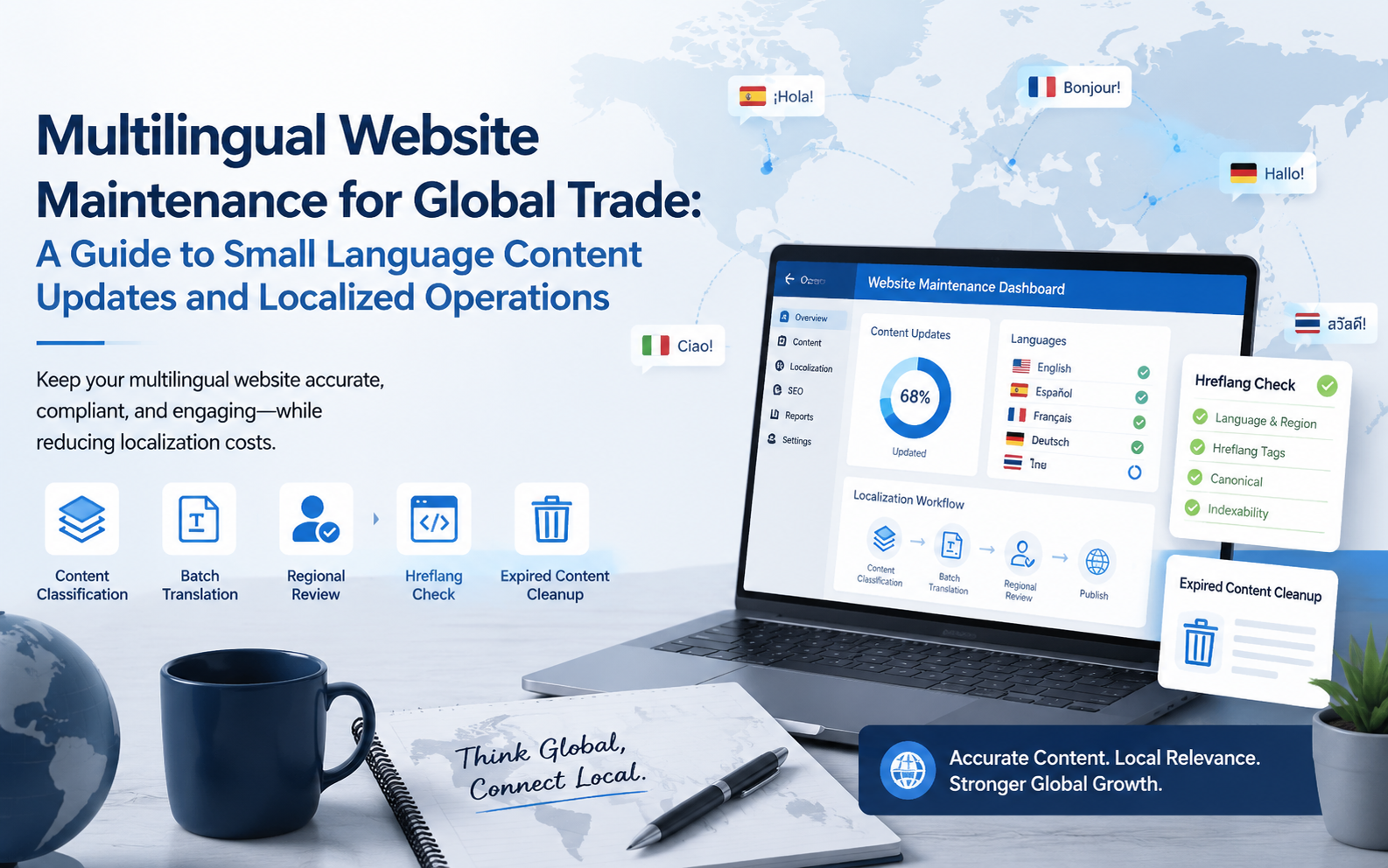
How to Maintain a Multilingual Global Website and Control Localization Costs
Content Management System (CMS), Magnolia CMS, Translation Management System (TMS)
4 August 2026
- 1. Why Multilingual Website Costs Escalate After Launch
- 2. Tier Content Instead of Translating Every Update at Once
- 3. Replace One-Off Updates with Change Packages
- 4. Set Boundaries Between the Global Master and Regional Localization
- 5. Audit SEO, Links, and Outdated Content Every Month
- 6. Build a Sustainable Maintenance Model with a Lean Team
- Conclusion
- Related reading
- 1. Why Multilingual Website Costs Escalate After Launch
- 2. Tier Content Instead of Translating Every Update at Once
- 3. Replace One-Off Updates with Change Packages
- 4. Set Boundaries Between the Global Master and Regional Localization
- 5. Audit SEO, Links, and Outdated Content Every Month
- 6. Build a Sustainable Maintenance Model with a Lean Team
- Conclusion
- Related reading
Summary
Maintaining a global multilingual website means continuously managing content updates across languages, translation reviews, technical SEO, link integrity, and regional publishing responsibilities after launch. This article explains how content tiers, batched translation, collaboration between headquarters and regional teams, and scheduled audits can reduce the operating costs caused by one-off translation requests, out-of-sync versions, and repeated publishing work.
In practice, cost is driven less by the number of languages than by clear content tiers, terminology rules, and publishing ownership. When LeadsTech plans multilingual content and translation workflows, these governance rules are defined first so teams can decide which updates need to reach each market. If a company is also rebuilding its global website, corporate website development services should account for the same governance rules.
1. Why Multilingual Website Costs Escalate After Launch
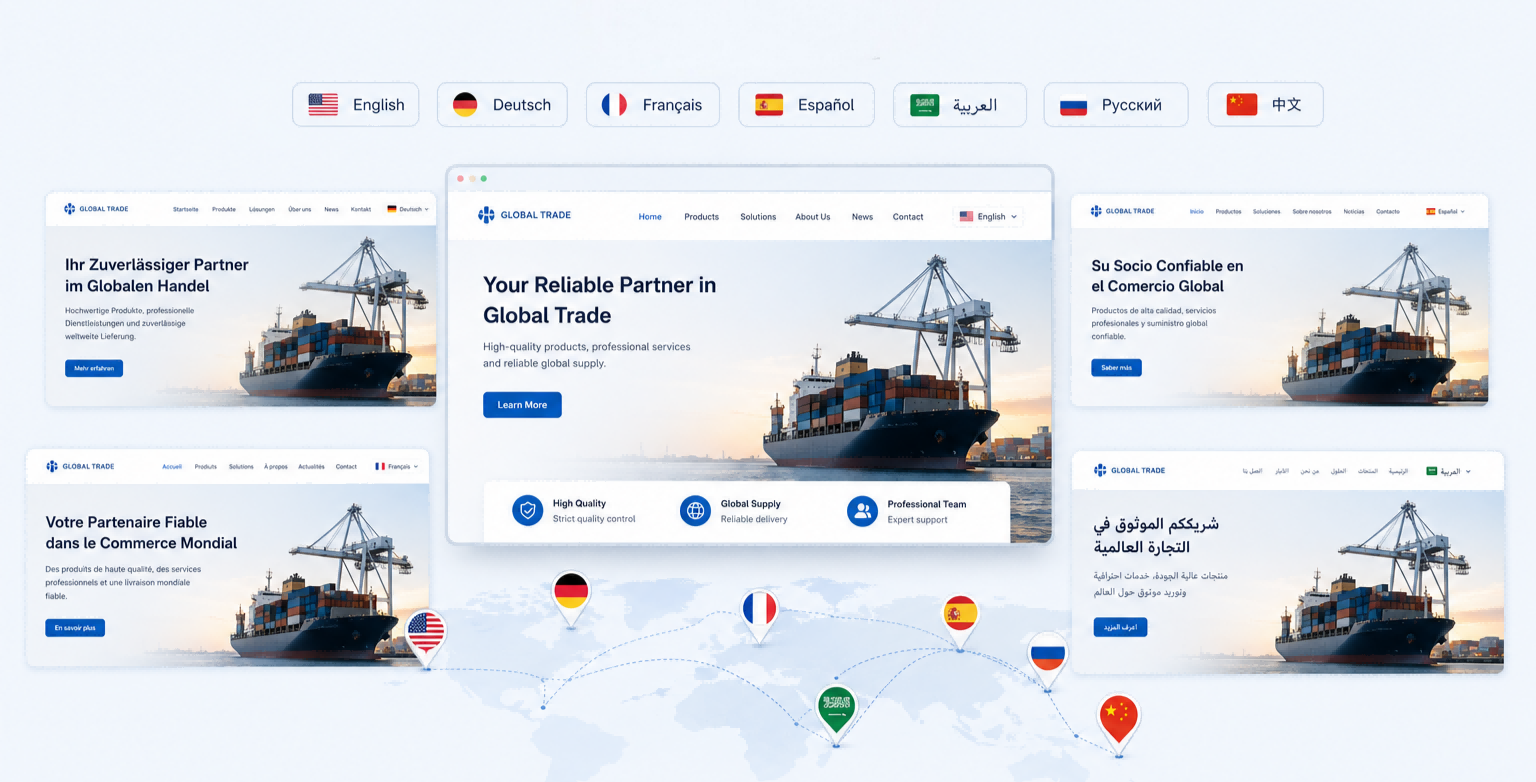
At launch, many companies only need to maintain English and a few additional languages. As products change, customer stories expand, trade shows approach, and regulatory requirements evolve, content updates become much more frequent. The cost of a global multilingual website usually escalates not because translation rates are too high, but because a single change is split across multiple conversations, review cycles, and publishing tasks.
Teams using Magnolia to manage multilingual websites should first define which content must stay synchronized, which updates can be handled in batches, and which decisions belong to regional teams. Assuming every market needs every update immediately only creates unnecessary work. Clear priorities allow translation and review resources to focus on product facts, compliance information, and high-value pages.
2. Tier Content Instead of Translating Every Update at Once
When maintaining a global multilingual website, translation rates are only one part of the cost equation. Update frequency, the number of review cycles, and the publishing process can have just as much impact on total operating costs. Start by assigning each type of content an update priority.
A practical model divides pages and assets into three tiers:

Mandatory Synchronization
Product specifications, pricing rules, certifications, compliance statements, terms of service, and essential contact information. Set clear translation and publishing deadlines for this content.

Quarterly Updates
Customer stories, industry articles, solution pages, FAQs, and downloadable resources. These updates can be grouped into monthly or quarterly batches.

Regional Discretion
News, event announcements, social media content, and local market materials. Regional teams can decide whether to update this content based on market needs.
This tiered model directs the multilingual website budget toward content that affects sales, compliance, and customer trust instead of spending resources to keep every language version perfectly synchronized.
3. Replace One-Off Updates with Change Packages
A common source of waste in secondary-language maintenance is launching a separate translation and review request every time a sentence changes, an image is replaced, or a product attribute is added. A more manageable approach is to combine updates from a defined period into a single “change package.”
For example, compile the following every two weeks:
- Links to new or revised pages.
- Changed fields, copy, and downloadable materials.
- Images, videos, and CTAs that need to be replaced.
- Target languages, market priorities, and launch dates.
Magnolia’s Content Translation Support module can export and import page content in translation-friendly formats such as XLIFF, CSV, and Excel. It also provides contextual information about related content, making it easier to route batched changes to translation teams or regional reviewers.
For global multilingual websites, a “compile, translate, then publish” workflow is generally easier to control than processing each item immediately. If machine translation is required, teams can evaluate Magnolia’s Content Translation Extended module and their configured translation services. Human review should remain part of the process, especially for product terminology, compliance language, and sales commitments.
4. Set Boundaries Between the Global Master and Regional Localization
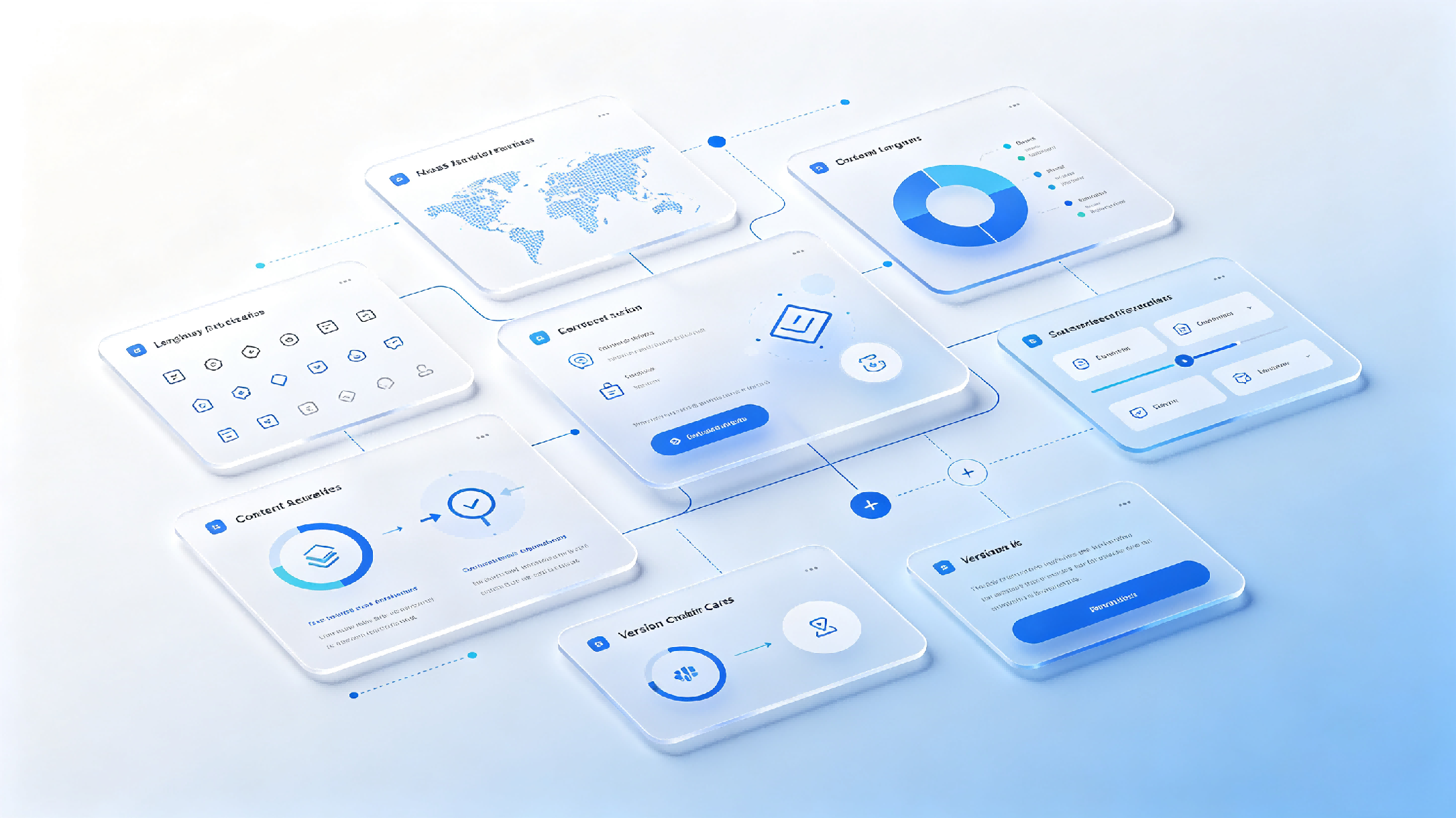
The long-term maintenance challenge is not the number of languages; it is the division of content ownership. Separate content into two groups: elements that regional teams should not change without approval and elements they can adapt to local needs.
- Managed by headquarters: Product specifications, brand information, shared visual assets, certifications, and core solutions.
- Managed by regional teams: Local customer stories, events, contacts, frequently asked questions, downloadable materials, and calls to action.
Magnolia’s Live Copy extension can support this operating model. It creates linked copies from a master site and pushes master updates to the corresponding pages. Regional teams can edit and protect selected pages, components, or fields so future master updates do not overwrite necessary local differences.
With clear ownership boundaries, teams do not need to duplicate an entire page every time headquarters changes the master experience. Regional teams can also make targeted local adjustments without creating uncontrolled branches.
5. Audit SEO, Links, and Outdated Content Every Month
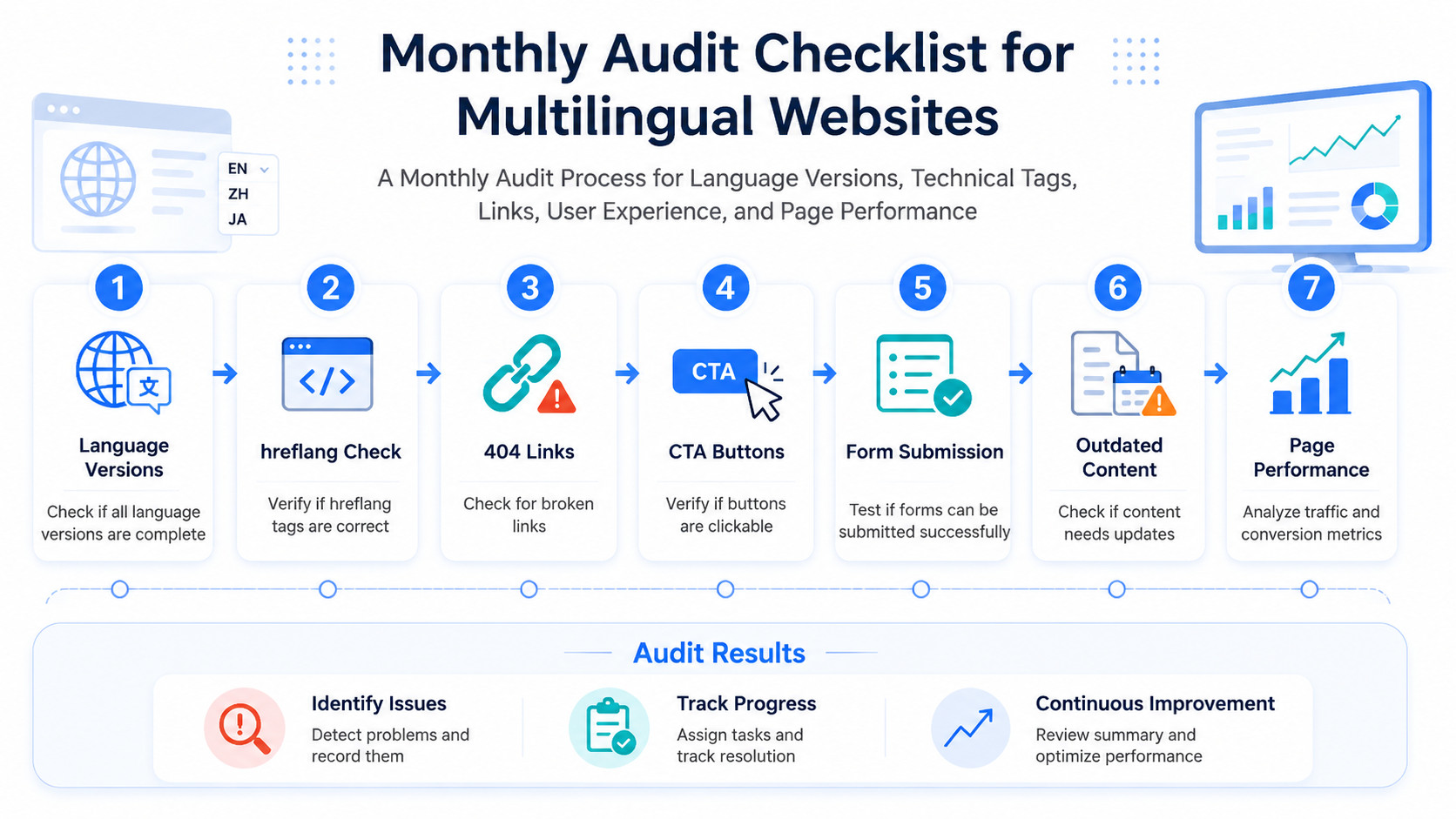
Cost-efficient maintenance should not come at the expense of quality. Schedule a monthly review of priority market pages and address these issues first:
- Whether each page still maps to the correct language and region.
- Whether every language or regional version has reciprocal hreflang annotations, including a self-reference.
- Whether forms, downloads, contact details, and CTAs still work.
- Whether discontinued products, past events, and outdated PDFs are still referenced publicly.
- Whether secondary-language pages contain leftover English, garbled text, or missing fields.
Google recommends using hreflang to identify language or regional variants of the same page and requires each version to list itself and all corresponding versions. Each language page should also have its own directly accessible URL rather than relying entirely on automatic redirects based on a visitor’s language or IP address.
A monthly Magnolia multilingual website audit does not need to cover the entire site. Start with high-traffic pages, pages that generate the most inquiries, product pages, and recently updated content, then build a repeatable checklist over time.
6. Build a Sustainable Maintenance Model with a Lean Team
You do not need a full content team for every language. Based on content volume, update frequency, and compliance risk, a lean operating model can combine a headquarters content owner, regional reviewers, and a translation provider.
The headquarters owner manages content priorities, the terminology library, and the master version. Regional reviewers validate language, customer stories, and market fit. The translation team works only on organized change packages. For organizations adding new markets or content channels, Magnolia’s multisite capabilities can configure domains, locales, templates, and inheritance relationships for different sites within one instance.
This model helps global multilingual websites keep priority-market content current without expanding every local team. Organizations should also track translation turnaround time, the volume of content awaiting review, outdated pages, broken links, and conversion performance on priority pages. These measures show whether the maintenance process is actually reducing costs.
Conclusion
Long-term multilingual website maintenance should not aim to synchronize every page in real time. A more sustainable model relies on clear content tiers, reusable change packages, defined regional responsibilities, and scheduled audits. Treat secondary-language operations as an ongoing content governance practice, and set update priorities based on business risk and page value.
If you are planning the ongoing operation and governance of a global multilingual website or optimizing Magnolia CMS, explore our enterprise website and CMS services.
Explore Enterprise Website and CMS Services
You can also visit Contact Us to discuss multilingual content maintenance and regional operations with the LeadsTech consulting team.

Related reading
- Five Localization Strategies and a CMS Selection Guide for Multilingual Websites
Learn how multilingual website programs can evolve from translation into regional content governance and long-term operations. - Building a Global Website Is More Than Web Development: How a Professional CMS Supports Multilingual, Multi-Country Operations
Learn how a professional CMS supports multi-country sites, content reuse, and collaboration across regional teams.
Recommended Articles
Enterprise AI MarTech Trends Analysis 2024-2029 Outlook Report
From AI content productivity tools to a core engine for revenue growth and marketing transformation
*The PDF will be sent directly to your inbox.
Email Error
Please enter a valid email address.
Thank You!
The whitepaper has been sent to your inbox. If you don’t see it, please check your spam or promotions folder.