

How to Choose a Website Development Company in Taiwan
AEM Sites, Content Management System (CMS), UX/UI Design
25 August 2026
An enterprise website should support content operations, organic discovery, lead capture, and collaboration—not simply act as a brand brochure. When evaluating website development companies in Taiwan, comparing visual style and an initial quote is not enough. LeadsTech helps enterprises combine website strategy, UX/UI design, CMS delivery, and SEO/GEO optimization into an operating model that can improve over time.
Key takeaways
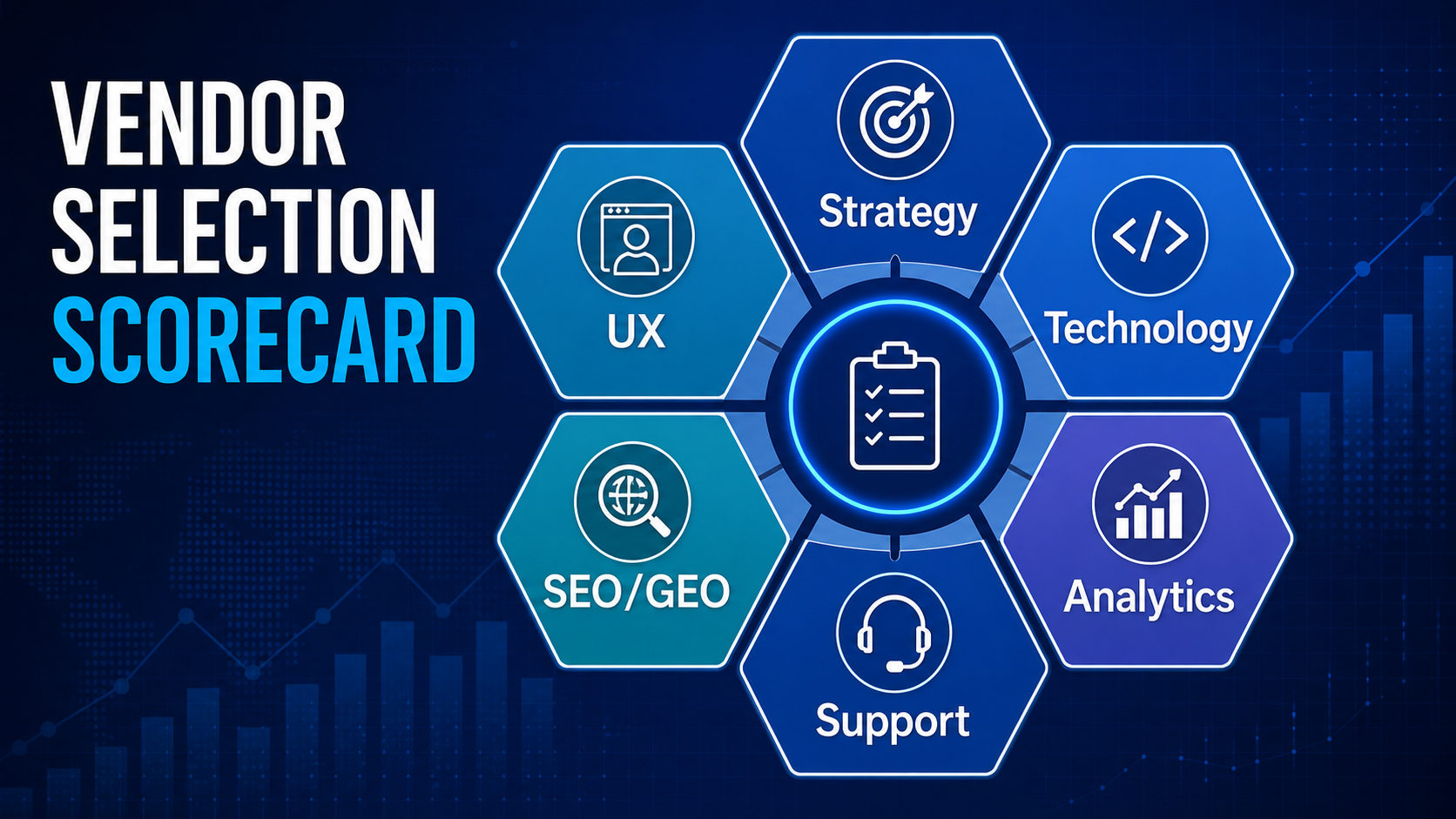
Define the market, audience, conversion action, content workflow, and integrations before design. Then compare strategy, UX, technology, SEO/GEO, delivery, and support.
Define the enterprise website goal first
Define the markets, primary conversion actions, content ownership, and CRM, membership, or analytics integrations before turning needs into measurable acceptance goals.
Strategy and requirements
Interview business, marketing, IT, and content teams to define audiences, conversion paths, permissions, and integrations.
UX, content, and accessibility
Review navigation, search, forms, mobile journeys, and content templates; include accessibility in acceptance criteria.
Technical architecture and integration
Clarify CMS, hosting, backup, security updates, APIs, and source-code handover.
SEO and GEO foundations
Include URLs, redirects, metadata, structured data, sitemaps, and performance in the implementation scope.
Delivery and quality assurance
Compare milestones, approval owners, change rounds, test environments, and acceptance checklists.
Ongoing support
Confirm maintenance coverage, response hours, training, reporting, and the pricing model for new work.
How to choose a Taiwan website development company: six criteria
Price differences usually reflect different scopes. Ask suppliers to separate build, licensing, hosting, migration, training, maintenance, and change costs, then confirm handover and acceptance criteria.
Compare scope and total cost—not just the quote
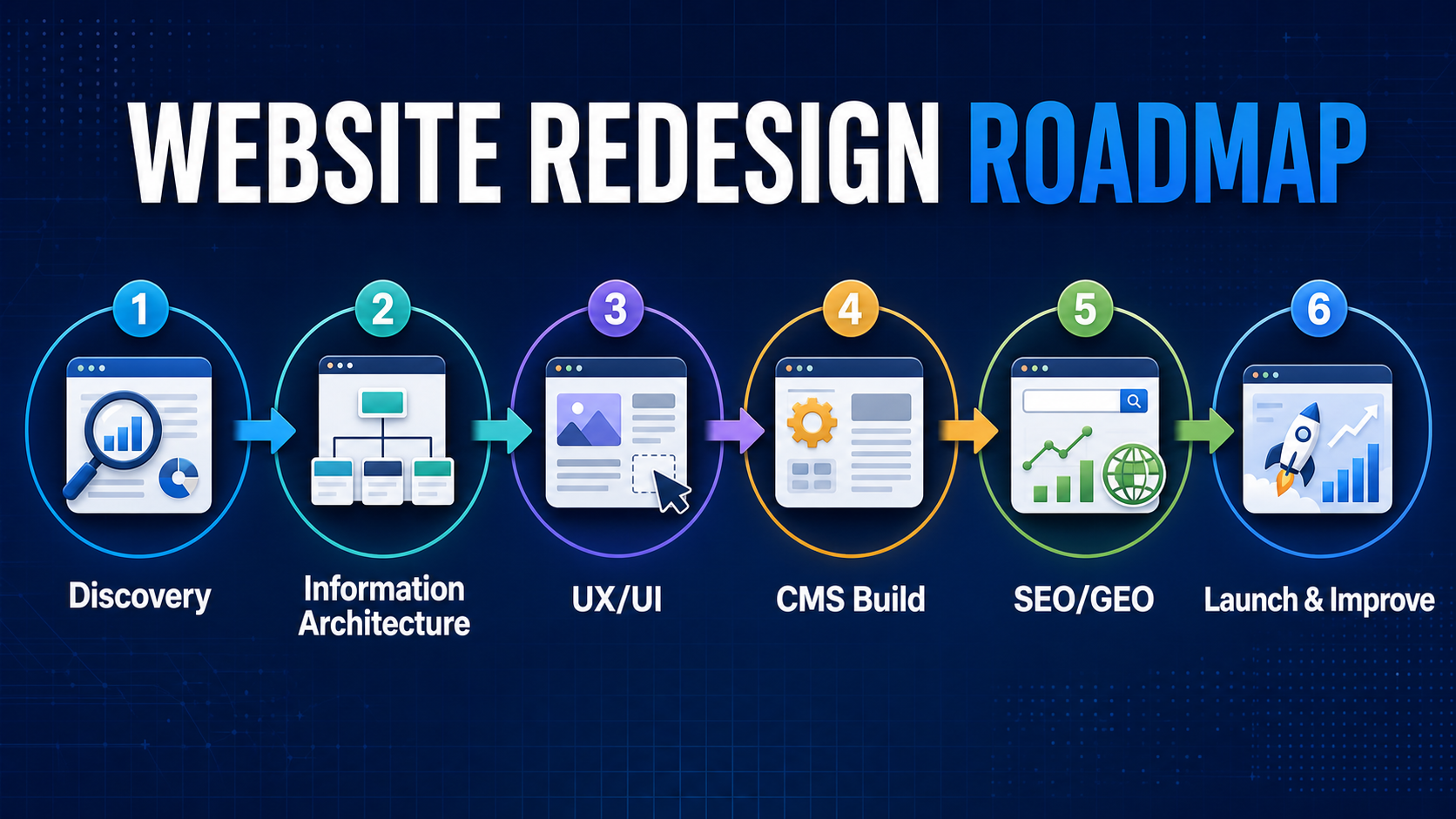
- Discovery and requirements
- Information architecture and content mapping
- UX/UI design and component validation
- CMS build, forms, analytics, and integrations
- Quality testing and launch checks
- Continuous optimization
Website redesign: from discovery to continuous improvement
SEO and GEO should be built into delivery, not added after launch. Preserve valuable pages and URLs, support titles, descriptions, alt text, and structured data, then implement sitemaps, canonicals, redirects, and performance checks.
How to build SEO and GEO into website delivery
Consider a Taiwan industrial-equipment company expanding overseas. Its old site requires a supplier to update every product page, language structures diverge, and forms cannot identify inquiry sources. A better model standardizes content, reuses components, and sends source and product-interest signals to CRM or reporting.
Business scenario: how an outdated website slows marketing and sales
Consider a Taiwan-based industrial equipment company expanding overseas. On its old site, external vendors must update each product page, Chinese and English structures diverge, and forms cannot identify inquiry sources. A stronger model standardizes the content model, reuses components, and sends source and product-interest signals to CRM or reporting. Track time to publish, form completion, qualified inquiries, organic landing pages, and lead response time to connect the redesign to observable operational gains.
Vendor-selection checklist
- Does it deliver stakeholder requirements, content scope, and a risk register?
- Does it demonstrate mobile, form, search, and content-editing journeys?
- Does it provide a CMS, permissions, hosting, security, backup, and integration approach?
- Does it cover SEO migration, analytics tracking, and Core Web Vitals acceptance?
- Does it define milestones, approvals, testing, change control, and a launch plan?
- Does it explain maintenance, training, documentation, source-code handover, and transition?
Frequently asked questions
What is usually included in a website development quote?
Compare discovery, UX/UI, development, CMS, migration, testing, launch, and maintenance against one shared scope.
How long does an enterprise website redesign take?
It depends on scope, content volume, languages, integrations, and approval speed.
Should we choose a custom build or an existing CMS?
Choose based on the content model, permissions, integrations, and long-term maintenance needs.
Can a redesign affect SEO performance?
Yes. Inventory important pages, create redirects, and monitor indexing and organic performance after launch.
Does GEO need to be a separate workstream?
It should be embedded in crawlable architecture, clear answers, entity information, internal links, and trustworthy evidence.
Conclusion
The real test is whether a partner can turn business goals into a website that is manageable, discoverable, measurable, and continuously improvable. Define the requirements and acceptance framework first, then ask suppliers to respond to the same questions. Contact LeadsTech to assess your current site, plan an enterprise redesign, or integrate SEO and GEO.

Further reading
Related Articles

Enterprise AI MarTech Trends Analysis 2024-2029 Outlook Report
From AI content productivity tools to a core engine for revenue growth and marketing transformation
*The PDF will be sent directly to your inbox.
Email Error
Please enter a valid email address.
Thank You!
The whitepaper has been sent to your inbox. If you don’t see it, please check your spam or promotions folder.