
When redesigning a website, developing a portal, or launching a digital product, businesses often face a practical question: should the internal design team lead the work, or should it go to an external UX/UI specialist? The answer usually requires comparing capabilities, timelines, resource stability, research depth, and ongoing maintenance—not just design fees.
Summary
In-house teams understand the product, brand, and internal processes, making them well suited to ongoing, frequent design work. External teams are useful when a project needs additional capacity quickly, UX research, design systems expertise, cross-industry experience, or a structured approach to a major redesign. Many businesses benefit most from a hybrid model: internal teams retain product ownership and decision-making, while external specialists support research, architecture, complex design, and delivery peaks.
1. Key Differences Between In-House and External Teams
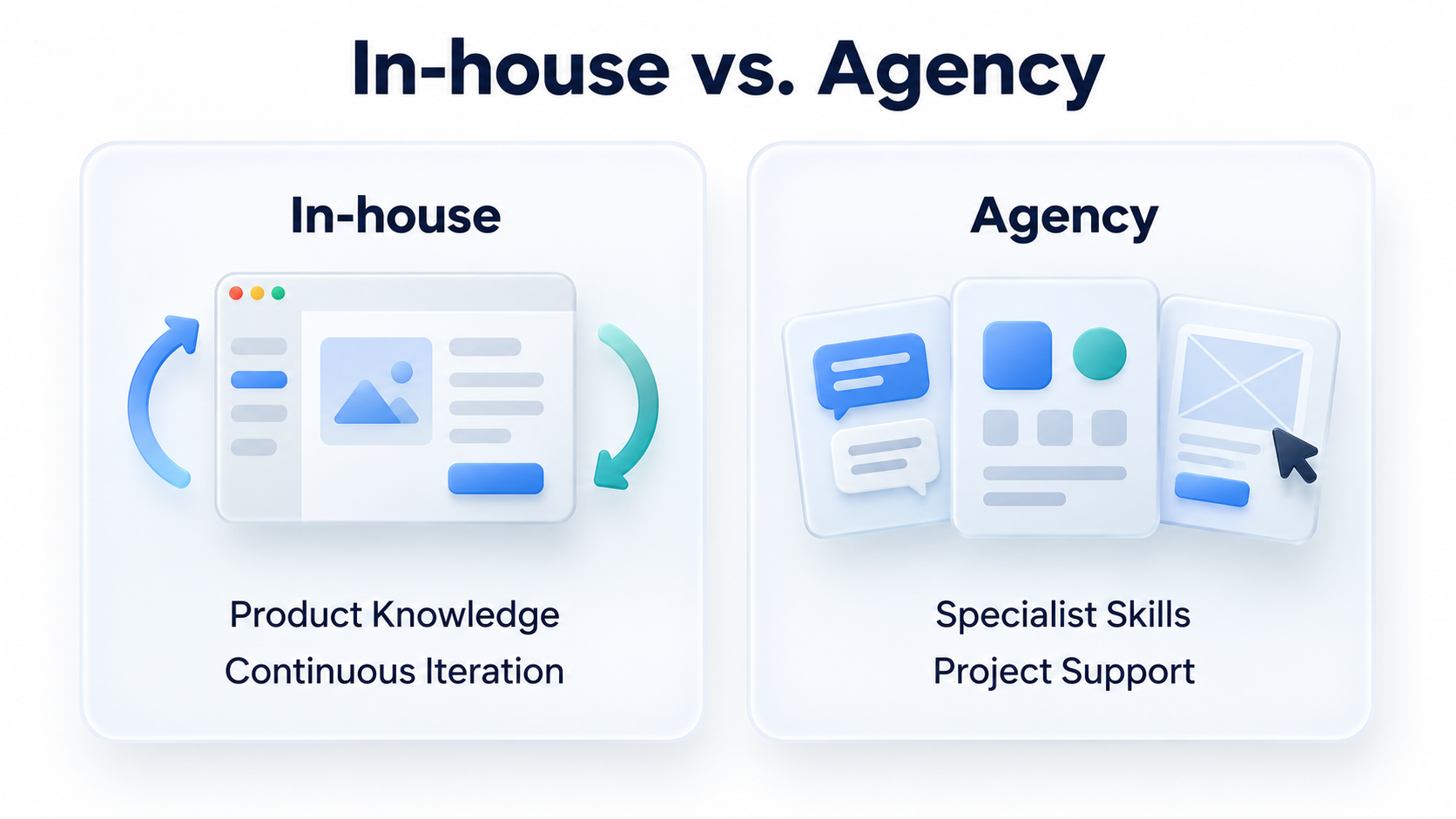
Internal designers typically have a deeper understanding of the product’s background, stakeholders, brand, and existing systems, and can respond quickly to everyday requests. However, small teams can become occupied with campaigns, banners, routine changes, and urgent tasks, leaving little time for comprehensive user research or major architecture changes.
An external team can bring together roles such as UX researchers, UX designers, UI designers, design system specialists, and frontend consultants for a defined period. The trade-off is the need for initial knowledge transfer and a clear decision-making process. Without these, the external team may deliver designs that the internal team cannot maintain.
2. When Should You Use an In-House Team?
In-house work is often more efficient when a business already has a mature design team, a design system, and research capabilities, and its products require frequent, continuous iteration.
For example, a SaaS product may receive feature updates every week, requiring designers to work closely with product managers and developers over time. An internal team can build product knowledge faster and continuously improve the experience.
Internal teams can also usually handle smaller projects, such as adding a few pages to an existing website, adjusting CTAs, or improving part of a workflow.
3. When Should You Hire a Specialist Team?
External specialists are often a good fit for major website redesigns, new brand websites, portals serving multiple markets, complex B2B products, design system rebuilds, or projects requiring user research.
Another common situation is when the internal team knows a website is difficult to use but lacks a method for diagnosing why. An external UX team can establish a more objective direction through analytics, stakeholder interviews, user testing, information architecture, and prototypes.
When deadlines are tight and internal resources are limited, external teams can also extend capacity, preventing a single project from consuming the core team’s time.
4. How Should You Compare Costs?
Cost comparisons should go beyond an agency quote versus a designer’s salary. The full cost of an in-house team includes recruitment, management, software, training, and unused or peak-period capacity. External team costs include project management, research, design, workshops, and delivery.
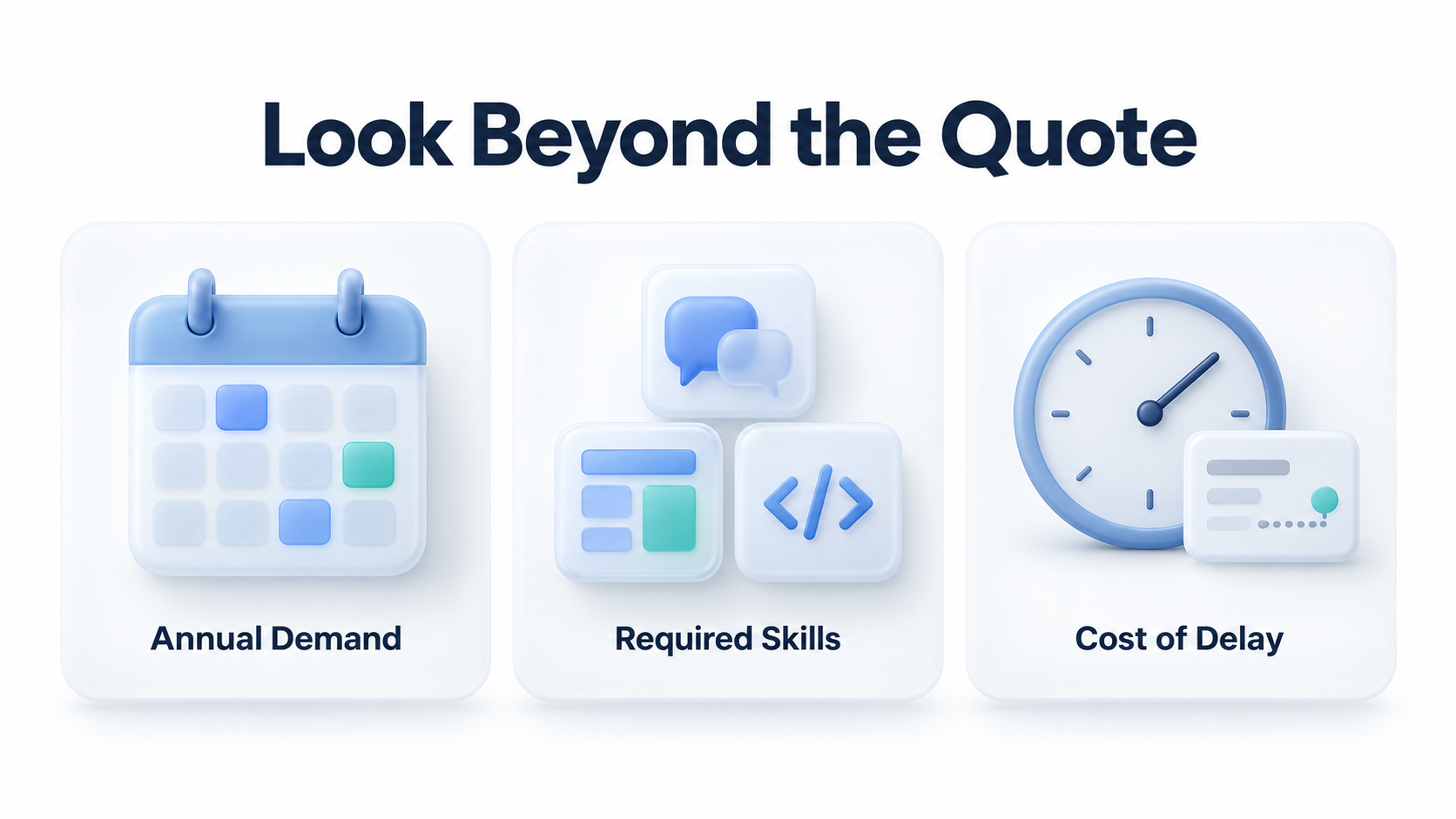
Businesses can compare three factors: the volume of design work expected over the next 12 months, the specialist roles required, and the opportunity cost of project delays.
If there is only one major redesign each year, building a complete internal UX research and design system team may not be economical. If product design is needed every day, relying entirely on external support over the long term may cost more.
5. How Can You Adopt a Hybrid Model?
A hybrid model is often the most effective practical option. Internal product owners, marketers, and designers manage product knowledge, brand standards, priorities, and decisions. External teams handle research, information architecture, prototypes, design systems, or specific workstreams.
At the end of a project, the external team should deliver a component library, design principles, research findings, prototypes, specifications, and usage guidelines. Knowledge transfer should also be planned so the internal team can maintain the work.

6. What Should You Look for in an External UX/UI Team?
First, assess whether the team starts with problems and research rather than immediately presenting visual styles. Second, confirm its capabilities in UX, UI, responsive design, accessibility, design systems, and developer handoff. Third, check its understanding of CMS platforms, analytics, SEO, and MarTech, because enterprise website design rarely operates in isolation.
Fourth, clarify review rounds, decision owners, prototype scope, and handoff formats. Fifth, ask for case studies that explain the problem, method, and improvement achieved, rather than relying on screenshots alone.
7. Frequently Asked Questions (FAQ)
Will an external team understand our brand?
A knowledge gap is possible, which makes initial discovery and brand alignment important. A good external team first learns about the brand, audiences, existing design language, and business context.
Can we hire an external team if we have no internal designer?
Yes, but the business still needs a product owner or project owner responsible for requirements, content, and decisions. All business judgment cannot be delegated to the supplier.
If UX/UI is outsourced, must the same company also handle development?
No, but design and development teams should collaborate early on components, the CMS, responsive behavior, accessibility, and technical constraints to avoid extensive rework after handoff.
8. Conclusion
Whether UX/UI should be handled in-house or outsourced depends on demand frequency, internal capabilities, project complexity, and timelines. Price alone is not enough. Clear responsibilities—internal ownership of products and decisions, with external expertise and capacity where needed—can help balance efficiency and design quality.
If your business needs specialist support with UX/UI, a website redesign, or a design system, explore LeadsTech’s digital experience services:

To evaluate an in-house, agency, or hybrid collaboration model, contact LeadsTech:

Related Articles
Enterprise AI MarTech Trends Analysis 2024-2029 Outlook Report
From AI content productivity tools to a core engine for revenue growth and marketing transformation
*The PDF will be sent directly to your inbox.