
Enterprise International CMS Recommendation: Adobe Experience Manager for Enterprise Content Management
AEM Sites, Content Management System (CMS)
19 April 2026
- Why International Multilingual Websites Demand More from CMS
- Core Challenges in International Website Construction
- Limitations of Traditional Enterprise CMS Platforms in Globalization
- Why We Recommend Adobe Experience Manager
- AEM’s Core Capabilities in Multilingual and Multi-country Management
- AEM’s Practical Advantages for Global Organizational Collaboration
- AEM’s Integration with E-commerce and Data Platforms
- Key Success Factors for Enterprise AEM Implementation
- Which Enterprises Are Best Suited for AEM
- Conclusion: AEM is a Global Content Platform, Not a Simple CMS
- Why International Multilingual Websites Demand More from CMS
- Core Challenges in International Website Construction
- Limitations of Traditional Enterprise CMS Platforms in Globalization
- Why We Recommend Adobe Experience Manager
- AEM’s Core Capabilities in Multilingual and Multi-country Management
- AEM’s Practical Advantages for Global Organizational Collaboration
- AEM’s Integration with E-commerce and Data Platforms
- Key Success Factors for Enterprise AEM Implementation
- Which Enterprises Are Best Suited for AEM
- Conclusion: AEM is a Global Content Platform, Not a Simple CMS
1. Why International Multilingual Websites Demand More from CMS
When an enterprise transitions from a single market to the global stage, the role of its website fundamentally changes:
- It is no longer just a brand showcase
- But rather the core platform for global market operations
An international website often needs to support:
- Multiple country-specific sites
- Multiple language versions
- Content for multiple business lines
- Collaborative management across multiple teams
This means a CMS is no longer just a content editing tool. It becomes an enterprise-grade global content infrastructure.
2. Core Challenges in International Website Construction
In actual projects, international multilingual websites typically face the following challenges:
Complex Multilingual Management
- Content updates are not synchronized
- Translation versions lack proper associations
- Difficult to balance localization with brand consistency
High Difficulty in Multi-organizational Collaboration
Headquarters, regional markets, and product teams often need:
- Hierarchical permissions
- Approval workflows
- Traceable content change records
Continuously Increasing Content Scale and Technical Complexity
As business expands:
- Page count grows rapidly
- Number of countries increases
- Data and personalization demands rise
If the CMS architecture is not scalable, the system will quickly become unmanageable.
3. Limitations of Traditional Enterprise CMS Platforms in Globalization
Many enterprises chose lightweight enterprise CMS platforms in the early stages but encounter obvious bottlenecks during internationalization:
- Multilingual versions require site duplication
- Weak content reuse capability
- Insufficient permission management granularity
- Difficult to integrate with data and marketing systems
Results are often:
- Rapidly rising management costs
- Local teams bypassing headquarters standards
- Increasingly complex website structure
This is also why more and more large enterprises are turning to enterprise-grade CMS platforms.
4. Why We Recommend Adobe Experience Manager
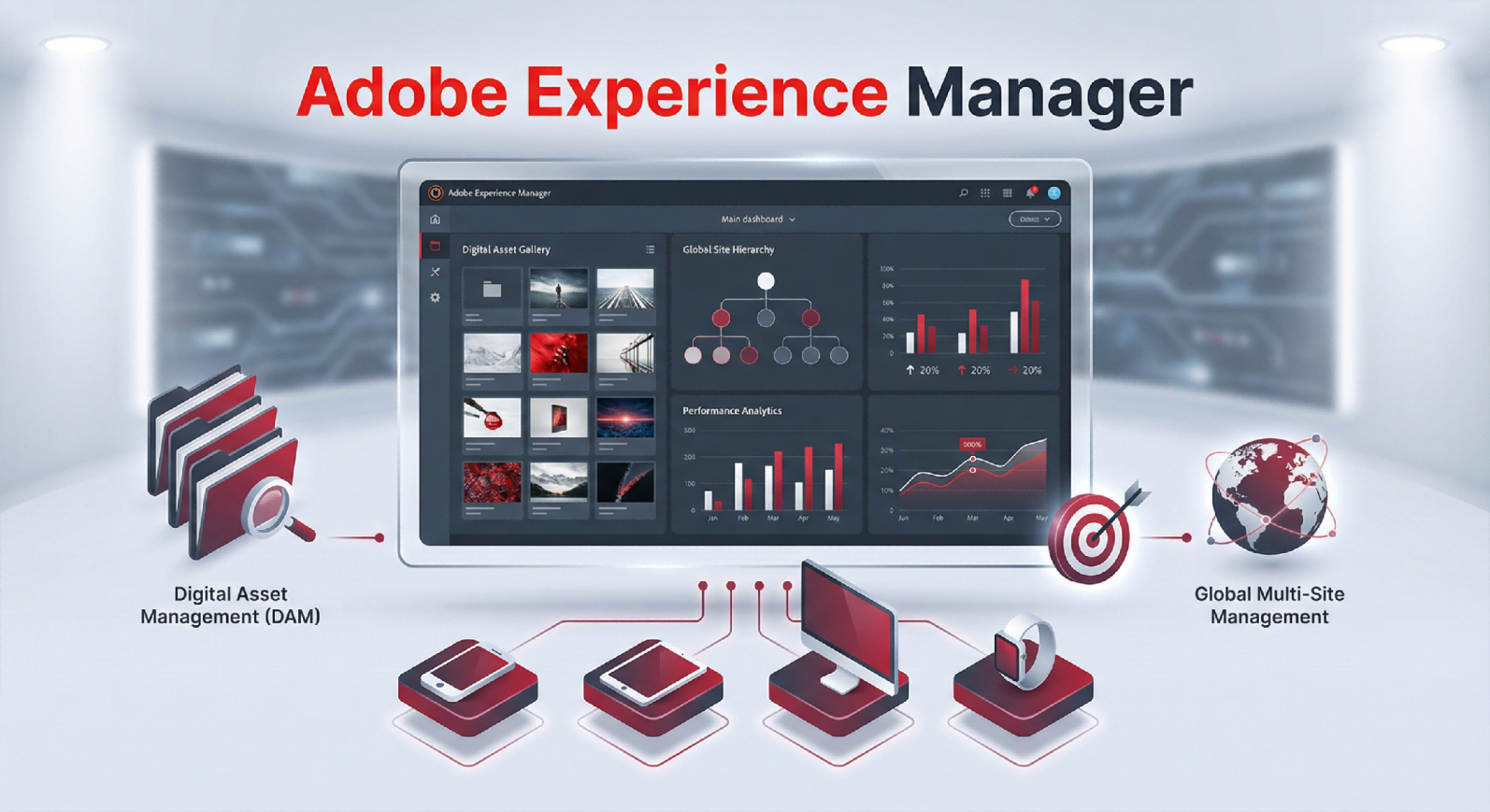
Adobe Experience Manager (AEM) is an enterprise CMS platform specifically designed for digital experiences at scale. Its advantages lie not only in features but in overall architecture design.
Core reasons for recommending AEM:
- Native support for multi-site and multilingual management
- Powerful content structuring and componentization capabilities
- Enterprise-level permissions and workflow governance
- Deep integration with Adobe ecosystem
- Support for long-term evolution and expansion
AEM’s positioning has never been a “website building tool” but rather a core component of the Digital Experience Platform (DXP).
5. AEM’s Core Capabilities in Multilingual and Multi-country Management
Multi Site Manager (MSM)
AEM's Multi Site Manager allows enterprises to:
- Establish language and country blueprints
- Maintain content inheritance and variations
- Control modification boundaries between headquarters and local teams
This solves the long-standing contradiction between "unification and flexibility."
Content Structuring and Reuse
Through componentization and content modeling, enterprises can:
- Reuse core content modules across different countries
- Flexibly combine locally differentiated content
- Improve content production efficiency
Translation and Localization Process Integration
AEM supports:
- Integration with translation management systems
- Automatic creation of language copies
- Translation status tracking
This avoids manual duplication and version confusion.
6. AEM’s Practical Advantages for Global Organizational Collaboration
In large enterprises, AEM’s value is often reflected in:
- Multi-level permission management
- Workflow and approval mechanisms
- Content publishing control
For example:
- Headquarters controls core brand pages
- Regional markets have permissions for local marketing pages
- Legal can participate in reviewing specific pages
This capability is difficult for lightweight CMS to achieve.
7. AEM’s Integration with E-commerce and Data Platforms
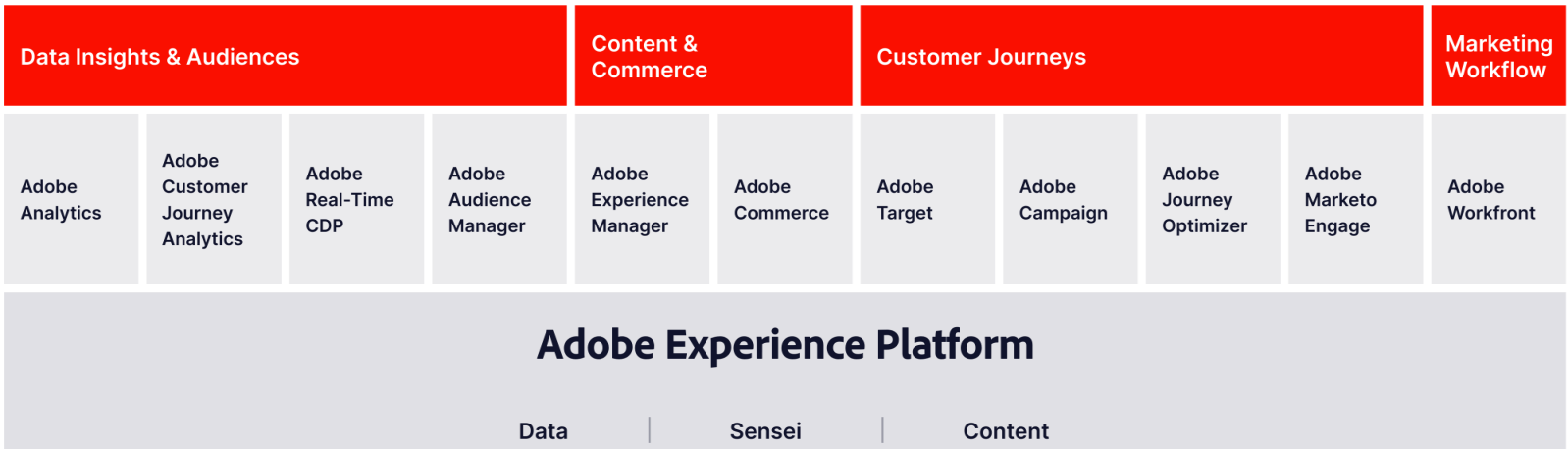
International website CMS should not be an isolated system.
AEM can deeply integrate with:
- Adobe Commerce Cloud
- Adobe Analytics
- Adobe Real-Time CDP
- Marketing Automation
Achieving:
- Integration of content and e-commerce experiences
- Real-time behavioral data feedback
- Personalization and intelligent recommendations
This elevates the website from a “display platform” to a “growth platform.”
8. Key Success Factors for Enterprise AEM Implementation
Choosing AEM does not mean the project will automatically succeed. Key success factors include:
- Clarify global information architecture and localization strategy
- Establish unified content models and naming conventions
- Design clear organizational permissions and governance mechanisms
- Implement in phases to avoid excessive complexity at once
AEM is more like an extensible platform requiring long-term planning.
9. Which Enterprises Are Best Suited for AEM
AEM is more suitable for enterprises that:
- Operate across multiple countries and brands
- Have large content scale
- Have complex organizational structures
- Have high security and compliance requirements
- Want to integrate e-commerce and data capabilities
For such enterprises, CMS selection is not a cost issue but a strategic one.
10. Conclusion: AEM is a Global Content Platform, Not a Simple CMS
The core issue with international website CMS is not “how to translate pages” but:
- How to unify the global brand
- How to improve multilingual content efficiency
- How to support business expansion over the next 3–5 years
Adobe Experience Manager’s value lies in: building a sustainably evolving global content platform for enterprises.
From International Multilingual Websites to Global Digital Experience Platform
If you are facing:
- Difficult governance of multi-country content
- Lightweight CMS can no longer support expansion
- Want to connect website, e-commerce, and data
Then now is the right moment to evaluate enterprise CMS platforms.
Contact us to explore AEM-based international website CMS solutions and build a content platform that truly supports global business growth.
Contact Us: Discuss international websites and CMS planning with our consultant team
Product Page: Learn about Adobe Experience Manager enterprise solutions
Further Reading and Reference Links
Further Reading
- Beyond Translation: Five Localization Strategies for Multilingual Website Construction and CMS Technology Selection
- Large Enterprise Website Construction Guide: High Traffic, High Security, and Global Content Management Challenges
- Integrated Website + E-commerce Strategy: Building a Dual Engine for Brand Overseas Growth
Reference Links
Related Articles
Enterprise AI MarTech Trends Analysis 2024-2029 Outlook Report
From AI content productivity tools to a core engine for revenue growth and marketing transformation
*The PDF will be sent directly to your inbox.
Email Error
Please enter a valid email address.
Thank You!
The whitepaper has been sent to your inbox. If you don’t see it, please check your spam or promotions folder.