
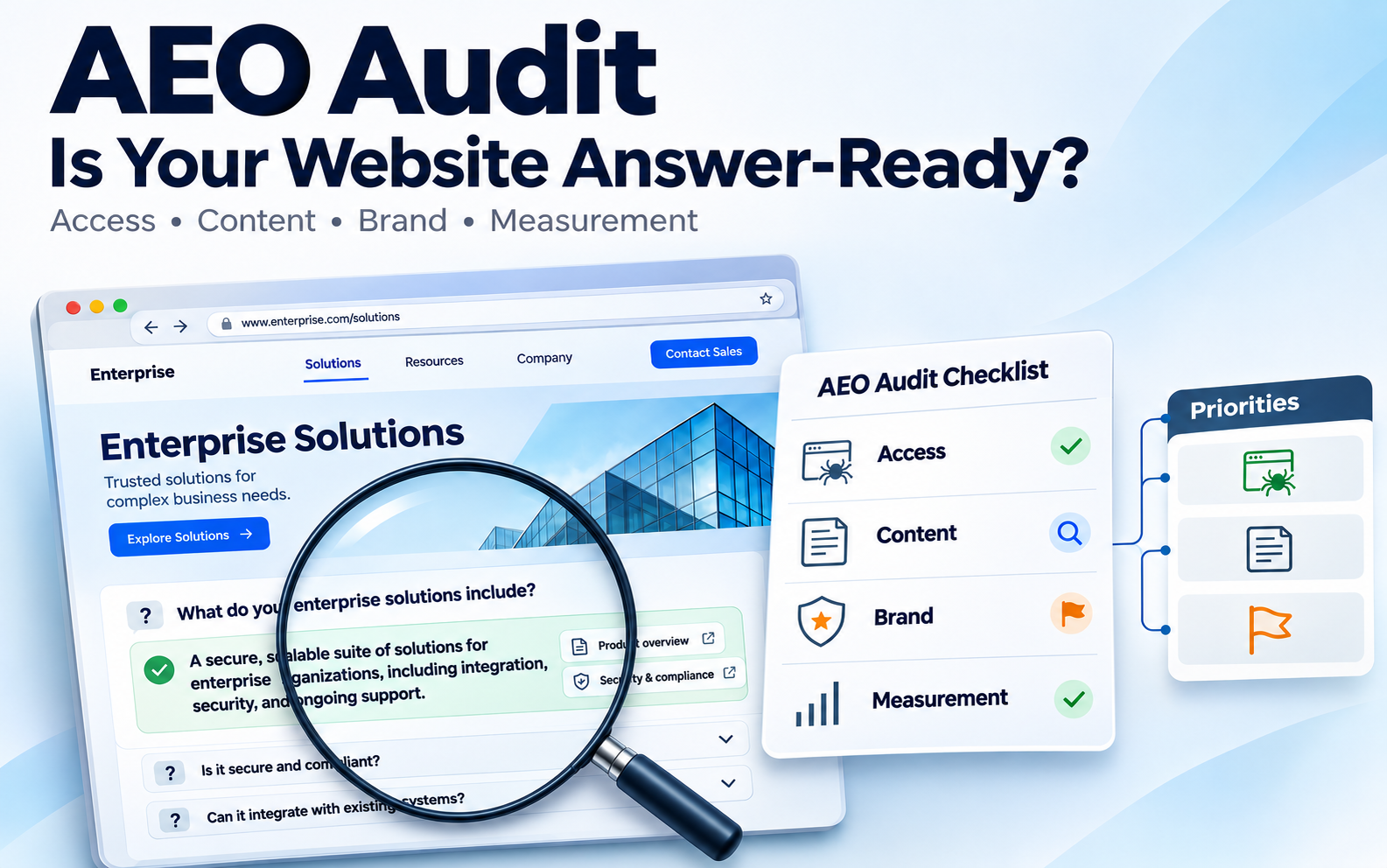
Should you start AI search optimization by publishing a large volume of articles? An AEO audit can reveal the real gaps: inaccessible pages, incomplete answers, or conflicting brand information. This guide sets out the audit scope and a practical checklist to help your team fix the right problems before investing in more content.
Key Takeaways (TL;DR)
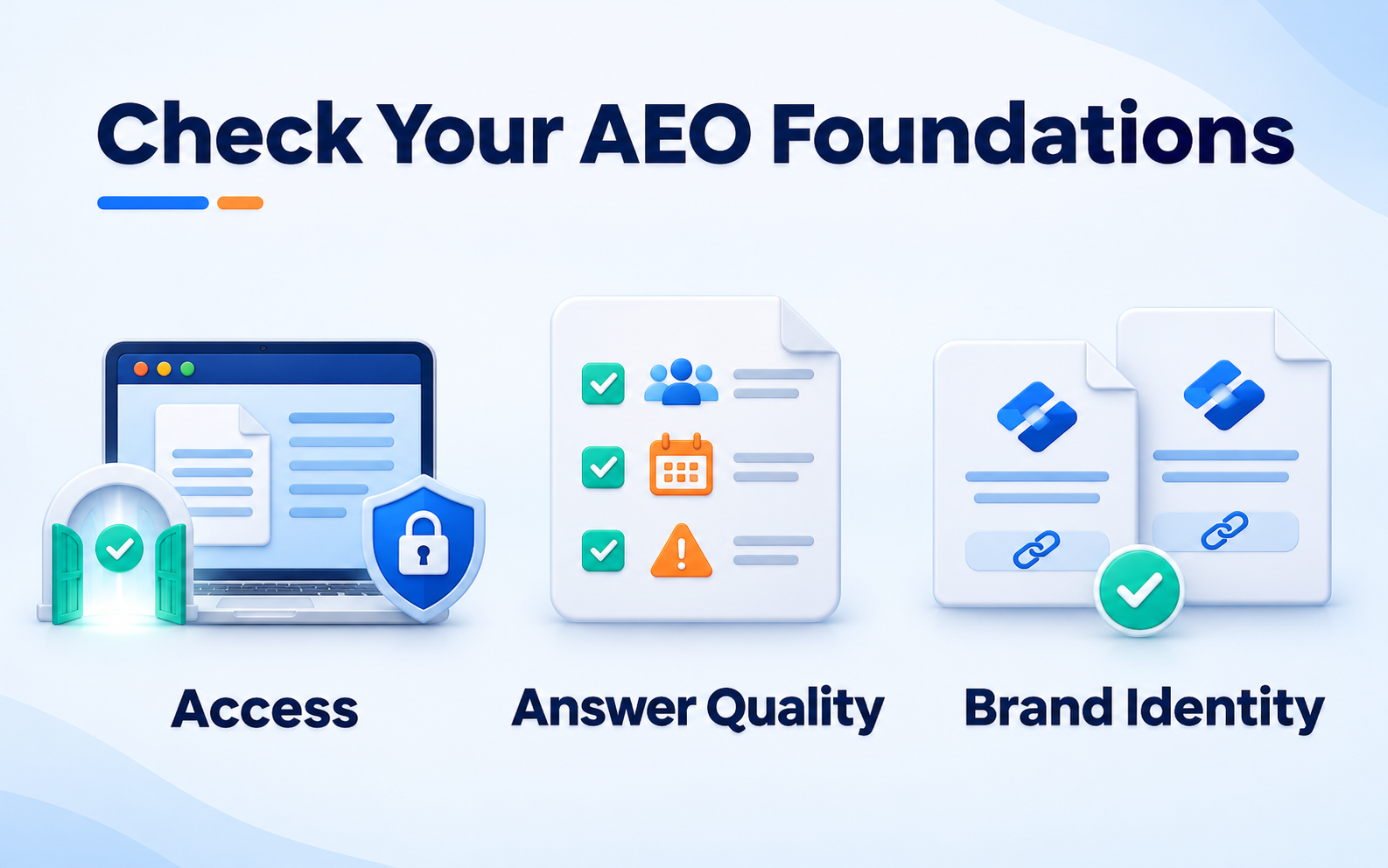
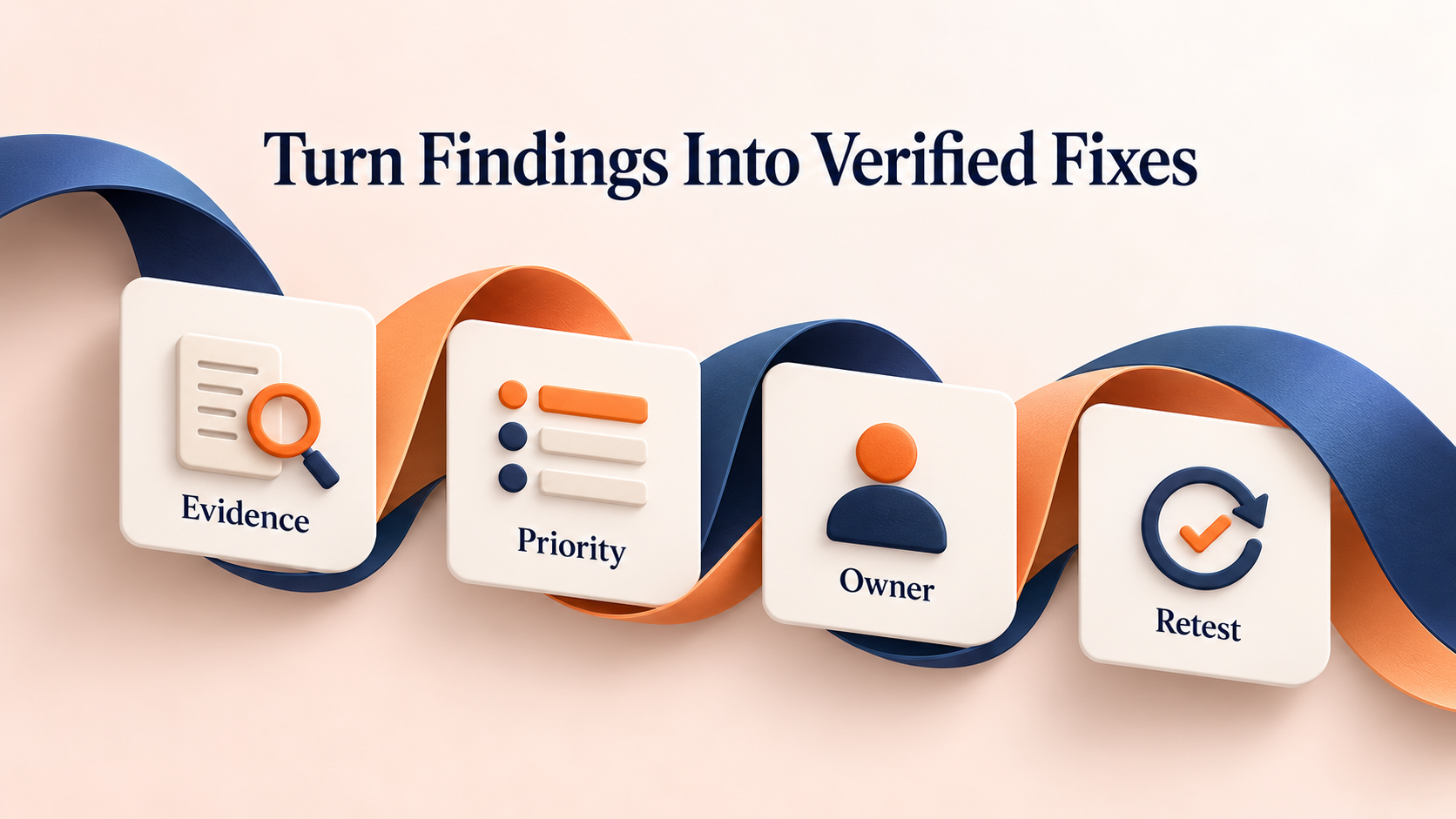
An AEO audit should examine website access, answer quality, brand information, and measurement baselines. Each finding needs evidence, an explanation of its impact, and an owner so it can become actionable work. Resolve barriers affecting important pages and clear factual errors before expanding content, and retain records of checks performed after the fixes.
1. How Do You Define the Scope of an AEO Audit?
Answer engine optimization (AEO) focuses on how content is understood and presented in answer-based search. An audit examines the conditions that affect those outcomes. Start by selecting priority products, customer questions, and markets.
LeadsTech’s SEO and GEO optimization services can help identify priority improvements based on your existing website and content. Provide real questions about product comparisons or implementation readiness so the audit serves a defined purpose, rather than simply producing an overall score.
Specify the representative pages, languages, and platforms you will observe. Record what was not checked so a sample-based assessment is not mistaken for a conclusion about the entire website.
2. What Should You Check Across Website Access, Content, and Brand Information?
Can Important Content Be Accessed?
Public pages should open normally, and essential information should not exist only in images or inaccessible interactive elements. Check for incorrect redirects, login restrictions, and website security controls that unintentionally block pages intended for public visibility.
Crawling, indexing, and snippet controls serve different purposes. For Google, also verify that the generative AI search controls in Search Console match your organization’s settings. Do not remove protections for confidential content simply to pursue visibility.
Do Answers Support Decisions?
Check whether content explains who the offering is for, prerequisites, limitations, and maintenance responsibilities. Descriptions such as comprehensive, leading, or efficient usually do not answer the comparison questions buyers actually ask.
Are Brand Facts Consistent?
Verify the company, products, markets served, and official URLs. Regional pages may be adapted for their markets, but descriptions of core capabilities and company relationships must not conflict. Correct outdated case studies and unverified certifications as well.
3. How Do You Establish a Comparable Measurement Baseline?
When manually reviewing AI answers, record the platform, mode, question, language, region, and date, and save the answer and its cited sources. A single answer that omits your brand does not prove your website is blocked.
Also check whether website analytics capture important reading and inquiry actions. Brand mentions, source citations, site visits, and qualified inquiries are different outcomes; do not combine them into a single undefined number.
Save a baseline and version record before making changes so you can evaluate differences later. Even when results improve, consider platform changes, seasonality, and other marketing activity rather than attributing every change to one edit.
4. Hypothetical Example: A Redesigned Software Website
Suppose a company’s product specifications appear only in an interactive window, its overview pages still use old categories, and inquiry events are not recorded correctly. Marketing notices few AI mentions and plans a large batch of new articles, potentially directing the budget toward the wrong problem.
The audit can first establish whether important specifications are accessible, then correct categories and inconsistent information and repair inquiry tracking. Only after that should the team create content for genuine gaps in comparison and implementation questions.
The business can monitor access to important pages, factual errors, unanswered questions, citation quality, and qualified inquiries. This is a hypothetical example; its purpose is to establish a sequence of improvements that can be checked.
5. Eight Audit Checks You Can Use
- Have you specified priority products, customer questions, languages, and pages?
- Can public pages be opened normally, and is their core text accessible?
- Do crawling, indexing, and platform controls match your visibility goals?
- Do pages explain applicable conditions, limitations, and next steps?
- Is company, product, and service information consistent and verifiable?
- Have you recorded the observation sample, timing, and individual metrics?
- Does each issue have an owner and a priority for resolution?
- Are fixes rechecked, with unresolved issues retained in the record?
Prioritize unusable key pages, clear factual errors, and problems that affect customer tasks before comparing the value and cost of expanding content. Tool warnings can provide clues, but they should not replace business judgment.
If an issue cannot be addressed soon, record the reason, interim measures, and when it should be reconsidered. Work does not become resolved simply because the report has been closed.
6. Frequently Asked Questions (FAQs)
How does an AEO audit differ from a standard SEO audit?
Both share website and content foundations. An AEO audit adds a focus on answer contexts, brand descriptions, and citation observations without neglecting existing search optimization work.
Does a high tool score mean no changes are needed?
No. You still need to check important customer questions, factual accuracy, and user workflows. An overall score may not cover these scenarios.
Should all crawling restrictions be removed?
No. Distinguish public content from private data first, then adjust the appropriate controls to match your visibility goals.
When should the audit be repeated?
Review affected areas after major redesigns, product changes, platform rule changes, or unusual performance. Maintain the baseline between audits according to how often the site changes.
7. Conclusion
An AEO audit should produce an actionable improvement plan that can be checked again. Establish the evidence and responsibilities before committing content and technical resources so decisions have a clear basis.

To assess gaps in your website and content, discuss the audit scope, priorities, and subsequent verification with LeadsTech.

8. Further Reading
- SEO vs. GEO: Comparing Search Engine and Generative AI Optimization
Understand their shared foundations and the different ways to assess traditional search and generative answers. - SEO, GEO, and AI Search Growth Strategy: Brand Visibility and Leads
Bring website content, technical requirements, and business goals into a shared growth plan.
Related Articles
Enterprise AI MarTech Trends Analysis 2024-2029 Outlook Report
From AI content productivity tools to a core engine for revenue growth and marketing transformation
*The PDF will be sent directly to your inbox.