
- Key Takeaways
- Where Pardot and Account Engagement Fit in B2B
- How to Structure Prospect Data and List Entry
- How to Nurture Leads with Engagement Studio, Scoring, and Grading
- How Pardot Works with Salesforce CRM
- B2B Marketing Automation Launch Checklist
- How to Measure Pardot Automation Performance
- FAQ
- Conclusion
- Further Reading
- Key Takeaways
- Where Pardot and Account Engagement Fit in B2B
- How to Structure Prospect Data and List Entry
- How to Nurture Leads with Engagement Studio, Scoring, and Grading
- How Pardot Works with Salesforce CRM
- B2B Marketing Automation Launch Checklist
- How to Measure Pardot Automation Performance
- FAQ
- Conclusion
- Further Reading
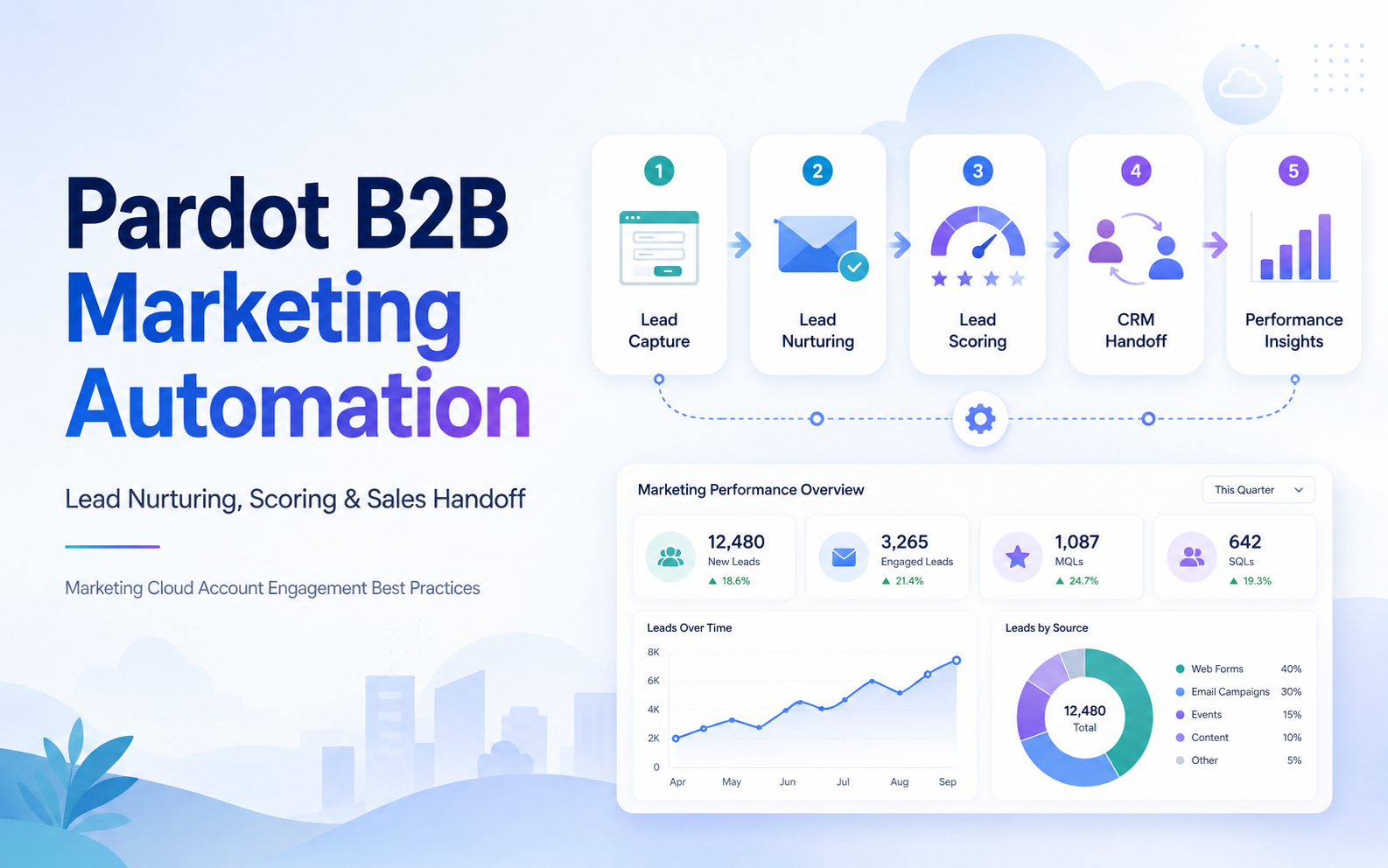
B2B buying cycles are long and involve multiple decision makers. A single form submission rarely tells you whether a prospect is ready for a sales conversation. Pardot, now Salesforce Marketing Cloud Account Engagement, is a B2B marketing automation platform that helps teams capture prospects, nurture them based on behavior, evaluate engagement and fit, and hand qualified opportunities to sales in Salesforce CRM. In LeadsTech engagements, the strongest programs start by aligning data definitions, sales-ready criteria, and sales follow-up ownership before building nurture content and routing logic.
1. Key Takeaways
- Pardot is now Marketing Cloud Account Engagement. Its core role is to connect B2B lead capture, nurturing, qualification, and sales follow-up.
- Define data sources, consent status, field standards, and campaign attribution before building forms, lists, and automation journeys.
- Scoring measures engagement, while Grading measures fit against your ideal customer profile. Together, they are more reliable than a single download or email open.
- Marketing and sales need a shared definition of sales-ready criteria, routing timelines, disqualification reasons, and re-nurture paths.
2. Where Pardot and Account Engagement Fit in B2B
Account Engagement is useful for organizations that rely on long-term nurturing, repeated content interactions, and close collaboration between marketing and sales. Common use cases include capturing prospects through forms or landing pages, segmenting by industry or role, sending nurture content through Engagement Studio, adjusting scores based on activity, and assigning qualified prospects to sales.
The platform does not replace market strategy. If your organization has not defined the ideal customer profile, buying stages, or content value, automation will only send irrelevant messages faster. Start with one clear use case, such as a 30-day nurture path after a white paper download or an event attendee conversion journey, so the team can measure each step and improve it over time.
3. How to Structure Prospect Data and List Entry
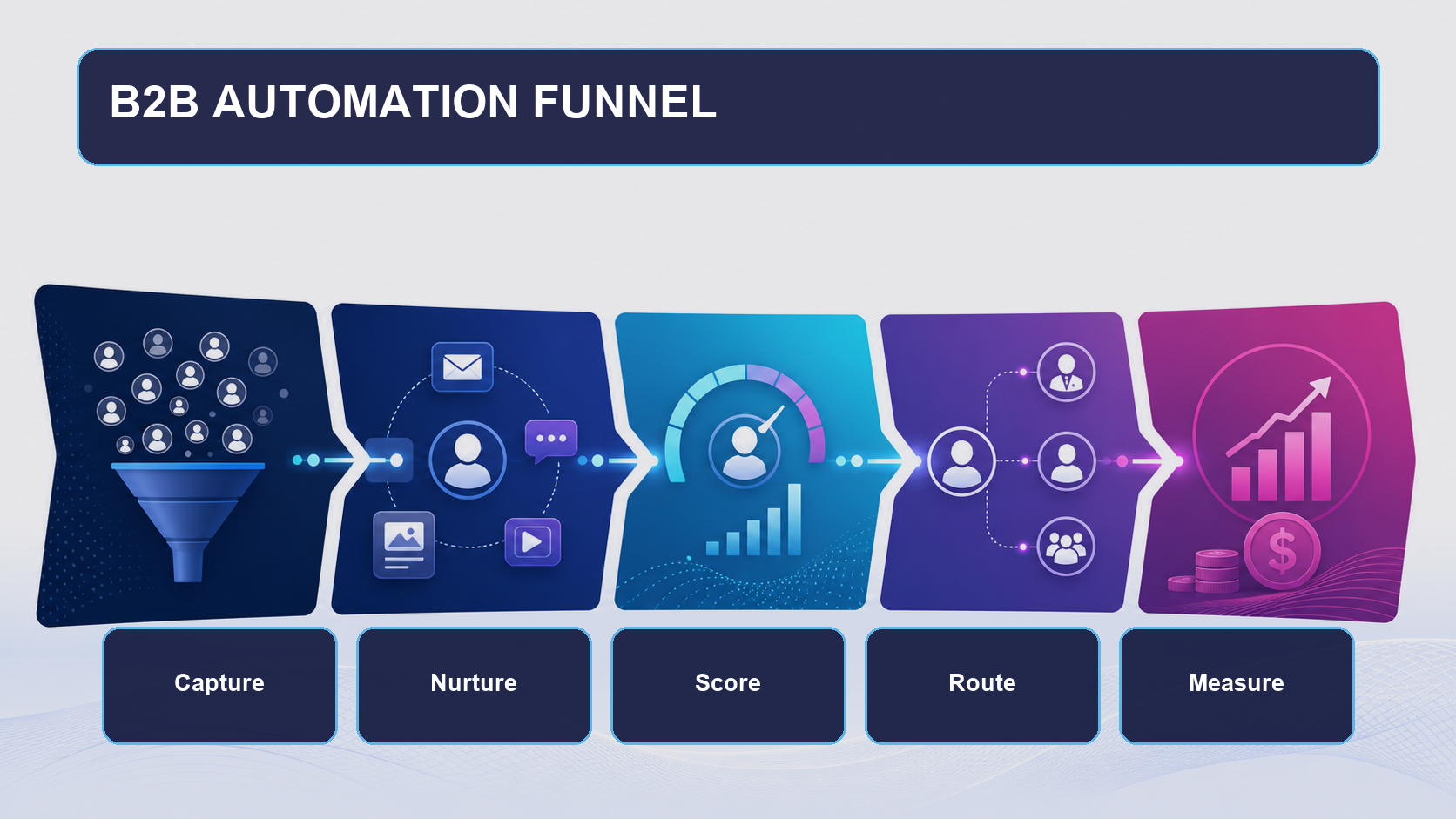
Start by mapping where prospects enter the system, including website forms, event lists, content downloads, partners, and CRM. Each entry point should capture source, campaign, consent status, and required fields, with clear rules for duplicate emails, existing customers, and invalid data. Forms should ask only for what is needed at that moment. Later interactions can progressively enrich company size, region, role, product interest, and buying timeline.
List design should separate static and dynamic use cases. One-time event lists can be managed as static lists. Audiences that change based on fields or behavior should use dynamic lists or automation rules. Naming conventions should include region, product, lifecycle stage, and purpose so teams can tell whether a list is still active. Automation should also respect unsubscribe status, deliverability, communication preferences, and data processing requirements.
4. How to Nurture Leads with Engagement Studio, Scoring, and Grading
Engagement Studio can branch based on prospect behavior and conditions, such as email opens, specific link clicks, form submissions, list membership, or score thresholds. Before building a journey, map the goal, entry criteria, wait times, primary actions, exit conditions, and sales handoff points. Every branch needs a reasonable next step so prospects do not remain in a dead-end path simply because they did not meet a condition.
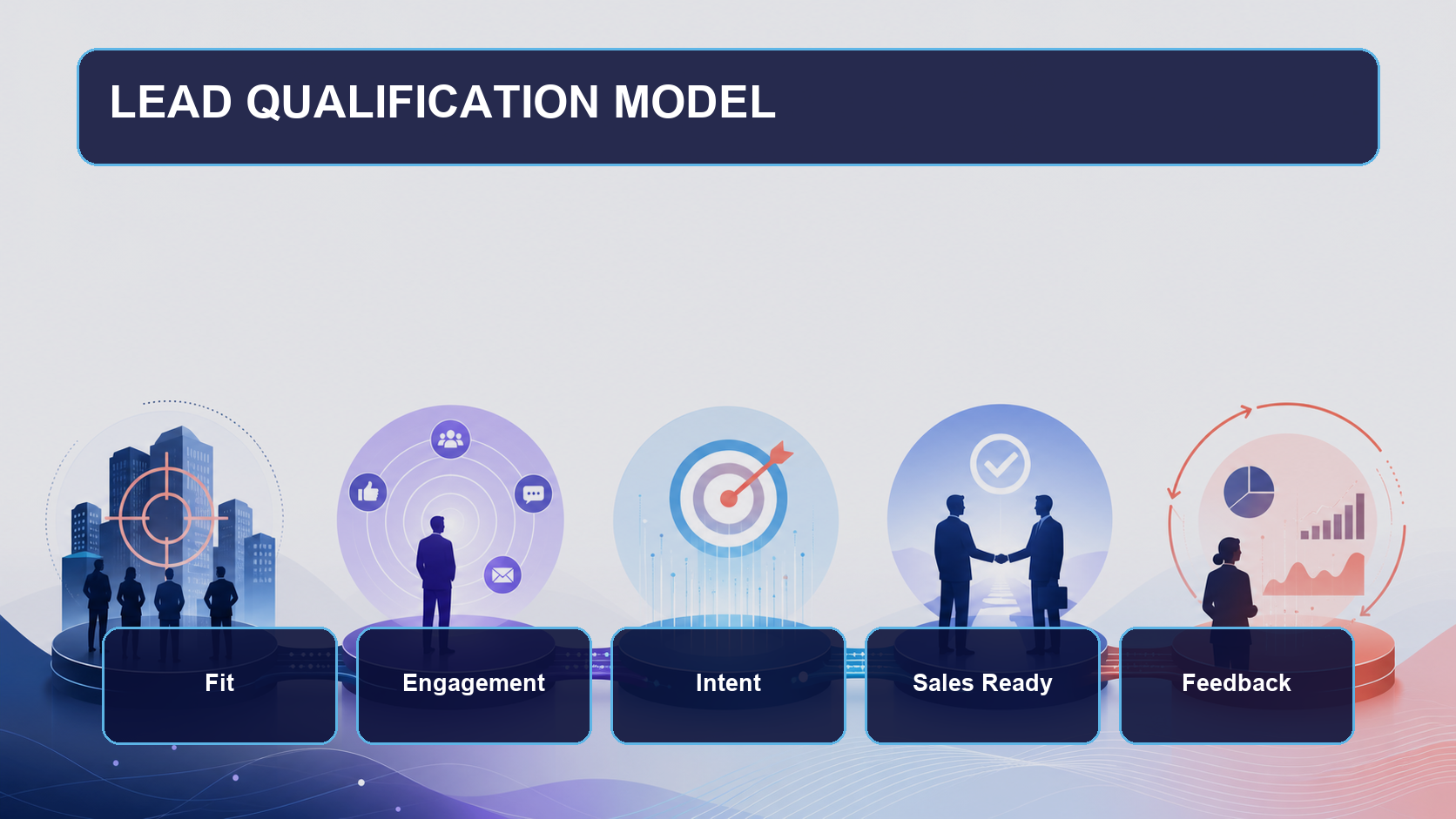
Scoring usually adds or subtracts points based on interactions such as product page visits, content downloads, event attendance, or long periods of inactivity. Grading evaluates fit using attributes such as job title, industry, company size, and region. A high-score, low-grade prospect may be active but not a target customer. A low-score, high-grade prospect may still be worth nurturing. Teams should set thresholds together and regularly test which behaviors actually correlate with qualified opportunities instead of keeping the original point model forever.
For example, a company selling enterprise cybersecurity solutions may place a prospect into a 21-day nurture after a trend report download. If an IT director reads a product comparison page and registers for a demo, the score increases. If the company size and region also fit the target profile, the grade is strong enough for regional sales assignment. A student who downloads several research assets may have a high score but should not become sales-ready. The scenario shows why engagement signals and customer fit need to be evaluated together.
5. How Pardot Works with Salesforce CRM
Account Engagement uses the Salesforce Connector to share data between prospects and CRM leads or contacts. During implementation, review field mappings, the system of record, conflict rules, connector user permissions, visibility, and sync exceptions. Do not assume every prospect should sync immediately. Marketing and sales should decide when assignment happens, which conditions create a lead, and which test records, competitors, or unqualified prospects should stay out of CRM.
Sales handoff is not the end of the workflow. Sales teams in Salesforce should see key engagement history, source campaign, score, grade, and the latest intent signals, then follow up within the agreed timeline. If a lead is not ready, sales should select a standard return reason, such as bad timing, no budget, or wrong role, so the prospect can enter the right re-nurture path. That closed loop helps marketing improve both the scoring model and the content strategy.
6. B2B Marketing Automation Launch Checklist
- Select one high-value use case and define the target audience, conversion event, and exit criteria.
- Confirm data sources, consent status, unsubscribe handling, duplicate rules, and retention policies.
- Standardize naming for fields, campaigns, lists, forms, and automation assets.
- Have marketing and sales define Scoring, Grading, and sales-ready thresholds together.
- Test every Engagement Studio branch, wait step, send setting, and failure path.
- Review Salesforce Connector permissions, field mappings, sync rules, and error monitoring.
- Define sales follow-up timelines, return reasons, re-nurture paths, and owners.
- Pilot with internal test data and a small audience before expanding in phases.
7. How to Measure Pardot Automation Performance
Email opens and clicks only show part of the engagement story. They do not prove revenue contribution on their own. Track form conversion rate, nurture completion, MQL volume, MQL-to-SQL conversion, sales acceptance rate, handoff time, opportunity creation, pipeline value, and campaign influence. Also monitor unsubscribes, bounce rates, duplicate records, and sync errors because data quality directly affects automation decisions.
Review high-scoring prospects that did not convert, low-scoring prospects that became opportunities, and prospects returned by sales each month. If an action often adds points but does not correlate with opportunities, lower its weight. If a specific content asset often appears before conversion, promote it earlier in the journey. Scoring models and nurture content should be calibrated against real outcomes, not platform activity volume.
8. FAQ
Are Pardot and Marketing Cloud Account Engagement the same product?
Yes. Salesforce renamed Pardot to Marketing Cloud Account Engagement. Some interfaces, documentation, and teams may still use the older Pardot name.
How is Account Engagement different from a standard email platform?
It goes beyond email delivery. It supports prospect data, forms, landing pages, segmentation, nurturing, scoring, sales handoff, and data collaboration with Salesforce CRM.
Can teams use Scoring or Grading without the other?
Technically, yes, but they answer different questions. Scoring measures engagement, while Grading measures fit. B2B sales handoff is usually stronger when both are considered.
When should a prospect sync to Salesforce CRM?
That depends on your data strategy. Common approaches sync prospects when they are assigned, qualified, or already matched to a CRM record, while excluding test and unqualified records.
How can teams avoid nurture fatigue?
Set frequency limits, wait times, and exit conditions. Match content to roles and buying stages, exclude people who recently received other campaigns, and monitor unsubscribes and declining engagement.
9. Conclusion
The real value of Pardot B2B marketing automation is not sending more messages automatically. It is connecting data, content, engagement signals, and sales workflows into a demand nurturing system that can improve over time. Organizations can start with one clear use case, build data governance, Scoring, Grading, Engagement Studio, and CRM handoff, then iterate based on opportunity outcomes. If you want to plan B2B automation workflows or evaluate Salesforce Marketing Cloud Account Engagement, contact LeadsTech or explore our marketing automation services.


10. Further Reading
Related Articles
Enterprise AI MarTech Trends Analysis 2024-2029 Outlook Report
From AI content productivity tools to a core engine for revenue growth and marketing transformation
*The PDF will be sent directly to your inbox.
Email Error
Please enter a valid email address.
Thank You!
The whitepaper has been sent to your inbox. If you don’t see it, please check your spam or promotions folder.