
What Can GA4 Analyze? A Guide to Traffic, Behavior, Events, and Conversions
Google Analytics, Website Analytics
13 October 2026
- Analysis One: Website Traffic and Sources
- Analysis Two: Landing Pages and Content Performance
- Analysis Three: User Behavior and Events
- Analysis Four: Funnels and Paths
- Analysis Five: Conversions and Campaign Performance
- Analysis Six: Audience and Device Differences
- How Can You Turn GA4 Analysis into Optimization Actions?
- Frequently Asked Questions (FAQ)
- Conclusion
- Analysis One: Website Traffic and Sources
- Analysis Two: Landing Pages and Content Performance
- Analysis Three: User Behavior and Events
- Analysis Four: Funnels and Paths
- Analysis Five: Conversions and Campaign Performance
- Analysis Six: Audience and Device Differences
- How Can You Turn GA4 Analysis into Optimization Actions?
- Frequently Asked Questions (FAQ)
- Conclusion
GA4 can analyze much more than how many people visit a website. It connects traffic sources, content interactions, events, funnels, and conversions to build a more complete picture of the digital journey. Enterprises that focus only on homepage traffic, users, and sessions are tapping into just a small part of its value.
Summary
GA4 supports standard analysis of acquisition, engagement, events, landing pages, e-commerce, users, devices, and geography. Explore also enables funnel, path, segment, and free-form analysis. The priority for enterprises is to define the question before choosing an analysis method. For example, increasing leads requires more than tracking form submissions: compare sources, landing pages, form starts, errors, and subsequent lead quality in the CRM.
1. Analysis One: Website Traffic and Sources
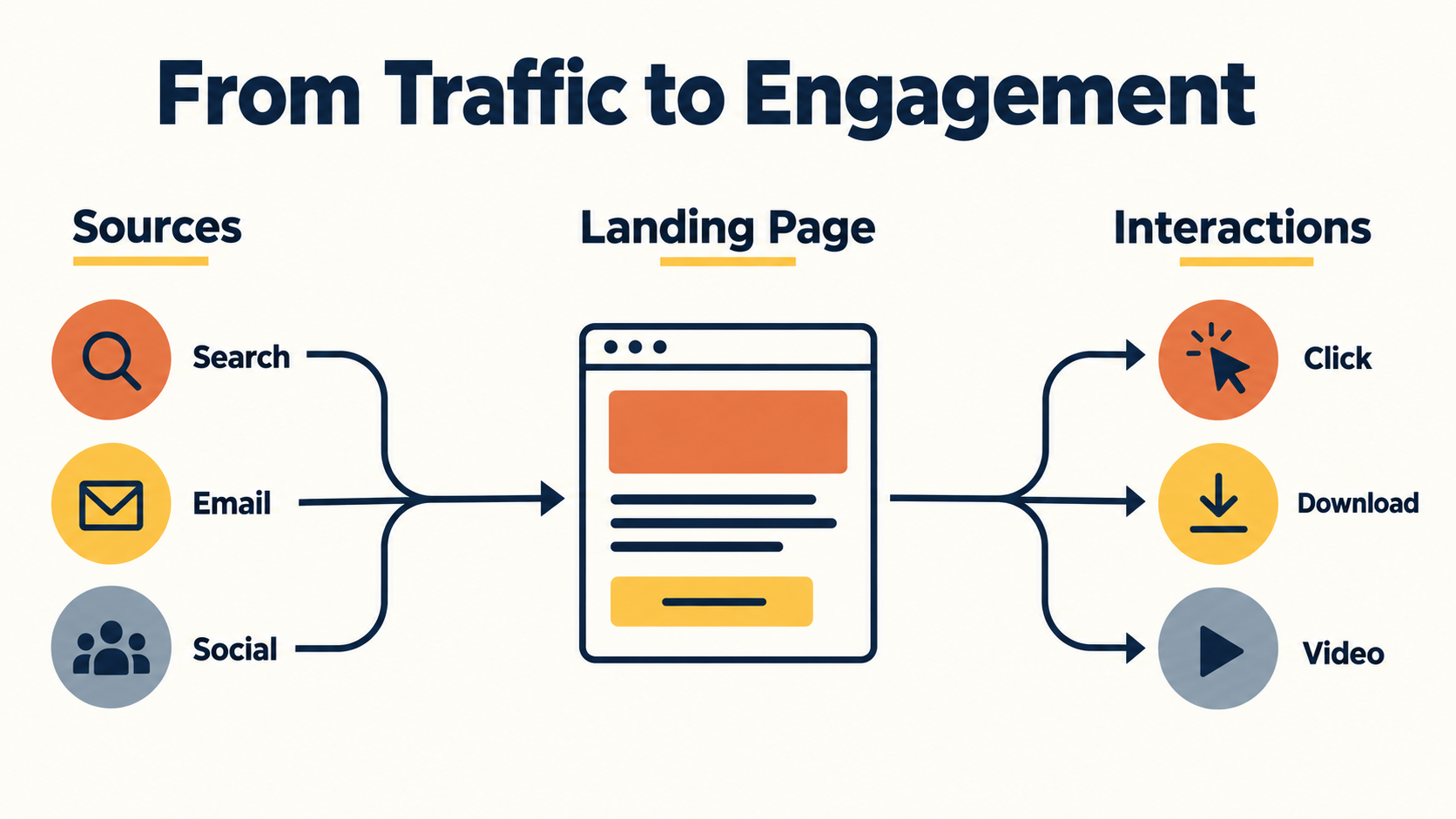
Acquisition analysis shows how many users, sessions, and key events come from organic search, paid search, email, social, referral, direct traffic, and other campaigns.
Enterprises should avoid judging channels by traffic volume alone. What matters is traffic quality, such as engagement, conversions, lead quality, revenue, or subsequent sales opportunities. A channel with high traffic but low-quality visitors does not necessarily deserve a larger budget.
2. Analysis Two: Landing Pages and Content Performance
A landing page is the first page a user visits on a website. Enterprises can compare which pages attract the most new users, which have higher conversion rates, and how performance differs across SEO, campaigns, and content topics.
Content analysis can incorporate custom events for scrolling, internal link clicks, downloads, videos, and CTAs to determine whether articles or product pages actually guide users to the next step instead of simply receiving views.
3. Analysis Three: User Behavior and Events
GA4’s event model can track interactions such as clicks, searches, forms, logins, downloads, and purchases. Parameters enable further comparisons across products, forms, languages, or page positions.
For example, even when the event is always form_submit, form_name and product_name can reveal which forms generate the most conversions and which product pages perform better in generating inquiries.
4. Analysis Four: Funnels and Paths
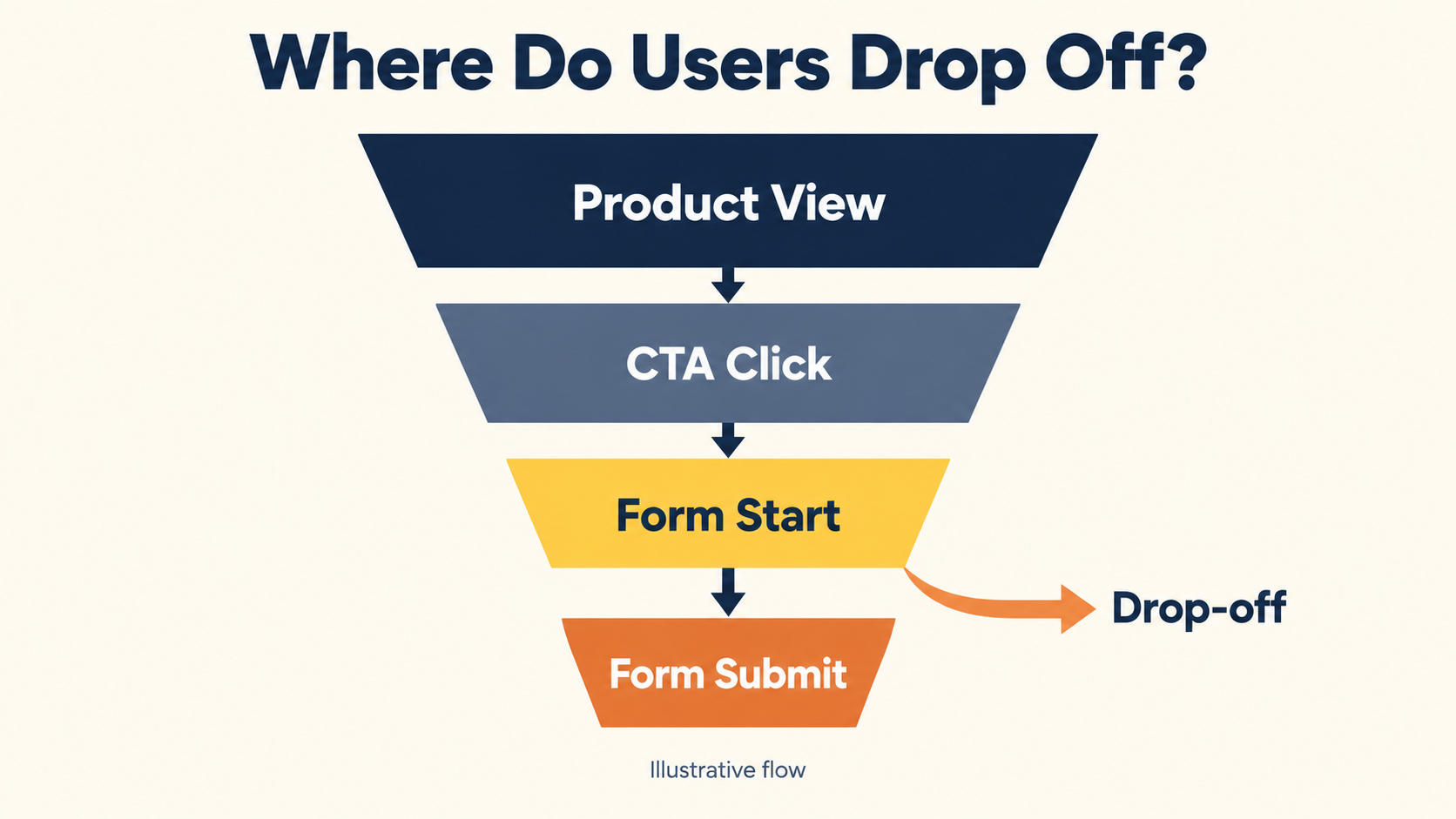
Funnel exploration is useful for analyzing a predefined journey, such as Product View → CTA Click → Form Start → Form Submit. It quickly reveals the step with the greatest drop-off, which can then be broken down by device, source, or region.
Path exploration helps uncover how users actually move through a website. Enterprises can look forward from a landing page or work backward from a conversion to identify common content and key touchpoints.
5. Analysis Five: Conversions and Campaign Performance
Enterprises can mark important actions as key events and compare performance across sources, mediums, campaigns, landing pages, or audiences.
For B2B enterprises, however, website conversions do not equal business success. Where possible, connect GA4 with a CRM, marketing automation platform, or data warehouse to track MQLs, SQLs, opportunities, or revenue, rather than optimizing only the surface-level conversion rate.
6. Analysis Six: Audience and Device Differences
Behavior can vary significantly across markets, devices, new versus returning visitors, and login status. Segments help enterprises identify these differences.
For example, overall form conversion may look normal while mobile conversion is much lower. Alternatively, landing page engagement in one country may be high with almost no conversions. These differences often offer more useful optimization opportunities than overall averages.
7. How Can You Turn GA4 Analysis into Optimization Actions?
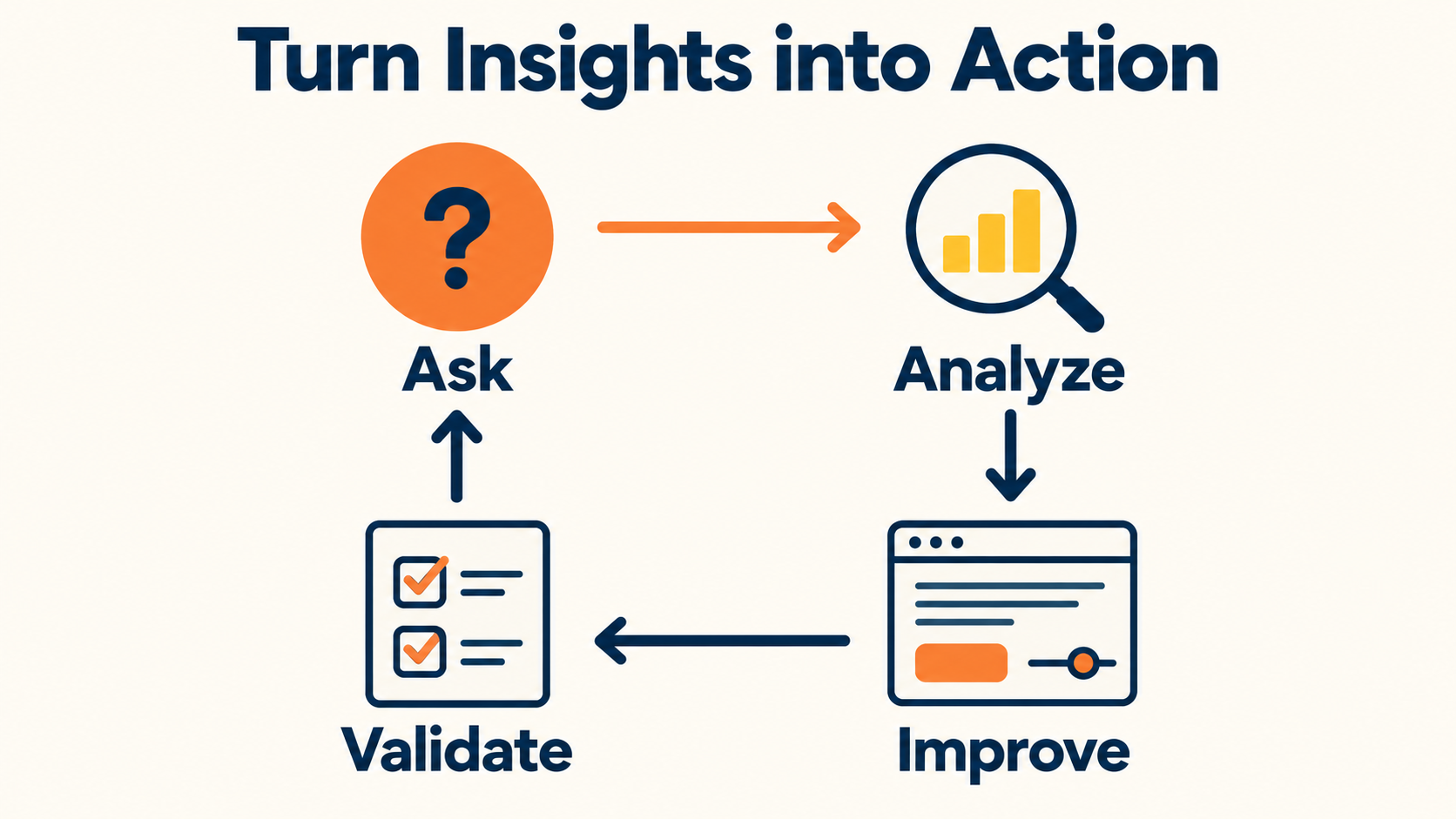
Establish a consistent process: define the business question, select KPIs and segments, identify anomalies, develop a hypothesis, and validate it through content changes, UX improvements, campaign adjustments, or A/B testing.
For example, if an SEO article receives high traffic but few CTA clicks, review search intent, CTA placement, content transitions, and the mobile layout. After making changes, compare click rates and subsequent conversions.
8. Frequently Asked Questions (FAQ)
Can GA4 analyze individual users?
GA4 is primarily used for aggregate analysis and understanding user journeys. Enterprises must also comply with platform policies and privacy requirements when using any identifiable information.
Can GA4 perform funnel analysis?
Yes. Use Explore to build funnels and compare results under different conditions.
Can GA4 identify which articles generate sales opportunities?
It can analyze the relationship between content and website conversions. To connect this to actual opportunity quality, integrate a CRM or other business data.
9. Conclusion
GA4’s value lies in connecting traffic, content, events, and conversions into a complete analysis. Website analytics can support sustained growth when enterprises move beyond asking how many people visit to understanding who visits, what they do, where they drop off, and what value they ultimately create.
If your enterprise needs GA4 dashboards, event tracking, funnels, or website analytics planning, explore LeadsTech’s Analytics and MarTech services:

To build an integrated GA4 and CRM analytics architecture, contact LeadsTech:

Related Articles
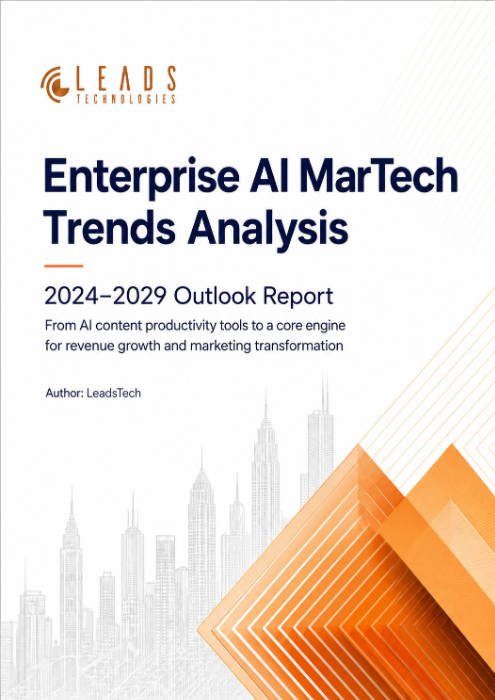
Enterprise AI MarTech Trends Analysis 2024-2029 Outlook Report
From AI content productivity tools to a core engine for revenue growth and marketing transformation
*The PDF will be sent directly to your inbox.
Email Error
Please enter a valid email address.
Thank You!
The whitepaper has been sent to your inbox. If you don’t see it, please check your spam or promotions folder.