

GA4 vs Adobe Analytics: A Complete Web Analytics Comparison
Adobe Analytics, Google Analytics, Website Analytics
27 September 2026
There is no universally best web analytics tool. The right choice depends on data complexity, governance, analytical needs, and the existing MarTech stack.
Summary
GA4 suits organisations that need standard web and app analytics, Google ecosystem integration, and event-based traffic and conversion analysis. Adobe Analytics suits organisations with complex dimensions, multiple brands and markets, highly customised tracking, deep segmentation, governance, and Adobe Experience Cloud integration.
1. Choose Analytics Tools Around Business Needs
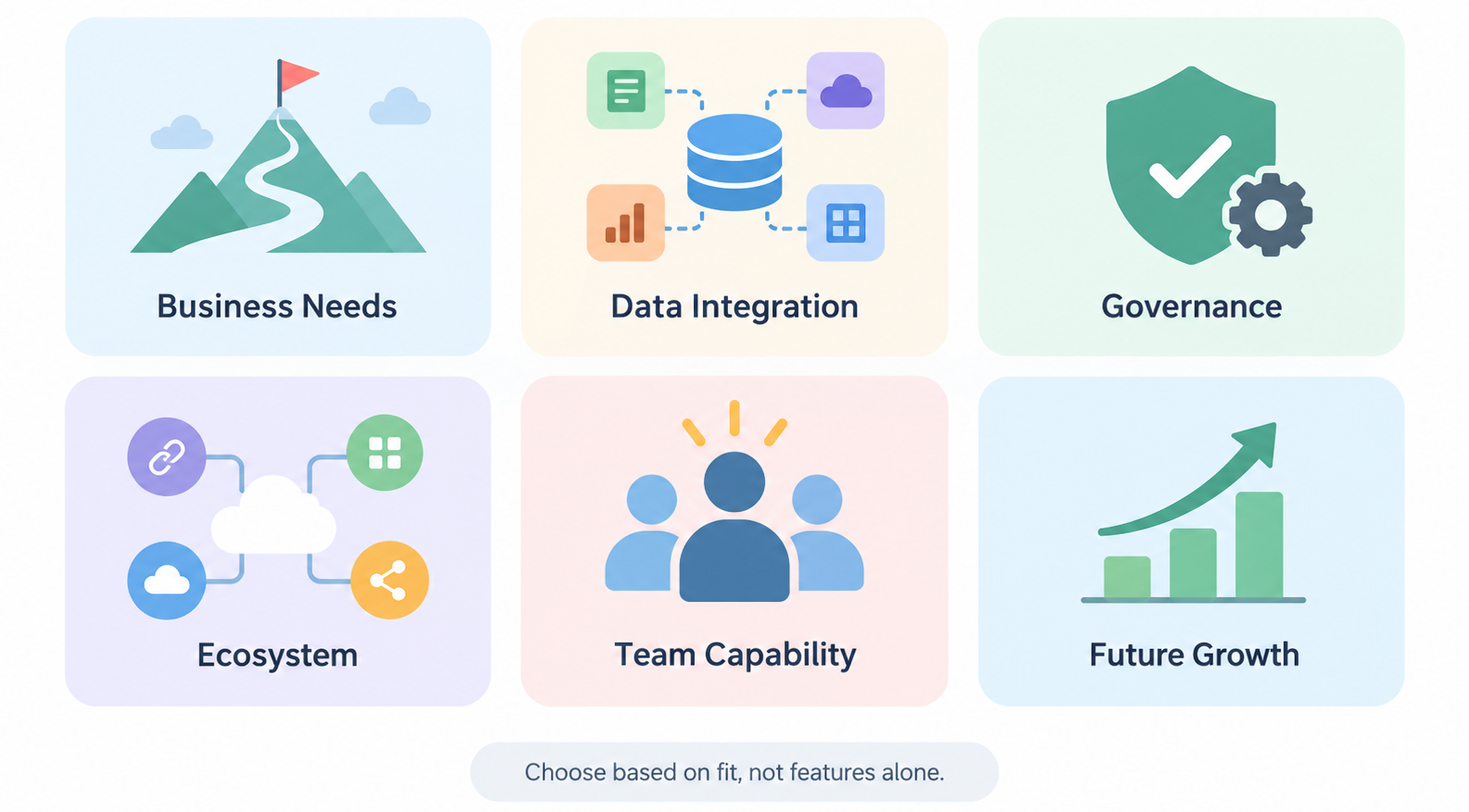
Start with business questions, users, integrations with CRM, CDP, ads, apps, membership and order data, cross-market governance, and in-house analytics capability. A platform that is too complex raises maintenance cost; a simpler one can limit analysis for multi-brand and multi-market journeys.
2. Who Is GA4 For?
GA4 uses an event-led data model for page views, clicks, form submissions, and purchases. Its Google Ads, Search Console, and BigQuery integrations make it practical for standard web and app tracking, campaign, source, event, and basic funnel analysis.
3. Who Is Adobe Analytics For?
Adobe Analytics supports highly customised collection and analysis. Teams can design variables, events, and classifications by brand, product, member, content, and business rules, then use Workspace for segments, flows, fallout, and attribution. It suits complex global, multi-brand and high-volume organisations, especially Adobe Experience Cloud users.
4. Key Differences Between GA4 and Adobe Analytics
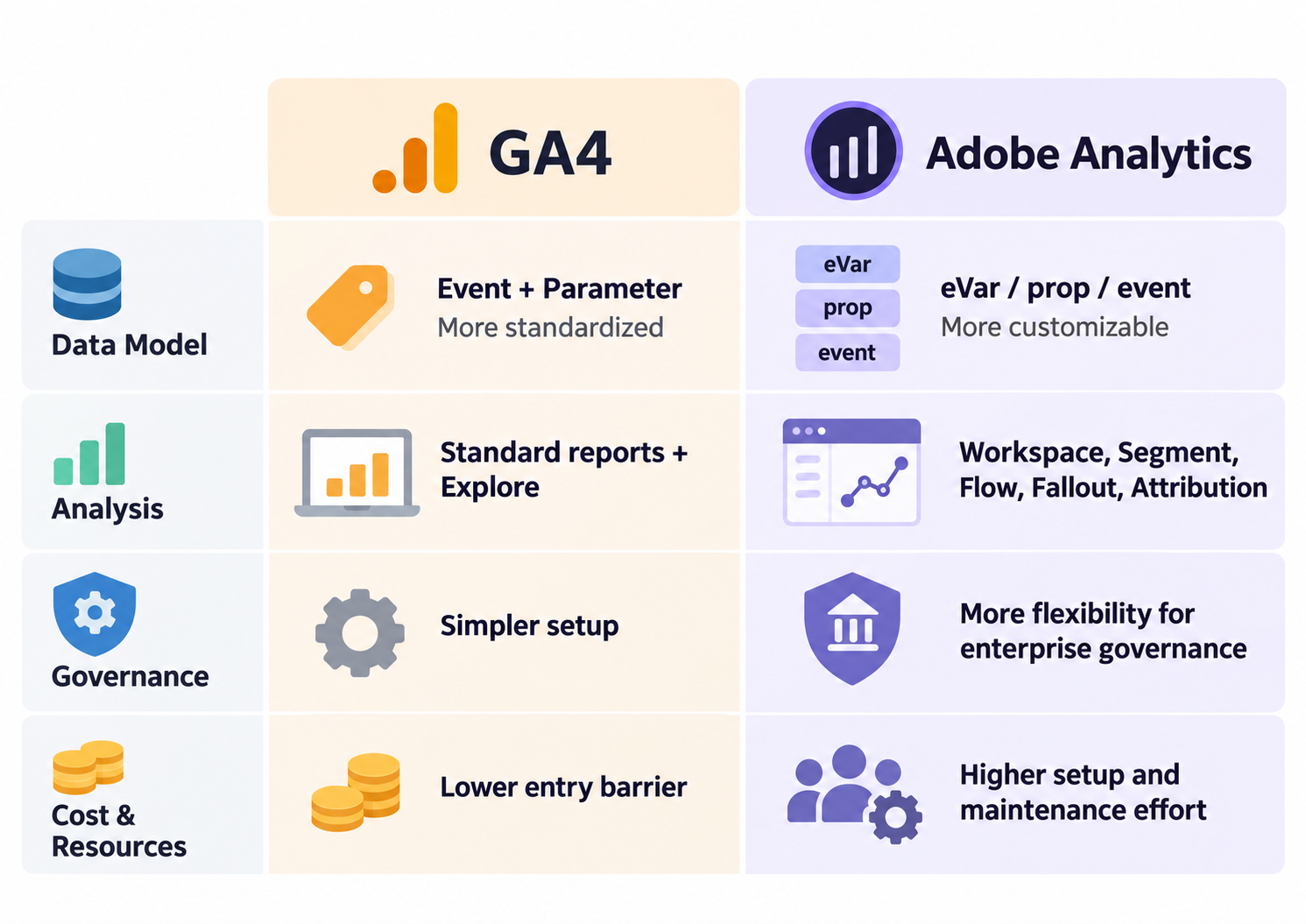
GA4 centres on events and parameters; Adobe Analytics supports detailed eVars, props, events, and classifications. GA4 offers standard reporting and Explore, while Analysis Workspace offers more flexible segmentation, flow, fallout, cohort and multidimensional analysis. Adobe provides more governance design space but needs more mature implementation, QA and management.
5. What Should Enterprises Assess?
Assess the complexity of marketing and product questions; integration needs across web, app, CRM, CDP, ecommerce and offline data; multi-brand and multi-market governance; existing Google or Adobe investments; long-term analytics teams; and needs for customer journey analytics, personalisation and audience activation.
6. Common Selection Scenarios
Use GA4 to establish a measurement foundation for traffic, campaigns, and form conversions. Adobe Analytics usually fits mature digital marketing teams that need consistent tracking across sites and markets with deeper segments and attribution. Using both is possible, but event definitions, KPIs, and the data layer must be unified.
7. Frequently Asked Questions
Can GA4 replace Adobe Analytics?
Not always. GA4 can be sufficient for standard needs, while Adobe Analytics remains stronger for customised dimensions, deep segmentation, governance, and Adobe ecosystem integration.
Is Adobe Analytics always more complex?
Implementation and governance are usually more complex, but its value comes from greater design flexibility. The right choice depends on analytical needs and organisational maturity.
Do we need a tracking plan first?
Yes. Without a measurement plan, any tool can accumulate ineffective events, inconsistent naming, and unreliable data.
8. Conclusion
Choose a Web Analytics platform from business questions and data governance, not feature counts. GA4 is strong for standardisation, the Google ecosystem, and fast adoption. Adobe Analytics is strong for enterprise customisation, deeper analysis, and Experience Cloud integration.


Related Articles
Enterprise AI MarTech Trends Analysis 2024-2029 Outlook Report
From AI content productivity tools to a core engine for revenue growth and marketing transformation
*The PDF will be sent directly to your inbox.
Email Error
Please enter a valid email address.
Thank You!
The whitepaper has been sent to your inbox. If you don’t see it, please check your spam or promotions folder.