
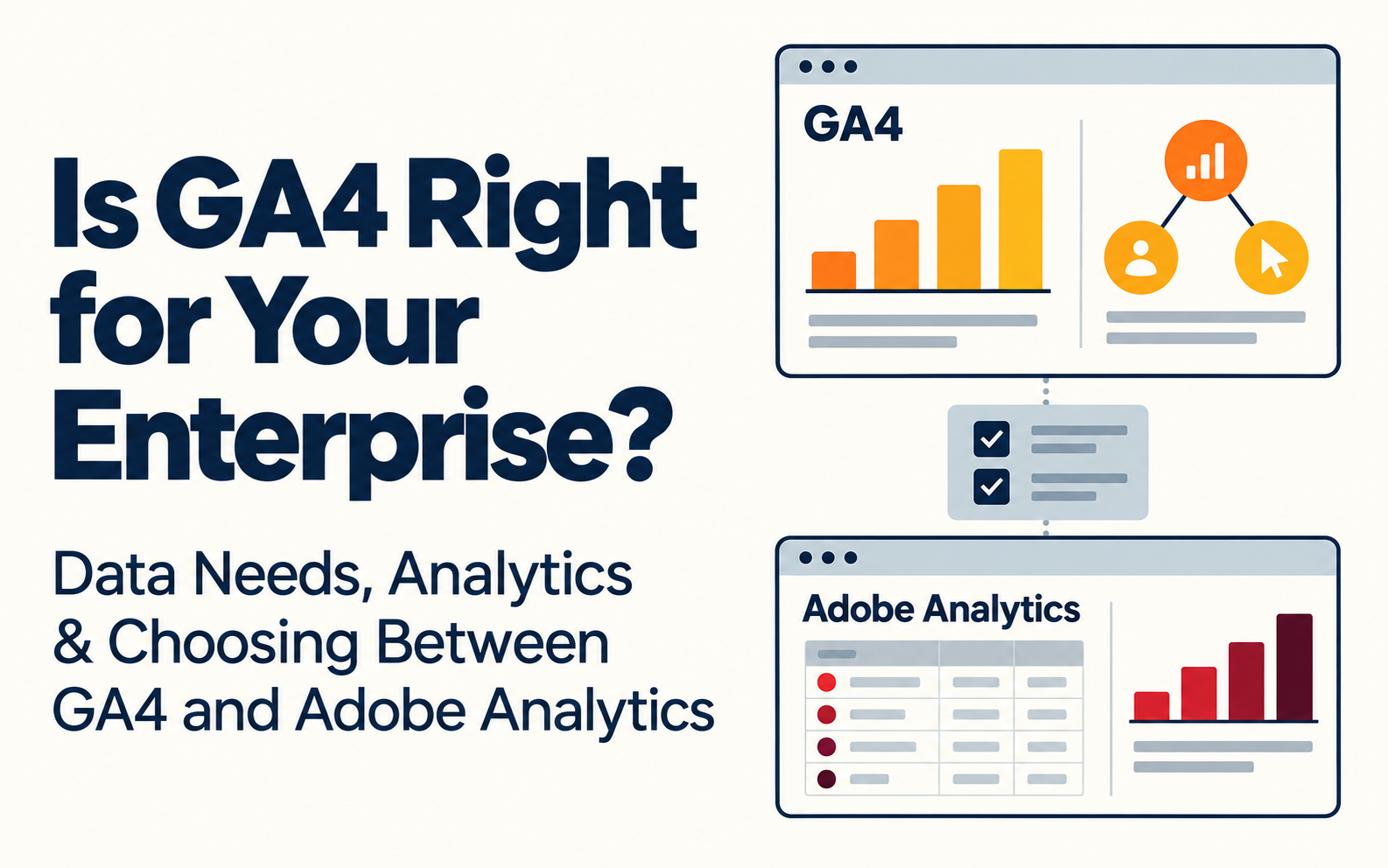
Is GA4 Right for Your Enterprise? Comparing Data Needs, Analytics Capabilities, and Adobe Analytics
Adobe Analytics, Google Analytics, Website Analytics
14 October 2026
For many organizations, GA4 is an important foundation for website analytics. But being able to use it is different from knowing whether it can meet your long-term needs. As your website, data model, analysis requirements, multimarket governance, and MarTech integrations become more complex, you need to reassess the roles of GA4 and enterprise platforms such as Adobe Analytics.
Summary
GA4 is well suited to standard website and app analytics, SEO and campaign measurement, event and conversion tracking, and integrations with Google Ads, BigQuery, and other Google products. Adobe Analytics generally offers more flexibility when you need highly customized dimensions, complex product and content classifications, governance across brands and markets, advanced segmentation and flow and fallout analysis, or Adobe Experience Cloud integrations. The deciding factor is the complexity of your data and analysis needs, not the size of your company.
1. When Is GA4 a Good Fit for Your Business?
GA4 can usually cover most of your needs if you primarily analyze traffic sources, landing pages, campaigns, content, forms, ecommerce, and basic funnels.
It also suits teams that want to establish a standard tracking framework quickly. Its event-and-parameter model is easy to extend, and it works with Google Tag Manager, BigQuery, and Google Ads as part of an integrated Google marketing ecosystem.
If your organization has yet to establish analytics governance, GA4 is a reasonable starting point. You can begin with a more standardized measurement plan and develop it as your needs evolve.
2. When Might GA4 Fall Short?
First, you may need extensive custom business dimensions, such as complex product hierarchies, membership statuses, content classifications, sales stages, or multilevel market structures. These requirements call for highly flexible data design and analysis.
Second, organizations operating across brands, countries, and websites need strict control over tracking specifications, permissions, variables, and reporting consistency.
Third, your analytics team may need to explore many combinations of data, build advanced segments, analyze flows, fallout, and attribution, or integrate deeply with Adobe Experience Cloud.
Fourth, you may want analytics to serve as a core data product across departments, extending beyond marketing reports.
3. How Do GA4 and Adobe Analytics Compare?
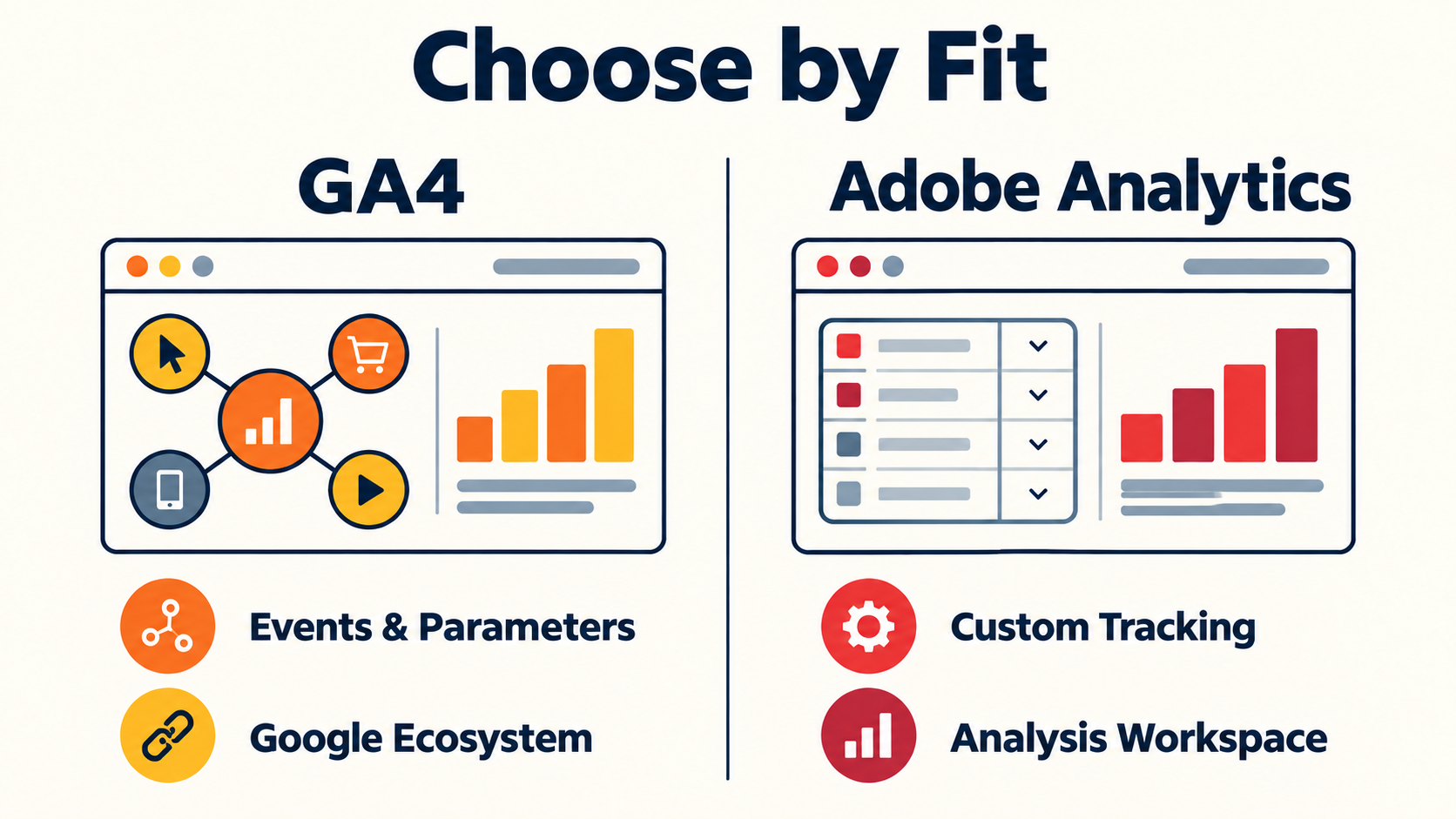
GA4 centers on a standardized event model and integration with the Google ecosystem. Adobe Analytics emphasizes customizable enterprise tracking and Analysis Workspace.
GA4 has a lower barrier to entry and supports a faster rollout. Adobe Analytics typically requires more comprehensive solution design, a data layer, governance, and a specialist team, while supporting more complex analysis needs.
If you already use AEM, Adobe Target, Customer Journey Analytics, or Adobe Journey Optimizer, integration with Adobe Analytics can offer greater value. Conversely, GA4 has a stronger ecosystem advantage if your organization relies heavily on Google Ads, BigQuery, and Google Cloud.
4. Six Criteria for Choosing an Analytics Platform
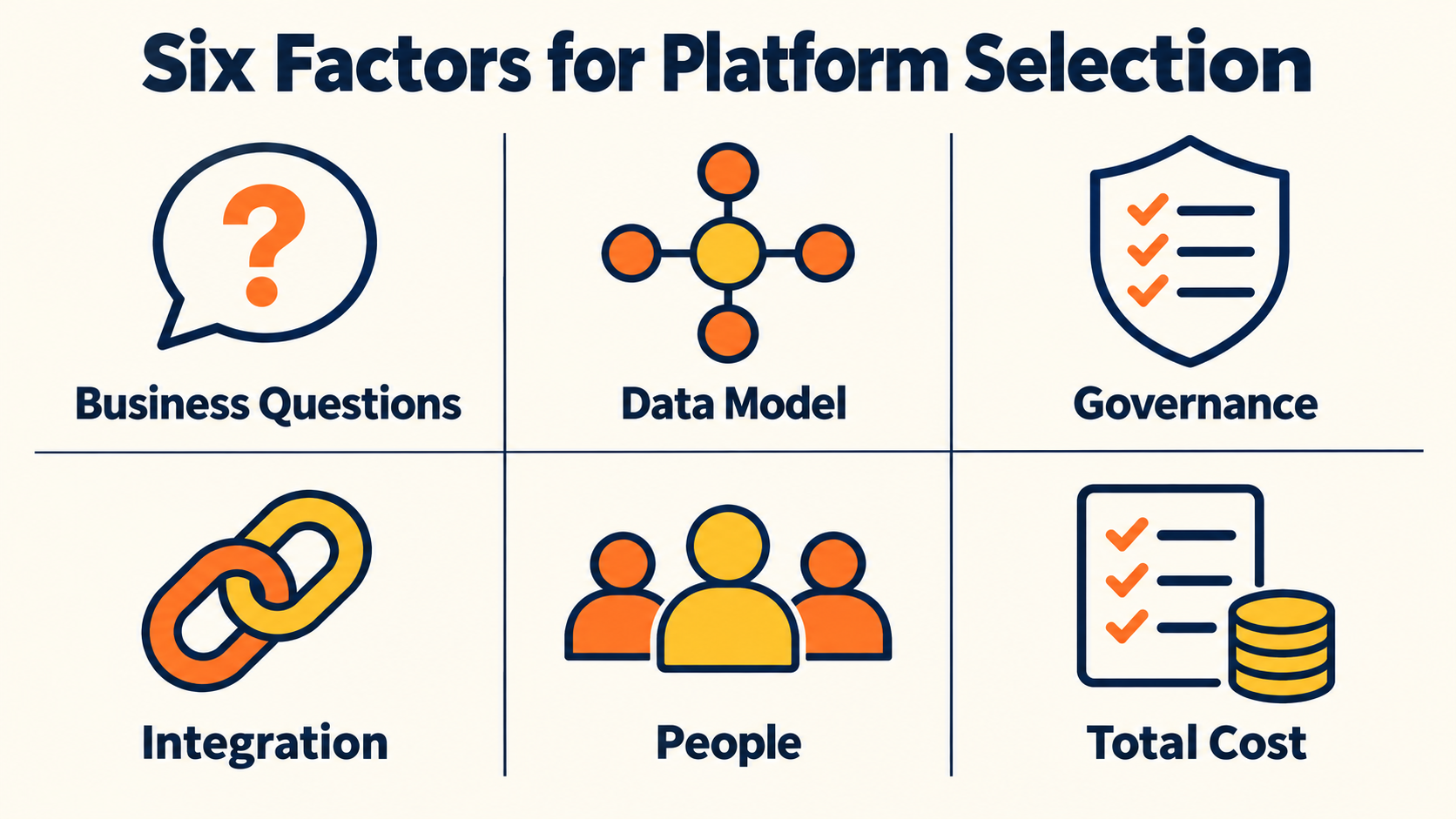
1. Business questions: Do you most often need to answer standard marketing questions or complex questions about customer journeys and products?
2. Data model: How many custom events, parameters, dimensions, and classifications do you need?
3. Governance: Do you need centralized management across brands, markets, environments, and access permissions?
4. Integration: Is your MarTech and data stack primarily Google or Adobe, or do you need to connect platforms?
5. People: Do you have analysts, analytics engineers, and implementation specialists in-house?
6. Total cost: Include implementation, maintenance, QA, training, and data governance costs alongside licensing.
5. Can You Use GA4 and Adobe Analytics Together?
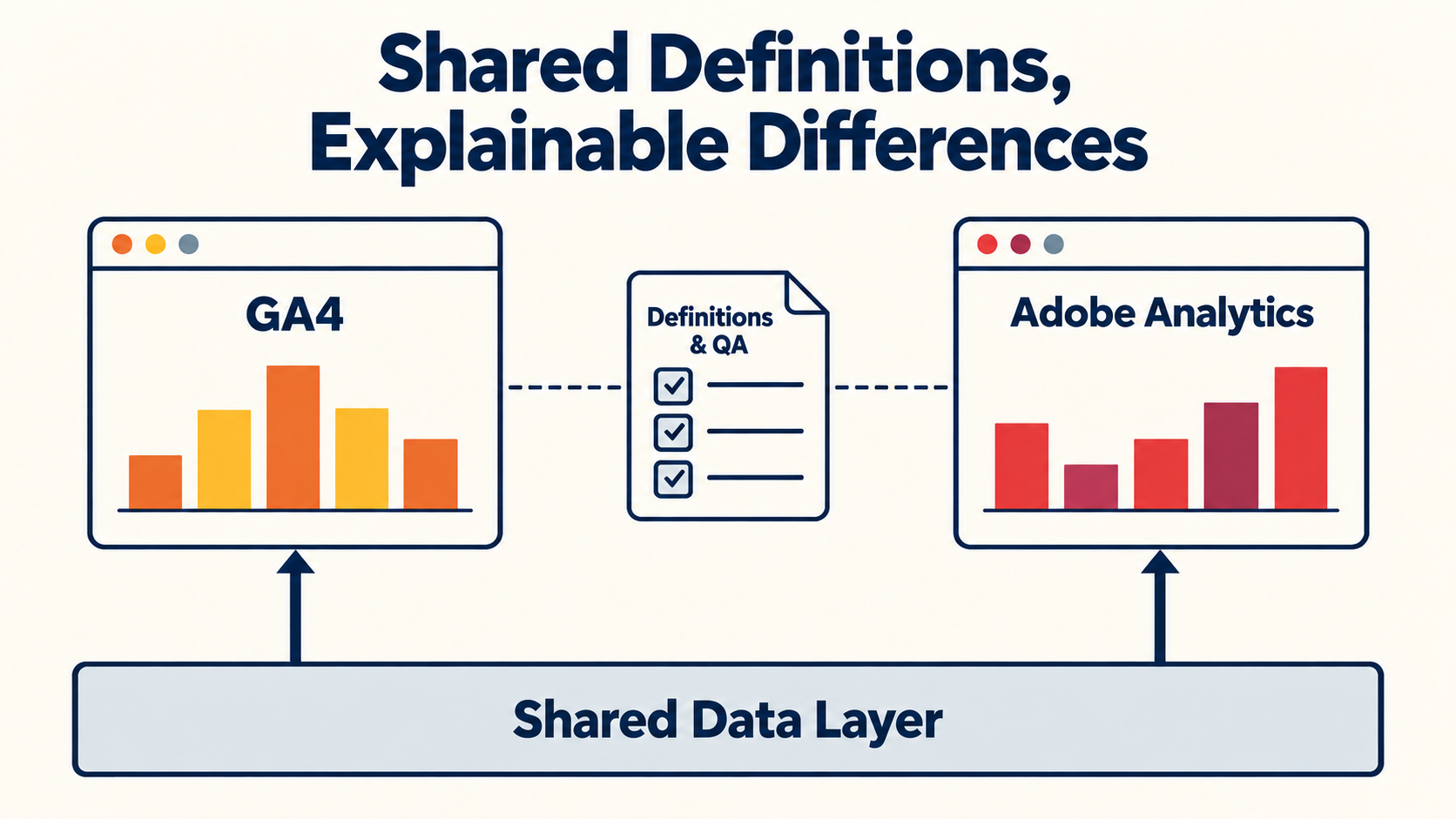
Yes. Some large organizations use GA4 for Google Ads, SEO, and general marketing analytics while relying on Adobe Analytics for more advanced enterprise analysis.
The biggest risk of using both platforms is inconsistent numbers. Establish a shared data layer, event definitions, conversion logic, and QA documentation. Expect some reasonable differences because the platforms process data differently; what matters is being able to explain those differences.
6. Frequently Asked Questions (FAQ)
Do large companies always need Adobe Analytics?
Not necessarily. Company size is only one consideration. Assess whether your data, governance, and analysis requirements need enterprise-level customization.
Can GA4 integrate with a CRM?
Yes, through a data warehouse, server-side integration, APIs, or other methods. First define your identity strategy, privacy requirements, and data responsibilities.
Can we move from GA4 to Adobe Analytics later?
Yes. Establishing a clear data layer and measurement plan early can reduce the cost of switching platforms later.
7. Conclusion
Choosing GA4 for your business involves more than comparing free and paid tools. GA4 offers strong capabilities for standard website analytics. As your needs expand to governance across markets, complex data models, and advanced cross-channel analysis, an enterprise platform such as Adobe Analytics may be a better fit. Define your requirements before choosing a platform to avoid both unnecessary investment and gaps in capability.
If you need help evaluating GA4 and Adobe Analytics, explore LeadsTech’s Analytics and Adobe Experience Cloud services:
Explore Analytics and Adobe Experience Cloud Services
To review your current analytics architecture and conduct a gap analysis, contact LeadsTech:

Related Articles
Enterprise AI MarTech Trends Analysis 2024-2029 Outlook Report
From AI content productivity tools to a core engine for revenue growth and marketing transformation
*The PDF will be sent directly to your inbox.
Email Error
Please enter a valid email address.
Thank You!
The whitepaper has been sent to your inbox. If you don’t see it, please check your spam or promotions folder.