
Salesforce Partner Services: Consulting, Implementation and Integration
Customer Relationship Management (CRM), Salesforce
20 October 2026
When businesses ask about Salesforce partner services, they often receive lists covering consulting, implementation, integration, and support without understanding what each should deliver. If the scope describes only service names, gaps can emerge in data preparation and launch responsibilities. This article explains service outcomes, internal commitments, and pre-purchase checks at each project stage.
Summary
Salesforce partner services can cover requirements planning, system configuration, data migration, custom integration, training, and ongoing support, but each provider’s delivery scope differs. Businesses should translate service names into concrete outcomes and confirm which documents, configurations, and testing evidence they will receive at each stage. The platform capabilities provided by Salesforce are not equivalent to the implementation work promised by a consultant. Defining the current phase’s processes and both parties’ responsibilities, then expanding based on data quality, usage, and operational metrics, makes delivery gaps easier to control.
1. Understanding the Scope of Salesforce Partner Services
Salesforce partner is a common search term, but an engagement may include commercial purchasing assistance, consulting, system implementation, or maintenance. Businesses should not assume the label includes every service. Confirm the contracting company, the actual delivery team, and matters that Salesforce or other suppliers must handle.
Salesforce provides customer relationship management (CRM) platforms, while consultants help businesses decide how to implement customer, sales, and service processes within the system. A platform feature does not mean the business has established suitable operating rules. In opportunity management, for example, sales managers and the implementation team must still jointly define when an opportunity can move to the next stage.
When purchasing services, divide them into four areas: planning what to do, building how it will work, integrating how data flows, and enabling continued team use. This turns seemingly abstract consulting services into verifiable outcomes and helps identify work excluded from a quote.
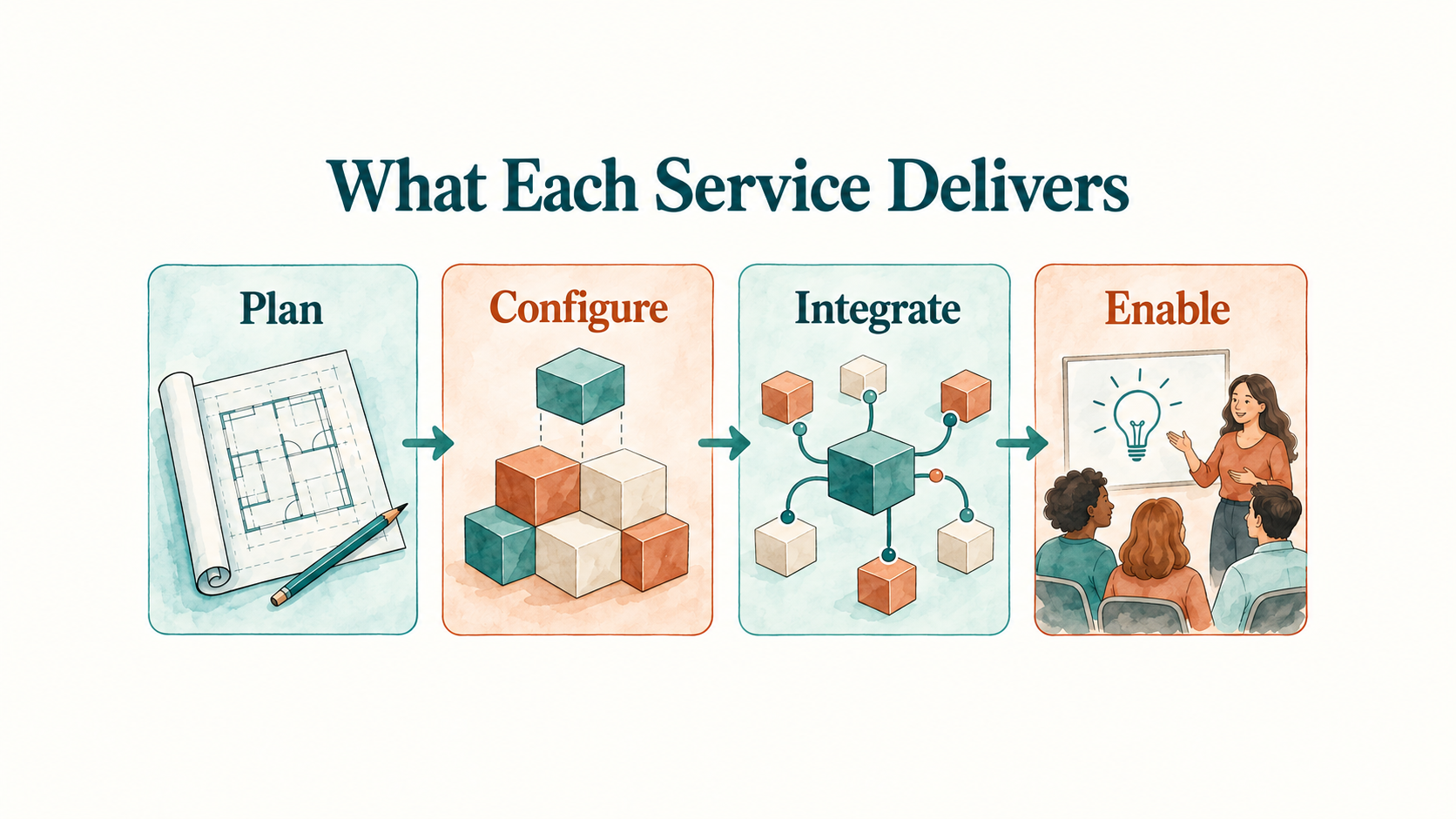
Figure 1: Planning, implementation, integration, and training each have distinct deliverables.
2. Consulting and Planning: Turning Departmental Needs into a Shared Blueprint
Planning begins by understanding the company’s problems. For example, marketing may believe leads are not being followed up, while sales considers the inquiries incomplete. Simply asking for another field may not solve the handoff problem. Consultants need to interview the relevant roles and clarify lead qualification criteria, routing, and feedback processes.
Useful deliverables at this stage include current-state process maps, problems and priorities, a list of user roles, and the scope of the current and later phases. Record the rationale and expected improvement for every requirement so the business understands whom a feature serves and what work its absence would affect.
Product and edition assessment is also part of planning. Sales tracking, customer service, and marketing nurture involve different tasks. Consultants should explain which needs existing capabilities can meet and which require additional products or integrations. Confirm available features and costs against the selected edition and formal commercial terms, rather than assuming everything in a demonstration environment is included in every license.
The business must still appoint someone authorized to approve processes. Consultants can present options and trade-offs, but the company must decide customer tiers, sales permissions, and departmental handoff deadlines. Listing open decisions and scheduling time to resolve them can reduce repeated changes during implementation.
After planning, use a requirements traceability table to connect problems, proposed solutions, and test scenarios. When someone later requests a change, identify the objective it affects before adjusting scope. This document need not be complex, but it should help colleagues who missed the initial interviews understand the reasoning behind decisions and reduce knowledge gaps caused by staff changes.
3. Implementation: Configuration, Data, and Testing Are All Essential
Configuration Should Reflect How People Work
Implementation services typically address data fields, pages, role permissions, workflows, and reports according to approved requirements. Request a configuration inventory and brief design notes to understand the business need behind each setting. Completed configuration should not be the only outcome: actual users should complete end-to-end tasks to confirm that entering and viewing information works for them.
Clean Data Before Migrating It
Legacy naming conventions, duplicate records, and missing fields affect trust in the new system. Migration services should specify who cleans the data, which historical records to retain, how fields map to the new system, and how results will be reconciled after import. Business data owners must participate in validation because technical teams may not know whether two similarly named companies are the same customer.
Testing Should Include Exceptions
Beyond successfully completing a normal inquiry, test scenarios such as an owner leaving the company, missing required data, duplicate accounts, and insufficient permissions. User acceptance testing (UAT) should start with business tasks and specify expected results and approvers for each operation. Record passed tests separately from unresolved defects instead of relying on a verbal assessment that the work is nearly finished.
Before launch, confirm cutover arrangements: when changes in the old system stop, how the final data batch moves, and how to pause or roll back if major problems occur. If a quote includes only configuration and importing, without cutover or launch support, clarify these omissions early rather than waiting until activation.
Test permissions using different roles, rather than completing acceptance testing only with an administrator account. Whether sales staff can access restricted customer data, managers can view their team’s reports, and departing employees’ work can be reassigned directly affects everyday operations. These scenarios are more meaningful than simply counting fields.
4. What Should Customization and Integration Services Deliver?
Customization adds configuration or development for specific needs, while integration enables systems to exchange data. Assess the need for both through business outcomes. If salespeople only need order status, for example, copying every transaction from an enterprise resource planning (ERP) system into CRM may be unnecessary. Consultants should help choose the smallest sufficient dataset.
Integration design should explain where data originates, how often it updates, which system can modify it, and which source prevails in a conflict. Request an interface inventory, field mappings, error logs, and retry procedures. Successfully sending data once does not demonstrate that an integration can reliably support daily operations.
For special approvals or cross-system queries, ask consultants to compare standard configuration, existing extensions, and custom development first. Consider not only initial effort but also testing, version updates, documentation, and handover complexity. Less customization is not always better, but every customization needs a clear rationale and an ongoing maintenance owner.
At delivery, the company should receive the configuration documentation, code or packages, deployment instructions, and test records specified in the contract. Confirm licensing and support separately for third-party tools. Rather than broadly demanding free maintenance forever, list what needs maintenance, how it will be handled, and how changes will be estimated so both parties work to a common standard.
Also ask who monitors integration failures. If an order status fails to update, must a user notice, or can the system alert an owner? Consultants need to deliver actionable procedures for locating errors, deciding whether to resend data, and verifying results, while identifying situations that require technical staff.
5. Distinguishing Training, Launch Support, and Ongoing Optimization
Training should enable employees to complete their work, not merely attend a course. Salespeople can practice creating and following up on opportunities, managers can identify overdue items, and administrators can learn to add users and manage basic configuration. Give the company materials, exercises, and FAQs that it can reuse when new employees join.
Launch support helps teams through the transition, including collecting issues centrally, identifying configuration defects, and answering operational questions. Agree on support hours, reporting channels, and escalation contacts, and distinguish urgent incidents from routine improvement requests. Define response expectations, resolution arrangements, and information the company must provide consistently.
Ongoing optimization adjusts the system based on usage records and business changes. If a stage frequently lacks a next action, check for missing reminders or owners. If a field is consistently blank, confirm whether it is necessary. Tie optimization to measurable problems instead of continually adding work based only on lists of new features.
Request regular reviews of open items, completed improvements, and remaining risks. Separating maintenance from new projects helps prevent major development work from consuming long-term support budgets. Arrange knowledge transfer so the company gradually gains day-to-day administrative capability instead of outsourcing every minor change.
The frequency of support reviews should match the business cycle. During campaigns with more inquiries, focus on routing and follow-up; when entering a new market, check the suitability of roles, data, and reports. The company and consultants should jointly select a few important problems, assign improvement owners, and define verification methods so meetings do more than recite a task list.
6. Defining Responsibilities Across the Business, Consultant, and Platform Provider
The company owns business decisions, data definitions, and user participation. Consultants own design, configuration, integration, and delivery within the contract scope. Salesforce provides platform support according to the purchased products and support plan. This is a starting point for clarifying responsibilities; confirm the actual division of work against the contract and project arrangements. Services can complement each other, but no party should assume another has already taken responsibility.
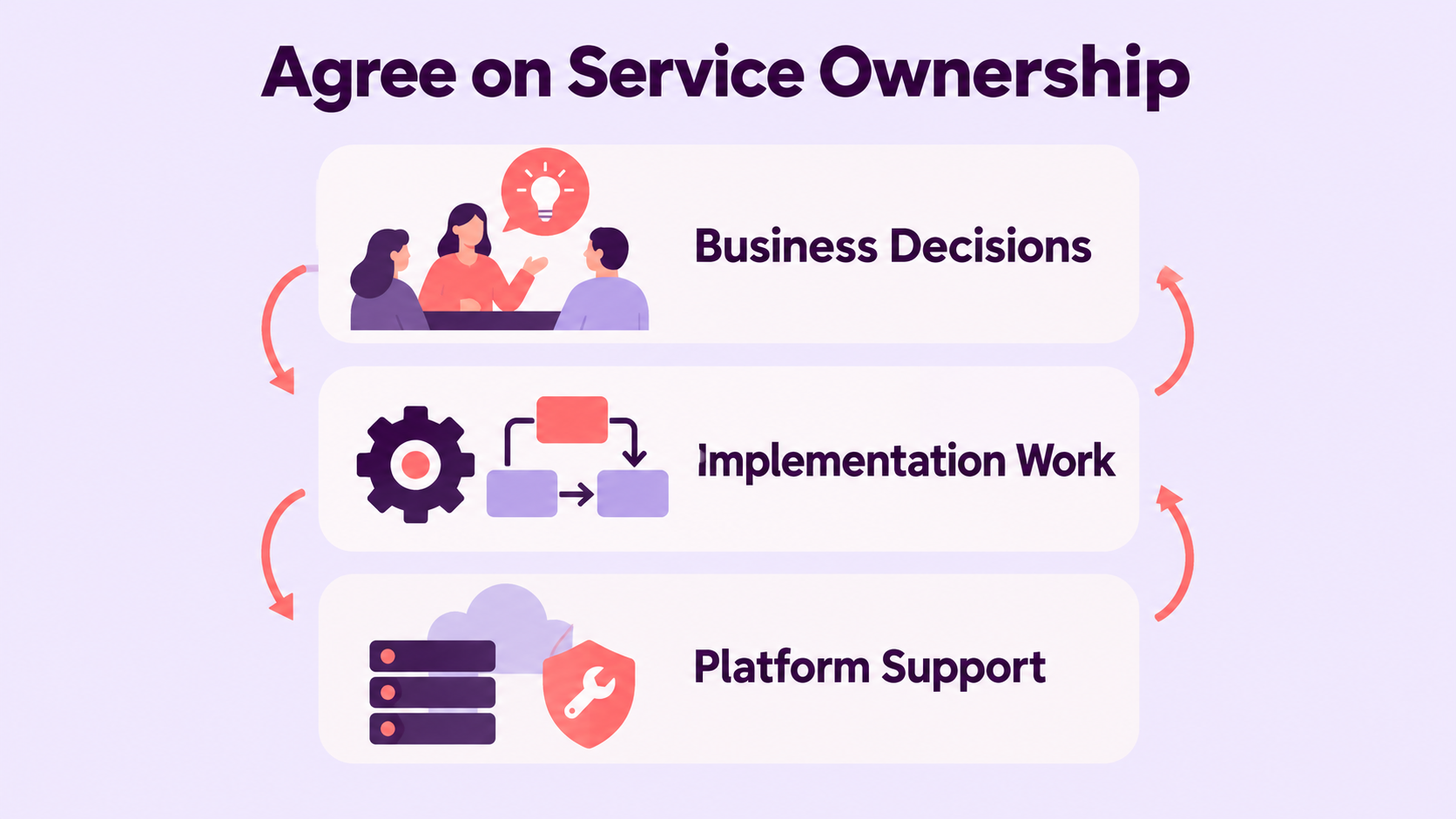
Figure 2: Business decisions, consultant delivery, and platform support require clear ownership.
For data migration, integration failures, permission changes, platform issues, and new requirements, document the first contact, the person assessing the issue, and the approver. Even when an issue must be escalated to Salesforce, identify who prepares reproduction steps, tracks progress, and responds to users so it does not bounce between suppliers.
Data access responsibilities must also be addressed. Use de-identified data for testing where possible and grant permissions according to work requirements. Confirm how consultants and subcontractors access information and how accounts, data copies, and documents will be handled when the project ends. For cross-regional use, the appropriate business owners should confirm applicable requirements.
7. Hypothetical Scenario: Fix Inquiry Handoffs Before Expanding Integration
Consider an industrial parts supplier receiving website inquiries and trade show leads while marketing and sales maintain separate records. Management wants to implement Salesforce and first requests more reports. If consultants build reports immediately while sources and follow-up statuses remain inconsistent, the reports may simply expose the existing problems.
A more practical sequence starts by defining valid inquiries and sales handoff rules, cleaning duplicate accounts, and then building routing and follow-up processes. Test a small set of representative leads in the first phase. Only after confirming that salespeople can use the system should the company assess website and ERP integration. This hypothetical example illustrates service sequencing; it is not an actual customer outcome.
Track required-field completeness, overdue follow-up rates, and first-response time. Preserve a baseline from the original process, then compare using the same lead population and calculation methods. If results do not improve, review definitions, working habits, and routing rules instead of merely asking for another dashboard.
8. Six Checks Before Purchasing Salesforce Services
- Does each stage specify deliverables, completion criteria, and a business approver?
- Are data cleanup, import reconciliation, cutover, and launch support included?
- Do custom features and integrations include maintenance, error handling, and documentation arrangements?
- Does role-based training include materials, task exercises, and administrator handover?
- Are licensing, implementation, third-party tools, and ongoing support itemized separately?
- Are responsibilities for new requests, defect fixes, and platform support clearly distinguished?
Mark each checklist item as included, separately estimated, or the company’s responsibility. An excluded task does not necessarily make a proposal unsuitable; the key question is whether the business can handle it internally. If neither party has an owner, there is a gap to resolve before signing.
9. Frequently Asked Questions
Will a Salesforce Partner Handle All System Work?
Not necessarily. Services depend on the company's capabilities, the actual team, and the contract scope. Request a work breakdown confirming whether planning, migration, integration, training, and maintenance are included, and which tasks require third parties or internal teams.
Can We Hire a Consultant Just to Optimize Our Existing Salesforce System?
Yes. Start with a current-state review to identify specific process, data, or usage problems, then purchase a defined scope of improvements. Preserve the original configuration and data state before work begins, and agree on testing and rollback methods to avoid disrupting other processes while improving one area.
How Can We Decide Whether Ongoing Support Is Worth Renewing?
Review issues resolved, system stability, improvement outcomes, and knowledge transfer. If support reports show only hours without explaining their impact on users, request issue categories, outcomes, and recommendations, then evaluate renewal against business needs.
10. Conclusion
Understanding Salesforce partner services means knowing what each stage delivers, what your company must contribute, and who keeps things running, rather than memorizing feature names. Clearly documenting service scope and completion criteria makes implementation, integration, and subsequent improvements easier to coordinate.
LeadsTech provides Salesforce consulting and planning, implementation, integration, and ongoing optimization services. Discussions can begin with the processes your business most needs to improve.

Prepare a list of existing systems, key problems, and expected outcomes to help consultants assess a suitable service mix and distinguish essential work for the current phase from later expansion.

11. Further Reading
-
CRM for Global B2B Businesses: A Salesforce Implementation Guide
Explore planning priorities for cross-market sales processes and CRM implementation.
-
Why CRM Implementations Fail and How to Choose the Right Consultant
Use common failure causes to identify gaps in processes, data, and consultant collaboration.
-
How Salesforce Partners Support Global CRM Operations
Assess system integration and ongoing operational needs across regional teams.
Related Articles

Enterprise AI MarTech Trends Analysis 2024-2029 Outlook Report
From AI content productivity tools to a core engine for revenue growth and marketing transformation
*The PDF will be sent directly to your inbox.