
Salesforce, Partners, and Consultants: CRM Delivery Models
Customer Relationship Management (CRM), Salesforce
21 October 2026
When preparing to implement Salesforce, companies often compare quotes before deciding who will own process decisions, data preparation, and acceptance testing. Salesforce, partners, and consulting firms can play overlapping roles, and their services can be combined. This guide examines delivery responsibilities, internal capabilities, and ongoing operations to help you choose the right CRM delivery model.
Summary
Start by identifying what you need: software licenses, platform support, implementation delivery, or ongoing operational services. Salesforce, partners, and consulting firms are not mutually exclusive categories; one provider may fill several roles. Your internal team can lead the project, a partner can deliver it, or multiple teams can share responsibility under a hybrid model. The right choice depends on clear ownership, sufficient capability, and verifiable results.
1. How Salesforce, Partners, and Consulting Firms Differ
Salesforce Provides Both Products and Different Levels of Service
Alongside its software platform, Salesforce offers Success Plans and Professional Services. Success Plans focus on support, resources, and guidance, while Professional Services include consulting and implementation. Actual coverage depends on the selected plan and contract. Buying the platform or a support plan does not automatically include all data cleanup, process redesign, or custom development.
When speaking with Salesforce, separate product selection, support entitlements, and project delivery. Whether a feature is available depends on the product and edition. Designing cross-functional processes is a task for consultants and your business. Resolving an incident depends on its cause and the responsibilities defined in the contract. These topics may arise in one meeting, but a single service label does not explain them all.
A Partner and a Consulting Firm May Be the Same Team
The term “partner” may refer to a licensing contact or a team that helps implement Salesforce. The label alone does not establish resale authorization, coverage of every product, or the ability to handle all development. A consulting firm may also be a Salesforce partner, providing process planning, configuration, integration, and training.
Before purchasing, verify the legal contracting entity, partner credentials, actual delivery team, and service scope. Capabilities listed in a sales presentation should translate into specific project roles and deliverables. Two firms that both call themselves consultants may specialize in very different areas, such as sales operations, technical integration, or organizational change.
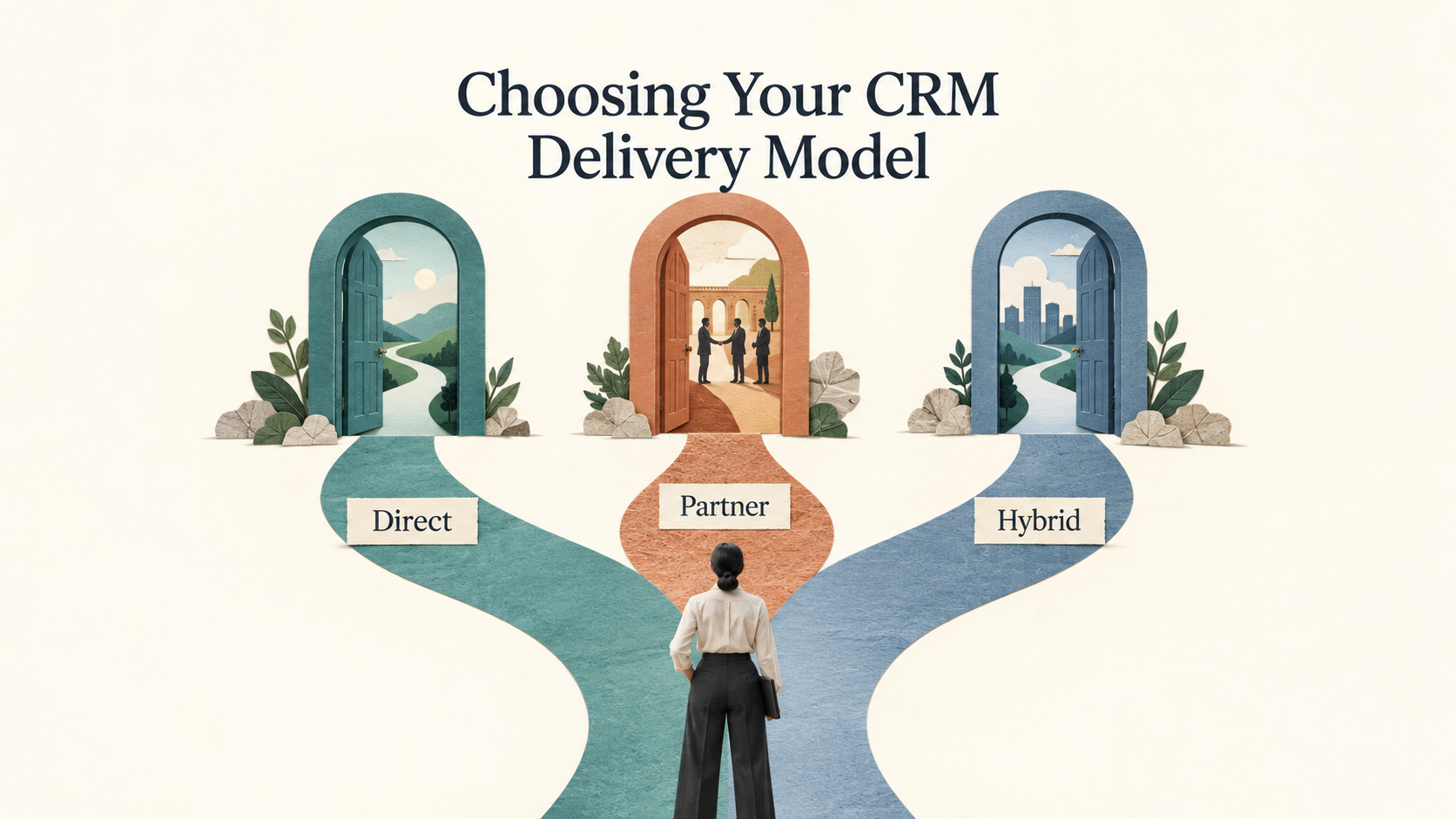
2. Three CRM Implementation Models
Internal Leadership: Control Design and Delivery
Organizations with experienced administrators, architects, and project managers can lead implementation internally, using Salesforce support or short-term specialist assistance as needed. Business knowledge stays within the organization, and priorities are easier to adjust. However, key staff must have enough time for requirements, testing, and operations.
This model suits a clearly defined scope, limited integrations, or organizations with reusable standards. Include internal hours and opportunity costs in your evaluation. Treating salaries as existing expenses does not make an internal implementation free. If your only administrator also handles daily support, interruptions can delay the launch.
Partner Leadership: Define the Scope and Delegate Delivery
A partner or consulting firm can handle requirements discovery, solution design, configuration, integration, and launch support, while your organization retains responsibility for business decisions and acceptance. This model suits companies without a complete delivery team or those that must coordinate multiple departments within a fixed deadline.
Delegating delivery does not transfer every responsibility. A consultant can recommend opportunity stages but cannot decide, on behalf of the sales leader, what evidence qualifies an opportunity. Consultants can define cleanup rules but should not independently determine whether two customer records represent the same legal entity. Assign people within your organization who can approve these decisions.
Hybrid Delivery: Divide Responsibilities by Capability
Complex or cross-region projects may involve Salesforce, a partner, and an internal team. Salesforce might advise on specific architectural questions, the partner might implement the solution, and your team might own data governance and operations. Salesforce services and partner services can coexist. The key is to avoid contracts that each assign the same responsibility to the other provider.
A hybrid model combines complementary skills but requires more coordination. Establish one decision-making process, a shared issue log, and consistent acceptance criteria. Teams may maintain separate work plans, but launch readiness must be assessed against the same business scenarios. Passing separate tests does not prove that the complete solution works.
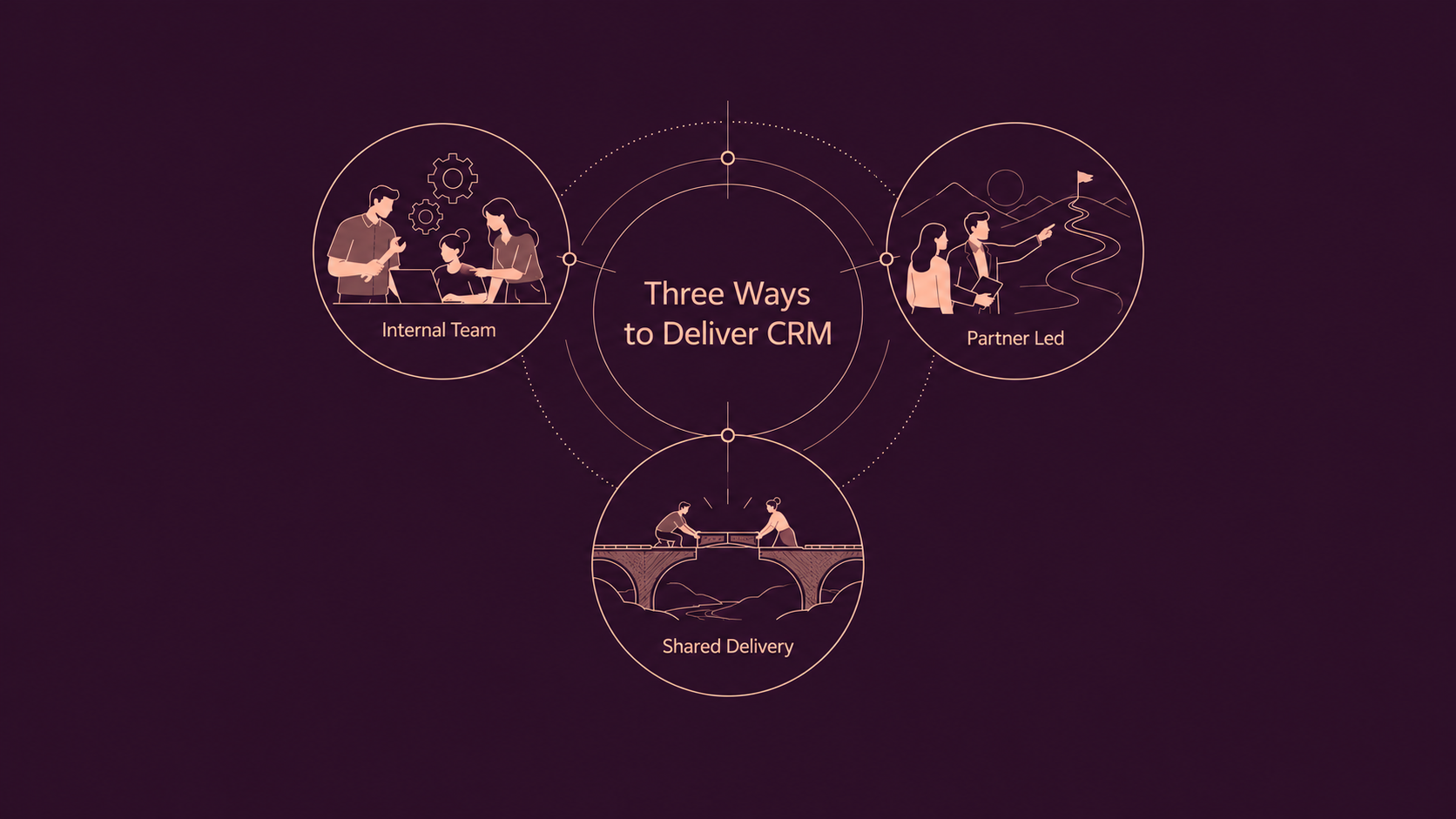
Figure 1: Internal leadership, partner leadership, and shared delivery are three adaptable arrangements.
3. CRM Delivery Models: Four Responsibilities to Clarify
Business Decisions and Data Ownership
Your organization should retain authority over process priorities, data definitions, and access rules. Consultants can propose options, but business owners must approve the tradeoffs. Decisions about sharing customer records across regions, approving discounts, and reassigning departing employees’ opportunities directly affect operations.
Assign an owner to each important data element. Customer names, order amounts, and contact preferences may be managed in different systems; “IT is responsible” is not specific enough. Define the source, correction contact, and dispute resolution process so that every reporting discrepancy does not become an argument between companies after launch.
Solution Design and Platform Support
Design responsibilities include the data model, configuration choices, integration approach, and maintenance documentation. Even when multiple teams implement the solution, one architecture owner should review consistency. If providers change, your organization needs to understand why configurations were chosen, which elements depend on specific editions, and where to begin troubleshooting.
Platform support also requires incident triage. Login problems, custom workflow errors, and external interface outages may need different teams. Contracts should specify the intake contact, service hours, escalation process, and required information. Being able to contact Salesforce does not mean every incident carries the same service commitment.
Acceptance and Handover
Base acceptance on business scenarios that users can perform, such as creating an opportunity from a new lead, checking managerial access, or reconciling an order in finance. Do not simply count configured fields. Retain test evidence and record the impact and remediation owner for unfinished items.
Handover should include more than a presentation. Obtain configuration inventories, integration specifications, test records, administrator instructions, and outstanding tasks. Where external accounts or deployment tools are involved, confirm that your organization can continue managing the necessary assets and that access is transferred securely.
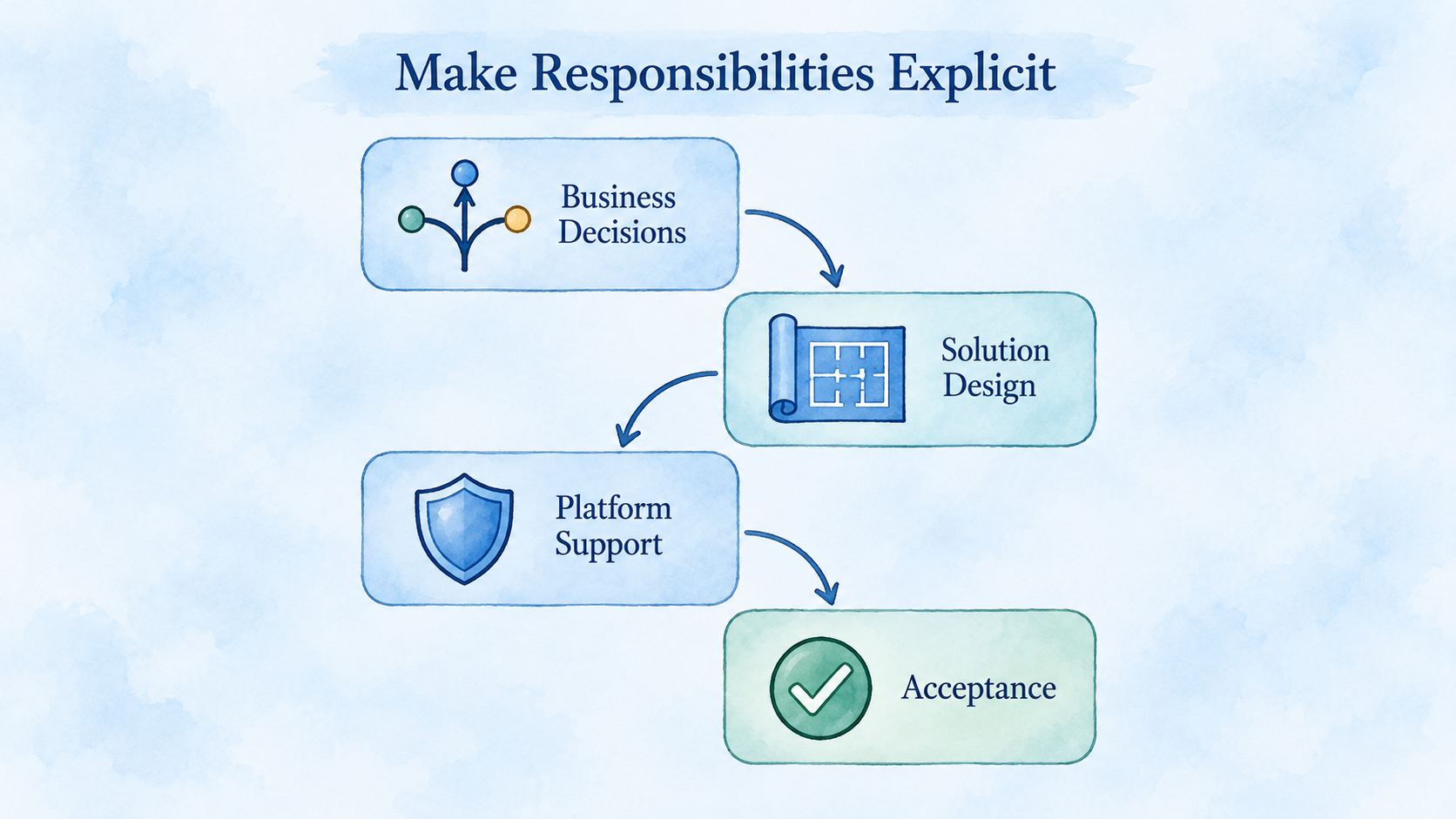
Figure 2: Clarify ownership of business decisions, solution design, platform support, and acceptance before work begins.
4. How to Evaluate CRM Consulting Proposals and Total Cost
Give every candidate the same requirements brief before comparing proposals. At a minimum, include priority business goals, user groups, data sources, systems to integrate, launch constraints, and available internal staff. If candidates receive different information, pricing differences may simply reflect different scopes.
Break costs into licensing, initial implementation, data preparation, integration maintenance, training, and ongoing support. Different pricing models can reasonably coexist: a defined scope may carry a fixed fee, while exploratory work is estimated by phase. Look beyond the initial total to how changes will be requested, priced, and approved.
Use this checklist in proposal discussions:
- Ask for first-phase deliverables, exclusions, and required contributions from your organization.
- Confirm the actual consulting and technical roles, not just the firm’s total certification count.
- Use a real business scenario to test design tradeoffs and acceptance methods.
- Ask how poor data quality or delayed external interfaces will be handled.
- Specify the post-launch support period, intake process, and pricing boundaries for later optimization.
- Confirm how documentation, configurations, and knowledge will be transferred, including staff replacement arrangements.
When a team claims industry experience, ask it to explain process constraints similar to yours and how it handles exceptions. Evaluate the reasoning behind design choices, not the number of screens shown. If a provider promises a fixed improvement before understanding your needs, examine the assumptions and calculation method.
Include your future administrators in proposal discussions. The people who will change fields, manage users, and handle first-line issues are well placed to identify maintenance challenges. Ask candidates to demonstrate a common change so you can assess whether every small adjustment will still require external help after handover.
Have business, IT, and procurement teams record their observations separately, then discuss differences together. Weight criteria according to project risk. Integration-heavy organizations should emphasize architecture, while distributed user groups may place more weight on training and change management. Scores organize evidence; they do not replace judgment about critical risks.
5. A Hypothetical Cross-Region Salesforce Implementation
Consider a company operating in Hong Kong and Taiwan that wants consistent opportunity management while retaining local approval differences. It has one internal administrator but lacks integration development skills, and another vendor maintains its order system. Assigning everything to a single contact could conceal important handoff issues.
The company could use a partner-led approach to establish sales processes and the data model, with its administrator participating in configuration and testing. The order-system vendor would own source data and interfaces, while Salesforce specialists could clarify platform architecture if needed. This is an example of shared responsibilities, not a claim that every company needs three service providers.
Start with one sales team and establish the basic workflows for leads, accounts, opportunities, and management review. Expand to other regions once data quality and user feedback stabilize. Including every local exception from the outset can consume significant time coordinating requirements that have not yet been validated.
Acceptance criteria should cover cross-region data visibility, successful handoffs, required-field completeness, and managers’ ability to trace opportunity changes. Set targets against the company’s existing baseline rather than adopting a provider’s generic improvement percentages.
6. CRM Project Governance After Signing
Once the project begins, record each major decision with the issue, options, final decision, approver, and impact. This reduces later disputes about what was included and helps new team members understand the design rationale. Meeting records should support execution rather than accumulate as unread documents.
Review both deliverables and business readiness at every milestone. Completed configuration does not mean the system is ready to launch if your organization has not cleaned its data or assigned testers. Put both parties’ tasks in one plan to expose dependencies early.
Define an exit and handover process as well. This does not assume the partnership will fail; it allows operations to continue when requirements change, people leave, or contracts expire. Include open issues, known limitations, maintenance schedules, and knowledge transfer, and rehearse the handover before formally closing the project.
Cross-company collaboration also needs shared requirement identifiers and version control. Business changes should be traceable through design, configuration, and testing. If consultants use their own management tools, agree on how your organization will receive complete records, so the project does not end with scattered emails and inaccessible links.
For projects with an unclear scope, consider a short discovery phase that produces current-state process maps, a gap list, and estimates for the next phase. Discovery needs acceptance criteria too; it should not remain an open-ended series of interviews. Use the evidence to decide whether to expand the engagement, reduce scope, or improve internal data first.
After launch, review usage and support records regularly. If most issues stem from incomplete data, adjust the input process. If interfaces repeatedly fail, revisit the integration design. Ongoing services should address observable problems rather than simply add features on a fixed schedule.
7. Frequently Asked Questions
Does Buying Directly from Salesforce Eliminate the Need for Consultants?
Not necessarily. Purchasing channels and delivery capabilities are separate issues. A capable internal team can lead implementation. If you lack process design, integration, or launch experience, you can still engage Salesforce Professional Services or a suitable partner under a clearly defined scope.
Are Salesforce Partners Always Less Expensive Than Consulting Firms?
A provider’s label does not determine cost. Scope, data quality, integration complexity, and support arrangements all affect pricing. Compare total costs for equivalent outcomes, confirm whether licensing, implementation, and maintenance are quoted separately, and identify the work your organization must perform.
Can We Start Internally and Bring in a Partner Later?
Yes, but the partner should first assess existing configurations, data, and unresolved issues. Design records and test evidence help determine what can be retained and what needs to change. Define the assessment scope clearly rather than assuming every existing design can be expanded without modification.
8. Conclusion
Choosing Salesforce, a partner, or a consulting firm means matching the capabilities your business needs with clear delivery responsibilities. Establish what your team can own, then decide where external specialists should contribute. This usually moves a project forward more effectively than comparing brands or prices alone.
LeadsTech’s Salesforce solution services cover consulting, implementation, and integration. Prepare your priority processes, data sources, and available internal capabilities as a starting point for discussing the engagement scope.

To identify the right delivery model, discuss your specific business scenarios, responsibilities, and phased implementation options with our team.

9. Further Reading
-
How Salesforce Partners Support Global CRM Operations
Learn more about the partner’s role in cross-region CRM operations.
-
Why CRM Implementations Fail and How to Choose a Consultant
Use common implementation challenges to assess consulting capabilities and engagement terms.
Related Articles

Enterprise AI MarTech Trends Analysis 2024-2029 Outlook Report
From AI content productivity tools to a core engine for revenue growth and marketing transformation
*The PDF will be sent directly to your inbox.