
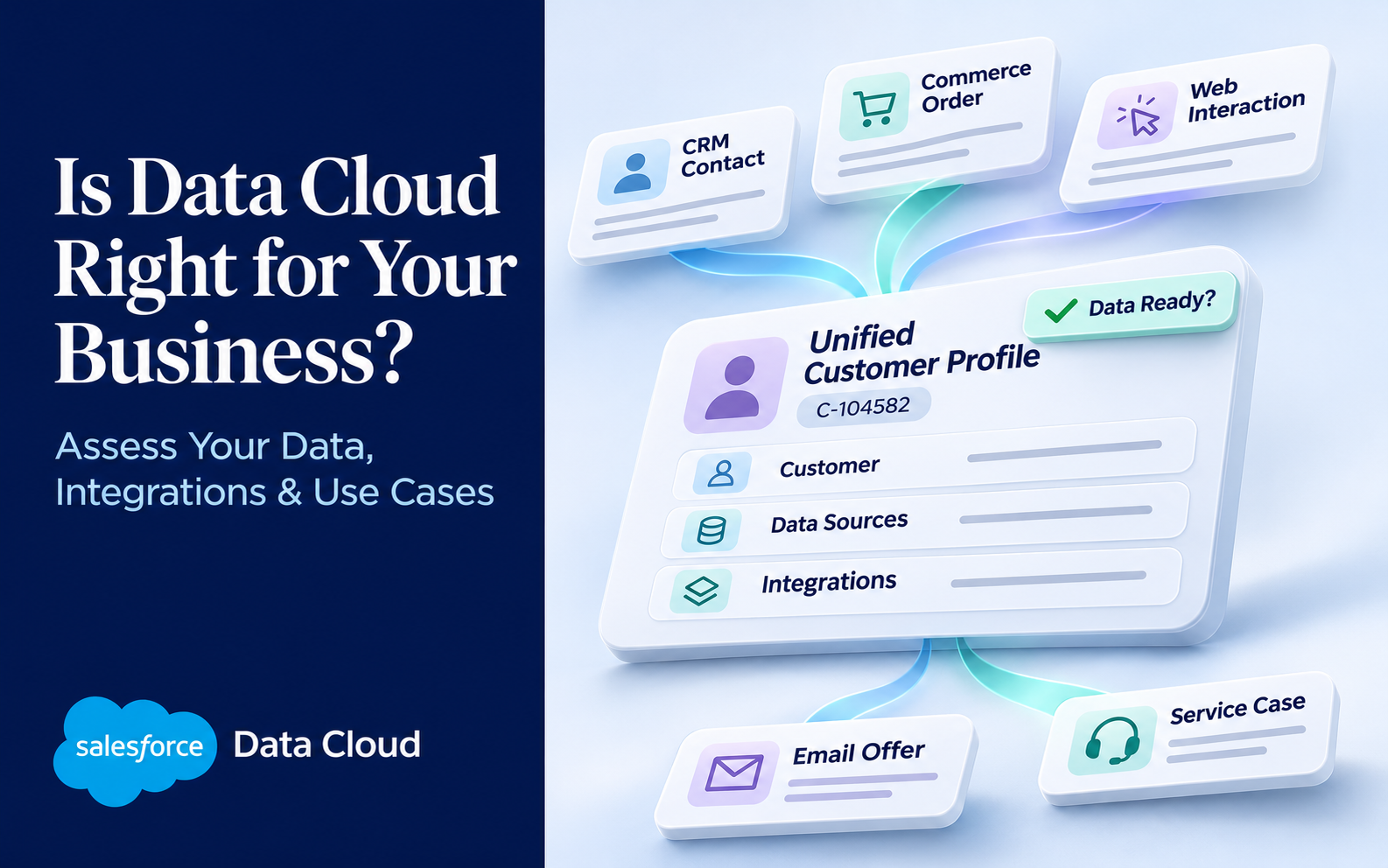
Is Data Cloud Right for Your Business? Architecture and Implementation Needs
CDP, Salesforce
5 November 2026
Does your organization still need Salesforce Data Cloud if it already has CRM, a data warehouse, and marketing tools? The answer depends on whether you can reliably link data and put it to work when needed. LeadsTech can help clarify requirements and assess Data Cloud fit, comparing improvements to your existing architecture with adding a platform. This guide examines use cases, architecture, integrations, and team capabilities to help you assess implementation readiness and choose what to validate first, beyond a comparison of feature lists.
Summary
Start by asking whether your organization needs to connect customer data from multiple sources for marketing, sales, service, or other operational uses. Salesforce now calls the product Data 360; this article retains the Data Cloud name used in its original title. Data quality, identity evidence, receiving systems, and maintenance capabilities matter as much as platform features. Depending on your readiness, the right next step may be implementation, a limited pilot, or foundational data improvements.
1. Identify the Business Problem You Need to Solve
Is Fragmented Information Disrupting Work?
If serving a customer requires searching several systems manually, or marketing lists must repeatedly be exported and compared, investigate the underlying problem. Document the tasks affected, the data they require, and the impact of the current manual process.
Define the problem in terms of a specific user and action. A service agent checking recent orders before replying to a customer and a manager reviewing annual transaction trends may use similar data, but they have different requirements for timeliness, presentation, and maintenance.
If the issue is simply a missing field or report configuration in one system, improving the existing tool may be more direct. A new data platform should address a clear need across sources or applications. A large volume of data alone does not justify a full implementation.
Evaluate Analytics and Operational Needs Separately
Analytics typically explains past performance and trends; operational use puts data into a specific workflow. Explain who will act on an insight, what they will do, and why the existing process cannot support that action.
For example, reports may already identify high-potential customers, while sales representatives cannot access the relevant information in their workspace. The gap may be in activation and workflow integration. Evaluate that part of the process rather than rebuilding the same historical reports.
Also establish who owns the response to the data. If no one will use the results to adjust service, content, or follow-up, even well-organized profiles may have little reason to remain in active use.
2. Map Your Existing Architecture and Platform Roles
Understand CRM, Data Warehouses, and Customer Data Applications
CRM typically supports customer relationships and business processes, while a data warehouse often handles centralized analysis and historical data. Your architecture may differ, so start with existing responsibilities and identify the gap a new platform would fill.
Data Cloud can support data integration, identity resolution, and activation. Do not assume during evaluation that it will automatically replace every transactional, master data, or analytics system. Systems of record and their maintenance responsibilities must remain clear.
Map sources, processing, and destinations to expose duplicated work. If data is already cleansed in your warehouse, assess whether that work can be reused instead of rebuilding the entire transformation process without analysis.
Compare Ingestion, Data Federation, and Hybrid Approaches
Salesforce offers different integration approaches. Evaluate source support, update requirements, query frequency, and processing behavior. Whether data is copied is not enough on its own to determine whether ingestion or Zero Copy data federation is preferable.
If you already use an external data platform, assess a combination of direct queries, caching, and ingestion where needed. These approaches affect source workloads, data freshness, and operational management differently. Test them against representative use cases.
Zero Copy does not remove the need for modeling, identity rules, or governance. Even when less data needs to move, fields, relationships, access, and usage purposes still need clear definitions to support reliable applications.
3. Check Whether Your Data Is Ready for Use
Quality and Identifiers Matter More Than Volume
Check whether the fields required for your priority use case exist, are updated consistently, and can be traced to their sources. More data does not necessarily mean usable data. Persistent gaps in important identifiers can limit unified customer profiles.
Identity evidence must reflect business meaning. Shared phone numbers, departmental email addresses, and similar names can make different customers appear to be the same person. Conversely, one person may use different contact details across sources. Prepare samples to assess both situations.
B2B organizations must distinguish accounts, contacts, and company relationships. If the goal is to understand interactions among several people at one company, merging them into one individual profile will not produce accurate relationships in reports.
Confirm Data Ownership and Permitted Uses
Each important source needs an owner who can explain its fields and approve changes. If a source team cannot supply definitions, samples, or an update plan, document those gaps in the implementation plan rather than hiding uncertainty within integration work.
Preferences, consent, and usage restrictions require accessible data and explicit rules. The platform can support the relevant configuration, but your organization must define data purposes, access roles, and maintenance processes, then validate their behavior in actual workflows.
Include deletion, deactivation, and correction requirements in the assessment. Focusing only on how new data enters the platform, without knowing how older data stops being used, adds complexity to integration and ongoing operations.
4. Verify Support for the Complete Integration Requirement
Include Both Sources and Destinations
When evaluating a connector, look beyond the supported product name. Check the actual objects, fields, update modes, and permission requirements. A connection to a source does not establish support for every record and behavior your organization needs.
For destinations, confirm data formats, identity fields, and receiving capabilities. If marketing or service tools still require manual preparation after receiving data, decide whether that is an acceptable first-phase arrangement or an obstacle to the expected value.
When integrations depend on outside vendors or other departments, identify contacts, test environments, and change schedules early. These dependencies often affect delivery order. Do not plan the entire project solely around the time needed to configure the platform.
Set Freshness Requirements by Use Case
Daily lists, service queries, and personalization during an interaction have different timing requirements. Define acceptable data age and response behavior before selecting capabilities. Avoid labeling every requirement simply “real time.”
Overall timeliness depends on sources, processing, identity resolution, and destinations. If a critical source updates only overnight, increasing downstream processing frequency cannot produce earlier data. Review the original constraint with the teams involved.
Establish how the application should respond when a source is unavailable or data has not arrived. Whether to use older data, display a status, or pause an action depends on the use case, and business owners must accept the corresponding limitations.
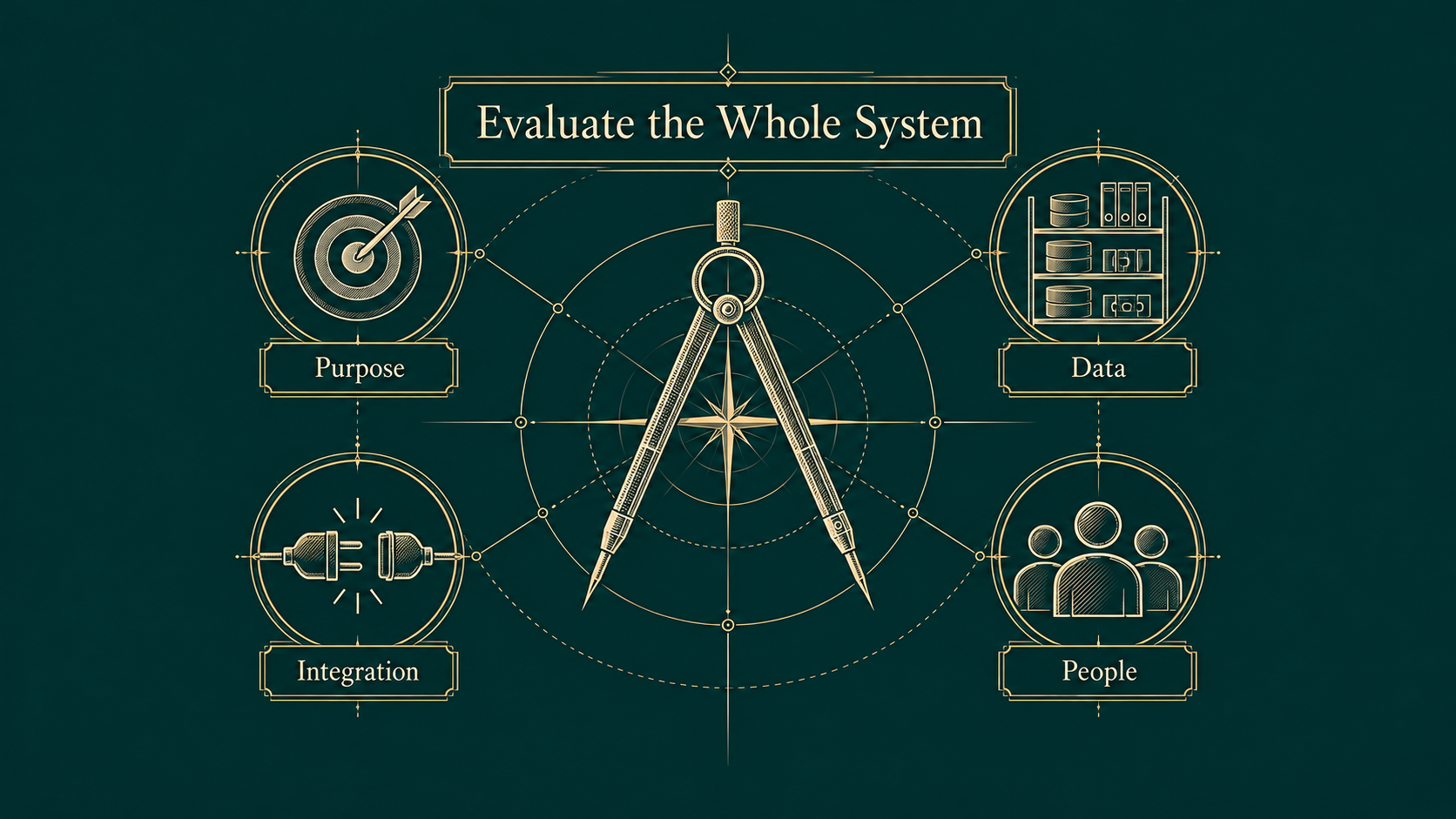
Figure 1: Assess platform fit by considering business purpose, data, integrations, and people together.
5. Assess Team Capabilities and Maintenance Resources
Implementation requires participation from business, data, systems, and receiving-system owners. You do not need every specialist in place at the start, but you do need to know who will approve rules, supply samples, accept deliverables, and resolve issues after launch.
If you use external consultants, retain internal decision-making and data ownership. Consultants can help with architecture, implementation, and validation, but your organization still needs to understand which data is authoritative and which actions serve its business goals.
Maintenance includes source changes, identity rules, activation results, and troubleshooting. Allocate people and time for this recurring work during evaluation, rather than planning only for the initial launch.
Make training task-based: investigating missing data, explaining why a customer qualifies, or pausing a problematic activation. These tasks reveal whether a team can take ownership more effectively than a tour of the menus.
If several departments share the platform, define who can add sources, change shared fields, and coordinate requests. Without shared management practices, duplicate models and conflicting definitions can emerge.
6. Choose a First Use Case Worth Pursuing
Compare Value, Readiness, and Effort Together
A priority use case needs a clearly identified user and expected improvement, available data, and a destination team that can participate. A promising idea without the required identifiers or samples usually needs foundational work first.
Estimate effort across data cleansing, source-team participation, integration, testing, content, and training. Look beyond screen configuration or connector counts to identify work that depends on unconfirmed rules and people.
Present known conditions alongside unresolved questions for each use case so decision-makers can see the reasons for prioritization. The aim is an evidence-based sequence, not apparently precise scores that obscure uncertainty.
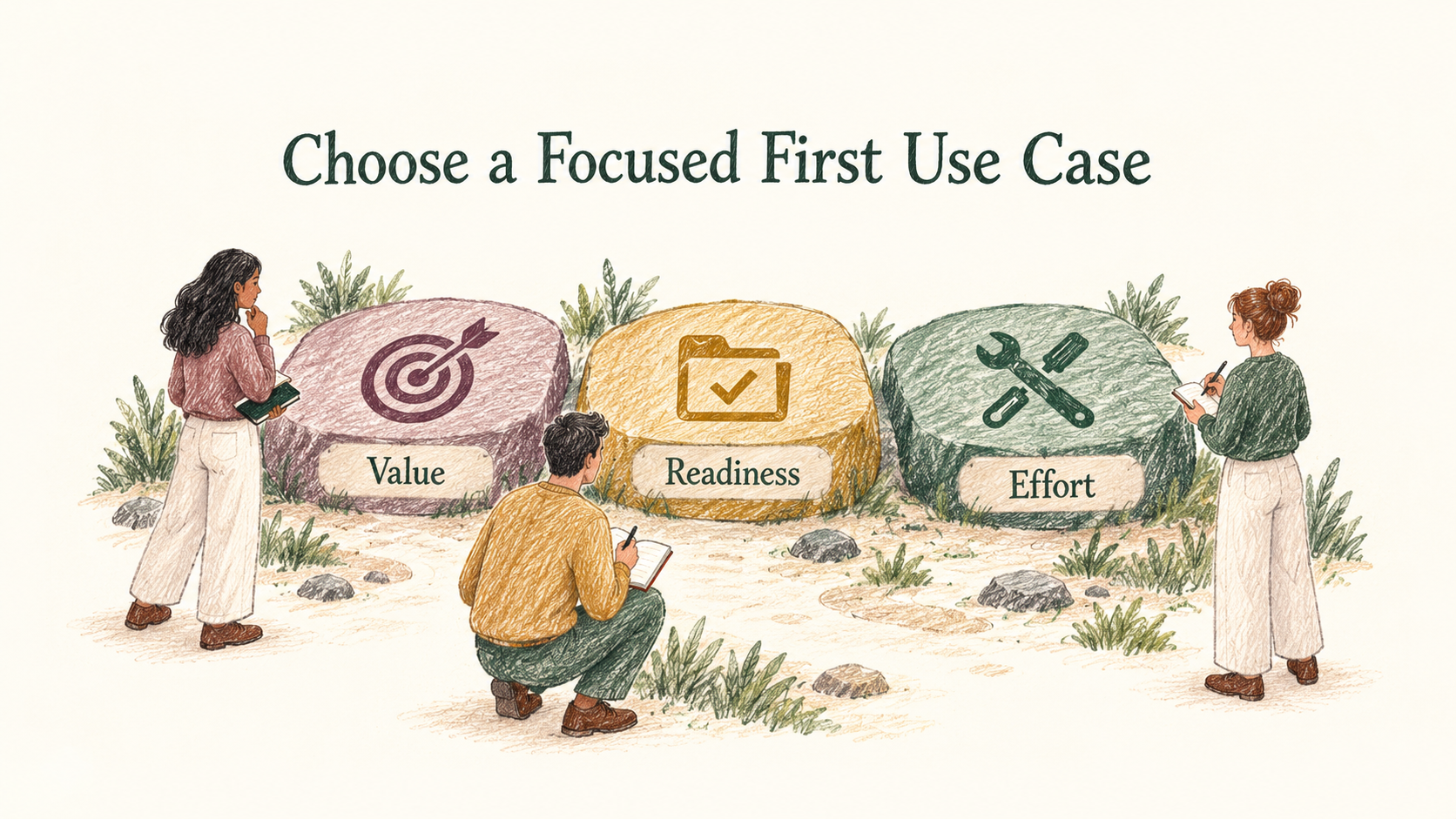
Figure 2: Use value, readiness, and effort to choose a clearly scoped first use case.
Use a Hypothetical Scenario to Test the Value
Suppose a B2B organization wants sales representatives to see recent service issues before following up with customers. A small set of essential sources and representative accounts could be used to validate identity, case summaries, and the workspace experience. This is a hypothetical assessment scenario, not a result achieved for an existing client.
First confirm that users can find the correct customer, understand the issue status, and choose an appropriate follow-up action. A summary without its source or update time may look complete while still failing to support a reliable decision.
Use the findings to decide what happens next. Expand when the data and workflow are feasible; improve a source when its quality is the main obstacle; revisit the integration or business action when the receiving system cannot use the data.
Define Exit Criteria for a Limited Pilot
A pilot needs a specific question, samples, a time limit, and a decision-maker. It might establish whether a particular source can map to existing identities or whether a destination can use data within an acceptable time. It should not become an open-ended demonstration of every feature.
After testing, document what passed, the limitations, required improvements, and further investment. A clear explanation of why you should not expand yet is also a valuable assessment outcome.
7. Estimate and Compare the Investment Before Implementation
The platform plan, data scope, processing approach, and usage can all affect investment. Base estimates on your current contract and actual design. Another company’s scale or historical pricing should not be applied directly to your requirements.
Compare options against the same business use case, data scope, and acceptance criteria. If one proposal includes source cleansing and handover while another covers only platform configuration, total prices alone do not reveal the full cost.
Include ongoing operational work such as rule changes, data monitoring, issue support, and evaluation of new requests. These arrangements determine whether the platform remains useful over time, not just whether the first delivery is completed.
Compare improvements to existing tools as well. If a straightforward interface or process change meets today’s need, make that improvement first while preserving a path toward future applications across sources.
When source or identity quality is the main uncertainty, a limited pilot is often more useful than committing immediately to a full scope. The assessment should explain what the next investment will resolve and how the result will be judged.
8. Three Readiness Levels and What to Do Next
If the use case is clear, essential data is available, integrations are feasible, and owners are ready to take over, you can plan a phased implementation. Keep the first phase focused while retaining a complete, testable path from source to destination.
If the direction is clear but identity, source, or timing requirements remain uncertain, start with a limited pilot. Turn the most important uncertainties into test questions to avoid investing in unnecessary implementation work.
If users, data ownership, or essential sources are missing, strengthen the foundation first. This may mean documenting field definitions, improving identifiers, establishing preference processes, or confirming how the receiving system will be used.
- Who will use the data, and what action will they take?
- Are the essential sources, identifiers, and update methods clear?
- What can the existing architecture already accomplish?
- Are sources and destinations ready for integration?
- Who owns rules, acceptance testing, and ongoing maintenance?
- What evidence and limitations will define the first use case?
9. Frequently Asked Questions
Do we need Data Cloud if we already have a data warehouse?
That depends on the gap. If your existing architecture already links identities and supports the required applications, another platform may be unnecessary. If data is difficult to use in business workflows, evaluate integration options for that specific need.
Can we start before all our data is complete and clean?
You can begin with a limited assessment or pilot using essential sources, provided you disclose quality limitations and assign responsibility for improvements. The platform will not automatically supply missing business definitions or reliable identifiers.
How do we avoid implementing a platform that no one uses?
Start with specific users and work actions, involve the team that will take over in acceptance testing, and assign maintenance and improvement responsibilities. Assessing whether people can complete their work is more useful than checking whether features are enabled.
10. Conclusion
Whether Data Cloud fits your organization depends on the alignment between your use cases and implementation readiness. Understand your architecture, data quality, and integration capabilities first, then validate a limited use case to make the investment decision more concrete.
LeadsTech can discuss your Salesforce Data Cloud architecture and application requirements, helping you assess the current environment, identify gaps, and prioritize what to validate.

To assess implementation feasibility, bring an overview of your existing systems, main data sources, and the work you want to improve so we can discuss the next steps.

11. Further Reading
-
CRM vs. CDP: Choosing a Customer Data Platform for Your Business
Understand how CRM and CDP roles differ based on data use and operational needs.
-
A CDP Implementation Guide for Taiwan: Integrating Customer Data
Explore further considerations for data integration, governance, and implementation planning.
Related Articles
Enterprise AI MarTech Trends Analysis 2024-2029 Outlook Report
From AI content productivity tools to a core engine for revenue growth and marketing transformation
*The PDF will be sent directly to your inbox.