

Is Marketing Cloud Right for Your Business? Features, Data and Integration
Marketing Automation, Salesforce
29 October 2026
When businesses want to turn scattered customer data into ongoing marketing engagement, platform selection must consider more than feature counts. Whether Salesforce Marketing Cloud is suitable depends on actual use cases, data architecture and team capabilities. This article outlines an evaluation approach to clarify requirements and integration conditions before setting a reasonable investment scope.
Summary
Start a Marketing Cloud evaluation by identifying the marketing problems to solve, then check product, data and operational requirements. Automation tools and integration dependencies differ across product lines, so one feature checklist cannot represent every solution. Compare options using concrete scenarios, representative data and measurable acceptance criteria. Estimate content, integration and ongoing maintenance effort to avoid discovering missing prerequisites after purchase.
1. When Is Marketing Cloud Worth Evaluating?
More comprehensive marketing automation is worth evaluating when a business needs to tailor communication to customer status, integrate multiple data sources or maintain multistage journeys. Customer onboarding, event follow-up and existing customer nurturing may all require coordinated data and content.
Requirements should go beyond “improve personalization” or “increase conversions.” Describe the current process: how teams prepare lists, how frequently they update them, where delays occur and which disconnected messages customers may receive. These details provide a basis for comparing platforms.
If the main task is an occasional newsletter to a single list, with no clear segmentation or integration needs, compare simpler options first. A large gap between platform capabilities and actual usage can increase training and management effort without delivering corresponding value.
If data sources, communication eligibility and content ownership remain unclear, address those prerequisites first. Delaying a large implementation does not mean stopping improvements. Start with one priority use case, establish data quality and operating practices, then assess expansion.
2. Understand Marketing Cloud’s Product Scope First
Salesforce’s official materials distinguish Marketing Cloud Next, Account Engagement and Engagement. Their automation tools, data objects and content tools differ, so quotes, demonstrations and comparisons should name the actual product being evaluated.
For example, official comparisons list Flow Builder, Engagement Studio and Journey Builder as different automation tools. If your team wants Journey Builder and Data Extensions, confirm which Engagement offering is under evaluation and whether it includes the required capabilities.
CRM dependencies also differ between products. Do not extend one product’s prerequisites into a rule for the entire Marketing Cloud family. When adopting multiple products, include data exchange and ownership in the architecture diagram, then verify the contract scope.
Demonstrations should distinguish standard capabilities, additional licenses, third-party services and custom work. Obtain written scope and prerequisites for any capability affecting the initial goals, rather than assuming everything in the demonstration environment fits the budget.
3. Evaluate Features Through Complete Use Cases
From Audience to Next Action
Choose two or three representative scenarios and ask for a demonstration of the complete path from data entry and audience creation to message preparation and recording subsequent outcomes. This reveals implementation effort more clearly than checking features individually.
Include normal and exception conditions in every scenario. How will the platform and team handle missing data, preference updates, duplicate events or a sales handoff? A demonstration showing only the smoothest path provides little evidence of suitability for daily operations.
Are Content and Channels Actually Ready?
Check the languages, channels, personalization and approval processes your business needs. Every additional language or branch usually creates more content production and testing work. Evaluate whether the team can sustain that content supply when making the purchase decision.
Also verify sending configuration, domain arrangements, channel requirements and third-party dependencies. A product feature does not mean activation prerequisites are complete. Specify which tasks belong to the vendor and which require the internal IT team.
Can Results Be Measured Reasonably?
Decide which actions and data sources to observe, such as inquiry submissions, event participation or sales follow-up. Engagement metrics support analysis but do not independently represent final business outcomes. Vendor examples should not be used to directly project your own benefits.
Ask the demonstration to show how results connect to audiences and journey versions, and identify data gaps. If current systems do not record key actions, creating a tracking method belongs in the project scope. The platform should not be expected to fill every information gap automatically.
4. Map Data Sources, Identity and Purpose
List membership, CRM, transaction, website activity and other sources, specifying owners, update schedules and intended uses for each data category. Not all historical data needs to enter the marketing platform. Prioritize data directly relevant to initial use cases.
Contact identification is especially important. The same person may have different identifiers across sources, and email addresses can change. Decide how to match records, handle duplicates and designate the authoritative source for key fields.
In Engagement scenarios, review Contact Key, Subscriber Key and the sending relationships of data tables together. Beyond counting imported rows, understand how many contacts those records represent and whether consistent relationships can be maintained.
Distinguish events from customer attributes. Event registrations, orders and browsing activity can occur repeatedly. Compressing them into one record per person can lose historical relationships. Confirm data granularity before evaluating segmentation and journey requirements.
Preference and suppression information also need defined sources, updates and usage rules. Data being present in the platform does not make it usable in every channel. Confirm how rules are implemented in workflows, and test actual outcomes after updates in representative scenarios.

Figure 1: Clarify data sources, customer identification and data use before evaluating a platform.
5. Evaluate More Than Whether Systems Can Connect
Check Update Timing and Failure Handling
“API integration is available” is only a starting point. Businesses also need to understand data direction, available fields, update frequency, interface limits and maintenance responsibilities. For an existing connector, confirm that it covers the actual objects and business requirements.
Derive update requirements from use cases. Daily event-list preparation and immediate responses to customer actions tolerate different delays. Do not set every source to the highest frequency. First establish whether faster updates actually change the next action.
Failed, delayed or partial data transfers need observable status and recovery procedures. Evaluate retries, resubmissions and reconciliation. In particular, confirm that resubmitting events does not unintentionally cause duplicate communication.
Confirm Return Data and Ownership
Integration does not necessarily end when a list enters the platform. Preference changes, campaign outcomes and sales handoff status may need to return to other systems. Specify which information is returned, when it is returned and which value takes precedence in a conflict.
If multiple systems can edit the same field, prevent them from overwriting each other. List authoritative sources and update rules in the architecture evaluation, then validate them with concrete samples. Changing connectors alone usually cannot solve these issues.
Plan test and production environments as well. Keep test data, account permissions and external channels separate, and explain how approved settings move between environments. Unrecorded differences are often discovered only at activation.
6. Can Your Team and Budget Support Long-Term Operations?
Platform fees are only part of the investment. Estimate data preparation, integration, content production, testing, training and ongoing maintenance. Include new channels and third-party services in comparisons according to the actual solution.
Usage evaluation must follow the formal definitions in the product and contract. For Engagement, contact counts should not be limited to people who have received messages. Records entering certain processing workflows may also affect the counting scope. Verify your business scenario with the vendor.
Separate initial implementation and daily operations in the budget, then identify the incremental investment needed for expansion. This clarifies initial affordability and prevents future requirements from being bundled into one scope without focus.
Assign responsibility for marketing rules, data quality, content and platform management. Internal teams and external partners may share these duties, but none should remain unassigned. Confirm who can assess exceptions, approve changes and arrange improvements during platform selection.
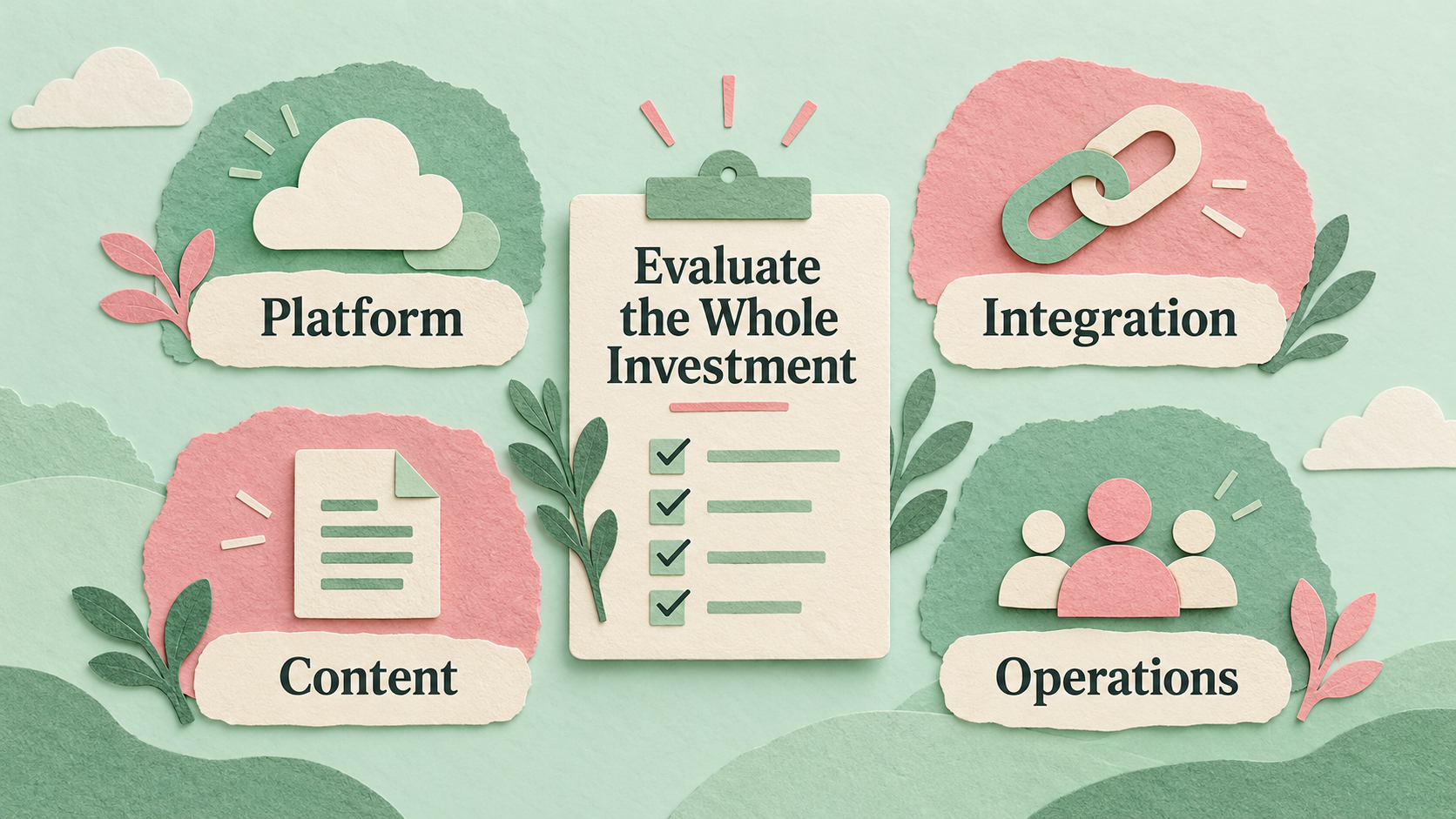
Figure 2: Total investment includes the platform, integration, content and daily operations.
Create Shared Evaluation Criteria
Before comparing solutions, have marketing, IT and data owners jointly decide which conditions are mandatory and which are optional advantages. Without shared criteria, departments may favor different features without establishing which solution best meets the initial goals.
Attach evidence to each assessment, such as an actual demonstration, documentation, test results or explicit delivery scope. Mark unverified commitments and set confirmation deadlines. This distinguishes proven capabilities from expectations about future availability.
Compare the difficulty of everyday changes as well. Ask future operators to update content, interpret audience conditions and investigate errors, recording the permissions and support they need. A demonstrator’s fluency does not mean your team can maintain the solution at the same speed.
Use reasonable growth scenarios, such as entering another market, adding languages or integrating another source. The aim is not to predict exact numbers but to understand which changes require redesign, additional licensing or more staff, giving future budgets a sound basis.
7. Use Focused Validation to Support Purchasing Decisions
Define a representative validation scope using approved test data and content to check the complete process. The purpose is to confirm key assumptions, rather than demonstrate as many features as possible. Large numbers of real customers should not be used directly as test subjects.
Set passing criteria before starting, including correct identification, explainable segmentation, exception handling, maintainable content and traceable results. Record any manual remediation, its workload and acceptable limits so decision-makers understand the practical cost.
For example, a hypothetical B2B business operating across regions might validate an event follow-up process integrating event data and CRM. Key cases include one person attending multiple events, different language content and communication after a sales handoff. This is an illustrative evaluation scenario, not a client case study.
If validation shows that source records cannot be matched reliably, improve identification and authoritative sources before adding branches. If the data is usable but content production cannot keep up, adjust the initial scope or operational resources.
- List essential initial use cases and deferred items.
- Verify the actual product, features, dependencies and licensing scope.
- Use representative data to validate identification, segmentation and exceptions.
- Assign ownership for integration, content and maintenance work.
- Estimate implementation, daily operating and expansion effort.
- Base the final decision on test evidence and unresolved issues.
Use Validation Results to Guide Adjustments
At the end of validation, classify outcomes as achieved, achievable within a defined scope, or still lacking prerequisites. Explain how each gap affects the initial goals, instead of mixing many minor issues and one critical obstacle into the same task list.
If essential data is unavailable, smooth content-tool operation does not establish that the overall scenario works. Conversely, if key processes work but some visual refinements remain, prioritize those tasks rather than treating visual completeness as the only acceptance criterion.
Keep the reasons for selection, deferred features and important assumptions in the decision record. Future teams can then understand the original architecture and reassess changed conditions, rather than treating initial constraints as permanent rules.
Finally, confirm the handover from validation to implementation. Assign owners to identify reusable settings, test-only arrangements and data or content requiring renewed approval. Validation reduces uncertainty, but a formal launch plan and operational preparation are still necessary.
8. Frequently Asked Questions (FAQs)
Does Using Salesforce CRM Automatically Make Marketing Cloud a Good Fit?
No. Your existing CRM is one part of the evaluation. Marketing scenarios, product lines, data and operational capabilities still need review. Easier integration cannot replace a complete requirements assessment or establish that all prerequisites are ready.
Can Marketing Cloud Automatically Solve Data Quality Problems?
The platform is not a substitute for data governance. Inconsistent identifiers, unclear field definitions and uncertain preference sources require business rules and ownership first, followed by configuration and integration.
Must Every Journey Be Planned During Platform Selection?
Understand the overall direction first, then focus on initial scenarios that can be validated. Future expansion requirements inform architecture evaluation, but every journey does not need to be implemented at once. Proceed in phases based on data, content and team readiness.
9. Conclusion
Marketing Cloud’s suitability depends on use cases, data and operational capacity together. Clarify product scope, integration dependencies and total investment, then validate a focused scenario to bring the implementation plan closer to actual needs.
LeadsTech can help businesses discuss Salesforce marketing platform requirements, data integration and implementation options, clarifying a feasible initial scope and plans for later expansion.

If your business is comparing marketing platforms, organize your existing systems, priority use cases and main pain points, then evaluate the next step with the team.

10. Further Reading
-
Explore the fundamentals of marketing automation and its business applications.
-
How to Choose a Marketing Automation Platform
Assess requirements, data and operational conditions when selecting a platform.
Related Articles

Enterprise AI MarTech Trends Analysis 2024-2029 Outlook Report
From AI content productivity tools to a core engine for revenue growth and marketing transformation
*The PDF will be sent directly to your inbox.