
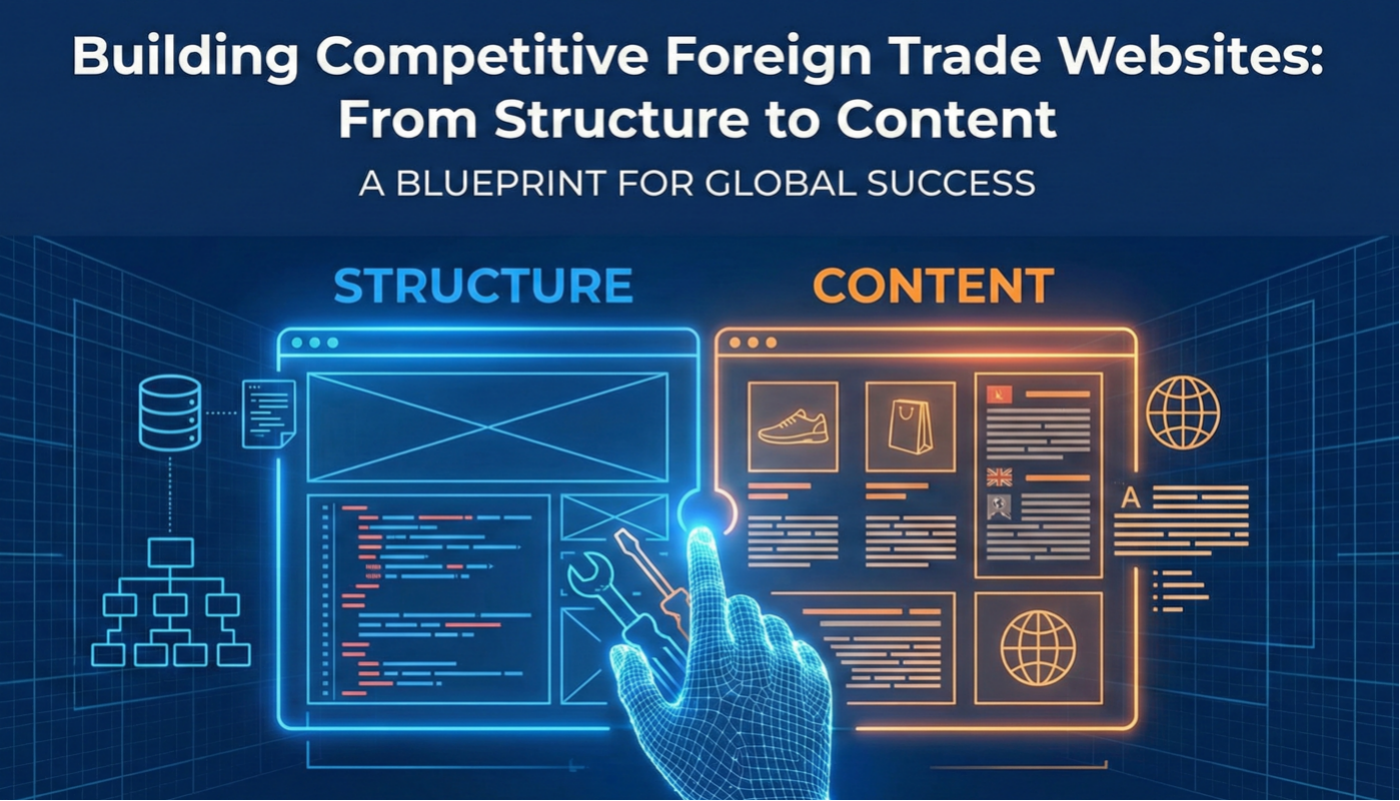
Essential Elements of Overseas Trade Website Development
AEM Sites, Content Management System (CMS), Magnolia CMS
12 April 2026
- 1. Why a “Functional” Foreign Trade Website Is Far From Enough
- 2. The Underlying Logic of Overseas Foreign Trade Website Development
- 3. Website Architecture: The Foundation That Determines Scalability and Long-Term Costs
- 4. CMS Selection: The Core System Supporting Long-Term Operations
- 5. Multilingual and Multi-Country Structural Design
- 6. Overseas SEO and Technical Fundamentals
- 7. Content Strategy: From Showcase Website to Growth Engine
- 8. User Experience and Trust Building
- 9. Conclusion: Foreign Trade Websites Are a Systematic Project
- 10. Further Reading and Reference Links
- 1. Why a “Functional” Foreign Trade Website Is Far From Enough
- 2. The Underlying Logic of Overseas Foreign Trade Website Development
- 3. Website Architecture: The Foundation That Determines Scalability and Long-Term Costs
- 4. CMS Selection: The Core System Supporting Long-Term Operations
- 5. Multilingual and Multi-Country Structural Design
- 6. Overseas SEO and Technical Fundamentals
- 7. Content Strategy: From Showcase Website to Growth Engine
- 8. User Experience and Trust Building
- 9. Conclusion: Foreign Trade Websites Are a Systematic Project
- 10. Further Reading and Reference Links
1. Why a “Functional” Foreign Trade Website Is Far From Enough
Many companies focus on the following when building overseas foreign trade websites:
- Whether the website is live
- Whether the pages look attractive
- Whether there is an English version
But when the website is actually launched in overseas markets, they often encounter real problems:
- Almost no traffic from search engines
- Short visit duration and few inquiries from overseas customers
- Difficulty maintaining multilingual content
- Challenges in quickly expanding to different country markets
This reveals a fact:
- A “functional” foreign trade website does not equal a “competitive” foreign trade website.
- A truly competitive overseas website is a comprehensive system designed over the long term, covering architecture, systems, and content strategy.
2. The Underlying Logic of Overseas Foreign Trade Website Development
Before diving into specific elements, it is essential to understand a core principle:
The goal of an overseas foreign trade website is not to showcase the company itself, but to solve problems for overseas customers.
This means:
- The website structure must align with the cognitive path of overseas users
- Content should be built around value, solutions, and trust
- The system must support continuous optimization and growth
Therefore, foreign trade website development is not a single-point optimization but a systematic project.
3. Website Architecture: The Foundation That Determines Scalability and Long-Term Costs
3.1 Is the Information Architecture Clear?
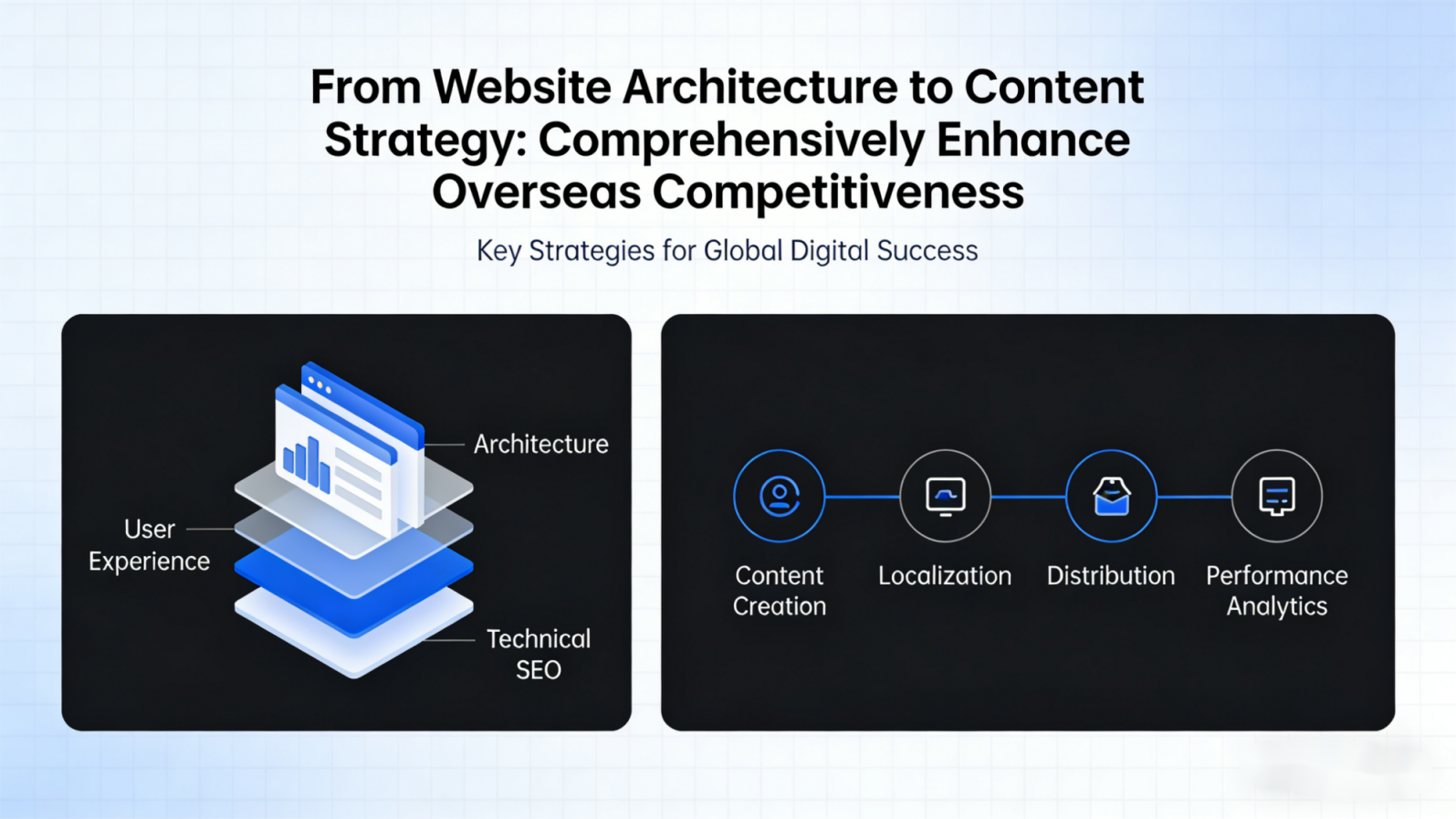
Overseas customers usually want to understand within a short time:
- Who you are
- What problems you can solve
- Why they should choose you
Therefore, the website architecture should have:
- Clear navigation hierarchy
- Explicit product/solution categories
- Reasonable page depth
Overly complex or illogical structures directly affect conversion rates and SEO.
3.2 Does It Support Future Expansion?
The foreign trade website architecture should consider from the start:
- Whether new countries and languages will be added
- Whether product lines will increase
- Whether multiple brands or sub-sites are needed
If the architecture only serves current needs, later adjustments often come with very high costs.
4. CMS Selection: The Core System Supporting Long-Term Operations
The CMS is the true “central system” of a foreign trade website.
4.1 What Does the CMS Determine?
A suitable CMS directly affects:
- Content publishing efficiency
- Multilingual management capability
- SEO controllability
- Team collaboration methods
4.2 Differences Among CMS Levels
When companies seriously plan for overseas markets, the CMS is often the first core system to upgrade:
- Lightweight CMS/Website Builders: Suitable for early validation
- Mid-level CMS: Suitable for starting multilingual operations
- Enterprise-level CMS (e.g., AEM, Magnolia): Suitable for large-scale, multi-country operations
5. Multilingual and Multi-Country Structure Design
5.1 Multilingual Does Not Equal Multiple Translations
True multilingual operations need to consider:
- Whether content corresponds one-to-one
- Whether localized differences are allowed
- Whether updates are traceable
5.2 Multi-Country Website Structure Choices
Common structures include:
- Independent sites for different countries
- Subdirectories or subdomains
- Hybrid architectures
6. Overseas SEO and Technical Fundamentals
A large part of overseas competitiveness comes from long-term stable organic traffic.
6.1 Basic International SEO Capabilities
Foreign trade websites should have:
- Controllable URL structure
- hreflang settings
- Structured data
- Reasonable internal linking system
6.2 Performance and Accessibility
Overseas users are extremely sensitive to loading speed and usability:
- Page load speed
- Global access stability
- Mobile experience
7. Content Strategy: From Showcase Website to Growth Engine
7.1 Content Is More Than Just Introducing the Company
High-quality foreign trade website content usually revolves around:
- Industry problems and pain points
- Solutions and methodologies
- Customer cases and trust endorsements
7.2 Content Structure and Long-Term Production Capability
Content strategy should consider:
- Whether it can be sustainably produced
- Whether it is easy to reuse in different markets
- Whether it supports SEO and subsequent optimization
8. User Experience and Trust Building
In overseas markets, trust often matters more than price.
Foreign trade websites should focus on strengthening:
- Clear company background and qualifications
- Customer cases and industry recognition
- Compliance statements, privacy policies, and contact information
These seemingly “basic” elements often directly influence whether overseas customers are willing to engage further.
9. Conclusion: Foreign Trade Website Is a Systematic Project
Building an overseas foreign trade website is never just about:
- Creating a few pages
- Translating some copy
It encompasses:
- Website architecture design
- CMS and system selection
- Multilingual and multi-country operations
- SEO and content strategy
- Long-term growth and evolution capabilities
Only by considering these elements within the same framework can a foreign trade website truly become a source of competitive advantage for a company going global.
Closing Remarks: From “Website Building” Mindset to “Platform” Mindset
If you find that:
- The website is increasingly difficult to maintain
- Multilingual content efficiency is low
- SEO and content growth are limited
Then the problem often lies not in execution but in the initial system design.
Feel free to Contact Us to discuss your overall foreign trade website planning with our consulting team.
Product Page: Learn About Enterprise-Level CMS and Global Official Website Solutions
10. Further Reading and Reference Links
Further Reading
- Overseas Foreign Trade Website Development Is More Than Just Building a Website: How to Support Multilingual and Multi-Country Operations Through Professional CMS
- How to Choose a Content Management System (CMS) for Foreign Trade Website Development? In-Depth Comparison of Mainstream Overseas Website Builders
- Build Your Own or Use an Overseas Foreign Trade Website Platform? Comprehensive Comparison to Help Companies Make Wise Global Expansion Decisions
Reference Links
Related Articles

Enterprise AI MarTech Trends Analysis 2024-2029 Outlook Report
From AI content productivity tools to a core engine for revenue growth and marketing transformation
*The PDF will be sent directly to your inbox.
Email Error
Please enter a valid email address.
Thank You!
The whitepaper has been sent to your inbox. If you don’t see it, please check your spam or promotions folder.