
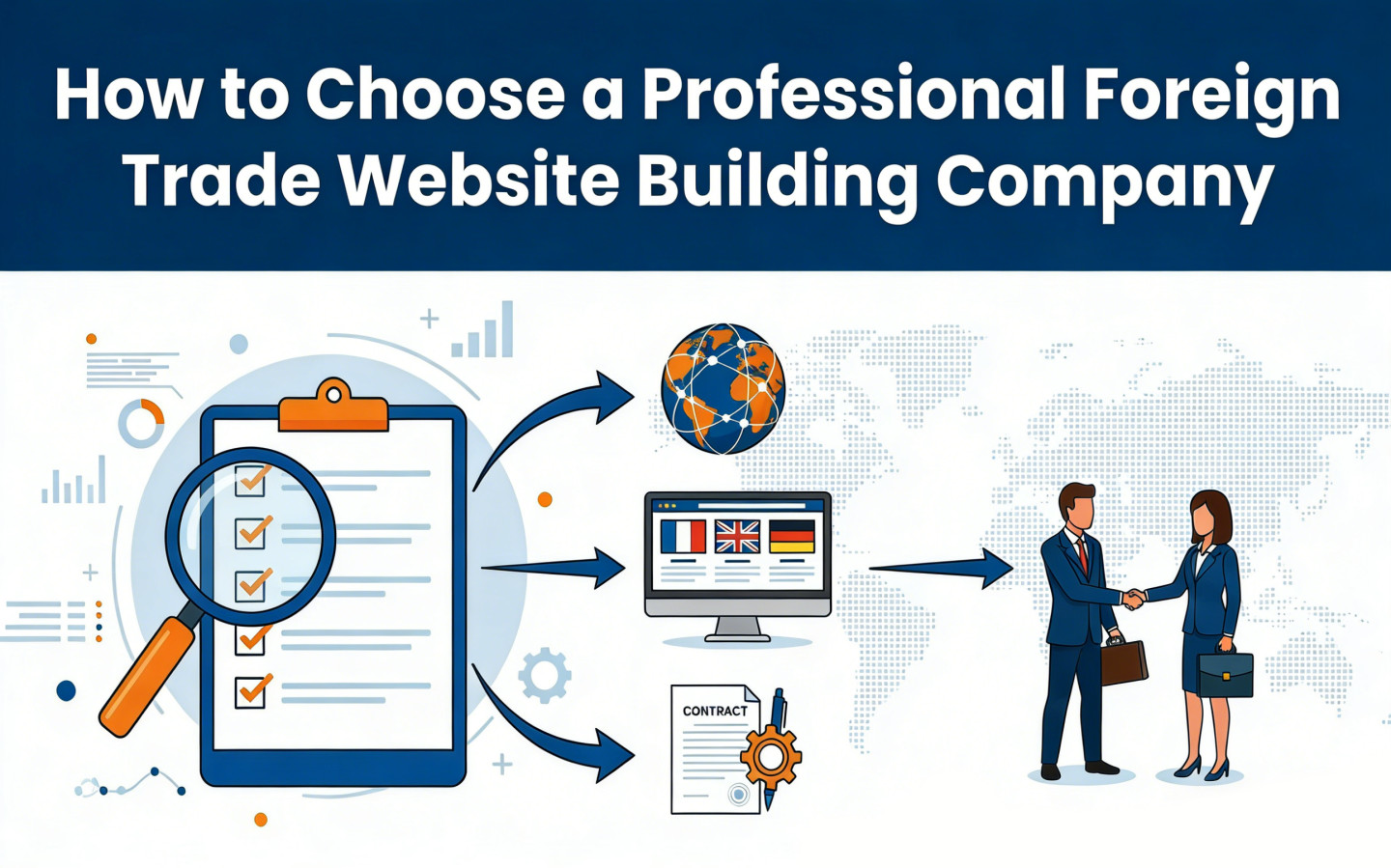
How to Choose a B2B Website Agency: 5 Key Criteria for Global Success
Content Management System (CMS)
10 April 2026
- Why a B2B Website Agency Directly Impacts Global Expansion Success
- Criterion 1: Do They Truly Understand Global Markets and B2B Trade?
- Criterion 2: Does the Technical Architecture Support Long-Term Scalability?
- Criterion 3: Do They Have Content, SEO, and Internationalization Capabilities?
- Criterion 4: Can They Support Enterprise-Level Collaboration and Governance?
- Criterion 5: Do They Offer Long-Term Support and Upgrade Capabilities?
- Three Common Mistakes When Choosing a B2B Website Agency
- Conclusion: Choosing the Right Agency Means Choosing a Long-Term Partner
- Further Reading and References
- Why a B2B Website Agency Directly Impacts Global Expansion Success
- Criterion 1: Do They Truly Understand Global Markets and B2B Trade?
- Criterion 2: Does the Technical Architecture Support Long-Term Scalability?
- Criterion 3: Do They Have Content, SEO, and Internationalization Capabilities?
- Criterion 4: Can They Support Enterprise-Level Collaboration and Governance?
- Criterion 5: Do They Offer Long-Term Support and Upgrade Capabilities?
- Three Common Mistakes When Choosing a B2B Website Agency
- Conclusion: Choosing the Right Agency Means Choosing a Long-Term Partner
- Further Reading and References
1. Why a B2B Website Agency Directly Impacts Global Expansion Success
For many companies, building a B2B website is often misunderstood as a one-time design or development project. However, in real global expansion scenarios, a corporate website typically plays the following roles:
- The primary entry point for a global brand
- A core channel for building trust with international customers
- A key source of B2B leads
- A foundational platform for content, SEO, and marketing campaigns
If the initial direction is wrong, companies often face:
- SEO-unfriendly site structure that limits traffic growth
- High costs for multi-language and multi-market expansion
- Low content publishing efficiency, relying on developers or outsourcing
- Full website rebuilds that lead to duplicated investment
Therefore, choosing a B2B website agency is essentially choosing a long-term digital infrastructure partner for global expansion.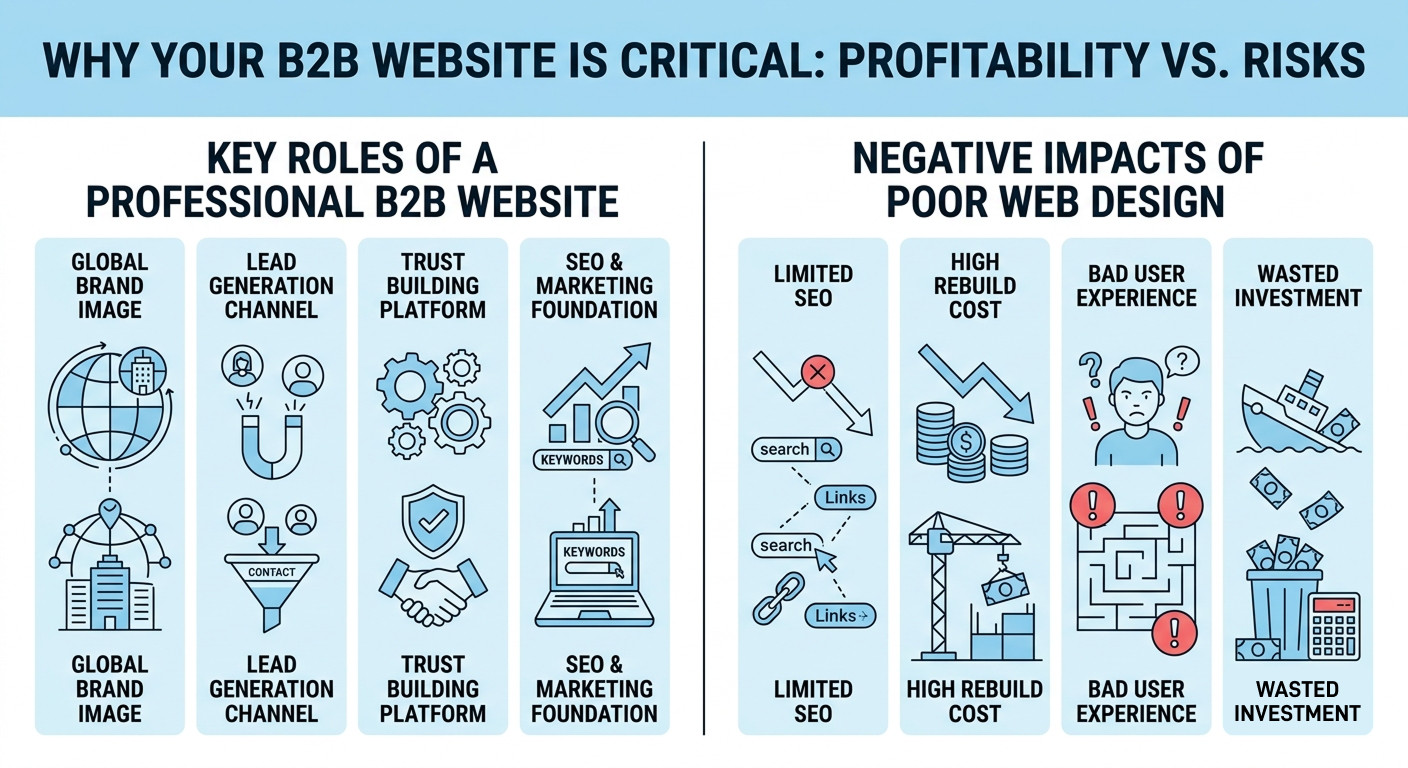
2. Criterion 1: Do They Truly Understand Global Markets and B2B Trade?
The most important—and often overlooked—question:
Do they truly understand what a “B2B website” and “global users” mean?
Many so-called “global website agencies” simply translate domestic website templates into English while ignoring key differences such as:
- User browsing and decision-making journeys in overseas markets
- Structural differences between B2B and B2C information architecture
- How brand trust is established in different countries
- Regulations, privacy, cookies, and compliance requirements
A professional agency should clearly answer:
- Which countries and markets your target customers come from
- Whether your website is brand-driven, lead-driven, or transaction-driven
- Whether different markets require differentiated content strategies
If they only talk about design without discussing business and market strategy, it is usually a red flag.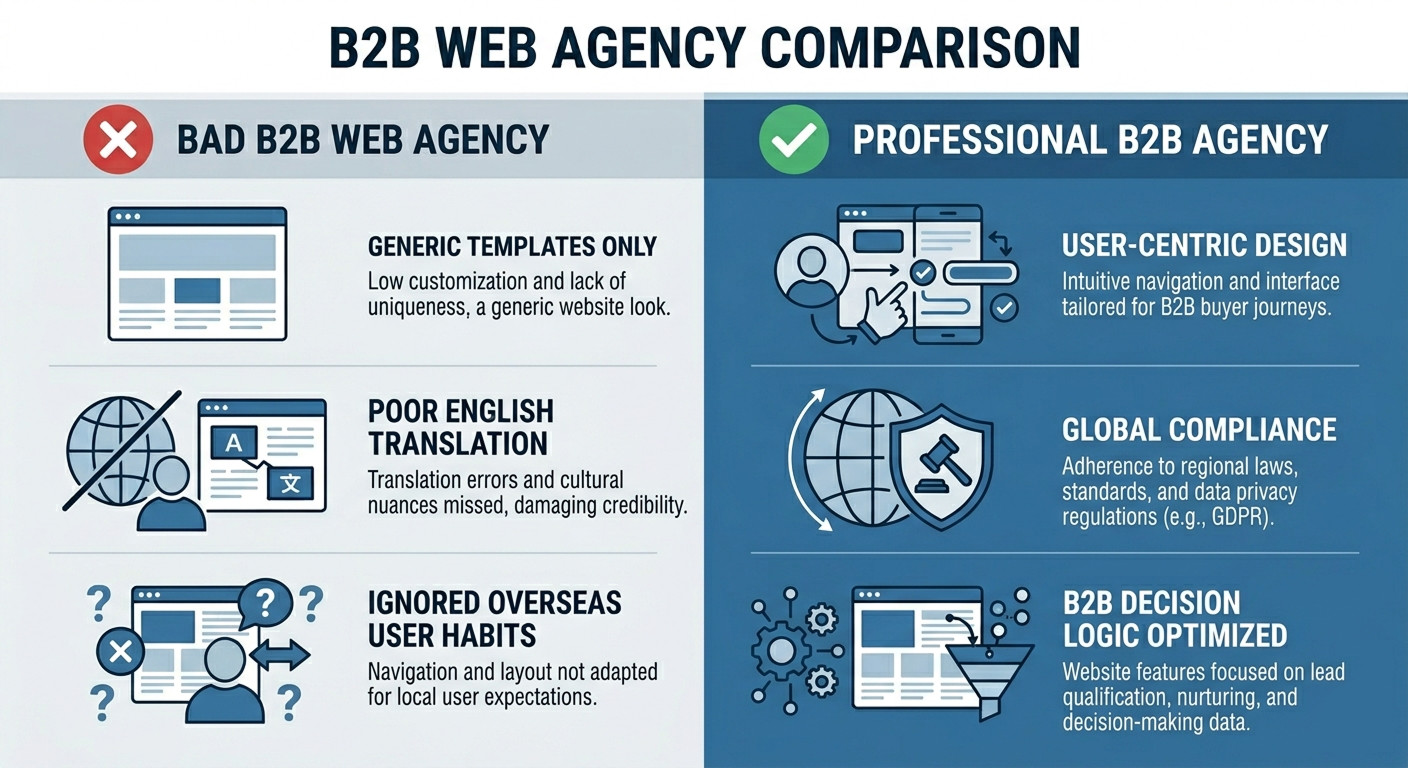
3. Criterion 2: Does the Technical Architecture Support Long-Term Scalability?
A B2B website is not a one-time deliverable—it is a continuously evolving platform.
Therefore, the agency’s long-term architectural vision is critical.
Key considerations include:
- Whether the CMS supports multi-site and multi-language expansion
- Support for headless or hybrid architectures
- Integration capabilities with CRM and marketing systems
- Support for future SEO, performance, and AI capabilities
For mid-to-large B2B enterprises, familiarity with enterprise CMS platforms (such as AEM and Magnolia) is often a key differentiator.
These platforms emphasize:
- Content structuring and governance capabilities
- Multi-market collaboration and permission management
- Long-term maintainability and security
If your company has a clear global expansion plan, your technical architecture should not only meet current needs but also support growth over the next 3–5 years.
4. Criterion 3: Do They Have Content, SEO, and Internationalization Capabilities?
Many B2B websites look great after launch but fail to generate leads. The issue is often not design, but content and SEO.
A professional agency should have the following capabilities or methodologies:

4.1 International SEO Fundamentals
- Proper URL and site structure
- Hreflang and multilingual SEO implementation
- Page performance and Core Web Vitals
- Structured data and metadata management

4.2 Content Structure and Information Architecture
B2B website content is not just copywriting—it should include:
- A clear value proposition
- Problem-oriented content for international customers
- Content pathways that support sales and conversion

4.3 Sustainable Content Production System
A strong agency helps companies build:
- Reusable content templates
- Clear content hierarchy
- A system that internal teams can maintain long-term
Instead of relying on outsourcing for every update.
5. Criterion 4: Can They Support Enterprise-Level Collaboration and Governance?
As global business scales, websites often involve:
- Headquarters and regional markets
- Internal teams and external agencies
- Cross-functional collaboration among content, marketing, and IT teams
If an agency only focuses on delivering a website without considering:
- Permissions and workflows
- Content approval processes
- Multi-team collaboration capabilities
Operational challenges will inevitably grow over time.
This is why many scaling companies move from WordPress to enterprise platforms like Magnolia or AEM.
6. Criterion 5: Do They Offer Long-Term Support and Upgrade Capabilities?
The real challenges of a B2B website often begin after launch.
You should evaluate whether the agency provides:
- Ongoing optimization and upgrade capabilities
- Continuous technical and content support
- Understanding of emerging trends (e.g., AI search, GEO)
Professional agencies do not treat projects as one-time deliveries. Instead, they:
- Continuously optimize conversion and content performance
- Help companies adjust strategies based on market changes
- Iterate across CMS, SEO, and user experience
7. Three Common Mistakes When Choosing a B2B Website Agency
Mistake 1: Focusing Only on Price or Templates
Low-cost template websites often mean:
- Limited control over content structure
- Weak SEO foundations
- High long-term expansion costs
Mistake 2: Prioritizing Design Over Architecture
Visual design is superficial—long-term performance depends on architecture and content governance.
Mistake 3: Ignoring Future Global Expansion Plans
If your business plans to enter multiple markets, scalability must be considered from the beginning.
8. Conclusion: Choosing the Right Agency Means Choosing a Long-Term Partner
Building a B2B website is not just a design or technical project—it is a critical part of a company’s global strategy.
A truly professional agency should offer:
- Deep understanding of global markets and B2B trade
- Scalable technology and CMS architecture
- Content and international SEO expertise
- Enterprise-level collaboration and governance mindset
- Long-term support and upgrade capabilities
Choosing the right partner can save years of costly mistakes.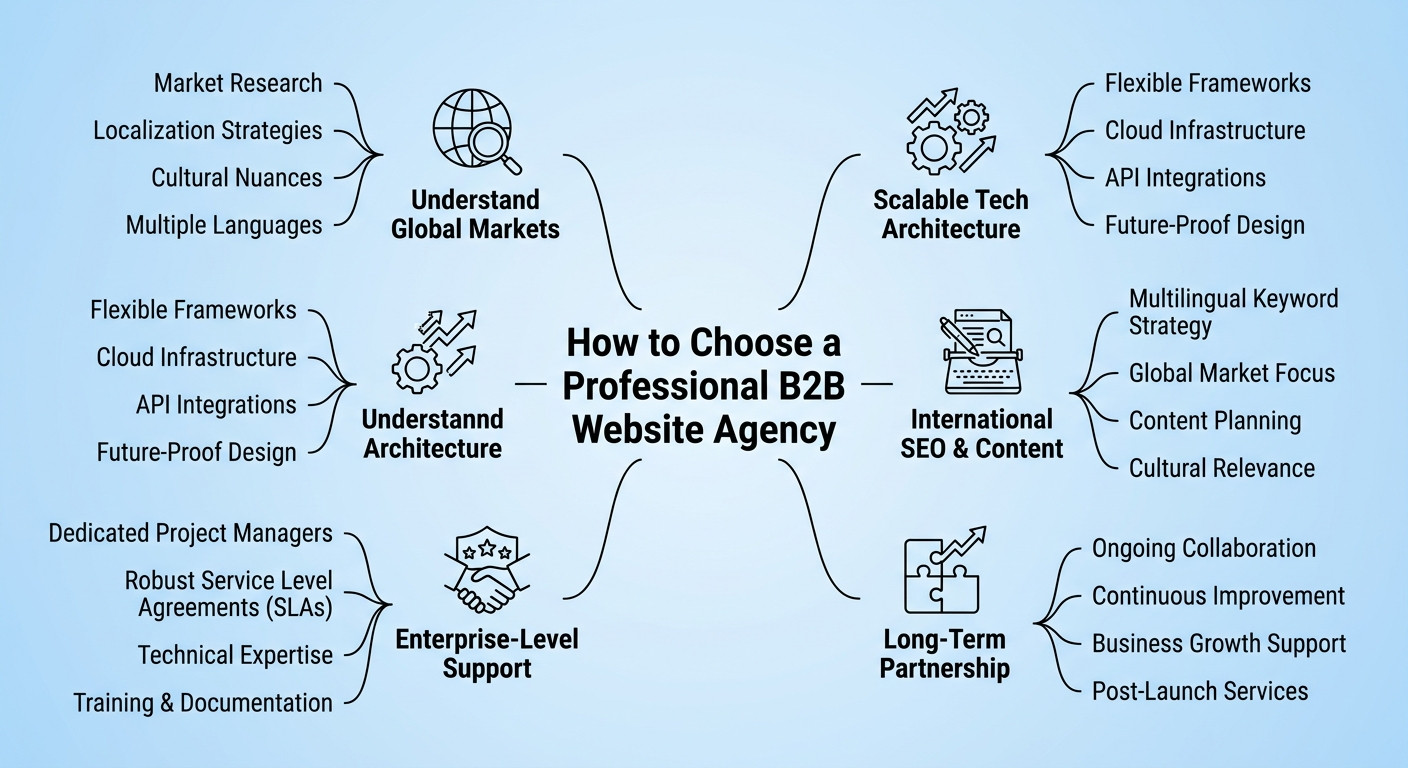
Next Steps: How to Get Started
If you are evaluating a new B2B website or planning an upgrade, start with these questions:
- Does your current website support future market expansion?
- Is your CMS limiting content and SEO growth?
- Does your agency truly understand your global strategy?
If you want to learn more about building a scalable global website or evaluating enterprise CMS platforms like AEM or Magnolia, feel free to contact us.
Contact Us: Talk to our consultants about your global website strategy
Services: Explore enterprise CMS and B2B website solutions
Further Reading and References
Further Reading
- How to Choose a CMS for Global B2B Websites: A Deep Comparison of Leading Platforms
- What Is AEM as a Cloud Service? A Key Step Toward Cloud-Based Content Platforms
- From SEO to GEO: How Enterprise Content Gets Understood and Referenced by AI
References
Related Articles
Enterprise AI MarTech Trends Analysis 2024-2029 Outlook Report
From AI content productivity tools to a core engine for revenue growth and marketing transformation
*The PDF will be sent directly to your inbox.
Email Error
Please enter a valid email address.
Thank You!
The whitepaper has been sent to your inbox. If you don’t see it, please check your spam or promotions folder.