

What Is Adobe Experience Platform (AEP)?
Adobe Experience Platform, CDP, Personalized Marketing
17 September 2025
1. What Is Adobe Experience Platform (AEP)?
Adobe Experience Platform (AEP) is Adobe’s enterprise customer-data foundation for collecting, standardizing, governing, and activating data in real time. It turns fragmented signals from web, mobile, CRM, commerce, and offline systems into reusable data for experience delivery.
For organisations planning a data foundation, the key decision is how AEP will connect to activation tools such as Adobe Real-Time CDP, analytics, and journey orchestration. Leads Technologies helps teams assess the architecture, governance model, and implementation roadmap before rollout.
Adobe Experience Platform (AEP) is the data foundation of Adobe Experience Cloud. It collects and connects customer data from different sources—online, offline, mobile, CRM—into a real-time, unified profile.
Unlike traditional databases or CRMs that work in silos and update slowly, AEP is designed for real-time marketing. It powers other Adobe tools like:
Quick Answer: What Is Adobe Experience Platform?
Adobe Experience Platform (AEP) is Adobe’s enterprise data foundation for collecting, standardizing, governing and making customer experience data available in real time. It uses Experience Data Model (XDM) to standardize data, stores governed data in a data lake and profile store, and supplies applications such as Adobe Real-Time CDP, Adobe Journey Optimizer and Customer Journey Analytics. AEP is the foundation; these applications use AEP services to solve activation, journey and analysis use cases.
Practical Enterprise Use Cases
- Unified customer profiles: Connect CRM, web, app, commerce and offline events with explicit identity and merge rules.
- Audience qualification and activation: Build governed audiences and send them to approved destinations with measurable latency.
- Cross-channel journey orchestration: Provide trusted events and attributes to journey decisions across email, mobile, web and other channels.
- Customer journey analysis: Standardize event data so teams can analyze behavior across channels instead of relying on isolated reports.
- Privacy and governance: Apply labels, policies, consent and access controls before data is used downstream.

Real-Time CDP
audience building and activation
Journey Optimizer
personalized customer journeys
Customer Journey Analytics
cross-channel insights
In short: AEP is not just storage. It’s a dynamic data platform that helps brands understand and engage customers instantly.
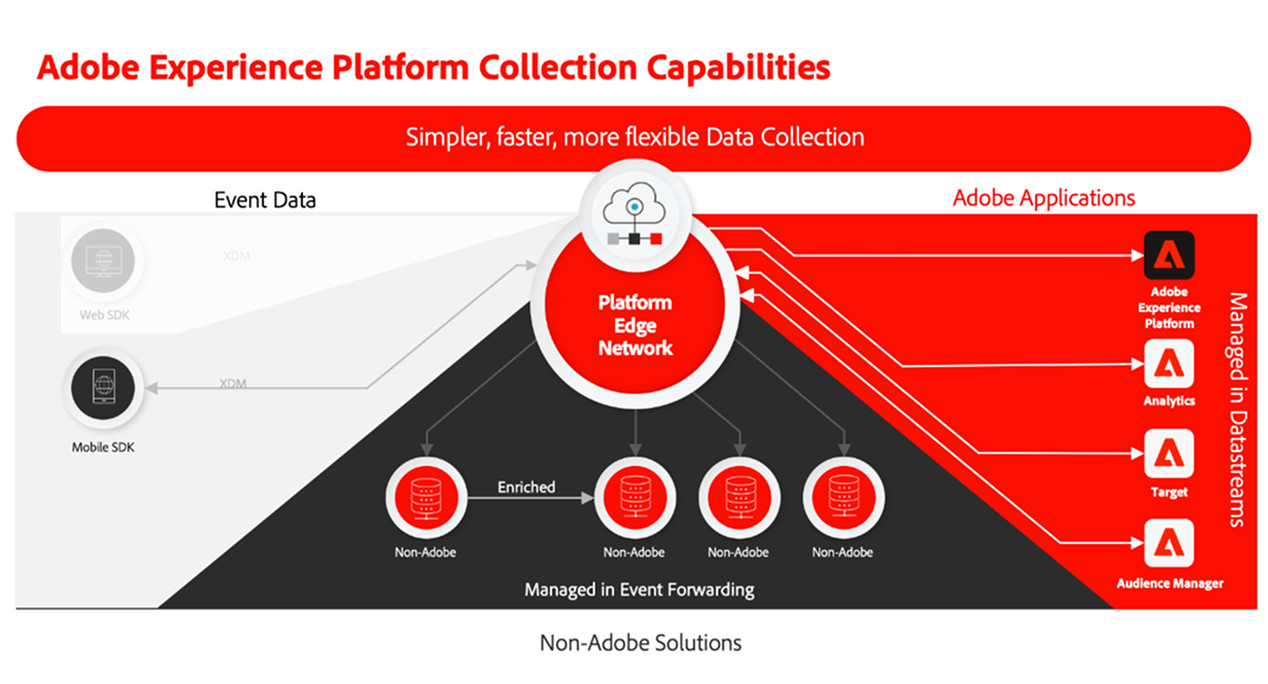
2. Core Components of AEP
- Experience Data Model (XDM): A standard format for all customer data, so different systems can “speak the same language.”
- Data Lake: Scalable storage that makes huge amounts of data usable, not just archived.
- Real-Time Customer Profile: A constantly updated “golden record” of each customer, combining all their interactions.
- Identity Service: Matches data like email, cookies, and loyalty IDs to the same person, enabling true omnichannel personalization.
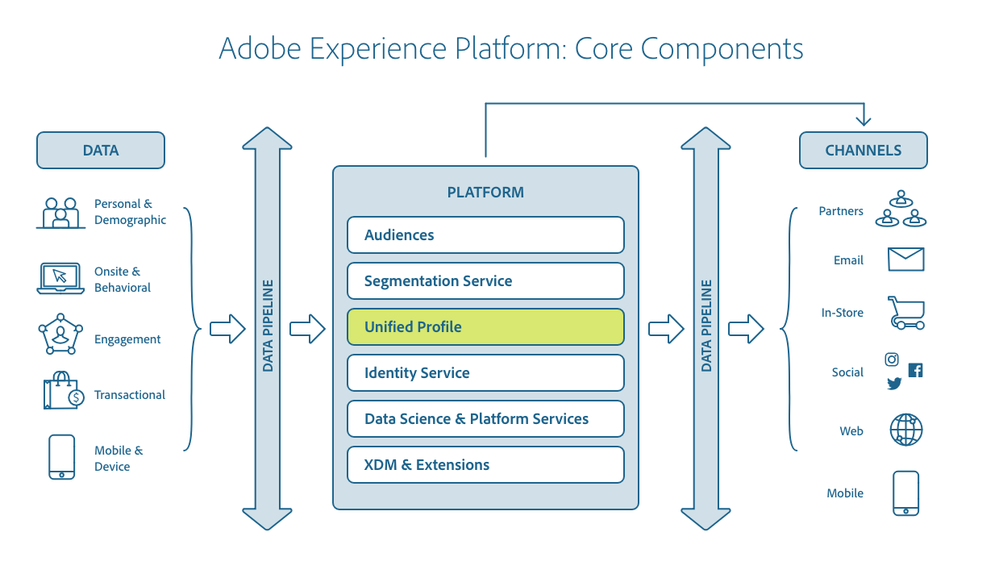
3. How AEP Works in Practice
Data Ingestion
AEP can take in data from many sources—batch uploads, real-time streams, or APIs—so brands can connect both old and new systems.
Unification & Enrichment
Once data is in AEP, it gets cleaned, standardized with XDM, and merged into Real-Time Profiles. This creates a single, always-updated customer record.
Governance & Privacy
AEP has built-in tools to manage consent and comply with privacy rules (like GDPR and CCPA). This means marketers can use data responsibly while keeping customer trust.
4. Key Benefits for Enterprises
One Source of Truth
Breaks down data silos so every team works with the same customer information.
Personalization at Scale
Use unified profiles to deliver the right message, at the right time, on the right channel.
Privacy & Compliance
Built-in tools help follow regulations like GDPR and CCPA, protecting both brand and customer trust.
Future-Ready
AEP’s scalable design supports AI, machine learning, and new channels, making it a long-term foundation for digital transformation.
Frequently Asked Questions
Is Adobe Experience Platform the same as a customer data platform?
No. AEP is the underlying data and governance platform. Adobe Real-Time CDP is an application built on AEP that focuses on profile, audience and activation use cases.
What data should an AEP implementation start with?
Start with a small number of high-value sources tied to a measurable use case. Define identity rules, consent, XDM schemas, data quality and activation success before adding more data.
Who should own AEP?
AEP needs shared ownership across marketing, data, privacy, security and engineering. A platform team should govern schemas, identities, access, monitoring and change control while business teams own outcomes.


5. AEP in the Adobe Ecosystem
- Powering Other Adobe Tools:
- Real-Time CDP (RTCDP): Uses AEP data to build audiences and activate them across channels.
- Journey Optimizer (AJO): Delivers personalized, cross-channel journeys based on real-time profiles.
- Customer Journey Analytics (CJA): Analyzes all interactions to measure and improve performance.
- Connecting to External Systems:
AEP integrates with CRM, ERP, BI, and other business platforms, so data flows smoothly across the entire organization.
In short, AEP is the data engine that fuels both Adobe solutions and external business systems, making customer data useful everywhere.

6. Conclusion & Next Steps
Adobe Experience Platform (AEP) is the foundation of customer experience management. By unifying data, building real-time profiles, and ensuring privacy, it gives companies the tools to deliver personalized experiences at scale.
AEP doesn’t work alone—it powers Adobe’s key applications like RTCDP, AJO, and CJA, and integrates with external systems to support a full digital ecosystem.
👉 In the next article, we’ll explore Real-Time CDP (RTCDP) in detail, and see how businesses use it to turn unified data into actionable audiences.
📩 Interested in learning how Adobe Experience Platform can help your business?
Contact our team for more details »
Related Articles
Enterprise AI MarTech Trends Analysis 2024-2029 Outlook Report
From AI content productivity tools to a core engine for revenue growth and marketing transformation
*The PDF will be sent directly to your inbox.
Email Error
Please enter a valid email address.
Thank You!
The whitepaper has been sent to your inbox. If you don’t see it, please check your spam or promotions folder.