
Sales Cloud Consulting: CRM Setup, Process Optimization and Improvement
Customer Relationship Management (CRM), Salesforce
27 October 2026
Sales Cloud provides sales management tools, but businesses still need to decide how to define opportunities, assign responsibilities, and maintain data. Implementation consultants help teams turn these decisions into a working system. This article explains their role in setup, process improvement, and ongoing operations, and offers practical ways to evaluate the results of the engagement.
Summary
Sales Cloud implementation consultants help connect sales strategy, process design, system setup, and everyday use. They provide methods and expertise when departments use different definitions, data sources are complex, or internal delivery capacity is limited. The business remains responsible for operational decisions, data validation, and user participation. Evaluate the engagement by whether people can complete their work, trust the data, and maintain the system over time.
1. What Problems Do Sales Cloud Implementation Consultants Solve?
Businesses often view implementation as creating fields, importing data, and building a few reports. The harder part is usually making decisions. What qualifies as an opportunity? Who owns an account when several salespeople contact it? What information do managers need to help close deals? These questions directly influence the design.
Salesforce’s implementation guidance identifies goals, measurement methods, sales processes, and user preparation as important work. Consultants help businesses organize these elements, identify dependencies, and sequence implementation. This requires a deeper engagement than simply configuring features against a requirements list.
Internal teams with mature processes and management capabilities can lead the project themselves and seek specialist support as needed. Projects spanning several departments, involving integrations, or lacking available internal staff may require broader consulting services. Decide what to outsource and how much support to obtain based on capability gaps.
Professional consultants must also understand business language. A manager’s concern about inaccurate forecasts could stem from outdated opportunities, inconsistent amount definitions, or stages without supporting evidence. Adding analytics features before identifying the cause may leave the real management problem unresolved.
2. Before CRM Setup: How Consultants Support Sales Process Decisions
Have Different Roles Describe the Same Work
Through interviews and workshops, consultants can trace lead intake, qualification, opportunity follow-up, and handover after a sale. Having salespeople, managers, and operations staff describe the same scenario often reveals different assumptions about handoffs. Sales may consider a task complete while operations still lacks essential information.
Process discovery should include exceptions, rather than only the ideal path. Upsells, renewals, collaborative selling, reopening lost deals, and changes of ownership can all affect records and reports. Consultants make these exceptions visible, then work with the business to decide which belong in the first phase.
Turn Management Needs into Consistent Definitions
Opportunity stages need clear entry criteria and required information. Consultants can propose design options and use representative deals to test whether teams interpret them consistently. Business managers should approve the final definitions, rather than delegate sales policy decisions entirely to external technical staff.
Reporting requirements should also start with questions: Which deals lack a next step? Which opportunities have stalled? Why has a region’s pipeline changed? Identify the evidence needed to make these judgments before designing fields and update rules. This reduces the collection of data merely because it might be useful later.
Define a Workable First Phase
Consultants should help distinguish essential outcomes, later enhancements, and areas that still require discovery. Each priority requirement needs an identified user, triggering scenario, expected result, and acceptance method. If requirements remain unclear, begin with discovery rather than produce an apparently precise total price based on numerous assumptions.
The scope should also record business commitments, including data provision, decision deadlines, and testing staff. Delays sometimes result from unmet dependencies rather than slow configuration. Putting both parties’ work in one plan helps reveal risks earlier.
3. What Verifiable Outcomes Should Sales Cloud Consultants Deliver?
Clear Decision and Design Records
Implementation deliverables should include process maps, data definitions, and important design decisions. For each trade-off, record the options considered, reasons for the chosen approach, and limitations. This helps the business understand the original intent when making changes and prevents new team members from maintaining the system through guesswork.
For example, allowing several salespeople to work on one account requires consideration of both responsibilities and data visibility. Consultants should explain how the design supports collaboration, rather than deliver only the name of a setting. The business can use scenario walkthroughs to confirm that the design fits actual work.
A System That Supports Complete Workflows
After configuration, consultants need to demonstrate end-to-end scenarios rather than list feature counts. The business should be able to complete priority workflows, from lead intake and opportunity creation to information updates and management review, and understand how to handle common exceptions.
Test evidence should trace back to the original requirements and include expected and actual results, issues found, and resolution decisions. Clearly identify limitations where outcomes depend on external systems or unfinished data preparation. A successful demonstration using sample data does not establish production readiness.
Transferable Knowledge and Maintenance Capability
Documentation should help business administrators perform everyday tasks such as user management, common configuration changes, troubleshooting, and change procedures. It need not describe every screen, but should show successors where designs are documented, how to operate the system, and when to escalate an issue.
Knowledge transfer should include hands-on work. Having an administrator complete a common maintenance task and a consultant verify the result provides stronger evidence of a successful handover than recordings alone. Businesses should retain the necessary documents and configuration information so they do not lose management context when the engagement ends.
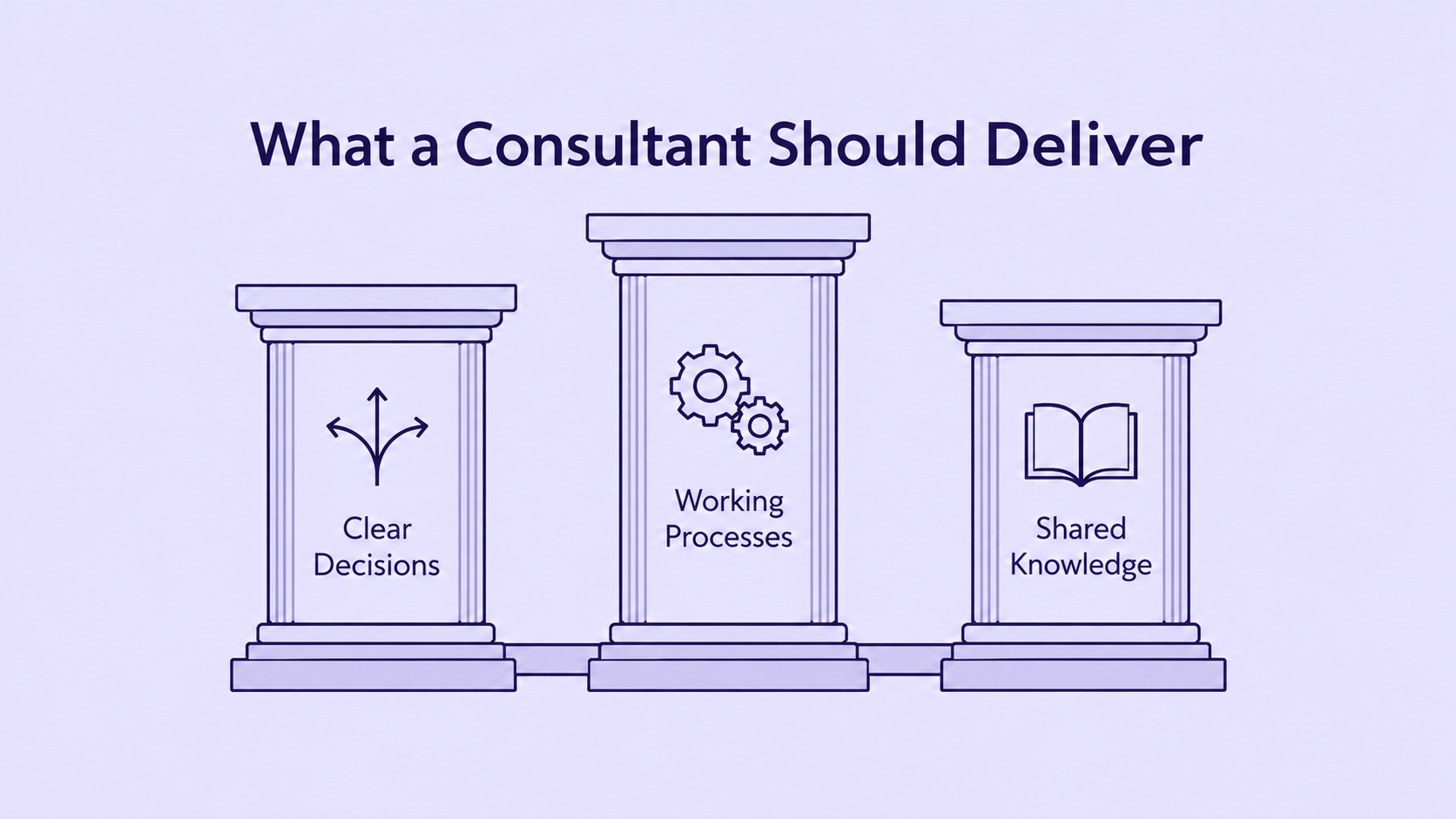
Figure 1: Clear decisions, working processes, and shared knowledge are three categories of consulting deliverables.
4. Sales Cloud Data and Integration: How Consultants Reduce Delivery Risk
Data design must distinguish accounts, contacts, and transactions and establish identifiers and relationships. Consultants can inventory sources, map fields, and develop quality checks. Business data owners should decide retention, merge, and correction rules. Technical staff should not guess whether two records represent the same customer.
Before migration, rehearse with representative samples and verify record counts, amounts, owners, and relationships. Retain failure and exclusion lists so the business knows which information has not entered the new system. Full acceptance requires confirming that migrated data still supports correct work, rather than merely checking that records appear.
Integration designs need to specify authoritative sources, exchange directions, update frequency, and exception handling. Consultants should confirm constraints with external system teams so neither side assumes the other will automatically retry failed transfers or clean the data. An interface that transmits data is only one part of integration.
For automation and custom features, consultants should explain the long-term maintenance implications. Evaluate standard capabilities and configuration first, then decide whether development is necessary. Every additional design should have a business rationale, test method, and owner so the business understands the cost of future changes.
Validate permissions using real roles. Sales representatives, managers, operations staff, and integration accounts perform different work. Consultants help design visibility and capabilities, while the business approves access principles. A successful administrator test does not prove that all users can complete their tasks.
5. How Consultants and Businesses Share Launch Responsibilities
Consultants typically help prepare test environments, acceptance scenarios, issue analysis, and cutover plans. The business must arrange user testing and approve the results. Launch decisions should reflect data, process, permission, and staff readiness, rather than rely solely on a previously scheduled date.
Training should be role-based. Salespeople need to practice follow-up and handoffs, managers need to use pipeline data, and administrators need to handle maintenance and support. Consultants can provide materials and guidance, but business managers should also incorporate the new processes into everyday meetings to establish consistent use.
A cutover plan should sequence the end of updates in old tools, final data migration, verification, and access for users. Each step needs an owner and completion criteria, along with agreed conditions for pausing the cutover. Where multiple vendors are involved, establish shared decision-making and notification contacts.
Define the scope of support during the initial launch period. User questions, system defects, and new requirements may need different treatment. Agreeing intake, classification, and escalation procedures in advance helps teams focus on restoring work rather than debating responsibility during an incident.
6. Continuous Improvement: Making Sales Cloud Consulting Address Real Problems
Observe Work and Data, Beyond Logins
After launch, review data completeness, lead follow-up, opportunity updates, and management usage. Login counts are only one reference point. Check whether core work has actually moved into the system. If people still maintain separate spreadsheets, consultants should help identify missing processes or information.
Classify user feedback as well. Unfamiliarity with operations may require training, data issues require governance, design defects require correction, and new requirements need value and scope assessment. Treating every problem as a development request can add complexity without addressing the root cause.
Prioritize, Adjust, and Verify Again
Prioritize improvements by business impact, frequency, and implementation cost. Consultants should explain their recommendations, while the business decides priorities. For every change, assess the effects on other processes, reports, and integrations and retain testing and rollback methods.
After making a change, revisit the original problem to check whether it improved. If data entry is shortened, is data quality still sufficient? Do additional reminders actually lead to follow-up? Ongoing services should produce observable results rather than merely report how many settings were changed that month.

Figure 2: Continuous improvement starts with observation, followed by prioritization, change, and verification.
7. How to Evaluate Sales Cloud Consultants and Engagement Scope
When selecting a consultant, ask them to work through a scenario similar to your business and explain their discovery, design, and acceptance approach. This reveals more about their methods than a company profile alone. Certifications and experience are useful, but also confirm the roles and availability of the people who will actually participate.
- Request a list of first-phase outcomes, exclusions, assumptions, and business commitments.
- Confirm who handles business analysis, architecture, configuration, integration, and project management.
- Check whether design, testing, and handover documentation supports ongoing maintenance.
- Use representative scenarios to confirm that consultants can explain trade-offs between options.
- Define the boundaries between defect correction, requirement changes, and ongoing support.
- Confirm how internal administrators will participate and take over when the engagement ends.
Engagement governance should include decision records and a change log. When requirements change, consultants explain the effects on timelines, data, and testing, and the business approves implementation. This prevents verbal requests from gradually expanding the scope without a shared basis for acceptance.
Agree knowledge-transfer methods and required documentation for changes in key personnel. Businesses are purchasing more than one consultant’s personal experience. They also need a service arrangement that a team can continue to support.
Separate licensing, implementation, data preparation, integration, and ongoing service costs. Ask vendors to estimate against the same scope, then compare outcomes and responsibilities rather than only the total price. For uncertain work, phased discovery generally manages risk better than concealing assumptions.
8. Hypothetical Scenario: Turning Inconsistent Reports into an Improvement Plan
Suppose a sales manager discovers that pipeline totals submitted by different teams do not match Sales Cloud reports. A consultant investigates a sample and finds that some people enter annual contract value in opportunities, while others enter only the amount expected this quarter. Some deals also have outdated statuses.
The priority is not to build more dashboards. The business first approves amount and stage definitions, while the consultant helps adjust field guidance, correct data, and create checking reports. Representative deals are then reconciled to confirm that different teams interpret the data consistently.
Pipeline reviews can subsequently become part of regular meetings so managers continue to use the same data source. This hypothetical scenario illustrates why processes and management behavior need to change alongside the system. Delivering features alone may not resolve inconsistencies between teams.
9. Frequently Asked Questions (FAQ)
Do We Still Need a Sales Cloud Consultant If We Have an Internal Administrator?
It depends on capabilities and workload. Administrators can lead everyday maintenance, while consultants provide specific process, architecture, or integration experience. Businesses can use joint implementation or short-term expert reviews without outsourcing everything.
Can Implementation Consultants Decide Our Sales Processes for Us?
Consultants can propose methods and design recommendations, but the business should retain operational decision-making authority. Opportunity definitions, account allocation, and management metrics affect operations. Authorized owners must approve them and help users understand them.
How Can We Judge Whether Ongoing Consulting Is Worthwhile?
Assess whether it resolves known problems, maintains system reliability, and builds internal capability. Agree on metrics for regular review, deliverables, and knowledge transfer rather than evaluating the service solely by hours worked or the number of features added.
10. Conclusion
The value of Sales Cloud implementation consultants is in helping businesses turn sales management goals into clear rules, a usable system, and continuous improvement capabilities. Effective collaboration requires the business to own decisions and data responsibilities while consultants contribute methods and delivery expertise.
LeadsTech’s Salesforce solution services support consulting, implementation, and integration discussions, helping businesses clarify the initial scope and ongoing operational needs.

To assess how consultants could support your business, gather your current process challenges, data sources, and internal capabilities, then discuss verifiable engagement outcomes with us.

11. Further Reading
-
Salesforce Sales Cloud: A Complete Guide to CRM Sales Management
Understand Sales Cloud’s sales management applications and working context.
-
Why CRM Implementations Fail and How to Choose the Right Consultant
Explore implementation risks and the criteria for choosing a consultant.
Related Articles

Enterprise AI MarTech Trends Analysis 2024-2029 Outlook Report
From AI content productivity tools to a core engine for revenue growth and marketing transformation
*The PDF will be sent directly to your inbox.