
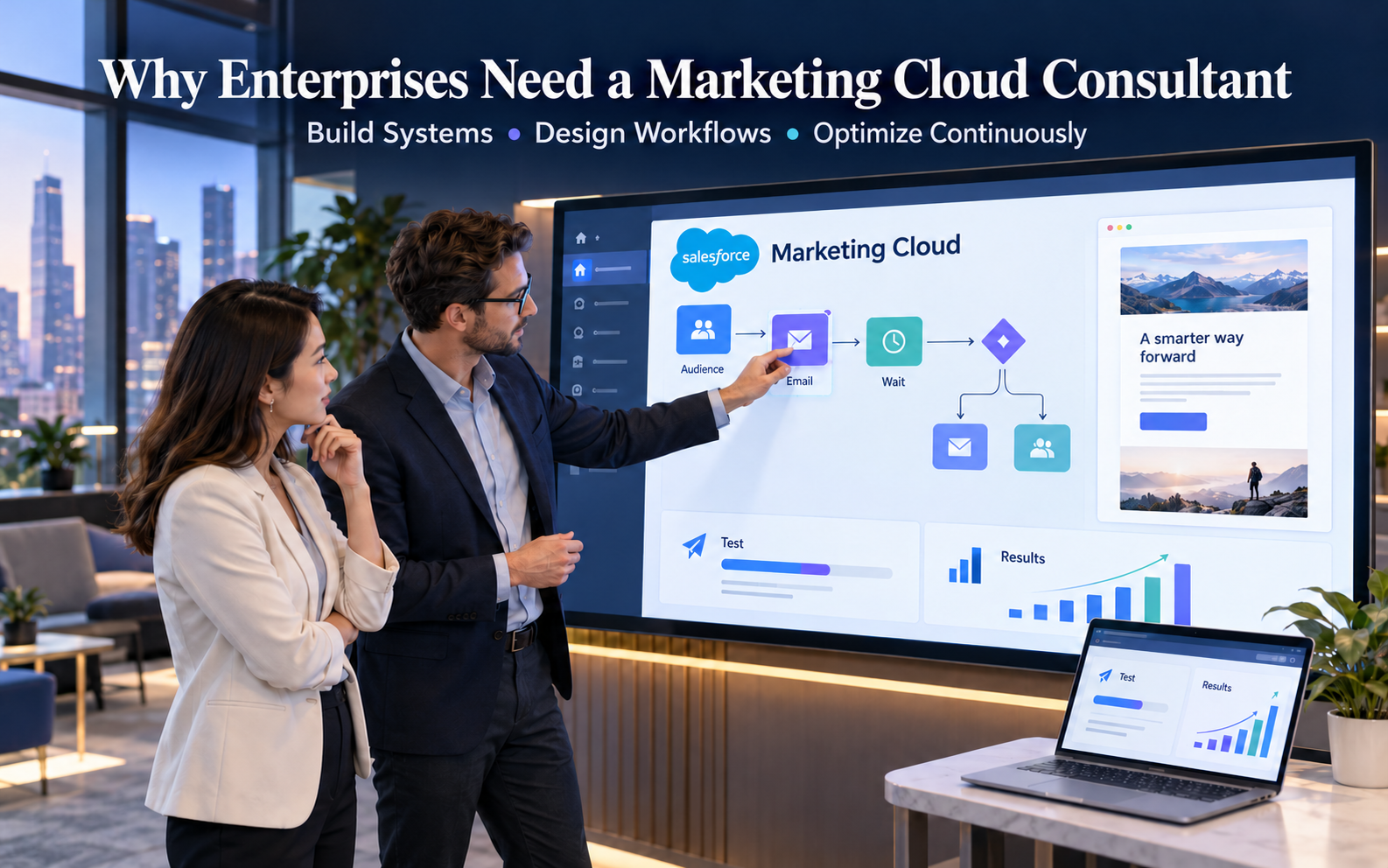
Marketing Cloud Consultant Guide: Setup, Workflows and Optimization
Marketing Automation, Salesforce
30 October 2026
Implementing a marketing platform often requires businesses to address data, content, workflows and collaboration across departments at the same time. A Salesforce Marketing Cloud implementation consultant helps organize this work into an actionable plan. This article explains expected deliverables, responsibilities and acceptance methods to help businesses establish marketing automation workflows they can sustain.
Summary
A Marketing Cloud implementation consultant should help clarify requirements, design data and workflows, validate the implementation and prepare internal teams to take over operations. Assess more than the number of settings or journeys completed. Check the rationale for decisions, exception handling, test evidence and knowledge transfer. Businesses still need to define objectives, data owners and approvers. Shared responsibilities turn platform capabilities into marketing operations that can improve over time.
1. When Does a Business Need a Marketing Cloud Implementation Consultant?
When marketing, IT and data teams understand a problem differently, a consultant can help establish shared requirements. For example, marketing may want immediate follow-up while IT receives source data only once a day. The teams first need to agree on a feasible scope.
External support is also worth considering if a platform is already in place but journeys are difficult to maintain, audience counts frequently differ or every revision depends on a few people. The priority may be diagnosing and organizing the existing design, rather than rebuilding everything.
Businesses with mature internal capabilities can handle some work themselves and engage a consultant for specific architecture, integration or validation tasks. Define the collaboration scope around capability gaps instead of assuming that one party must do everything.
Consultants provide methods and implementation support, but cannot decide customer strategy, data purposes or communication priorities for the business. Without internal decision-makers, even a complete design may remain awaiting approval and delay progress.
2. Start With Clear Requirements and Scope
Turn Marketing Goals Into Specific Scenarios
Requirements discussions should identify the audience, triggering event, next action and exceptions. Event follow-up, for example, requires knowing when attendance data becomes available, who is eligible for messages and how communication changes after sales takes over.
The consultant should map current and target workflows, highlighting manual steps and data gaps. This helps the business decide what to automate first and where human judgment remains necessary, rather than transferring existing problems directly into the new platform.
Every scenario needs measurable acceptance outcomes. Instead of simply specifying “build a personalized journey,” explain which data defines groups, what content is used, how missing data is handled and how subsequent outcomes are confirmed. Concrete specifications help both parties control scope.
Confirm the Actual Product and Prerequisites
Marketing Cloud includes different product lines. Consultants should specify the recommended product, capabilities included in the offering and items requiring additional arrangements. Journey Builder, Engagement Studio and Flow Builder are not interchangeable tools.
For journeys built in Marketing Cloud Engagement, verify data, channel, account and sending prerequisites. The project plan should identify who supplies sources, confirms settings and approves activation, with important dependencies included in the schedule.
The initial scope should ideally deliver one complete, usable workflow. Consultants should prioritize essential work and later expansion items, explaining tradeoffs rather than accumulating requirements until every feature becomes a launch prerequisite.
3. Leave Clear Records of Implementation Design Decisions
Data Models and Integration Specifications
Consultants should explain how contacts are identified, sources are matched and customer attributes relate to event data. Businesses need to understand what each dataset represents, rather than receiving undefined fields and tables.
Integration specifications should cover data direction, update timing, field mapping, failures and resubmissions. A successful connection is only one piece of evidence. Data completeness, duplicate records and the effects of delays also need verification to support marketing workflows.
Assign authoritative data ownership when several sources are involved. Contact details, languages and preferences may be maintained in different systems. Consultants can propose a design, but the business must approve conflict handling and update rules so responsibilities are clear.
Account, Content and Permission Design
User roles should reflect actual work. Different people may produce content, manage data and activate campaigns. Permissions should let the team complete tasks while preserving approvals. Convenience is not a reason for everyone to share a privileged account.
Content assets need naming rules, versions and a relationship inventory, especially when shared across languages or journeys. Teams must understand which changes affect other workflows. Consultant deliverables should include maintenance rules as well as the current campaign’s screens.
Configuration documentation should record design reasons and important limits. For example, is a source updated daily because of business needs or an existing interface limitation? Preserving the rationale helps future teams make sensible adjustments when conditions change.
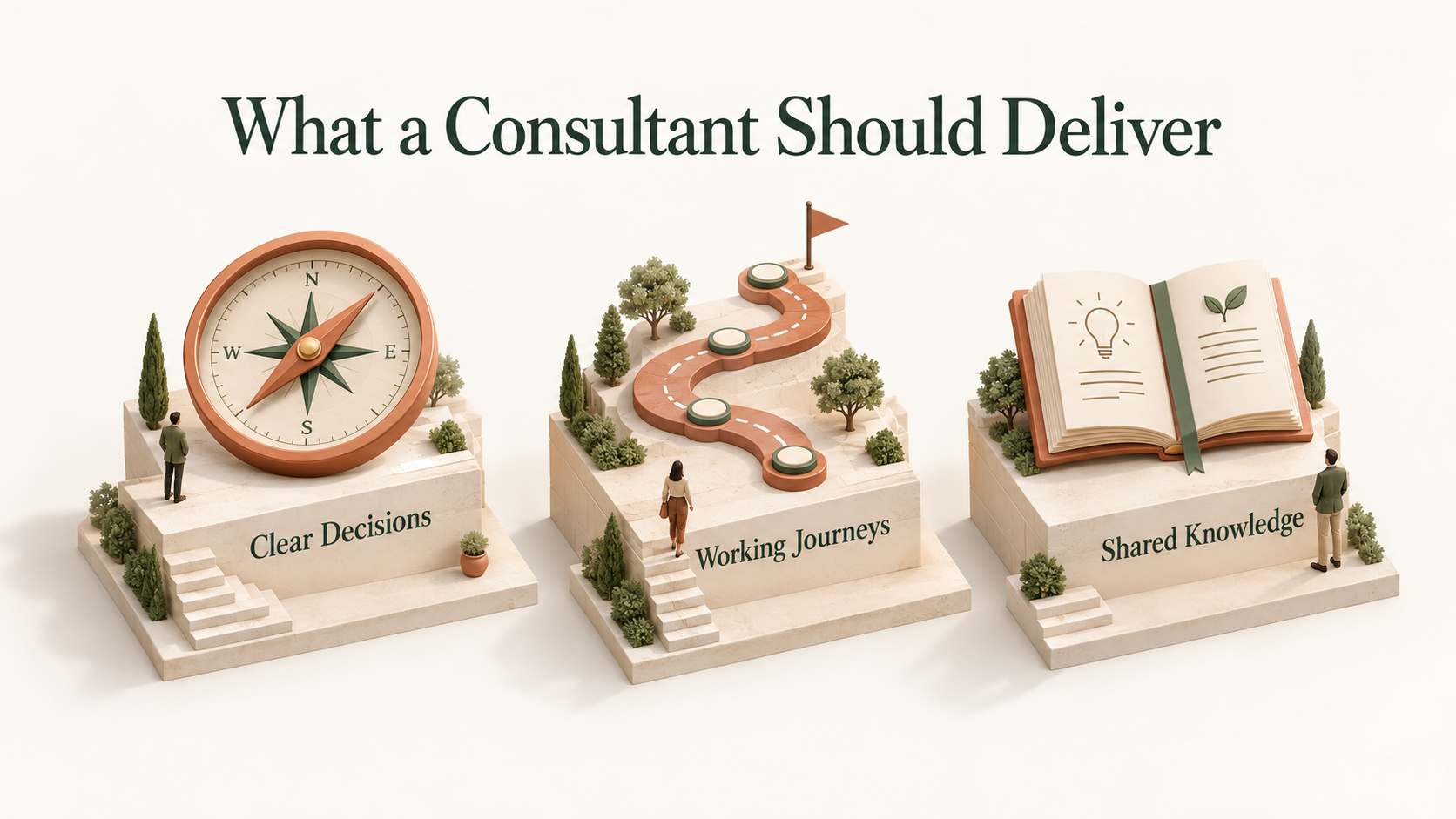
Figure 1: Consultant deliverables should include clear decisions, working journeys and shared knowledge.
4. Include Exceptions and Cross-Team Handoffs in Workflow Design
Rules Beyond the Journey Diagram
Define entry, branching, waits, reentry and exit conditions. Consultants need to connect these conditions to data and actual settings, and confirm expected outcomes with marketing. A complete-looking diagram should not conceal details that still depend on improvised decisions.
Define handling for missing data, late events and repeated participation. The default branch must not become a sending route for all unclear records. Under approved rules, wait, exclude or refer them for manual handling, and retain traceable records.
Include preference updates in the workflow. Consultants should help confirm synchronization, evaluation timing and applicable rules for different message contexts. Businesses must confirm their requirements and participate in validating behavior against approved arrangements.
Handoffs Between Marketing and Sales
If a journey aims to prompt sales follow-up, define when handoff occurs, what information is supplied and how receipt is confirmed. Creating a record does not mean someone has accepted it. Without subsequent status updates, marketing may continue sending poorly timed messages.
Consultants can design information and status flows, but sales must participate. Agree on which cases remain in marketing nurture, which require personal contact and who follows up on failed handoffs. These responsibilities are part of the workflow.
Review overlapping communication when multiple journeys run together. Consultants can identify conflicts and possible settings, while marketing owners determine priorities. Technical ability to run journeys simultaneously does not establish that doing so provides a suitable customer experience.
5. Verify Evidence and the Team’s Ability to Take Over
Tests should trace the full process through source data, audiences, content and outcome tracking, using normal and exception samples. Consultants should deliver test conditions, expected results, actual evidence and unresolved issues so the business can independently assess launch readiness.
Do not use “configuration complete” as the only acceptance criterion. Data may import correctly but select the wrong audience; content may display correctly but use links or languages unsuited to the scenario. Technical validation and business acceptance should proceed together, with relevant owners confirming results.
The activation plan should explain checks, approvals, monitoring and pausing. If audience counts become abnormal or upstream work is delayed, the team needs to know what to do first, whom to notify and when to resume. Rehearse these procedures before launch.
- Requirements and workflow documents map to actual settings.
- Representative data and exceptions have supporting test evidence.
- Content, languages, links and preference handling have been checked.
- Sources, integrations and daily exceptions have assigned owners.
- Launch, pause and recovery procedures are understood.
- Operators can perform necessary maintenance and investigate problems.
Knowledge transfer should involve more than one demonstration. Having the receiving team update content, inspect segmentation reasons and trace an exception provides better evidence of understanding. Consultants can then address documentation and operational gaps revealed by practice.
Confirm where documents and settings are stored, how they are accessed and who maintains them. Handover materials left only on personal computers or private accounts can become unavailable after staffing changes, undermining long-term platform maintenance.
6. Establish a Shared Routine for Continuous Improvement
Post-launch consulting should distinguish fault support, data issues, content adjustments and new requirements. Each needs different evidence, participants and estimates. A vague promise of “continuous improvement” cannot adequately describe all of them.
Routine reviews can examine data delays, journey volumes, exclusion reasons and content performance, then prioritize issues that most affect objectives. Fix data or workflow gaps before adding features to avoid increasing complexity on an unstable foundation.
For each improvement, explain the hypothesis, scope of changes and observation method. Is a branch adjustment intended to improve audience matching or correct faulty criteria? Keep versions and comparison periods to assess whether the change produced the expected result.
Separate business outcomes from execution quality. A functioning journey is a basic requirement, while commercial results also depend on content, products and market conditions. Consultants should help establish reasonable measurement, without promising overall results from one engagement metric.
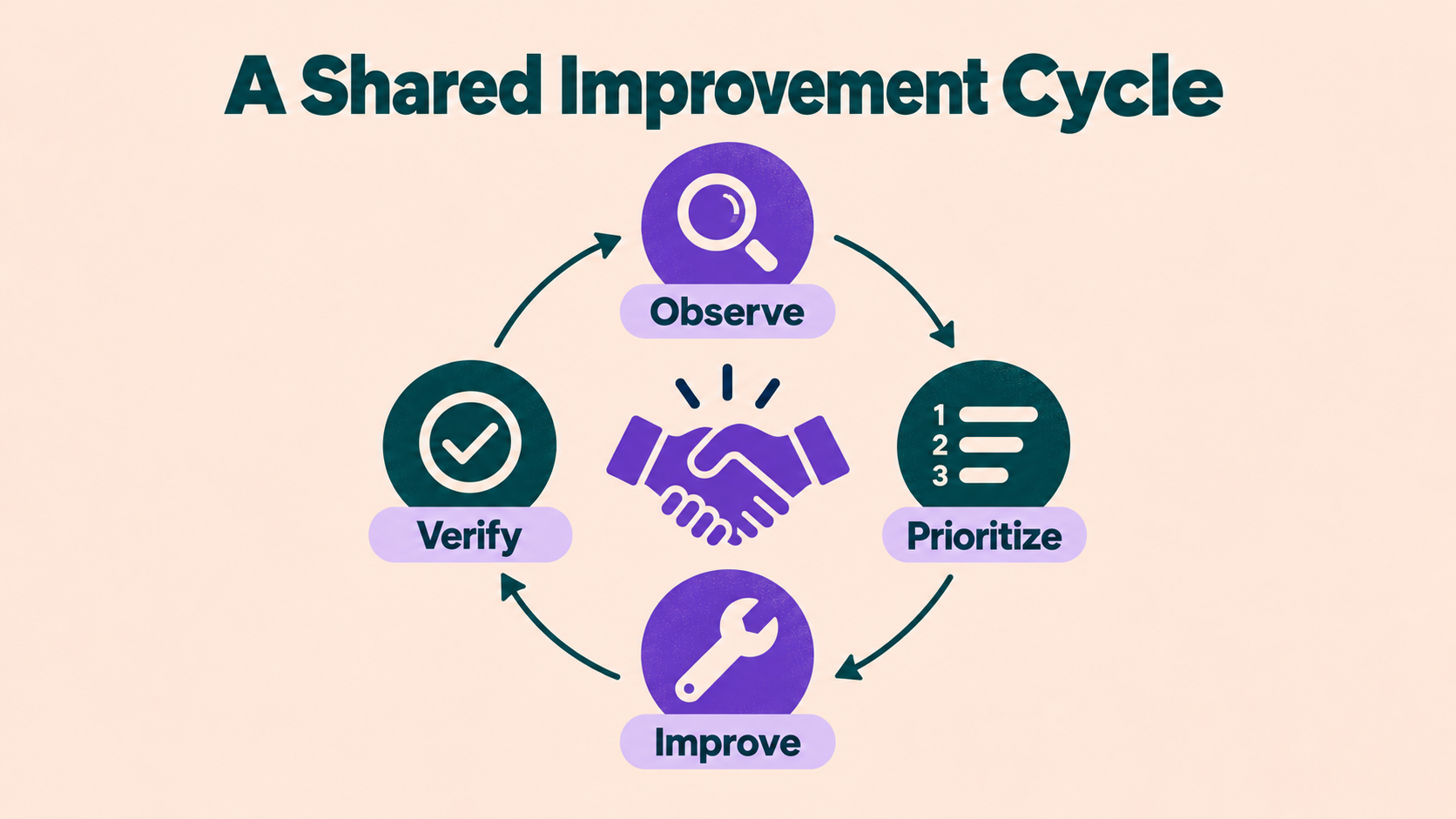
Figure 2: Continuous improvement cycles through observation, prioritization, adjustment and verification.
7. How to Choose the Right Marketing Cloud Consultant
Ask candidate teams to explain how they handled data, organizational or workflow challenges similar to yours. Focus on methods and delivery capabilities rather than screens alone. Cases involving customer data should use appropriate de-identification.
Request an initial scope, dependencies, responsibilities and acceptance approach. Clear explanations of the data and decisions the business must provide are more useful than unconditional promises of speed. Include unconfirmed items in the plan and arrange follow-up.
When comparing quotes, confirm the journeys, sources, content, testing and handover work included. Similar-looking proposals may offer different arrangements for later changes and support. Align the scope first to create a reasonable basis for comparison.
For example, a hypothetical business wants to connect event lists to CRM and build a follow-up journey. A consultant could first deliver data mapping, segmentation and one representative workflow. The business supplies rules and approved content, and both test repeated events, late data and sales handoffs. This is an illustrative collaboration scenario.
Initial success in this scenario means more than sending messages. The business should also be able to explain list differences, change content and handle exceptions. These capabilities support expansion and reduce dependence on a consultant’s judgment for every campaign.
Manage Changes During the Engagement
Requirements naturally become clearer through discussion, but each additional journey, source or channel needs an impact review. Consultants should explain the added design, content, testing and maintenance work. The business then decides whether to include it initially or defer it.
Change records should include reasons, decision-makers, related documents and validation methods. Verbal agreements that do not update configuration and test scope can produce conflicting expectations at delivery. Concise, consistent records are easier to track than lengthy meetings.
Define escalation procedures in advance. When source data conflicts with marketing requirements, agree on who convenes the relevant people, when options are presented and who makes the final decision. This prevents issues from being passed repeatedly between teams.
At the end of an engagement, the business should receive current architecture, workflows, configuration inventories and outstanding tasks. Confirm how account access and third-party dependencies are managed. This gives the original team, another partner or internal staff a consistent starting point for future work.
Do not label unfinished items merely as “future optimization.” Explain their current state, impact, recommended handling and ownership so the business can decide whether to delay launch, limit usage or arrange additional work.
After the project, hold a joint review of effective practices, recurring problems and prerequisites for the next phase. This helps turn collaboration experience into methods the business can reuse internally.
8. Frequently Asked Questions (FAQs)
Do We Still Need an Internal Owner After Hiring a Consultant?
Yes. The business must still decide objectives, rules, data purposes and priorities, and arrange content and acceptance. Consultants support design and implementation, while an internal owner keeps decisions and operations consistent.
Must Consulting Start With a Full Implementation?
No. Start with requirements discovery, diagnosis of existing workflows or focused validation, then decide on implementation based on the results. Scope should reflect current capability gaps and available resources.
How Can We Tell Whether Handover Is Complete?
Beyond documentation, verify that the receiving team can perform daily tasks, understand key rules and handle common exceptions. Use practical exercises and representative scenarios, and plan follow-up for capabilities that are still missing.
9. Conclusion
A Marketing Cloud implementation consultant helps businesses establish clear decisions, usable workflows and shared knowledge. Explicit deliverables, responsibilities and acceptance methods allow implementation results to carry into daily operations and continuous improvement.
LeadsTech can discuss Salesforce implementation, marketing workflows and data integration requirements with your business, using priority scenarios to define a practical collaboration scope.

If you are planning an implementation or improving existing journeys, organize your current systems, main issues and team responsibilities, then discuss the next step with us.

10. Further Reading
-
How to Choose a Marketing Automation Platform
Assess requirements, data and operational conditions when selecting a platform.
-
Why CRM Implementations Fail and How to Choose a Consultant
Review implementation risks through requirements, responsibilities and consultant collaboration.
Related Articles

Enterprise AI MarTech Trends Analysis 2024-2029 Outlook Report
From AI content productivity tools to a core engine for revenue growth and marketing transformation
*The PDF will be sent directly to your inbox.