
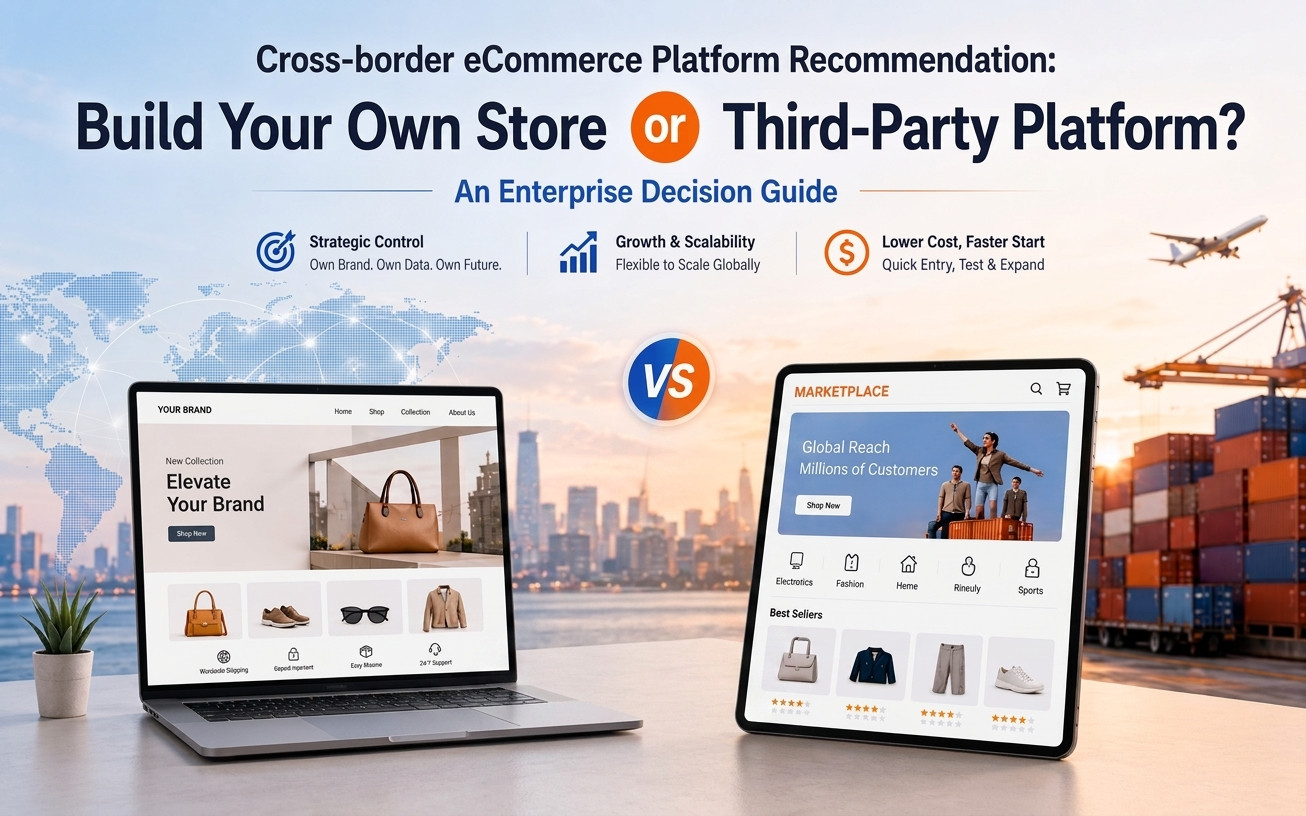
Cross-Border Ecommerce Platform Guide: Build Your Own Store or Use Third-Party Platforms?
Adobe Commerce (Magento), AEM Sites, B2B Marketing, e-commerce Platforms
8 May 2026
1. Introduction: The Critical Challenge of Choosing a Cross-Border Ecommerce Platform

For enterprises preparing to expand globally, the first critical question is often: Which platform should we choose?
When discussing cross-border ecommerce platform recommendations, most enterprises waver between two directions:
-
Rely on third-party platforms to quickly acquire orders
-
Build a brand independent store to create brand assets
This is not just a channel selection issue—it is a core strategic decision for enterprise development.
2. Two Mainstream Models for Cross-Border Ecommerce Platforms
When systematically analyzing cross-border ecommerce platform recommendations, mainstream models can be divided into two categories:
2.1 Third-Party Platforms (Marketplace)
-
Amazon
-
Alibaba
-
eBay
2.2 Brand Independent Stores (DTC / B2B Official Website)
-
Brand official website
-
Self-built ecommerce system
Both models have their advantages and correspond to different development stages and goals.
3. Third-Party Platforms: Quick Traffic Entry Points
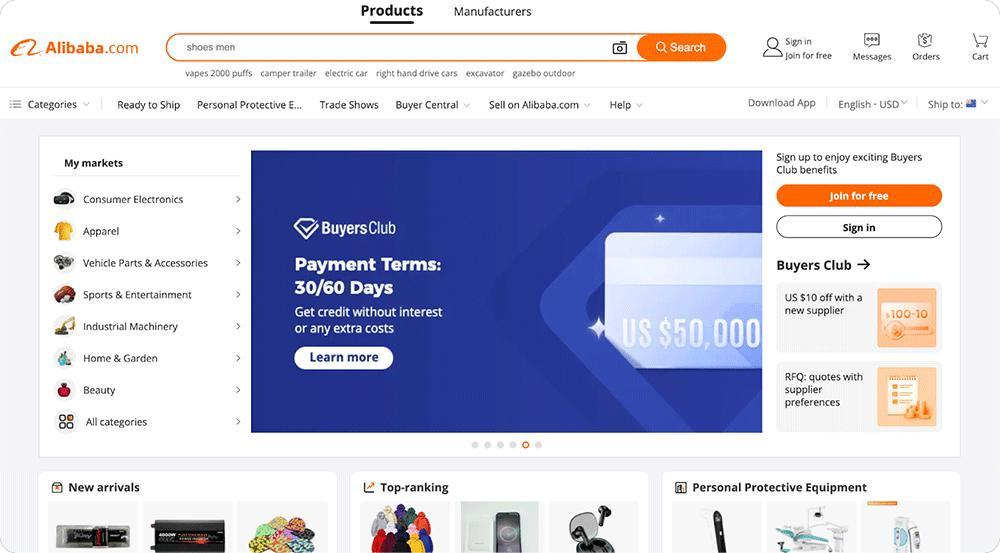
In most cross-border ecommerce platform recommendations, third-party platforms are usually regarded as the “starting point of choice.”
Advantages of Third-Party Platforms:
Built-in Traffic
Platforms have large numbers of ready buyers, reducing customer acquisition difficulty
Quick Launch
List products and start selling immediately with low technical barriers
Mature Transaction System
Payment, logistics, and review mechanisms are well-established
But their limitations are equally obvious:
-
Intense Competition: Severe homogenization and frequent price wars
-
Brand Weakening: Users remember the platform, not the brand
-
Limited Data: Customer data is difficult to accumulate and reuse
Therefore, third-party platforms are more suitable for short-term customer acquisition and market testing.
4. Brand Independent Stores: Long-Term Assets for Brand and Data
In increasingly advanced cross-border ecommerce platform recommendations, independent stores are seen as key to long-term enterprise growth.
Core Advantages of Brand Independent Stores:


Brand Control
Fully demonstrate brand value and differentiation

Data Asset Accumulation
Enterprises can relatively autonomously collect and manage customer data, but must still comply with data privacy regulations in various countries (such as GDPR) and technical platform limitations

Marketing Flexibility
Full control over SEO, content marketing, and retargeting

Scalability
Can integrate CRM, CDP, and marketing automation
Combined with modern content and ecommerce platform architecture, enterprises can achieve global content management and efficient delivery.
Furthermore, as AI search and content understanding capabilities improve, independent store content is more likely to be searched and referenced by AI, further enhancing brand exposure.
5. Brand Independent Stores vs. Third-Party Platforms: Core Differences
When evaluating cross-border ecommerce platform recommendations, comparisons can be made across the following dimensions:
| Dimension | Third-Party Platform | Independent Store |
|---|---|---|
| 1. Traffic Source | Platform-internal traffic | Owned traffic (SEO / Ads / Content) |
| 2. Brand Control | Weak | Strong |
| 3. Data Control | Limited | Complete |
| 4. Cost Structure | Commission + advertising fees | High initial investment, controllable long-term costs |
| 5. Long-Term Value | Short-term revenue focused | Long-term brand asset |
6. How Enterprises Should Choose the Right Platform Strategy
In actual decision-making, there is no single answer for cross-border ecommerce platform recommendations—it depends on the enterprise stage:
Startup Stage
Recommendation: Focus on third-party platforms
Goal: Quickly validate the market
Growth Stage
Recommendation: Run platforms + independent store in parallel
Goal: Start building the brand
Mature Stage
Recommendation: Make independent store the core
Goal: Enhance brand and profit
The key point is: Don’t treat the platform as the destination—treat it as the starting point.
7. Hybrid Model: The Future Mainstream Trend
More and more enterprises are adopting a hybrid strategy of “platform + independent store”:
Third-Party Platform Handles
Traffic generation
Acquiring new customers
Independent Store Handles
Brand accumulation
Customer repurchase
Data Integration Drives Growth
Guide customers to independent store
Build long-term relationships
This model is becoming the mainstream direction in cross-border ecommerce platform recommendations.
8. Conclusion and Action Recommendations
In the current competitive environment, choosing the right platform strategy will directly affect the enterprise’s growth path.
From the perspective of cross-border ecommerce platform recommendations:
-
Third-party platforms are suitable for short-term growth
-
Independent stores are suitable for long-term value
-
Hybrid model has the most potential
If you are evaluating your enterprise’s cross-border ecommerce strategy:
Visit our services page to learn about brand independent stores and ecommerce integration solutions, or Contact Us to work with our consulting team to develop the best go-global path for you.