
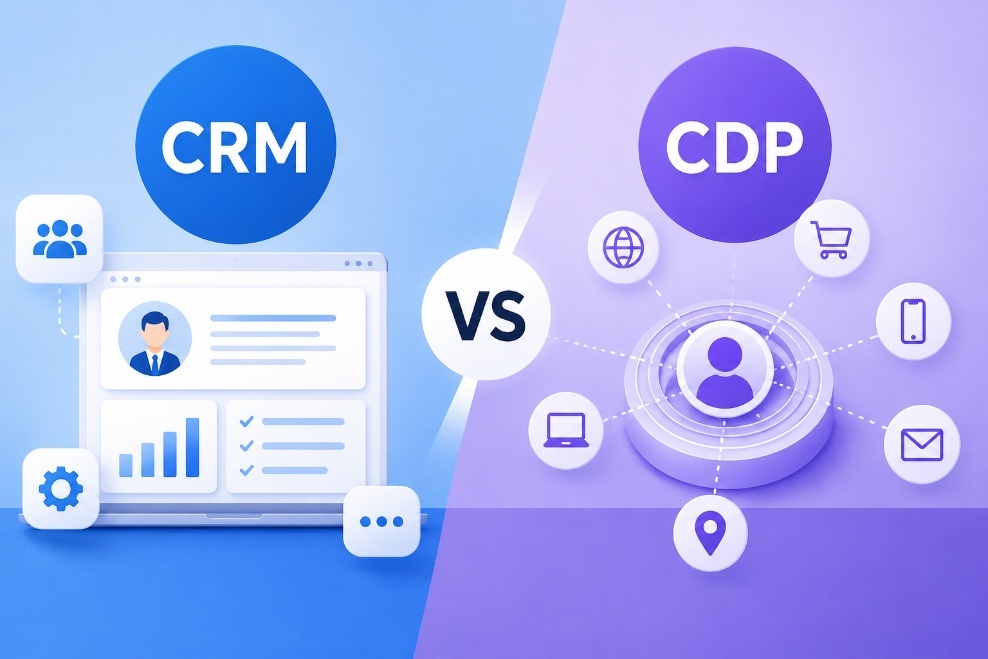
CRM vs CDP: Key Differences, Use Cases, and How to Choose the Right Platform
CDP, Customer Relationship Management (CRM), MarTech
27 May 2026
- Why Are Enterprises Paying More Attention to Customer Data Platforms?
- What Is CRM?
- What Is a CDP?
- Core Differences Between CRM and CDP
- Which Enterprises Are Suitable for CRM?
- Which Enterprises Need a CDP More?
- Can CRM and CDP Coexist?
- 7 Key Factors to Evaluate When Choosing a Platform
- Common Mistakes When Implementing CRM and CDP
- Future Trends: Customer Data Integration in the AI Era
- Conclusion
- Why Are Enterprises Paying More Attention to Customer Data Platforms?
- What Is CRM?
- What Is a CDP?
- Core Differences Between CRM and CDP
- Which Enterprises Are Suitable for CRM?
- Which Enterprises Need a CDP More?
- Can CRM and CDP Coexist?
- 7 Key Factors to Evaluate When Choosing a Platform
- Common Mistakes When Implementing CRM and CDP
- Future Trends: Customer Data Integration in the AI Era
- Conclusion
Introduction
As digital marketing and AI applications develop rapidly, enterprises generate massive amounts of customer data every day. Yet many companies still struggle with scattered data, incomplete customer profiles, and disconnected marketing and sales information. This is why more and more enterprises are rethinking a key question: should they implement a CRM or a CDP?
Although CRM (Customer Relationship Management) and CDP (Customer Data Platform) are both related to customer data management, their positioning, purposes, and ideal use cases are very different. This article explains the core concepts, differences, and common enterprise implementation scenarios for CRM and CDP, helping companies choose the customer data management platform that best fits their needs.
1. Why Are Enterprises Paying More Attention to Customer Data Platforms?
In the past, customer data was often scattered across different systems, such as official websites, e-commerce platforms, POS systems, social channels, and customer service platforms. This easily created data silos and made it difficult for enterprises to build a complete customer view.
As marketing increasingly depends on first-party data and AI analytics, enterprises have also realized that without integrated customer data, it is difficult to execute precise marketing, improve customer experience, or scale automation capabilities.
As a result, CRM and CDP have gradually become important foundations for enterprise digital operations.
2. What Is CRM?
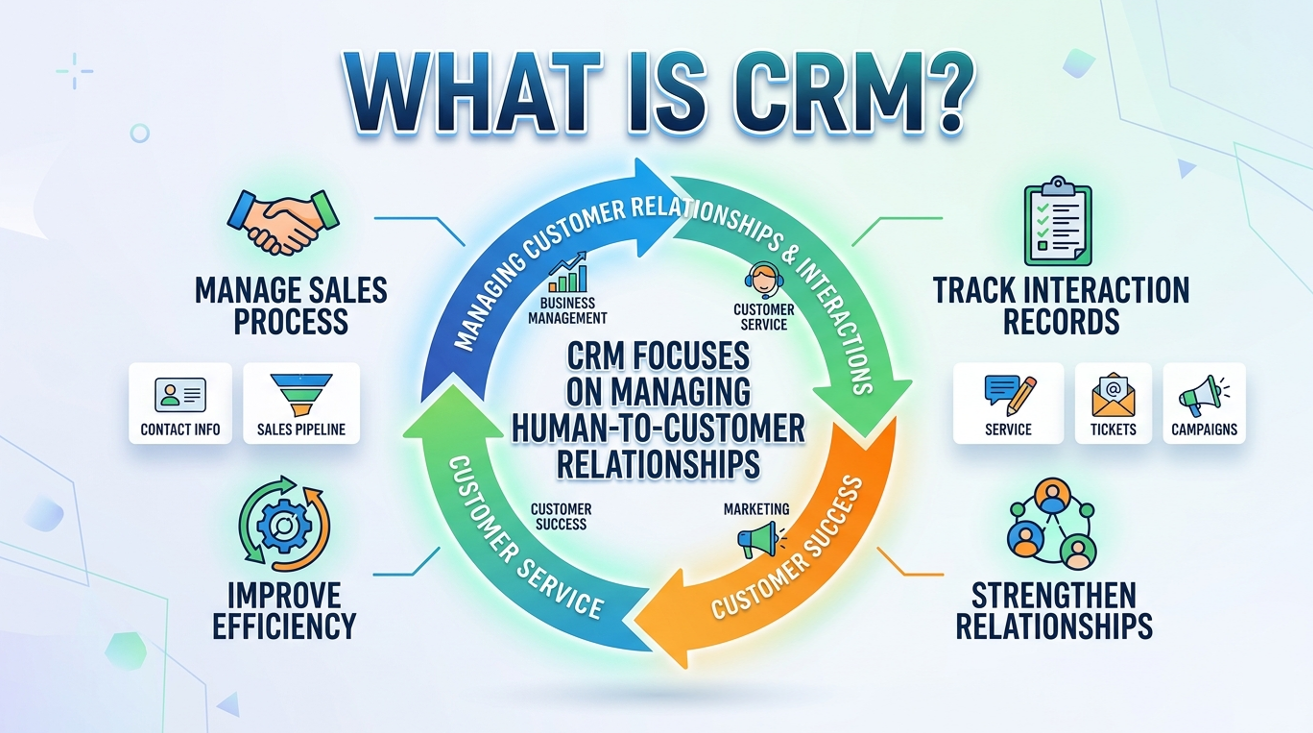
CRM (Customer Relationship Management) is primarily a system that helps enterprises manage customer relationships and interaction workflows.
It was originally used mainly for sales management, but it has gradually expanded into customer service, marketing, customer success, and other areas.
For most enterprises, the core value of CRM is helping teams manage customer relationships more effectively, improve sales efficiency, and build long-term interaction records. Common CRM applications include:
Sales Pipeline Management
Track opportunities, sales stages, and deal progress to help sales teams understand pipeline status.
Customer Interaction Records
Centralize customer contact information, communication history, and interaction records.
Customer Service Management
Integrate service cases, after-sales support, and support workflows to improve service efficiency.
Marketing Automation
Some CRM platforms also integrate EDM, lead nurturing, and campaign management capabilities.
Therefore, CRM is more focused on relationship management and business process management. Its core goal is to help enterprises manage the customer lifecycle more efficiently.
3. What Is a CDP?
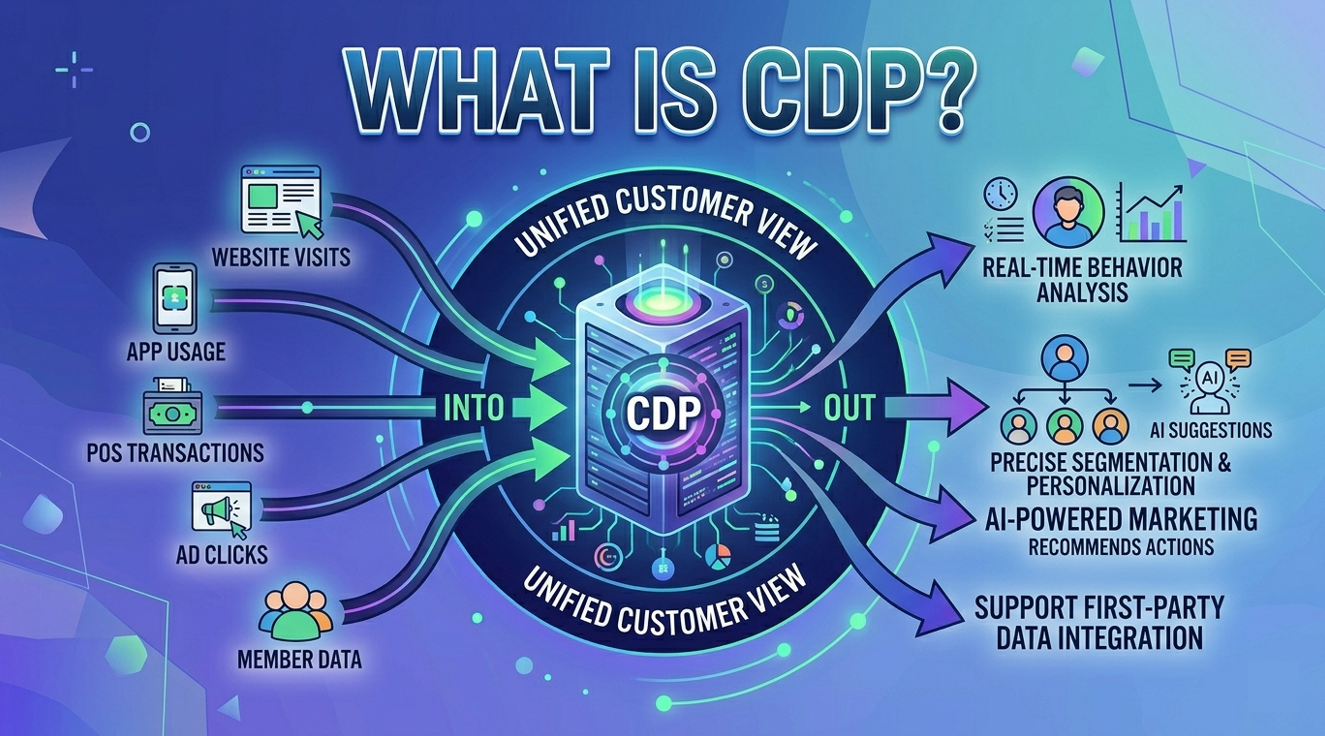
A CDP (Customer Data Platform) is packaged software that creates a persistent, unified customer database accessible to other systems. Its core mission is to integrate customer data from different channels, build unified customer profiles, and support real-time analytics and personalized marketing.
A CDP places particular emphasis on the integration of first-party data.
Compared with CRM, which focuses more on business process management, CDP is more oriented toward data and marketing applications.
Cross-Channel Data Integration
Integrate data from multiple sources, including websites, apps, POS systems, social channels, and advertising platforms.
Unified Customer Profiles
Combine different devices and identity data into a single customer profile.
Real-Time Behavioral Analytics
Analyze user browsing, clicks, and interactions to support real-time insights.
Precise Segmentation and Personalization
Support recommendation engines, marketing automation, and AI-driven personalized experiences.
Therefore, a CDP is more like the customer data hub of an enterprise and an important foundation for future AI marketing and data-driven operations.
4. Core Differences Between CRM and CDP
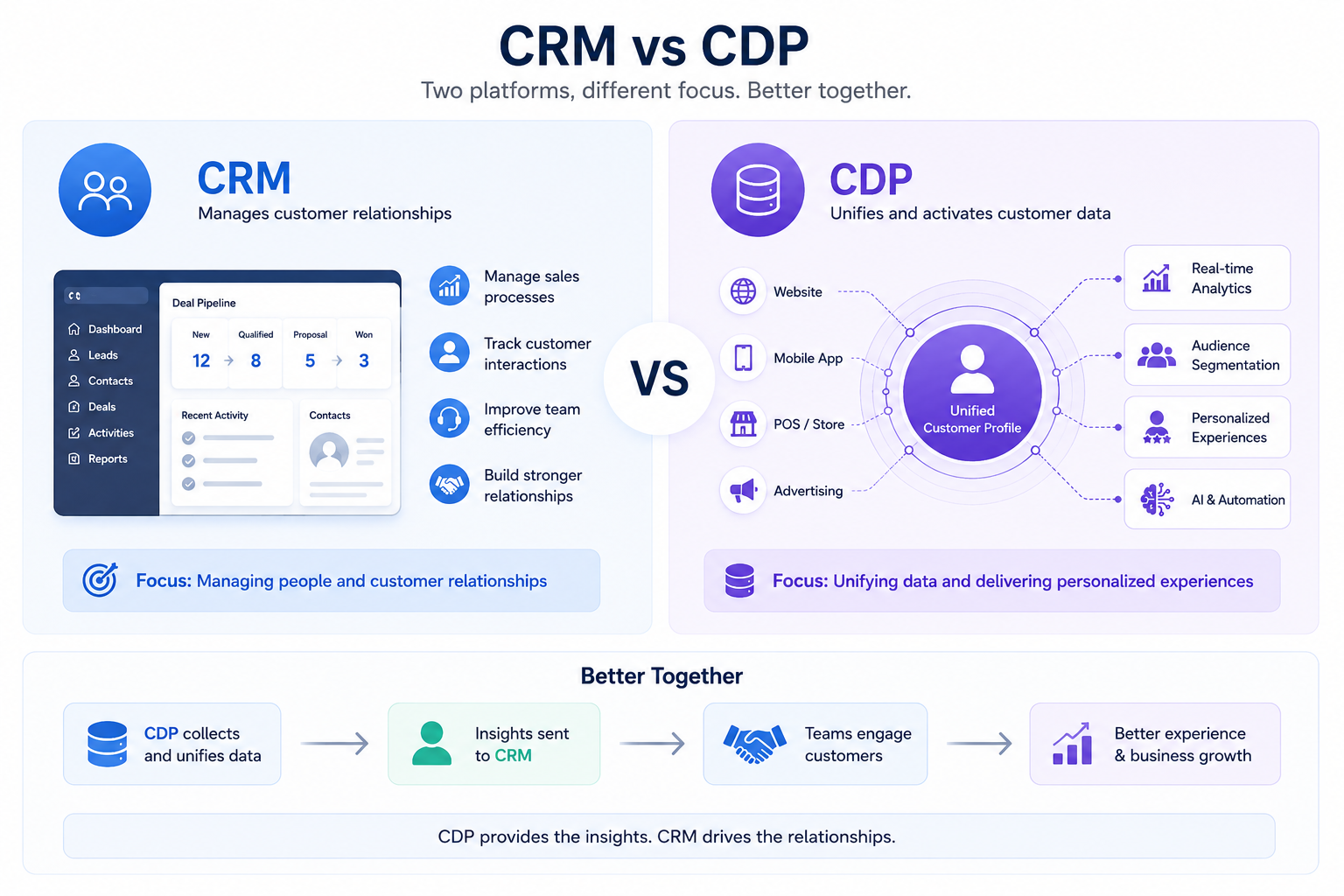
Although CRM and CDP are both related to customers, they solve different problems.
| Comparison Item | CRM | CDP |
|---|---|---|
| Core Purpose | Manage customer relationships | Integrate customer data |
| Main Users | Sales and customer service teams | Marketing, data, analytics, customer experience, and digital product teams |
| Data Sources | Manual input and interaction records | Automatic collection across multiple channels |
| Real-Time Capability | Usually workflow- and record-driven; real-time capability depends on platform and integrations | Designed for real-time or near-real-time profile updates, segmentation, and activation |
| AI and Personalization | Strong for sales, service, and workflow intelligence | Strong for audience intelligence, identity resolution, personalization, and activation |
| Suitable Scenarios | Sales and customer management | Precise marketing and data analytics |
In simple terms, CRM is more focused on managing customer relationships, while CDP places greater emphasis on customer data integration and insights.
5. Which Enterprises Are Suitable for CRM?
CRM is especially suitable for enterprises centered on sales processes and customer relationships, such as SaaS companies, consulting services, financial institutions, and manufacturers. These enterprises usually need to track opportunities over the long term, manage customer interaction records, and improve cross-team collaboration.
If an enterprise has the following needs, CRM is usually a good platform to implement first:
- Complex sales processes
- A relatively large sales team
- A need to manage opportunities and renewals
- A strong focus on customer service and after-sales processes
For B2B enterprises, CRM is often an important foundation for digital operations.
6. Which Enterprises Need a CDP More?
CDP is better suited for high-traffic and multi-channel businesses, such as e-commerce companies, media platforms, app services, and retail brands.
These enterprises generate large amounts of customer behavioral data every day, so they need a unified data platform to support analytics and marketing applications.
If an enterprise has started to prioritize the following capabilities, it usually means the need for CDP is increasing:
- Personalized marketing
- AI recommendations and automation
- Cross-channel data integration
- First-party data governance
- Real-time behavioral analytics
Although Chrome has adjusted its approach to third-party cookies, privacy regulations, browser tracking restrictions, and user consent management requirements continue to increase. As a result, enterprises need to rely more on first-party data and customer data governance, making CDPs increasingly important in the enterprise MarTech architecture.
7. Can CRM and CDP Coexist?
Yes. In fact, more and more enterprises are implementing CRM and CDP at the same time.
In practice, CRM is mainly responsible for customer relationships and sales process management, while CDP handles data integration and customer insights. For example, a CDP can analyze which customers show high purchase intent and then synchronize the list to CRM for the sales team to follow up.
This integration model allows marketing, sales, and customer service teams to share consistent customer data, further improving collaboration efficiency and customer experience.
8. 7 Key Factors to Evaluate When Choosing a Platform
When evaluating CRM or CDP, enterprises should first review the following capabilities:

1. Data Integration Capability
Whether it can connect with existing systems and data sources.

2. Scalability
Whether it can support AI, MarTech, and new channels in the future.

3. Real-Time Data Processing
Whether it can support real-time behavioral analytics and automation.

4. User Experience
Whether the interface is easy to learn and use.

5. Permissions and Governance
Whether it provides enterprise-grade data governance and permission controls.

6. Consulting and Implementation Support
Whether sufficient implementation and consulting capabilities are available.

7. Long-Term Operation and Maintenance Cost
Beyond licensing fees, follow-up integration and maintenance costs must also be evaluated.
Many implementation failures are not caused by poor tools, but by a lack of complete planning and governance strategy.
9. Common Mistakes When Implementing CRM and CDP
When implementing CRM or CDP, many enterprises focus too much on feature comparisons while overlooking the importance of organizational processes and data governance.
Common issues include:
- Inconsistent customer data quality
- Lack of clear KPIs
- Unclear system positioning
- Lack of shared processes across departments
- Lack of continuous optimization after tool implementation
If an enterprise does not establish a long-term data strategy, even implementing a large platform will make it difficult to fully realize its value.
10. Future Trends: Customer Data Integration in the AI Era
With the rapid development of generative AI and AI agents, enterprises are placing higher demands on customer data quality.
Future customer data platforms will no longer be limited to data storage. They will need to further support AI recommendations, real-time decision-making, marketing automation, and personalized experiences across channels.
Under this trend:
- CRM will become more intelligent
- CDP will become the core data foundation for AI
- The importance of first-party data will continue to increase
The data capabilities enterprises build today will also directly affect the effectiveness of future AI applications.
11. Conclusion
CRM and CDP are not replacements for each other. Instead, they address different layers of enterprise needs.
If an enterprise’s biggest challenges today are sales process management, customer interaction tracking, and customer service management, CRM is usually the higher-priority choice. However, if the enterprise is already facing needs related to multi-channel data integration, AI marketing, and personalized experiences, the importance of CDP will rise quickly.
What truly matters is not simply which tool to choose, but whether the enterprise has built a long-term customer data strategy and governance capability.
If your enterprise is evaluating CRM, CDP, or a broader customer data architecture, the key is not only choosing the right platform, but also assessing data readiness, integration design, governance requirements, and the long-term operating model. LeadsTech can support this evaluation through consulting, implementation planning, and MarTech integration experience, helping you define a practical strategy based on your current business needs and future growth goals.
Learn More About MarTech and CDP Solutions
Further Reading
- Why Do CRM Implementations Often Fail? Key Considerations and the Consultant’s Role When Choosing a Service Provider
- How to Choose the Right CRM System and Consulting Company: 7 Key Capabilities Enterprises Should Evaluate
Related Articles
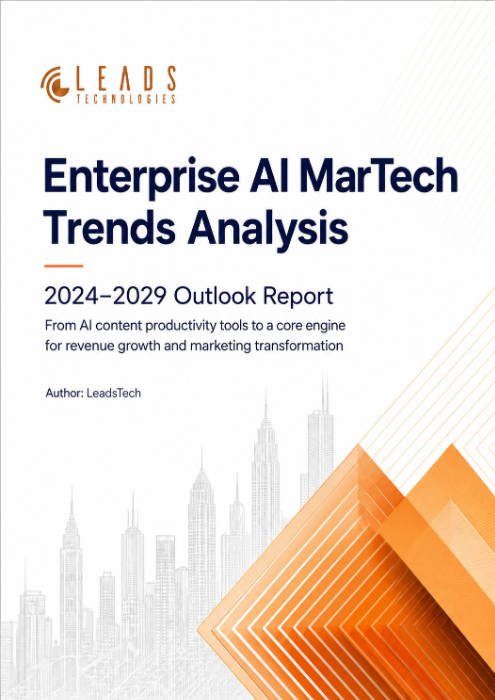
Enterprise AI MarTech Trends Analysis 2024-2029 Outlook Report
From AI content productivity tools to a core engine for revenue growth and marketing transformation
*The PDF will be sent directly to your inbox.
Email Error
Please enter a valid email address.
Thank You!
The whitepaper has been sent to your inbox. If you don’t see it, please check your spam or promotions folder.