

How to Choose a Google Analytics Consultant
Adobe Analytics, Google Analytics, MarTech, Website Analytics
19 August 2026
Many organizations have implemented GA4 and accumulated extensive reporting data, yet their teams still cannot answer basic questions such as which channels generate qualified inquiries or which website pages to improve first. The right Google Analytics consultant does more than build dashboards. They help establish a sustainable approach to measurement, validation, and optimization.
Key Takeaways
A Google Analytics consultant should translate business questions into a measurement plan before addressing tracking, data quality, reporting, and optimization.
When evaluating a consulting firm, assess its business strategy expertise, technical implementation skills, privacy governance, analytical capabilities, knowledge transfer, and ongoing support.
GA4 meets the website and campaign measurement needs of many organizations. Companies with multiple brands and markets, complex segmentation, or stricter governance requirements may also want to evaluate Adobe Analytics.
Do not measure success by the number of dashboards delivered. Track valid event coverage, data error rates, time from insight to action, and inquiry conversion performance.
From LeadsTech’s practical experience, a measurement plan is valuable not because it tracks more events, but because it helps marketing and sales make better decisions; that is the core of effective web and customer journey analytics.
1. Google Analytics Consulting Goes Beyond Installing Tracking Codes
GA4 uses an event-based measurement model. Page views, form submissions, file downloads, video engagement, and ecommerce behavior all require events, parameters, and key events defined around your business goals. If a consultant only deploys tags without first clarifying the business questions, you are likely to end up with plenty of data but few useful answers.
A comprehensive engagement typically covers measurement strategy, tracking architecture, Google Tag Manager configuration, data validation, guidance on Consent Mode configuration, reporting design, team training, and ongoing optimization. The consultant should also explain limitations such as data processing delays, reporting thresholds, sampling, and configuration limits so leadership does not mistake unstable data for real-time performance.
2. What Should You Define Before Choosing a GA Consultant?
Start by defining three areas. First, identify the decisions leadership needs to make, such as reallocating media budgets or prioritizing a website redesign. Second, specify which behaviors represent business value, including qualified inquiries, appointments, trials, or high-value downloads. Third, determine where the data needs to go, whether that is a CRM, advertising platform, data warehouse, or BI tool.
Without this clarity, the scope can quickly become dominated by event and dashboard counts. A stronger request for proposal documents decision scenarios, website and app scope, current tools, privacy requirements, internal owners, and the metrics the organization wants to improve.
3. Six Criteria for Evaluating a Google Analytics Consultant
Business Understanding
Does the consultant first ask about your revenue model, customer journey, and sales process instead of immediately demonstrating product features?
Measurement Planning
Can the consultant deliver a clear measurement plan that defines event names, trigger conditions, parameters, owners, and acceptance criteria?
Technical Implementation and QA
Does the team understand websites, apps, Tag Manager, cross-domain tracking, ecommerce, and server-side use cases—and provide test records and a rollback plan?
Privacy and Governance
Can the consultant work with legal and information security teams on consent, access, data retention, and change management without making legal decisions for your organization?
Analysis and Action
Can the consultant connect channel, content, funnel, and audience analysis to specific optimization experiments instead of only delivering polished dashboards?
Knowledge Transfer
Does the engagement include documentation, training, naming conventions, and follow-up support so your internal team does not remain dependent on one consultant?
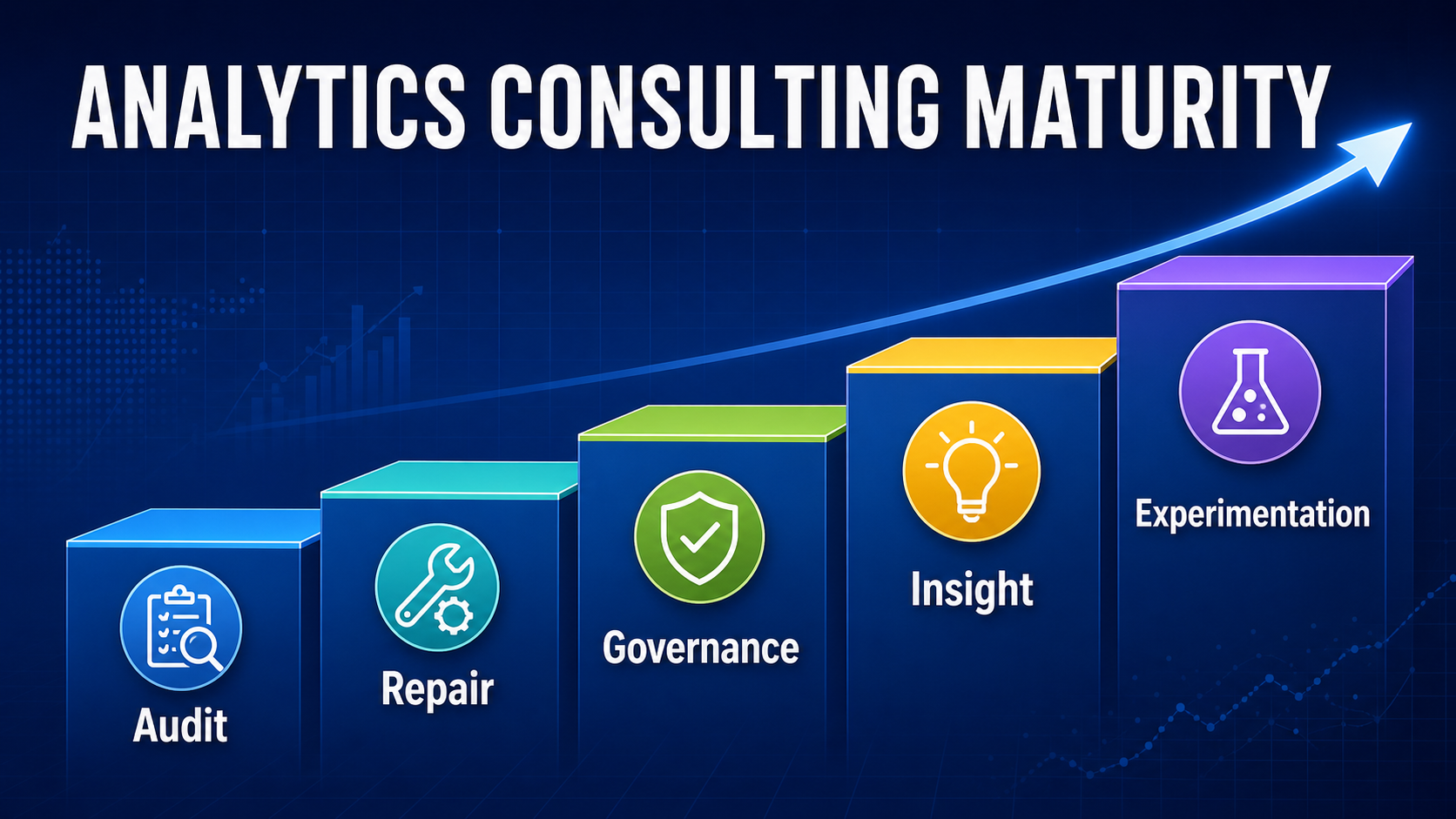
Figure: A six-stage web analytics consulting workflow that connects business strategy to continuous optimization.
4. GA4 or Adobe Analytics: Which Should You Choose?
GA4 and Adobe Analytics are not simply an entry-level and an advanced option. GA4 offers straightforward integration with tools such as Google Ads and BigQuery and can meet the needs of many organizations focused on website, app, media, and conversion measurement. A consultant should first determine whether your requirements can be met with reasonable implementation and governance costs.
If your organization manages multiple brands, markets, or complex customer journeys and needs highly customized segmentation, calculated metrics, report suite governance, or deeper analysis, consider evaluating Analysis Workspace, segments, and calculated metrics in Adobe Analytics. The decision must also account for licensing, implementation, maintenance, staffing, and integration costs—not just a feature checklist. LeadsTech can assess GA4, Adobe Analytics, or a combined approach against your actual data architecture rather than assuming every organization needs to switch platforms.
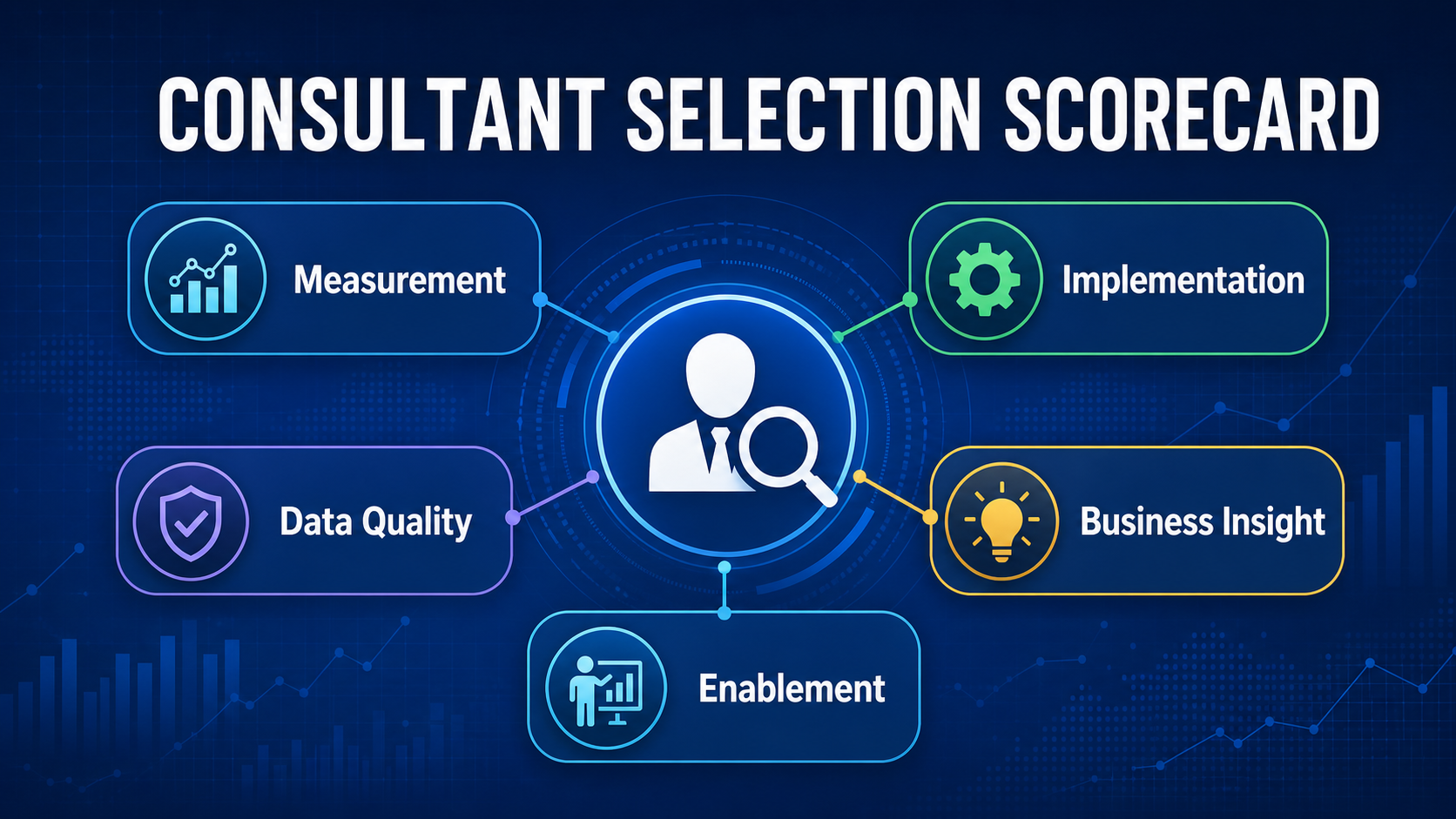
Figure: When choosing between GA4 and Adobe Analytics, compare ecosystem integration, data complexity, governance requirements, and total cost of ownership.
5. Business Scenario: Plenty of Data, but No Clear Path to Growth
Consider an industrial equipment exporter running search campaigns across multiple markets. Its website offers product downloads and request-for-quote forms. Marketing reports a high volume of “conversions,” but sales finds that many records are duplicate submissions, internal tests, or low-intent downloads. The two teams reach different conclusions about channel performance.
The right consultant would first define a qualified inquiry, then incorporate form type, product line, market, business email, and downstream CRM status into the measurement approach. They would also establish QA rules and channel reporting. Useful metrics include valid event coverage, the share of duplicate or anomalous events, identifiable lead-source rate, time to correct data issues, inquiry-to-opportunity conversion rate, and the cycle time from insight to test. These measures are closer to business value than the number of dashboards delivered.
6. Google Analytics Consulting: Implementation Steps and Success Metrics
Step 1
Inventory the decisions to support, websites and apps, existing tags, CRM, advertising platforms, and consent management tools.
Step 2
Create the measurement plan and naming conventions, including events, parameters, key events, data owners, and acceptance criteria.
Step 3
Implement in a test environment and validate the data with debugging tools, test cases, and cross-device checks.
Step 4
Build role-based reporting so leadership, marketing, content, and sales teams each see the metrics they need.
Step 5
Establish training, documentation, access controls, and change processes so website updates do not break tracking.
Step 6
Review data quality and business questions each month, then turn insights into content, media, or conversion optimization experiments.
During the selection process, ask each consulting firm for a sample measurement plan, QA checklist, issue-management approach, and training outline. Proposals should separate strategy, implementation, reporting, training, and ongoing support so you can compare the actual work rather than the total price alone.
7. Frequently Asked Questions
What services does a Google Analytics consultant provide?
Typical services include measurement strategy, GA4 and Tag Manager implementation, data QA, privacy and access governance, reporting and analysis, training, and ongoing optimization. The exact scope should reflect your website, app, CRM, and advertising integration needs.
Do we still need a consultant if GA4 is already installed?
A consultant can still add value if your team does not trust the data, cannot connect inquiries to acquisition channels, or lacks reporting that supports decisions. If you already have mature measurement, development, analysis, and governance capabilities, a short audit or targeted support may be enough.
How can we tell whether a GA consultant is qualified?
Ask the consultant to demonstrate a measurement plan, QA process, data limitations, and delivery responsibilities using your business scenario. Certifications and dashboards alone do not prove an ability to resolve real data-quality issues or coordinate across teams.
How much does Google Analytics consulting cost?
Pricing typically depends on the number of websites and apps, event complexity, cross-domain and ecommerce requirements, CRM and advertising integrations, reporting, training, and the support period. Request an itemized proposal and acceptance criteria rather than budgeting around an unverified fixed market rate.
Is GA4 or Adobe Analytics a better fit for our organization?
The answer depends on data scale, analytical depth, governance requirements, ecosystem integrations, internal skills, and total cost of ownership. GA4 meets many organizations’ needs, while multi-brand, multi-market, and complex analysis use cases may justify a closer evaluation of Adobe Analytics.
How soon can we expect results after implementation?
Timing depends on current data quality, development resources, and decision cycles. Start by validating tracking coverage, error rates, and reporting adoption, then assess whether content, media, or conversion experiments produce business improvements.
8. Conclusion
When you hire a Google Analytics consultant, you are investing in the ability to turn business questions into trusted data and practical improvements. Evaluate potential partners across six areas: measurement planning, QA, governance, analysis, knowledge transfer, and ongoing support. Then decide whether GA4, Adobe Analytics, or a combined approach best fits your needs. To review your current tracking and web analytics architecture, contact LeadsTech or explore our Google Analytics 4 (GA4), Adobe Analytics, and Web Customer Journey Analytics services.


9. Related Reading
- Adobe Analytics vs. GA4: An In-Depth Comparison:
Understand how the platforms differ in measurement architecture, analytical capabilities, and business fit. - Website Analytics Strategy: From Data to Growth:
Learn how to turn reporting into improvements across content, media, and the website experience. - Web Analytics Tools Compared: Features, Tradeoffs, and Selection:
Compare common analytics tools based on your requirements, team capabilities, and costs.
Related Articles
Enterprise AI MarTech Trends Analysis 2024-2029 Outlook Report
From AI content productivity tools to a core engine for revenue growth and marketing transformation
*The PDF will be sent directly to your inbox.
Email Error
Please enter a valid email address.
Thank You!
The whitepaper has been sent to your inbox. If you don’t see it, please check your spam or promotions folder.